
Matcha jelly can add a clean tea note to a dessert cup or become a topping in a cold drink. Its commercial problem is less romantic: the cubes must cut, scoop and travel without turning rubbery or shedding green liquid. The powder also needs to stay evenly distributed while the gel sets. For cafes and manufacturers, the right formula depends on the serving format. These ten checks help build a repeatable topping or dessert rather than a promising one-off tray.
Contents: Use · Powder · Gel · Dose · Mixing · Cut · Drink · Storage · Pack · Approval
1. Where Will Matcha Jelly Be Served?
Define the job of each piece
A dessert jelly eaten with a spoon can be soft and delicate. A cube used in a wide-straw drink must survive scooping, shaking and time in liquid. Those are different texture targets. Decide whether matcha jelly is the main dessert, a layer in a parfait or a beverage inclusion. Set portion weight and serving temperature before choosing the gel system. The recipe should be tested with the actual cup, spoon or straw, not only in a laboratory mold. A cube that looks perfect on a plate may block a dispenser or break in a cup.
Start with one application. Make a plain matcha jelly without fruit, syrup or dairy so the tea flavor and texture can be judged directly. Then place it into the intended finished product. In a sweet drink, a mild jelly can disappear; in a lightly sweetened dessert, the same dose may taste strong. If a brand wants several menu uses, it may need two formulations. One universal jelly is attractive for purchasing but should not be assumed before testing the service conditions.
2. Which Matcha Powder Suits a Gel?
Taste after setting, not only in water
Powders vary in bitterness, color and particle size. Ask for lot-linked samples and make identical small gel batches at one dose. Examine a cut face for dark specks and a bottom layer. Taste a full portion cold. A fine powder may distribute more smoothly, but it still remains suspended leaf material. A bright dry powder may look muted in the finished gel. Select on the finished application, with ingredient cost and supplier reliability beside the sensory result.
Keep a sample trail. Record powder lot, gel batch and the cup used for tasting. If the supplier changes a powder lot, repeat the gel test before switching. A difference that is minor in a whisked drink can be obvious in a transparent cube. Ask for a product specification and relevant quality records for any commercial option. If the jelly is sold with an origin or organic claim, make sure the records and finished label support that claim in the intended market.
| Powder check | Observe in gel | Reason |
|---|---|---|
| Flavor | Full cold serving | Tea may taste different after setting |
| Color | Cut cube and surface | Bright powder may not mean bright gel |
| Distribution | Top and bottom of slab | Settling may create layers |
3. Which Setting System Fits the Product?
Pick the texture and process together
Gelatin, agar and other setting systems produce different bites and require different process conditions. The choice must fit the product’s dietary positioning, production equipment and serving route. A cafe could cast a shallow tray and cut by hand. A manufacturer may deposit portions into sealed cups or make cubes for chilled distribution. Trial the intended method from the start. A gel that sets in a small dish can behave differently in a deep cup where heat leaves more slowly.
Check the claims. A plant-based gel does not automatically make the full product vegan if the syrup, topping or processing aids contain animal ingredients. A gelatin route needs its own source and labeling review. Qualified quality staff should validate the process and storage period for the exact formula. The recipe team should focus on the sensory target: clean break, pleasant chew and no tough skin. Do not choose a gelling agent solely because a familiar home recipe uses it.
4. How Much Matcha Gives a Clean Tea Flavor?
Build a dose ladder at a fixed sweetness
Make three nearby doses in the same gel base. Keep sugar and gelling agent constant for the first comparison. Higher matcha may strengthen tea flavor but can make a cube opaque, bitter or visually uneven. Taste a normal serving rather than a single tiny cube. If the jelly will sit in a sweet milk drink, test it there; a dose approved as a plain dessert may vanish after dilution. Record dose as grams per batch and per serving so purchasing can calculate real cost.
Adjust sweetness after choosing a direction. Sugar can soften bitterness yet make a topping too sweet when combined with a syrupy drink. A lower-sugar gel may give a useful contrast in a sweet beverage. Trial those choices with the finished menu item. Do not change powder, sugar and gel strength in one batch. A controlled notebook is more valuable than a drawer full of unmarked green cubes.
| Trial | Hold constant | Decide |
|---|---|---|
| Matcha dose | Gel base and sugar | Tea flavor and appearance |
| Sweetness | Selected dose and gel | Balance in finished product |
| Gel strength | Selected dose and sugar | Cut, scoop and chew |
5. How Do You Keep Powder Evenly Dispersed?
Wet and mix before the gel begins to set
Sift dry matcha if it has compacted and make a small smooth preblend with a compatible liquid. Add it at a repeatable stage in the gel process. The mixture must stay uniform from the first deposited cup to the last. Record vessel mixing and hold time. Matcha does not dissolve, so a quiet batch can allow particles to settle while trays are filled. Pull samples from the beginning, middle and end of the run and compare the cut faces after setting.
Look for the dark floor. A bottom layer may indicate that the gel set too slowly for the chosen powder and process. More vigorous mixing might help in a pilot but produce bubbles that spoil appearance. Test the order of addition, deposit temperature and gentle agitation as separate changes. If the finished jelly has dark streaks, check preblending first. A powerful mixer cannot always rescue dry cores once they have formed inside a thickening liquid.
6. What Size and Shape Should You Cut?
Let the serving tool choose the cube
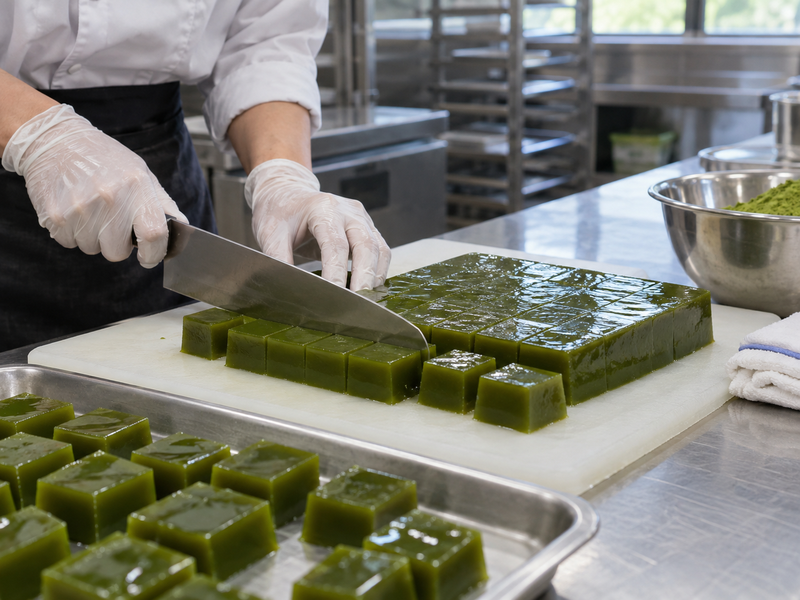
For a parfait, a larger neat cube may look attractive and give a distinct bite. For a beverage topping, smaller uniform pieces can pass through a wide straw more easily. Test the actual spoon or straw before committing to a cutter. Measure cube weight and count per serving. Portion by appearance alone can create large differences in tea dose and ingredient cost. A production team should also count trimming waste; a tray that yields many offcuts can make a low-cost ingredient expensive.
Use the cold product. A slab may cut cleanly at one temperature and tear at another. Set the temperature and timing for cutting in the process sheet. Check whether cubes stick together in a holding bin or deform during scooping. If the product is deposited directly into cups, examine whether the shape remains attractive after transport. Visual uniformity is useful, but the piece must be pleasant to eat. A firm cube that survives every machine yet feels rubbery is not a success.
| Application | Portion question | Test |
|---|---|---|
| Dessert cup | How many bites? | Spoon and full-cup tasting |
| Beverage topping | Will pieces pass the straw? | Actual drink and straw |
| Retail tray | Will cubes keep shape? | Pack and transport trial |
7. How Does Jelly Perform in a Beverage?
Test in the final liquid and ice
Matcha jelly may sit in milk tea, fruit tea, lemonade or a sparkling drink. Each liquid changes how the cube looks and tastes. Acidic beverages can make tea flavor feel sharper; sweet milk can mute it. Put the jelly in the real drink at the planned portion and wait the typical service time. Check whether pieces float, sink, shed color or break during stirring. Taste the liquid too. If the jelly colors the drink unintentionally, decide whether that is acceptable before launch.
Watch the bottom of the cup. A topping that settles under ice may be difficult for customers to reach. Staff might compensate by adding more jelly, raising cost and sweetness. Try the approved cup, ice amount and straw. If the drink is sealed for delivery, include the journey in the trial. A good topping should still be recognizable when the customer opens it, not only when the barista first closes the lid.
8. What Changes During Chilled Storage?
Judge both eating quality and food safety
A freshly set jelly can weep liquid, firm up or lose tea aroma during storage. Hold samples in the proposed container and inspect at several points in the intended sales window. Measure or describe liquid release, cube integrity, flavor and color. Qualified quality staff should set the microbiological and shelf-life program for the exact formula, process and pack. A home recipe’s storage estimate does not apply to a commercial product, particularly one handled as a drink topping throughout a shift.
Track opened and sealed packs separately. A sealed retail cup and an opened cafe service tub face different handling. Define how each is prepared, dated, held and discarded under the business’s approved procedures. Keep retained samples and lot codes. If a new powder or gelling agent enters the formula, review whether the previous storage evidence still applies. A small change in solids or acid can change appearance even when the product remains safe.
| Storage check | Record |
|---|---|
| Liquid release | Amount and visual effect |
| Texture | Cut edge and chew |
| Color | Side-by-side sample comparison |
| Flavor | Tea aroma and off-notes |
| Safety | Results from the approved plan |
9. Which Pack and Label Details Matter?
Pack for the real distribution route
A clear cup showcases the green cube but exposes color changes and condensation. An opaque container protects the visual until opening but cannot excuse an unappealing product. Test the actual lid, seal and stacking arrangement. If cubes are sold as a topping, verify that staff can remove the intended portion without crushing them. A retail pack needs ingredient, allergen, nutrition and claim review for the destination market. The gelling system and any sweetened base belong in that review.
Photograph what customers receive. Avoid an image of a pristine cube if normal transport leaves pieces irregular. A slight variation can be honest and appetizing; a misleading photograph creates complaints. If the product uses matcha from a named origin, keep documents tied to the lot. If it is marketed as vegan or organic, verify the entire finished product. The packaging should help a customer understand whether the jelly is a dessert, a drink topping or a ready-to-eat snack.
10. What Must Be Tested Before Launch?
Have another operator make and serve it
Keep a specification with powder source, formula by weight, preblend method, gel process, deposit or cut size, pack, storage plan and appearance reference. Add cost per saleable serving, including trimming and handling loss. Ask a second operator to make a batch using only the written sheet. Compare early and late fills, then have service staff add the jelly to the actual drink or dessert. A formula that depends on the developer’s unrecorded stirring habit is still a prototype.
Finish with the customer bite. The jelly should taste of tea, have the intended chew and survive its route to the customer. If one of those fails, fix that specific variable and repeat the trial. The launch decision should rest on a complete serving and a reproducible process, not the neatest cube on the cutting board.
| Launch evidence | Team |
|---|---|
| Approved matcha and specification | Purchasing |
| Formula and process | Product development |
| Storage validation | Quality |
| Portion and service test | Operations |
| Pack and claims | Packaging and marketing |
FAQ
Q1: Does matcha dissolve in jelly? No. It remains as fine leaf particles, so dispersion and setting time matter.
Q2: Can matcha jelly be vegan? Yes, with an appropriate plant-based setting system and a verified full ingredient list.
Q3: Why does matcha collect at the bottom? Powder may settle before the gel sets. Review preblending, mixing and deposit timing.
Q4: Can the same jelly work in desserts and drinks? It might, but spoon and straw use demand different textures. Test each application.
Q5: How long can a cafe hold matcha jelly? Set the period through an approved procedure for the exact formula, process and handling conditions.
The site’s guide to matcha clumps explains a related powder problem. The SERP reference jelly recipe offers a home method; commercial use requires portion and storage trials.