
A matcha glaze can make a plain pastry recognizable from across a display case. It can also make that pastry sticky, overly sweet or speckled with dry tea powder. A bakery needs a glaze that tastes of matcha, covers at a controlled weight and sets before the item is packed. These ten checks start with the pastry, then work through powder selection, mixing, application and storage so the finish remains useful after the photo is taken.
Contents: Use · Powder · Base · Dose · Mixing · Flow · Dry · Flavor · Pack · Spec
1. What Should the Matcha Glaze Do?
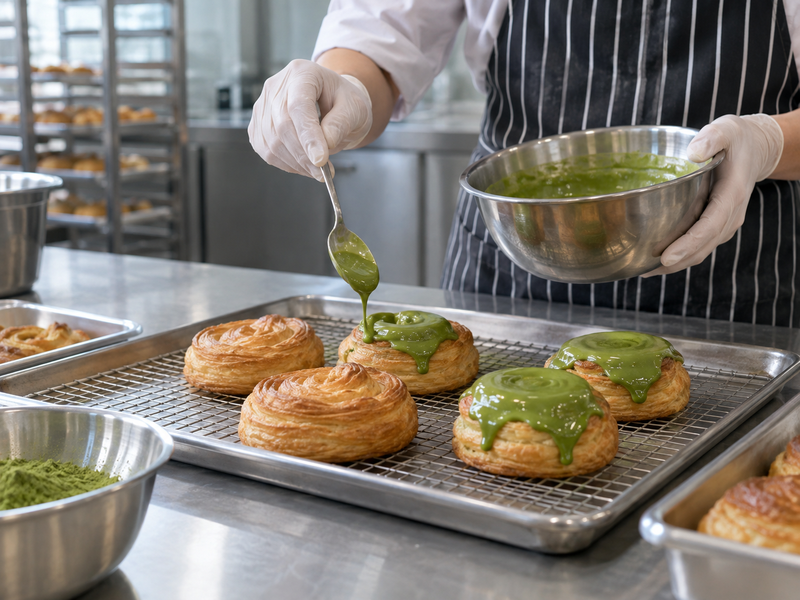
Give the finish one clear job
A glaze may add tea flavor, green color, sweetness, shine or a barrier against drying. Decide which of those matters most for the pastry. A thin coating on a plain doughnut can lead with matcha. A decorative stripe on a heavily flavored cake may contribute color but little taste. Use the actual baked item for every trial. A glaze that sets nicely on a metal spoon may soak into a warm scone or slide from a buttery croissant. Name the target application temperature and the amount of glaze per piece.
Taste the bare pastry first. If it is dry or bland, the glaze may temporarily hide a base problem. Compare a plain item with a glazed one after normal display time. The finish should improve the whole bite, not create a sweet shell over an unconvincing product. For a bakery selling several items with matcha glaze, one formula might not suit all surfaces. Test each product, then decide whether a shared glaze is operationally sensible.
2. Which Powder Works in a Thin Coating?
Compare appearance after the glaze dries
Thin coatings expose powder differences. Dark specks, coarse particles and bitter notes stand out against sugar. Request lot-linked matcha samples and test them at a fixed dose in the same glaze base. Apply the same measured amount to identical pastries. Judge fresh appearance, dried surface and tea flavor. A powder that performs well in a milk drink may not look smooth in a glaze. A more expensive powder may earn its price if it reduces visible faults or allows a lower dose.
Keep procurement involved. The selected powder needs a specification, relevant quality records and repeatable supply. Retain an approved lot sample and a photograph of the finished pastry under normal display light. A new lot should be compared in the actual glaze, not only tasted in water. If the bakery makes organic or origin claims, obtain documents that support the finished product’s wording. A green finish is not evidence of any certification.
| Powder test | Keep fixed | Examine |
|---|---|---|
| Sample A | Base, dose, pastry | Flecks, color, tea finish |
| Sample B | Base, dose, pastry | Flecks, color, tea finish |
| Sample C | Base, dose, pastry | Flecks, color, tea finish |
3. Which Glaze Base Fits the Product?
Choose by bite and operating conditions
A simple sugar glaze, a fat-containing coating and a dairy-based icing behave differently. The base affects sweetness, shine, set and storage. Start with the bakery’s reliable plain glaze if one exists. Add matcha in measured trials and compare with a plain control. A glaze intended for a doughnut case should not require a long drying period that slows production. A glaze for a chilled dessert may have a different target texture. Review allergens and claims for every base ingredient before finalizing menu copy.
Watch the finished surface. A sugar glaze can crack, a fat-rich coating may feel heavy, and a thin liquid can soak into pastry. These are observations to test, not reasons to rule out a base in advance. Apply each trial at the temperature used in production and inspect after normal handling. The easiest formula to mix is not always the easiest to pack. Choose a base that suits the product’s route from bench to customer.
4. How Much Matcha Is Enough?
Build a dose ladder without changing sugar
Make several glazes with nearby powder levels. Keep the base recipe and water addition fixed during the first comparison. Apply the same weight to each pastry. More powder may bring a stronger tea note and darker green, but it may also thicken the glaze or give a dry finish. Taste the whole pastry rather than licking glaze from a spatula. Record powder per kilogram of glaze and glaze weight per finished piece. Together, those numbers show the real matcha dose and cost.
Ask whether tea survives the pastry. A sweet doughnut or strongly flavored bun can bury a subtle glaze. If the highest powder level becomes bitter, reduce the pastry’s competing sweetness or reconsider the concept before adding still more matcha. A successful finish should taste deliberate. Color alone is a poor basis for a dose because lighting and pastry background change how green appears.
| Variable | Hold constant | Decision |
|---|---|---|
| Matcha level | Base and application weight | Flavor versus bitterness |
| Glaze weight | Approved formula | Coverage and cost |
| Base sweetness | Matcha and thickness | Balance in whole pastry |
5. How Do You Prevent Flecks and Clumps?
Wet powder evenly before final dilution
Sift dry matcha if it has compacted. A small smooth paste made with a compatible liquid can be easier to blend into the glaze base than powder dumped into a full mixer bowl. Record the mixing order and equipment. Scrape the sides of the vessel where dry tea can hide. Spread a thin smear on a white plate to inspect for dark pellets before applying a batch. If the glaze uses very little liquid, the preblend amount must be included in the formula rather than added by eye.
Check after a short hold. A smooth glaze can thicken while bakers work through a tray. Powder may also settle in a thin base. Take samples from the first and last pieces glazed and compare color and weight. If they differ, the process may need gentle mixing during application or smaller batches. Do not automatically increase mixer speed; excessive air can leave bubbles and uneven coverage. Solve the observed problem with one controlled change.
6. What Flow and Coverage Should You Target?
Define how the glaze should move
The right viscosity depends on the product. A poured glaze should reach the edges without leaving a bare center. A dip glaze should coat the top without creating thick drips. Record product and glaze temperatures, because both affect flow. Weigh a pastry before and after glazing to estimate pickup. Repeat on several pieces; the average alone can hide a wide range. A thin coat that looks economical may be invisible after drying, while a heavy coat can overwhelm the pastry.
Use a simple visual standard. Photograph acceptable top coverage, side drips and the dried finish. Count rejected pieces caused by bare spots or excess glaze. If production uses a curtain or automated depositor, test on that equipment before approving the recipe. A hand-spooned pilot may not represent the line. The process should allow another baker to reach the target without artistic guesswork.
| Application | Target observation | Common fault |
|---|---|---|
| Dip | Even top coat | Thick edge buildup |
| Pour | Continuous surface | Bare center or runoff |
| Stripe | Consistent width | Weak flavor contribution |
7. How Will the Glaze Set?
Measure time before packing
A pastry cannot be packed while its glaze sticks to film or transfers to a neighbor. Set a practical drying or setting time at the bakery’s real room conditions. Test both a quiet pilot day and a normal full rack. Humidity, airflow and pastry temperature can change the result. Touch a non-sale test piece at defined intervals and inspect for fingerprints or tack. If the glaze never becomes pack-friendly, change the base or process rather than asking packers to wait indefinitely.
Look at the set surface. Some glazes develop a dull crust or cracks; others remain glossy but soft. Decide what the product should look like after its normal display period. Do not choose the first fresh photograph as the visual standard. For chilled pastries, check whether condensation appears when they enter a warmer environment. A glaze that works in a bakery case may fail in refrigerated delivery.
8. Does the Finished Pastry Still Taste of Tea?
Serve it at the temperature customers use
Taste the glazed pastry after the glaze has set. Try it again near the end of the intended sales window. Tea flavor can be strong in wet glaze and faint once it dries on a sweet base. Ask tasters to note aroma, sweetness, bitter finish and whether the glaze improves the underlying product. A blind comparison with a plain glaze can reveal whether matcha is doing more than coloring the surface.
Keep pairings simple. Citrus, vanilla or sesame may support a tea finish, but each addition changes the story. Test one partner at a time. A matcha glaze on a matcha dough may be too much for a broad customer base; a plain dough can provide contrast. A product sold as a matcha pastry should deliver a recognizable tea note in a normal bite, not only when someone tastes a thick drip from the edge.
| Tasting point | Question |
|---|---|
| Fresh set | Is tea recognizable? |
| Display midpoint | Has aroma faded? |
| End of sale window | Is sweetness still balanced? |
9. What Happens in Display and Packaging?
Follow the pastry through its route
Pack glazed pieces in the proposed tray or wrapper and send them through normal handling. Open them to check sticking, cracking, color transfer and condensation. Count rejects, because a glaze that damages ten percent of pastries can erase an attractive ingredient saving. A clear lid can help show color but also reveal uneven coverage. If pieces are stacked, test the actual separator and pack height. Do not assume a photograph of one carefully placed pastry predicts a full case.
Review the whole label. A glaze may add sugar, dairy or other allergens to a previously plain product. Ingredient and nutrition data should reflect the approved formula and application weight. If an organic or origin statement appears, verify the records that support it. Shelf-life and safety decisions belong to the exact finished pastry and pack, not to a bowl of glaze. Changes to the base or topping may require a fresh review.
10. What Must the Production Sheet Record?
Make the coating reproducible
Record matcha supplier and approved characteristics, all ingredient weights, preblend method, mixing endpoint, application temperature, glaze pickup target, setting time, pack and sale window. Add photographs of acceptable fresh and set surfaces. Purchasing can use the specification to compare a new powder lot. Bakers can use the process sheet to avoid quietly changing water when a glaze thickens. Quality staff can link the finished product to its ingredient and storage records.
Ask another shift to glaze a tray. Compare pickup weight, appearance, yield and taste with the approved sample. If the second shift cannot reach the result, revise the instruction rather than relying on the developer’s instinct. Matcha glaze works commercially when it adds a clear tea finish, sets in the available production time and reaches customers without sticking to the pack.
| Approval record | Owner |
|---|---|
| Powder and lot sample | Purchasing |
| Formula and process | Product development |
| Pickup and yield | Production |
| Pack and sale test | Quality |
| Product photograph | Marketing |
FAQ
Q1: Can matcha be mixed straight into icing sugar? It can be sifted with dry ingredients, but test for dark clumps after liquid is added. A controlled preblend may be smoother.
Q2: Why is matcha glaze bitter? Powder dose, powder choice and the pastry’s sweetness all affect the full bite. Compare measured trials.
Q3: How can a bakery keep glaze green? Test powder, recipe, light and storage in the actual pastry and pack. Do not underprocess the product for color.
Q4: Is a glaze the same as frosting? No. A glaze is usually a thinner surface coating; frosting is generally thicker and can be piped or spread.
Q5: What should a bakery ask its supplier? Request lot-linked samples, specifications, quality records and a plan for consistent supply.
For another bakery application, see matcha donuts. The SERP reference glaze recipe offers a small-scale formula; production needs pickup and pack trials.