
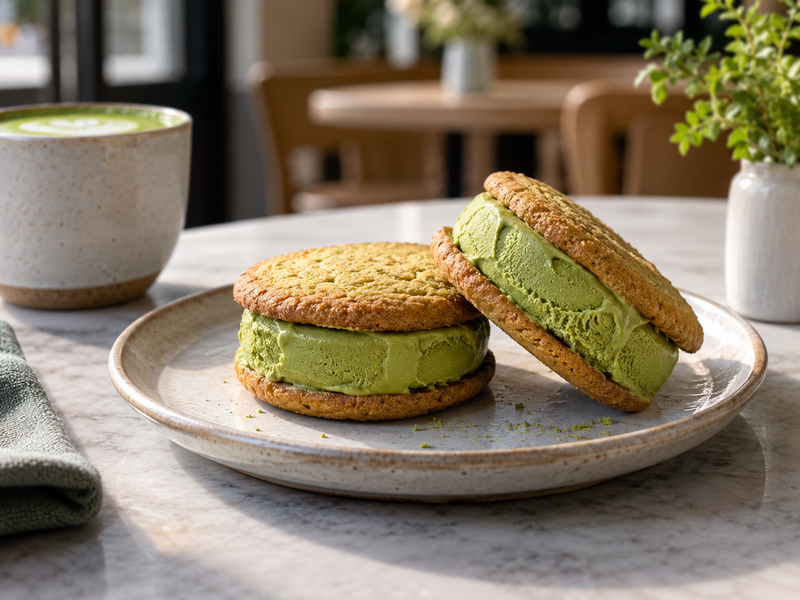
The hard part of a matcha ice cream sandwich arrives after assembly. A beautiful slab can crack at cutting, leak during wrapping or become too hard for a customer to bite. A bakery or frozen-dessert team should judge the product in its sold state, after freezing and handling. Sift & Simmer’s matcha ice cream sandwiches use thin matcha sponge around vanilla ice cream. That is one useful format; this guide compares it with a cookie build and sets a trial plan for consistent portions.
Contents
- 1. What makes matcha ice cream sandwiches saleable?
- 2. Should the outside be sponge or cookie?
- 3. Where should matcha go in the formula?
- 4. How should the frozen filling be selected?
- 5. How can staff assemble even layers?
- 6. How can a team cut clean, repeatable portions?
- 7. What packaging protects the eating experience?
- 8. How should cold storage and handoff be tested?
- 9. What should a pilot measure before launch?
- 10. What belongs in a supplier and production brief?
1. What makes matcha ice cream sandwiches saleable?
Write the eating target before the formula
A good sample has a recognizable tea flavor, neat cross-section and an exterior that yields when bitten from the freezer. Its filling stays within the edges during a realistic handoff. Those requirements conflict: a soft exterior may smear during cutting while a crisp cookie may freeze hard. Define the target at a stated serving condition. A café product eaten immediately can accept a different wrapper and softening interval from a supermarket pack carried home in a frozen bag.
Cut a benchmark in half. Photograph the layers, weigh the portion and check whether the filling has an even thickness from center to corner. Give tasters a piece after the proposed freezer hold, using the planned wrapper and serving instruction. Ask them to note the first bite, tea flavor, sweetness and mess. If matcha disappears behind vanilla and sugar, a darker exterior color will not fix the flavor. Keep one control sandwich without matcha; it helps separate tea effects from faults in cake, cookie or frozen filling.
| Product target | Trial observation | Decision |
|---|---|---|
| First bite | Outer layer yields without shattering | Adjust layer or service condition |
| Cross-section | Filling thickness stays even | Change spreading or frame |
| Tea note | Recognizable after freezing | Adjust matcha placement or dose |
| Handoff | Limited leakage and wrapper mess | Change pack or portion shape |
2. Should the outside be sponge or cookie?
Compare formats at freezer temperature
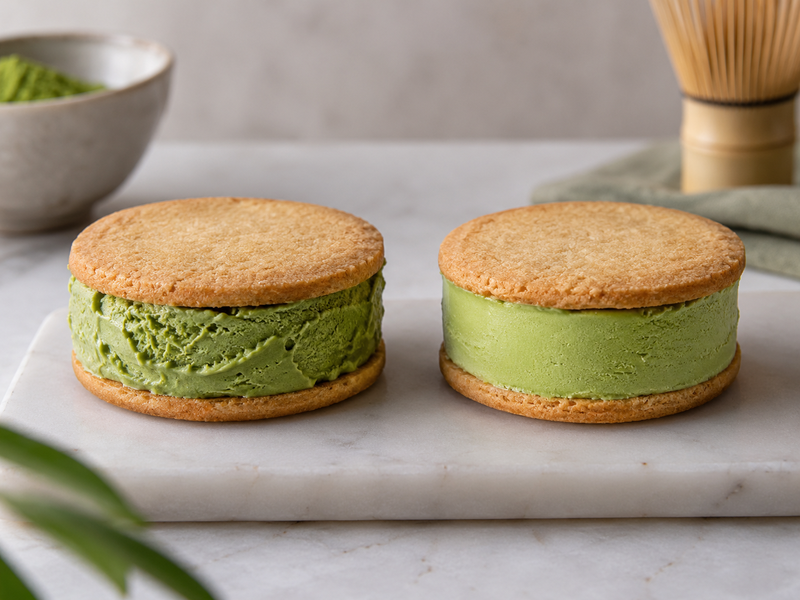
Sponge brings a soft bite and a broad green surface; the reference recipe uses two thin cake sheets for that reason. Cookies bring a familiar handheld form and may suit an existing bakery line. Neither choice can be judged solely when fresh. Freeze assembled samples using the intended process, then compare them after identical storage. A sponge that becomes damp at the filling boundary may need a different formula or assembly method. A cookie that becomes uncomfortably firm may need a softer recipe, thinner sheet or a documented short temper before service.
Use your production strengths. If a bakery already runs sheet cake, measure sheet thickness and usable cutting area. If it runs cookies, note diameter spread and how many matched pairs one batch yields. Scraps, breakage and hand assembly time affect cost. Test the same ice cream and matcha dose in both outside formats so the comparison is fair. The chosen base must fit the actual freezer, wrapper and selling channel, not merely win a tasting straight from the test kitchen.
| Exterior | Advantage to test | Failure to watch |
|---|---|---|
| Thin sponge | Soft first bite and square cutting | Damp seam or tearing |
| Soft cookie | Familiar round portion | Size spread and edge breakage |
| Wafer-style layer | Thin, tidy profile | Excessive hardness or softening |
| Hybrid layers | Distinctive texture | More parts and slow assembly |
3. Where should matcha go in the formula?
Dose the component customers actually taste
Matcha can color the sponge, flavor a cookie, join the ice cream or appear in two components. Begin with one placement, then compare it with a second only if the result needs stronger tea character. Weigh powder by batch and calculate grams per sandwich from saleable yield. A small internal dose ladder could compare low, middle and high additions while all other ingredients stay fixed; the exact levels belong to your own base formula. Do not describe a trial dose as an industry standard.
Taste after a freezer hold. Cold food can present flavors differently from room-temperature batter or freshly baked cake. Record flavor after the product reaches its planned eating condition. Check green color at cutting, after wrapping and after the intended storage interval under consistent lighting. If the tea tastes harsh, investigate matcha lot, dose and sweetener balance before adding more vanilla. Matcha Village’s guide to matcha for ice cream manufacturers gives a related buyer lens; your sandwich trial still needs its own sensory acceptance sheet.
4. How should the frozen filling be selected?
Match firmness and flavor to the outside
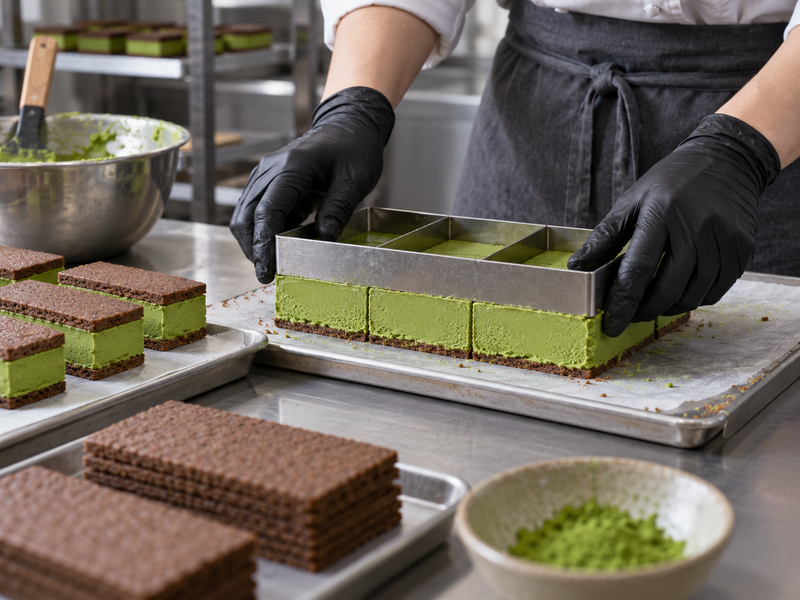
Vanilla gives matcha space, while a matcha filling increases tea intensity. Fruit and chocolate variants can work, but each adds a new sweetness or acidity question. Ask a frozen-dessert supplier for a sample under the conditions in which the sandwich will be assembled. Spreadability during assembly and firmness at sale are separate properties. If the filling softens too far before layering, staff may trap air or produce a wedge-shaped slab. If it stays too rigid, they may crush sponge while pressing.
Record a working window. Use a thermometer and timer during trials; document the temperature and time at which a particular filling spreads evenly in your room. This is a process observation, not a permission to leave dairy products unchilled. Return assembled units to controlled freezing promptly under your food safety plan. In the US, the FDA Food Code offers a retail model; local requirements and the product’s ingredients determine the applicable handling rules. Reject a filling if the team cannot assemble it consistently within a safe, practical workflow.
| Filling check | Measure during trial | Why it matters |
|---|---|---|
| Spreadability | Time and observed temperature | Even thickness |
| Flavor | Blind taste with exterior | Tea clarity |
| Firmness | Bite at planned service state | Comfortable eating |
| Melt behavior | Wrapper and handoff test | Customer mess |
5. How can staff assemble even layers?
Build one slab with controlled thickness
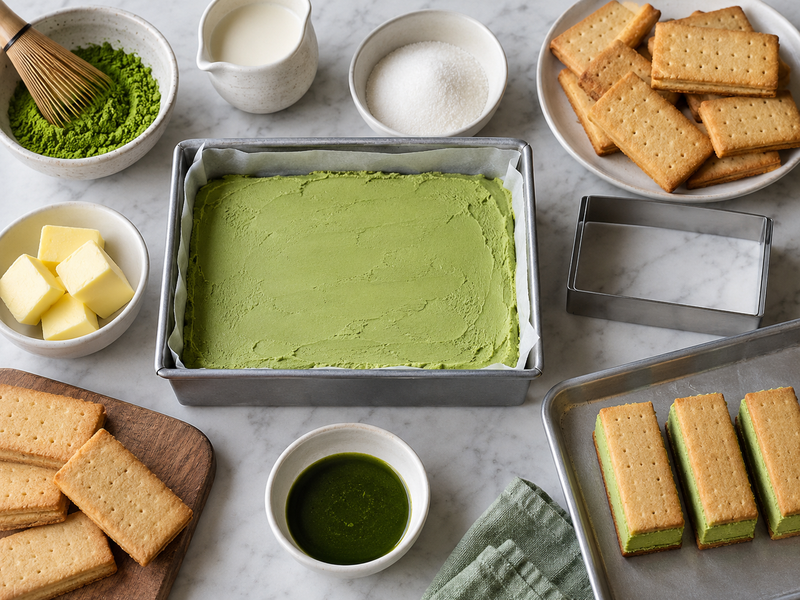
For square portions, line a shallow frame with the first sponge sheet, spread a weighed amount of filling, level it and add the second sheet. Record frame dimensions, sheet thickness and filling weight. Mark the direction of the second sheet if it has a pronounced grain or curl. Place a light, even contact sheet over the top for freezing rather than pressing so hard that filling escapes. A cookie format needs matched sizes and a repeatable filling dose, often easier with a measured scoop or depositor than with a freehand spread.
Inspect corners before freezing. A low corner will produce underfilled sale units even if the center looks good. Take a small sample from the edge of each pilot slab, or photograph an open corner against a ruler. Note how long the full slab spends out of controlled storage during assembly. If a staff member cannot finish a tray without the filling becoming too soft, divide the work into smaller lots. The most useful method is the one a normal shift can repeat, including cleanup, rather than a perfect slab made by one expert.
6. How can a team cut clean, repeatable portions?
Define cut size and tool condition
Cut only when the assembled slab has firmed enough to hold its layers. Draw a cutting map for the frame and calculate theoretical portions before the first cut. A blade warmed and wiped between passes can improve appearance, as the reference recipe suggests for home preparation. In a bakery, test that technique with the actual cutter, staff gloves and cleaning procedure. A warm blade can also leave smears if its surface is wet or the filling is too soft.
Count saleable yield. Weigh cut pieces from the center and edge, then note broken exteriors, wedge-shaped filling and off-size pieces. Do not bury this waste in a broad “processing loss” number. If a round cookie sandwich is chosen, match cookies by diameter and inspect whether the filling reaches the edge without squeezing out. Build a short visual rejection guide with photographs. It saves time when temporary staff pack the product during a seasonal rush.
| Cutting record | Target set by team | Observed result |
|---|---|---|
| Portion width | From pack and selling price | Measure five positions |
| Finished weight | From approved sample | Weigh center and edge |
| Defect count | Team’s release limit | Log cracks and leaks |
| Scrap weight | Costing assumption | Reconcile full slab |
7. What packaging protects the eating experience?
Wrap for the real route to the buyer
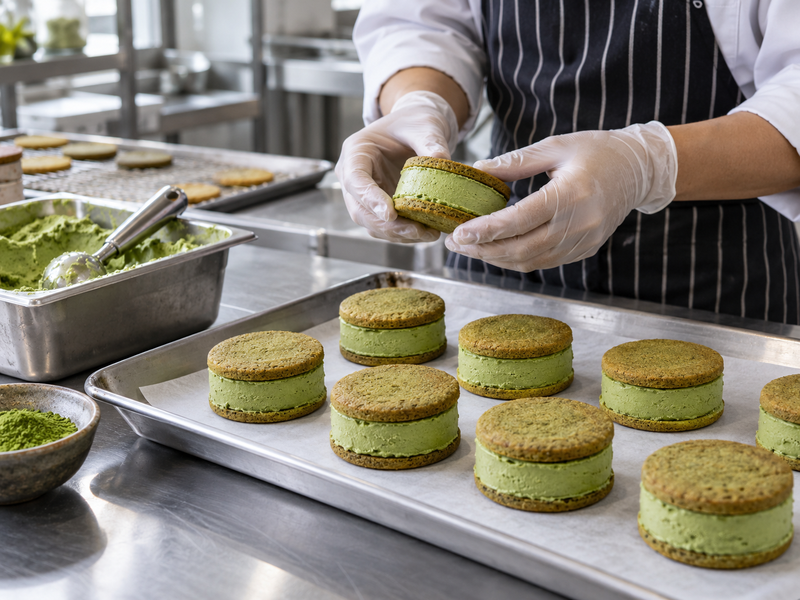
The wrapper needs to release from the exterior without pulling cake or leaving cookie crumbs, contain slight softening during handoff and carry the required product information. Test the actual material at freezer temperature. Some film becomes stiff, some paper picks up moisture, and a loose sleeve may let a square sandwich rotate and crush. If the product will be sold through a distributor, add a transport and case-opening trial rather than relying on a café counter test.
Observe opening, not only appearance. Ask staff who did not pack the samples to open them wearing normal service gloves. Check whether the label covers a tear point, whether the top layer sticks and whether customers can hold the dessert by the wrapper. Confirm ingredient and allergen information with the approved formula; a dairy ice cream, egg sponge and wheat cookie create different label obligations. Packaging cannot make an unvalidated shelf life safe. Record freezer conditions and evaluate quality for your exact product before making a storage claim.
8. How should cold storage and handoff be tested?
Follow the product from freezer to customer
Measure storage temperature at the point where units actually sit, including a display freezer during its busiest opening period. Check units from the top and back of a case, then inspect after a realistic staff handoff. Frozen food should stay frozen under the site’s food safety plan; a decorative display that warms its front row is not a reliable selling system. Local rules govern the applicable conditions. A dairy sandwich may also need a different pickup instruction from an all-plant formulation.
Run a queue simulation. Pull several units for a mock busy period and time wrapper selection, payment and handoff. If staff leave products on a counter while finishing drinks, change the workflow. Ask tasters to wait the expected travel time before eating, then note melting, bite texture and wrapper leakage. A unit that tastes good only in the kitchen at a particular minute needs a clearer service instruction or a formula change. Keep these results with the temperature log so later stores can reproduce the same handling.
| Handoff point | What to observe | Possible change |
|---|---|---|
| Display freezer | Unit temperature and frost | Relocate or adjust display |
| Staff pickup | Time out during payment | Move freezer nearer till |
| Short carry | Wrapper wetness and leakage | Change pack or serving cue |
| First bite | Exterior hardness | Adjust base or temper instruction |
9. What should a pilot measure before launch?
Use a small scorecard with rejection reasons
Run at least two pilot batches if the launch depends on repeatability. Use the same formula but different production shifts or matcha lots when possible. Record input weights, assembly temperature observations, freezer position, cut yield, pack defects and tasting scores. Set acceptance criteria before staff see results; otherwise a visually striking sample may excuse poor yield. A useful cost model divides total batch cost by saleable pieces, not by the theoretical number drawn on the cutting map.
Make complaints traceable. Assign each pilot batch a code that follows it into the wrapper. If a panel later reports a hard bite or weak tea flavor, the team can trace the exterior batch and matcha lot. Taste a wrapped sample at the earliest intended sale point and at the end of the proposed quality window. This does not establish a legal or microbiological shelf life by itself, but it exposes texture drift before a large order. Keep written reasons for rejected pieces; “did not look right” offers little guidance for the next trial.
10. What belongs in a supplier and production brief?
Describe the sold unit and its route
Give suppliers a target portion size, outside format, filling type, intended channel, target eating condition and pack format. For matcha, request a named lot, specification, sample quantity and lead time that supports a full pilot. If an ice cream supplier provides the filling, obtain ingredient and allergen information and the handling instructions needed by your site. Avoid asking any supplier to promise that powder alone will solve freezer texture, because cake, filling, assembly and service all contribute.
Close with a go or no-go decision. Approve the product only after staff can build, cut, wrap and hand it off within the agreed process, with acceptable saleable yield and flavor. Store an approved photograph and a cut sample specification beside the production sheet. If the sandwich changes from café pickup to retail distribution, reopen the pack and storage trial. The same recipe can behave differently after several handoffs, so a new channel deserves its own evidence.
FAQ
Q1: What are matcha ice cream sandwiches?
They are frozen handheld desserts with matcha in an exterior, filling or both, portioned between two edible layers.
Q2: Is sponge or cookie better for commercial service?
Test both after freezing. Sponge tends toward a softer bite; cookie production may fit an existing line, but either can fail in the chosen wrapper.
Q3: How much matcha should a team use?
Weigh a dose ladder in the selected component and taste wrapped units after the intended freezer hold. There is no universal dose for every formula.
Q4: How do teams make clean cuts?
Control slab thickness and firmness, use a mapped portion size, then test the cutter and cleaning method during a normal shift.
Q5: Can the recipe’s home storage period be used on a label?
No. Set any commercial storage claim through the product’s own validated process and applicable local requirements.