
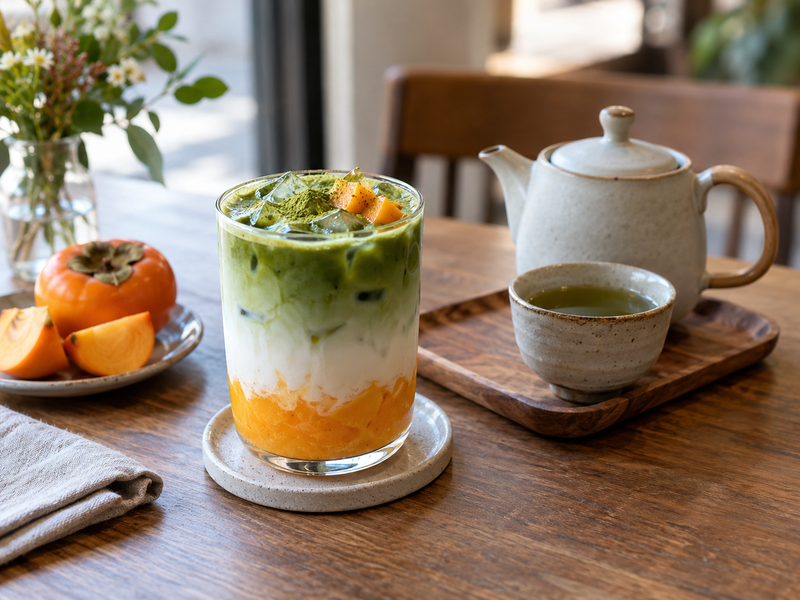
A persimmon matcha latte looks easy on a menu board: orange fruit beneath green tea. At the bar, fruit ripeness changes sweetness and pulp thickness, while the layer can disappear before the guest takes a photo. A café needs a measured purée, a matcha concentrate and an assembly order that works during a rush. Veggiekins’ persimmon matcha latte shows a home approach using ripe fruit. This guide builds a small commercial trial around fruit variability, repeatable service and clear buying records.
Contents
- 1. What should a persimmon matcha latte deliver?
- 2. Which persimmons should a café buy?
- 3. How should the fruit base be prepared?
- 4. What matcha preparation gives a clear tea flavor?
- 5. Which milk and sweetener work with persimmon?
- 6. How can baristas build reliable layers?
- 7. How should a hot version be tested?
- 8. What food handling and service checks belong in the SOP?
- 9. How should a café cost a seasonal drink?
- 10. What should a supplier and launch brief contain?
1. What should a persimmon matcha latte deliver?
Define taste before the color pattern
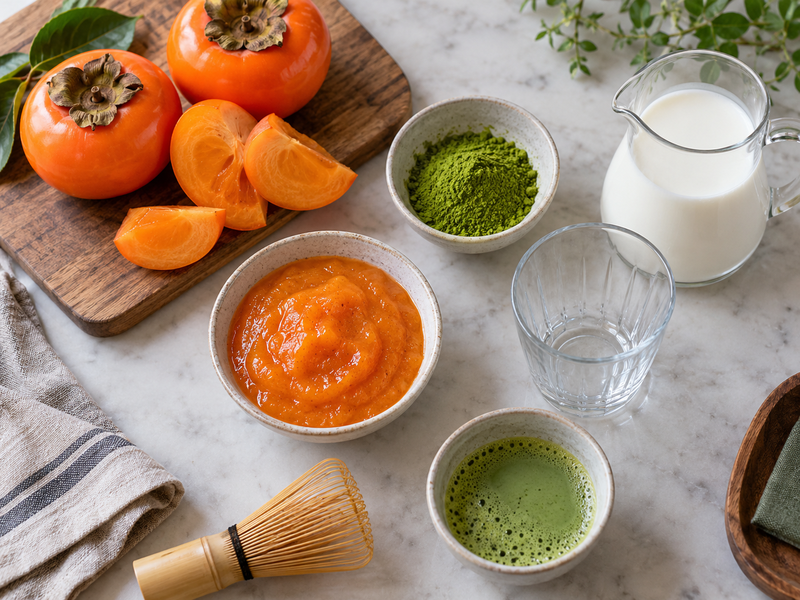
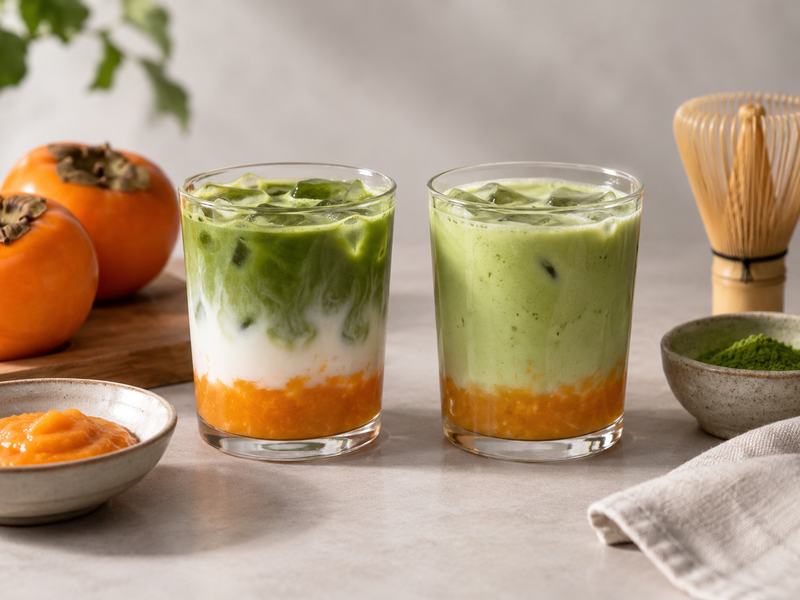
Persimmon contributes soft, honey-like fruit notes, while matcha brings tea and a gentle bitter edge. The drink should let customers taste both. Set a target serving size and decide whether fruit sits as a base, blends through milk or appears as a foam or topping. A layered drink has a visual promise: two colors should remain distinct through handoff, though mixing before drinking may give the best flavor. Photograph the accepted drink at pour and after the normal waiting time. Do not judge it only in the first few seconds.
Taste with and without a straw. A thick fruit layer can remain at the bottom, leaving the first sips as plain matcha milk and the last sips as sweet purée. Test a wide straw, a stir cue and a blended version. Note which one customers can drink easily. Record fruit flavor, tea clarity, sweetness and texture on separate lines, so a barista knows which part needs adjustment when a new fruit lot arrives.
| Drink check | Trial observation | Reason |
|---|---|---|
| Fruit flavor | Clear but not jam-like | Persimmon remains recognizable |
| Tea flavor | Noticeable after mixing | Matcha is more than color |
| Texture | Pourable, no large fibers | Baristas can portion it |
| Appearance | Layers survive handoff | Menu image matches service |
2. Which persimmons should a café buy?
Specify variety and ripeness
Persimmon varieties differ in shape, texture and behavior when ripe. A café should name the fruit it tested rather than writing “one persimmon” in a recipe. Buy a small range of ripeness from the intended supplier. Weigh the whole fruit, prepared flesh and waste separately. Mash or blend equal weights and compare sweetness, color, fiber and pourability. Use the variety and ripeness that provide a repeatable base, even if a softer fruit gives the best one-off photograph.
Write an incoming check. Staff can log supplier, delivery date, appearance and ripeness category. Reject damaged or spoiled fruit under the site food safety procedure. A very firm batch may need a different use or a wait period, but the café should not silently add extra syrup to every under-ripe purée. If seasonality changes sourcing, run a fresh taste and yield check. A purchasing forecast needs edible yield per kilogram, not only fruit price per case.
| Fruit lot | Prepared yield | Purée texture | Action |
|---|---|---|---|
| Trial A | Weigh after peel and trim | Smooth or fibrous | Accept or adjust |
| Trial B | Weigh using same method | Compare at same chill | Accept or adjust |
| Trial C | Note ripe-fruit loss | Compare color | Reject if inconsistent |
3. How should the fruit base be prepared?
Keep a controlled purée recipe
Peel and trim fruit using the site’s approved handling method, then weigh the flesh. Blend a small batch and pass it through a sieve only if the intended drink needs a smoother layer. Record the amount retained by the sieve; a smooth cup that wastes half the fruit may not be commercially sound. If adding sweetener or acid, weigh each addition and taste against an unsweetened control. Make a reference batch from the fruit lot approved in testing and keep a photograph of its flow from a measured spoon.
Check the base after chilling. Purée can thicken, separate or darken while it waits at the bar. Put trial portions in the actual service container, check them through the proposed service period and stir only by a documented method. Do not state a universal holding life for fresh fruit. Your ingredients, preparation, temperature and local food rules determine what can be served safely. A café with multiple stores can compare a centralized purée with in-store preparation; both need a written receipt and handling check.
4. What matcha preparation gives a clear tea flavor?
Build a consistent concentrate
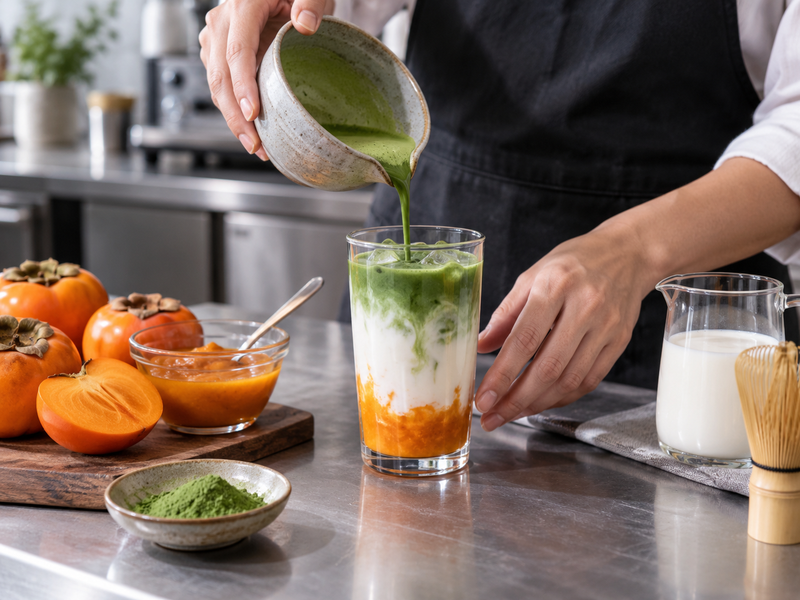
Weigh matcha per drink and whisk it with a measured amount of water. Record water temperature, mixing tool and time, then taste the concentrate in the full drink. A powder that tastes appealing in water can fade under fruit and milk. Compare at least two matcha lots at the same dose and service temperature. Do not choose solely by “ceremonial” language; the final cup is the application test. The site’s matcha-to-water ratio guide covers the preparation variable, while the latte trial should decide the final dose.
Watch settling and foam. Pour a test concentrate into a clear cup and observe clumps before adding milk. Sifting or pre-mixing can help, but use a repeatable step that staff can perform at peak service. If the matcha layer looks muddy against orange fruit, adjust concentration and pour order before adding color or extra sweetener. Keep one plain matcha latte control beside the persimmon version; it tells the team whether a tea issue comes from powder or fruit interaction.
| Tea trial | Hold constant | Score after mixing |
|---|---|---|
| Powder lot A | Fruit, milk, cup size | Tea clarity and color |
| Powder lot B | Same recipe and barista | Tea clarity and color |
| Higher dose | Same lot and fruit | Bitterness and cost |
| Different mixing tool | Same weights | Clumps and service time |
5. Which milk and sweetener work with persimmon?
Taste the complete cup
Dairy, oat and other plant drinks contribute different sweetness and body. Test the café’s existing milk choices before buying a new product for one seasonal item. Pour each over the same persimmon base and matcha concentrate, then taste immediately and after the normal wait. An oat drink may make the fruit taste sweeter; another milk may leave it thin. Record both taste and visual separation. A pretty layer that curdles or breaks during handoff is unsuitable for that combination.
Remove sweetness before adding more. Ripe persimmon can provide plenty of perceived sweetness. Start with an unsweetened fruit base and the café’s standard milk, then add measured syrup only if the finished drink needs it. Compare sweetness using the full cup after stirring, not a spoonful of fruit alone. Optional vanilla or cinnamon should be separate menu variants until the base recipe works. Each extra flavor complicates inventory and makes it harder to diagnose a weak matcha note.
6. How can baristas build reliable layers?
Specify order, ice and pour position
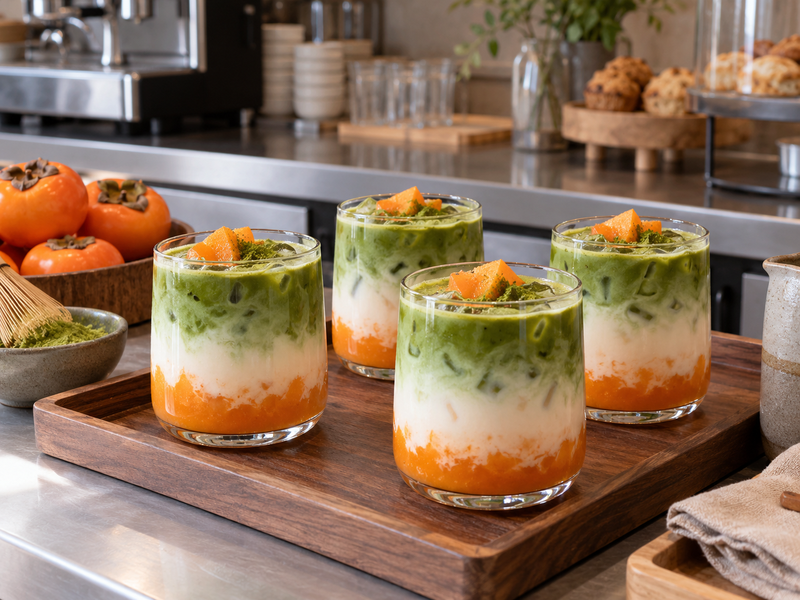
For an iced build, test fruit first, then ice and milk, with matcha concentrate poured last. The exact order must be confirmed with the chosen purée viscosity and cup shape. Weigh fruit per cup rather than guessing from a visual mark; pulp sticks to spoons and containers. Use one scoop size for ice and one pour vessel for tea. Photograph the cup after a normal barista makes it, not only after the development chef’s carefully staged pour.
Time a real order. During a rush simulation, make five drinks back to back and record assembly time, spilled purée, visible layering and guest-ready temperature. If a narrow cup slows the pour or makes fruit hard to mix, test another cup before revising the recipe. Write a service cue telling customers to stir before drinking if the layered version needs it. A cup that looks distinct but tastes unbalanced until shaken should not leave that instruction to chance.
| Build step | Defined measure | Common fault |
|---|---|---|
| Purée | Grams per cup | Uneven sweetness |
| Ice | Scoop and fill line | Dilution spread |
| Milk | Milliliters | Layer crowding |
| Matcha concentrate | Powder and water weights | Weak tea or clumps |
7. How should a hot version be tested?
Treat hot service as a new drink
Warming a fruit purée can change its texture and aroma, and hot milk may blend away the intended layers. Do not assume the iced recipe will scale directly. Make a small hot pilot with the same fruit lot and measured matcha dose. Test whether fruit belongs at the bottom or mixed into warm milk, and inspect the cup after several minutes. Taste it at the temperature customers will actually receive. If the drink separates, changes texture or hides the tea, keep the seasonal product iced rather than forcing a hot version onto the menu.
Check equipment and service load. A thick purée may not belong in a steam wand; it can complicate cleaning. Warm components using approved equipment and follow the site’s cleaning plan. Record time per order, cup comfort and any need for a spoon. Staff must know whether fruit is preheated, warmed per order or served cool under hot milk. Each choice changes speed and food handling. Approve hot service only after testing that full process during ordinary staffing.
8. What food handling and service checks belong in the SOP?
Follow the fruit from receipt to disposal
The standard operating procedure should say who receives fruit, how it is washed and trimmed, where prepared purée is stored, how containers are labeled and when they leave service. Use the site’s food safety plan for temperature and time limits. The FDA Food Code offers a US retail model, but applicable local rules and the exact recipe determine the controls. Do not copy a home recipe’s storage note onto a café batch without validation.
Train for a bad lot. Give baristas an approved taste or visual reference and a route for rejecting fruit base that smells off, separates unusually or does not pour as expected. Keep allergen information aligned with the chosen milk and toppings. If a guest asks for a milk swap, test that variant or state clearly which options are approved. A seasonal drink becomes manageable when a new hire can follow the recipe card and recognize when the ingredients are outside the accepted range.
| SOP point | Staff action | Record |
|---|---|---|
| Fruit receipt | Check variety and condition | Supplier and date |
| Purée batch | Weigh and label | Batch code and recipe |
| Service | Use approved portions | Waste and remake count |
| End of shift | Follow discard rule | Quantity and reason |
9. How should a café cost a seasonal drink?
Count edible fruit and remake risk
Start with the delivered cost of persimmons, then divide by usable flesh after trimming. Add matcha, milk, sweetener, cup, lid and labor. A trial drink that uses an attractive but scarce ripe fruit may have a volatile cost. Record how many fruits are too firm for immediate use and how much purée remains at close. That waste belongs in the seasonal forecast. Compare contribution per cup with another drink occupying the same menu slot, but do not ignore whether this one takes longer at the bar.
Price from the actual recipe. Staff may pour “a little more” fruit to maintain the orange layer as the batch thins. A weighed recipe prevents that drift and makes purchasing forecasts credible. Run one busy-shift trial and count remakes from poor layering, clumps and wrong milk. The cost sheet should reflect saleable drinks, not just ingredients measured in an ideal cup. After launch, review fruit yield and order mix weekly; a seasonal item needs faster adjustments than a permanent menu staple.
10. What should a supplier and launch brief contain?
Give purchasing a usable acceptance sheet
State the approved persimmon variety or substitute criteria, ripeness check, prepared yield, matcha lot and sensory target. Include cup size, ice and milk measures, serving temperature, assembly order, photograph and stirring instruction. Put the tested purée handling rule on the same page as the recipe. Purchasing can then compare fruit lots and tea suppliers against what the bar actually needs, rather than ordering from a product name alone.
Run a small launch. Offer the drink in a limited group of stores or shifts, then log sales, remakes, fruit waste and customer comments. If guests love the color but leave fruit at the bottom, the next revision should address drinkability. If tea flavor weakens with a new lot, recheck powder and dose before changing milk and syrup together. Approve a wider rollout when ordinary baristas can make a cup that tastes and looks like the reference sample during a queue.
FAQ
Q1: What is a persimmon matcha latte?
It is a matcha milk drink with a measured persimmon component, often served as a layered iced cup.
Q2: Which persimmon works best?
Test the available variety at a defined ripeness. Choose by prepared yield, pourability and flavor in the finished drink.
Q3: Should the fruit be sweetened?
Taste an unsweetened base first. Add measured sweetener only if the complete cup needs it.
Q4: Can cafés make a hot version?
Yes, but treat it as a separate process trial because heat changes fruit texture, layering and service time.
Q5: What should baristas record?
Record fruit batch, purée recipe, matcha dose, build order and reasons for remakes or rejected base.