
Matcha hummus needs a clear savory identity before it needs a stronger green color. Chickpeas, sesame paste, lemon, and garlic already compete for attention. A cafe or dip manufacturer can introduce tea without losing that balance by controlling the base texture first, then comparing small matcha additions in the portion customers will eat.
Contents: 1. What kind of matcha hummus will customers recognize | 2. Which chickpeas make a repeatable base | 3. What is a useful first matcha hummus trial | 4. How should tahini be selected and mixed | 5. How can matcha be dispersed without green specks | 6. How much lemon and garlic will the tea tolerate | 7. Should tea oil or another topping be added | 8. What changes when hummus moves into a tub | 9. How do you calculate cost and serving yield | 10. What should the supplier and kitchen approve together
1. What kind of matcha hummus will customers recognize?
Choose a dip, spread, or plated component
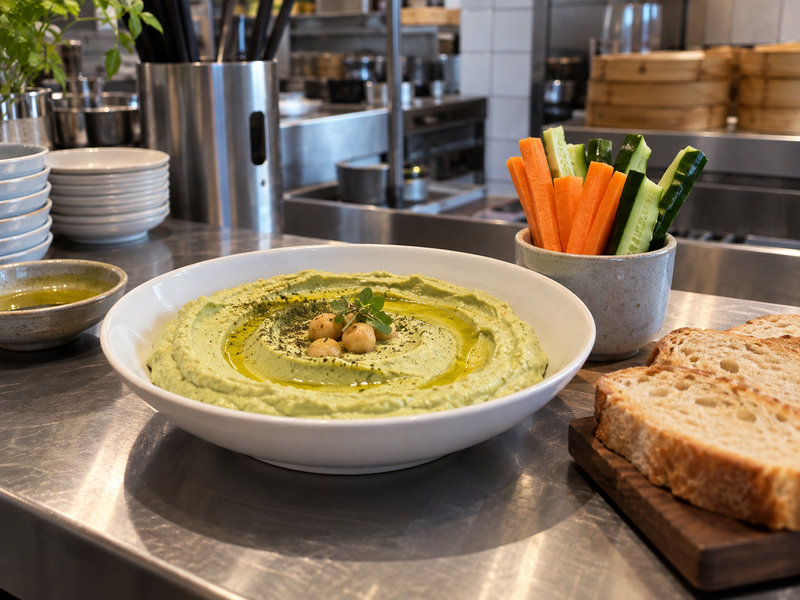
Decide whether customers will scoop the hummus with bread, spread it inside a sandwich, or eat it from a prepared bowl. Those uses demand different textures. A firm dip may tear soft bread, while a loose spread may escape from a sandwich during service. Define the serving temperature and companion food before asking tasters to choose a favorite.
Matcha Source’s own hummus recipe combines a chickpea and tahini base with matcha and also describes a tea oil finish. It offers two distinct ways to introduce the ingredient. For a commercial trial, compare the plain green dip before adding the oil so the team can identify where the tea flavor comes from.
| Intended use | Texture to examine | Service test |
|---|---|---|
| Sharing dip | Scoops without tearing bread | Use the actual bread or cracker |
| Sandwich spread | Holds a thin even layer | Cut a filled sandwich |
| Bowl component | Keeps its shape on the plate | Add neighboring ingredients |
| Retail tub | Scoops after the intended chill | Open the proposed package |
Write a short product description that names chickpeas and sesame. Customers should understand the food without assuming a sweet matcha dessert from its color.
2. Which chickpeas make a repeatable base?
Weigh the chickpeas after draining
Specify cooked chickpeas and a repeatable draining method. A can’s total net weight includes liquid, so it cannot stand in for the amount of chickpea solids entering a formula. Record the usable drained weight from several packs. If staff rinse the beans, record that step and the subsequent draining period as part of the preparation method.
Compare softness before processing. Firm chickpeas can leave visible fragments even after the tahini and liquid appear thoroughly mixed. Try crushing a few between a spoon and a plate. Use that observation to separate incomplete softening from an underpowered blender or a short mixing cycle. Avoid correcting every rough batch by pouring in more water.
For chickpeas cooked on site, document the cooked yield and the operator’s approved cooling and storage procedures. The dry seed weight is useful for purchasing, while drained cooked weight belongs in the blending formula. Keep both figures instead of allowing staff to switch between them.
Peeling may improve the texture you want, but it adds labor and loss. Run a peeled and unpeeled comparison with the same equipment. Approve that extra work only if the improvement remains noticeable when the dip is eaten with its actual accompaniment.
3. What is a useful first matcha hummus trial?
Make one base before splitting the samples
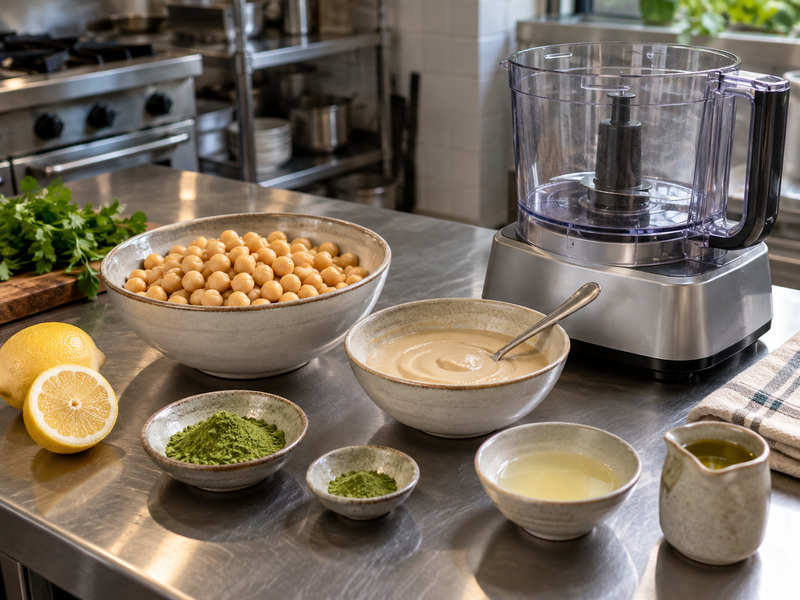
The quantities below describe an untested development batch. They are a starting suggestion, not a validated commercial formula. Blend the chickpeas, tahini, lemon juice, oil, salt, and part of the water. Add the remaining water only as needed to establish a smooth base, recording the amount used. Keep a plain sample for comparison.
| Base ingredient | Suggested quantity | Record during preparation |
|---|---|---|
| Cooked drained chickpeas | 400 g | Drain method and softness |
| Stirred tahini | 60 g | Product and sesame roast |
| Lemon juice | 25 g | Fresh or specified packed juice |
| Water | Up to 70 g | Actual amount incorporated |
| Olive oil | 20 g | Flavor intensity |
| Salt | 3 g | Final adjustment after tasting |
Leave garlic out of the first base comparison or add one measured amount to every treatment. A strong garlic note makes a subtle tea difference harder to judge. Divide the finished base into equal 100 g portions and propose tea additions of 0.2 g, 0.4 g, and 0.6 g, keeping another portion plain. Use a scale capable of measuring those small doses reliably.
Record tea as grams per portion of finished base. That prevents confusion when the total base yield changes with draining or water adjustment.
4. How should tahini be selected and mixed?
Check sesame flavor before blaming the tea
Taste the tahini on its own and in the plain hummus. A deeply roasted paste can dominate the finished dip even when its viscosity is convenient. Compare at least two suitable products if the first base has a persistent harsh finish. Keep the chickpea and lemon quantities unchanged during that comparison so the effect of sesame remains visible.
Soom lists roasted sesame seeds as the ingredient in its premium tahini. Other supplied pastes need their own specifications. Confirm the ingredient list, roast description, particle texture, and any handling instructions for the particular product you buy. Marketing terms such as smooth do not describe how it will behave in your processor.
Stir separated tahini thoroughly before weighing it. Taking mostly surface oil for one batch and dense paste from the bottom for another changes the formulation even if both portions weigh the same. Use a container and utensil that let staff mix the entire contents without leaving a compact layer behind.
Record the paste temperature and whether it pours or requires scraping. These observations help purchasing and production discuss a change of supply with something more precise than a complaint that the hummus feels different.
5. How can matcha be dispersed without green specks?
Reserve a little liquid for the tea
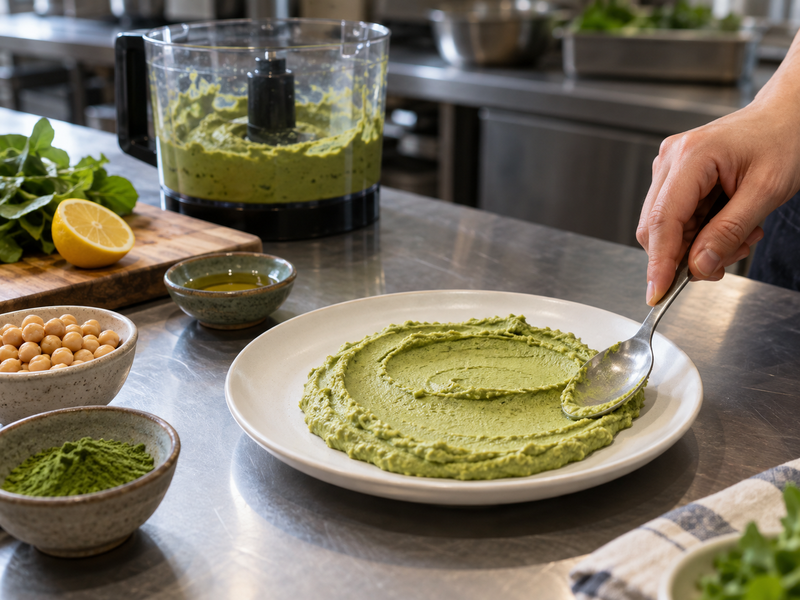
Sift the measured matcha before adding it. For a small trial, mix it with a weighed portion of the recipe water to make a smooth slurry, then incorporate it into the hummus. Count that water within the formula. Adding an unrecorded splash to each sample creates a texture difference that can be mistaken for a tea effect.
Compare a slurry method with direct dry addition if your processor can disperse fine powder well. Scrape the bowl walls and beneath the blades using the machine’s safe procedure. Examine a thin smear on a white plate rather than judging only the top of a deep mixing bowl. Small dark pockets are easier to see in that smear.
| Observation | First check | Controlled next trial |
|---|---|---|
| Dark green specks | Sifting and bowl scraping | Predisperse measured powder |
| Rough pale fragments | Chickpea softness | Change bean preparation |
| Excessively loose dip | Unrecorded water additions | Weigh all liquid |
| Uneven green bands | Mixing sequence | Add tea before final scrape |
Matcha contains fine leaf particles; the practical aim is even distribution. The site’s matcha solubility guide can help explain that distinction when equipment suppliers describe their mixing performance.
6. How much lemon and garlic will the tea tolerate?
Adjust seasoning after the tea comparison
Once a tea dose is provisionally chosen, compare lemon and garlic separately. A brighter lemon note may make the dip more appealing, but it can also move attention away from sesame and tea. Start with a plain spoonful, then taste with the intended bread or vegetables. The accompaniment can soften a sharp impression that seems excessive on its own.
Record garlic in a reproducible form and amount. Fresh cloves vary in size, and prepared garlic products have their own ingredient composition. A direction such as one clove leaves too much room for variation across a chain. Use weighed preparation quantities and describe whether the garlic is raw, cooked, or supplied as a paste.
Do not assume a lemon addition gives the dip a safe shelf life. Flavor adjustment and a validated preservation process are different tasks. If you intend to sell a chilled packaged product, send the final recipe and process to the responsible food-safety specialist for assessment. The bowl trial cannot answer that question.
Keep the final tasting sequence short enough for staff to describe each version clearly. Water and plain bread between samples can help the panel avoid carrying strong garlic or tea aftertaste into the next comparison.
7. Should tea oil or another topping be added?
Let the dip carry the first tasting
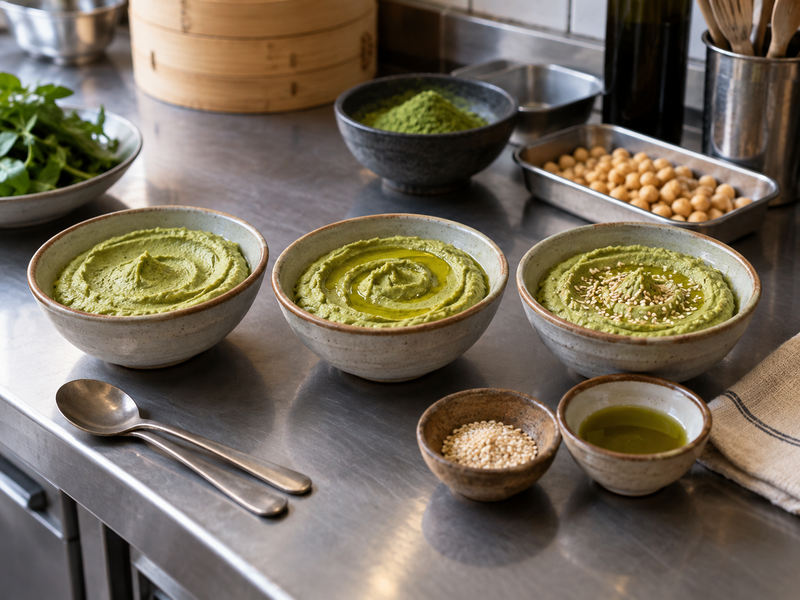
A tea oil finish can create a stronger aroma at the surface and a contrasting appearance. It also adds another component to prepare, portion, and explain to guests. Test the selected hummus without it first, then with a measured amount. A topping should earn its preparation time through a noticeable improvement in the complete serving.
Use an oil whose flavor suits the chickpea base. Strongly peppery oil may be attractive on its own yet combine awkwardly with a more bitter tea sample. Mix any tea oil immediately before the comparison and inspect whether powder gathers at the bottom. A small side bowl gives tasters control while making any settling easier to observe.
| Finish | Question for the tasting | Operational consideration |
|---|---|---|
| Plain surface | Is the dip complete alone? | Simplest portion control |
| Measured tea oil | Does it add pleasant tea aroma? | Mixing and separate dosing |
| Toasted sesame | Does the crunch suit the use? | Additional sesame component |
| Chopped herbs | Does freshness distract from tea? | Prep loss and short service window |
Keep dry toppings away from wet prep containers. Photograph the approved garnish quantity so a generous hand at the pass does not change the intended flavor or portion cost.
8. What changes when hummus moves into a tub?
Assess the packaged product independently
A dip that spreads smoothly from the processor may feel firmer after chilling. Check the product at its intended eating temperature using the actual serving utensil. Record the force needed to scoop, surface drying, any liquid separation, and whether the tea flavor still fits the base. These are observations for product development, not a validated expiry study.
Fill the proposed container to the intended net weight and assess how much remains on its walls when emptied. A narrow tub can make a firm hummus difficult to reach with bread or a short spoon. Review lid clearance as well; an oil garnish that touches the lid creates a different first impression when the customer opens the pack.
Give a food-safety specialist the completed formula, chickpea preparation, mixing conditions, filling method, packaging, and distribution plan. Do not borrow the expiry date of plain hummus or a commercially manufactured tahini. Your added water, tea, lemon, and handling steps produce a different finished product.
For cafe service, portion only under the operator’s approved hygiene and temperature controls. Use separate tasting portions during development instead of repeatedly sampling from the same container that staff intend to serve.
9. How do you calculate cost and serving yield?
Count the dip that reaches the customer
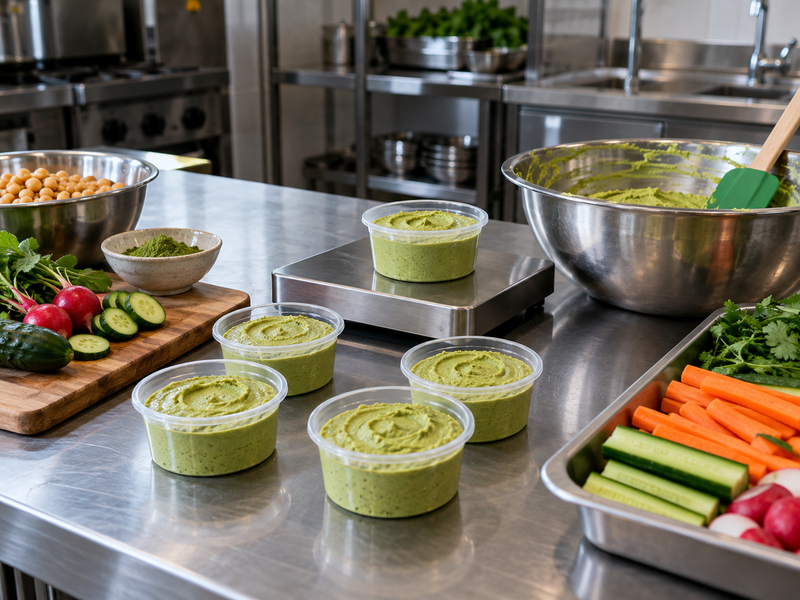
Weigh the finished batch, then the processor residue and any rejected sample. Chickpea pack yield, tahini left in containers, and hummus trapped beneath a blade all affect saleable output. Divide total ingredient cost by accepted net portions rather than by a theoretical recipe yield. Keep bread, vegetables, topping, and packaging visible as separate costs.
| Cost component | Record | Reason |
|---|---|---|
| Chickpeas | Drained usable weight | Liquid is not chickpea yield |
| Tahini | Actual paste issued | Container residue can be material |
| Matcha | Dose per base weight | Tea comparison needs equal basis |
| Accompaniment | Bread or vegetable portion | Often larger than garnish cost |
| Packaging and labor | Real filled units | Small tubs increase handling |
Check portions made by different staff using the same utensil. A spoonful with a deep decorative swirl can contain more product than a flatter presentation. Choose a target weight and practice achieving it quickly, then confirm it during the first service run.
If peeling chickpeas adds considerable labor, include that cost in the texture decision. A smoother dip may justify a premium plate, while a sandwich spread may not recover the same extra preparation expense.
10. What should the supplier and kitchen approve together?
Keep ingredient selection tied to the final dip
Prepare a brief with the chosen chickpea source, tahini, matcha dose, liquid balance, mixing equipment, serving format, and packaging. Send the matcha supplier a photograph of a thin smear and a filled portion, along with the flavor description. A request for the greenest powder alone gives little guidance about the savory balance you approved.
Confirm sesame information and any other allergens from the actual ingredients and shared handling process. Bread served alongside the dip may introduce a separate allergen profile. Treat a vegan or gluten-free menu claim as a finished-product decision supported by the ingredients and preparation controls, rather than copying a claim from an online recipe.
Have a second operator make the selected version from the written directions. Compare the final weight, smoothness, and portioning with the original trial. If the operator needs verbal instructions to correct the mixture, add those observations to the specification before the next run.
Ask Matcha Village for an unsweetened powder sample suited to savory applications. Supply the approved base recipe and comparison method, then schedule a side-by-side dip tasting with the current powder before agreeing on the first order.
Frequently asked questions
Q1: Can matcha be added to bought-in hummus?
Yes, as a small development trial. Weigh the base and tea, check the manufacturer’s handling instructions, and reassess the finished flavor. Adding ingredients changes the product, so its original storage guidance cannot automatically validate your altered dip.
Q2: Does the hummus have to contain tahini?
This article uses a chickpea and sesame base. A tahini-free product needs its own texture and flavor work. Describe the resulting dip accurately and reassess any allergen claim against the complete preparation process.
Q3: Why does the dip look speckled?
Check whether the fragments are matcha clumps or chickpea particles. Sifting and predispersing tea address one problem; softer chickpeas or a different processing method address the other.
Q4: Can extra lemon establish a longer shelf life?
No shelf-life conclusion follows from tasting more lemon. A qualified assessment of the finished recipe and process is required before making storage or expiry claims.
Q5: Should the strongest green sample win?
Only if its taste and texture also fit the intended serving. Approve the complete bite with bread, vegetables, or sandwich ingredients, and check that the tea remains pleasant after swallowing.