
Matcha tempura gives a restaurant two separate development decisions: how much tea belongs in the coating, and whether a finishing seasoning adds anything useful. A green batter can look promising before frying yet produce a heavy or bitter crust. Start with a reliable tempura base, compare small tea additions, and judge the food after the journey from fryer to customer.
Contents: 1. What should matcha tempura add to the menu | 2. Which matcha belongs in a frying trial | 3. How can you structure a small batter trial | 4. How should the food be prepared for coating | 5. What should the fryer test record | 6. How can the kitchen separate bitterness from frying faults | 7. Should matcha salt accompany the tempura | 8. How long does the crust remain acceptable in service | 9. What does a saleable portion really cost | 10. What should be approved before the first menu run
1. What should matcha tempura add to the menu?
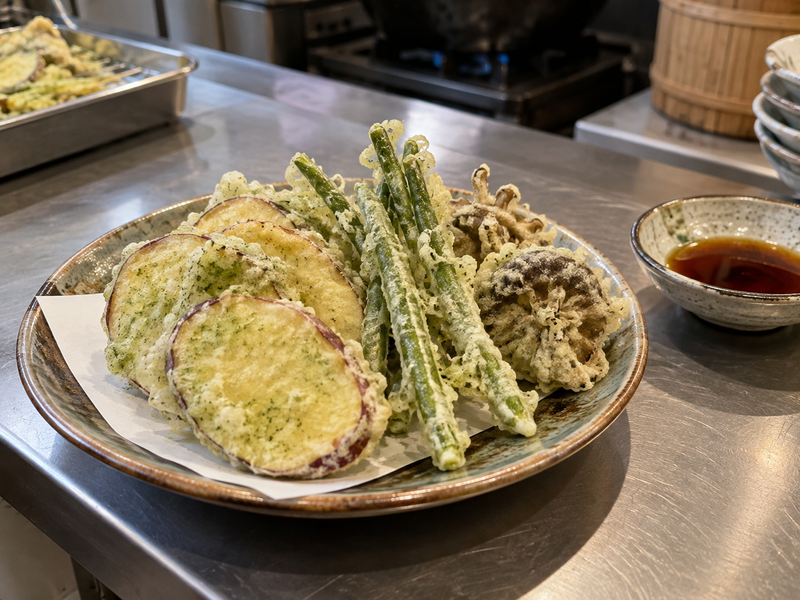
Describe the bite before buying powder
Choose one menu role first. A vegetable starter, shrimp topping for noodles, and mixed sharing plate need different portion sizes and service arrangements. Write down the intended crust thickness, tea intensity, and sauce before the first trial. Otherwise, a darker coating may win an internal photograph review while guests prefer the lighter version at the table.
The tea should remain recognizable alongside the food inside. Sweet squash, mild shrimp, and earthy mushrooms produce different flavor balances even when coated with the same batter. Compare them separately before presenting a mixed plate. Record which item carries the tea clearly and which needs a less assertive dose. A single batter may be convenient, but convenience should survive a tasting.
| Menu format | First decision | Useful observation |
|---|---|---|
| Vegetable starter | One vegetable or assortment | Crust versus vegetable sweetness |
| Shrimp portion | Piece size and count | Tea aftertaste with seafood |
| Noodle topping | Contact with broth | Speed of crust softening |
| Sharing plate | Sauce arrangement | Crispness of the final piece |
Keep the proposed name accurate. Tea in a separate salt gives a different eating experience from tea throughout the crust. Menu photographs should show the version customers will receive.
2. Which matcha belongs in a frying trial?
Compare powders in cooked coatings
Request unsweetened matcha with a clear ingredient statement. A latte blend may contain sugar, milk ingredients, or other components that change browning and flavor. Do not substitute it because the color looks similar in the bag. Note the supplier, product code, and lot on the trial sheet so a successful coating can be reproduced with the same material.
Jade Leaf’s shrimp tempura recipe demonstrates adding sifted matcha to a prepared batter. It establishes a practical recipe format; it does not validate your fryer, shrimp size, or commercial holding conditions. Use that distinction when setting expectations with purchasing staff and the kitchen team.
Compare candidate powders at the same addition rate before changing their dose. Fry samples in a consistent sequence and taste the plain coating as well as a complete bite. Note gritty spots, harshness, and color after cooking. Those observations are more useful than selecting a product from a grade name alone. Ask for a second sample from a later lot before approving a recurring purchase, particularly if the visual difference is central to the dish.
3. How can you structure a small batter trial?
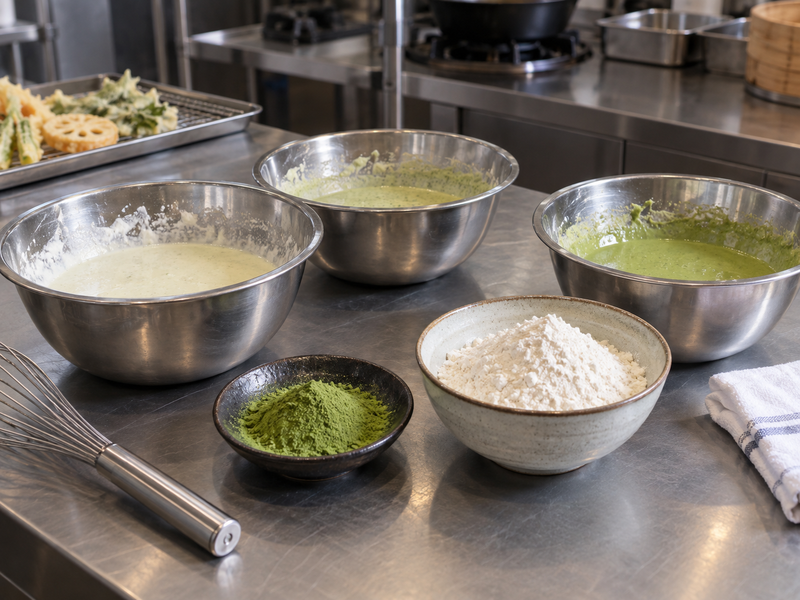
Keep the base constant
The following is a proposed screening plan, not a tested recipe. Use your existing approved tempura batter or prepare a commercial mix according to its current pack directions. Weigh a small amount of dry base for each treatment. Keep the specified water quantity constant during this first comparison, then conduct a separate adjustment if the tea changes coating pickup enough to affect the result.
| Trial | Dry batter base | Matcha addition | Purpose |
|---|---|---|---|
| Control | 100 g | 0 g | Establish ordinary crust behavior |
| Light tea | 100 g | 1 g | Check subtle aroma and color |
| Medium tea | 100 g | 2 g | Compare tea presence |
| Stronger tea | 100 g | 3 g | Identify bitterness or heavy coating |
These amounts express additions to the dry base, not percentages of finished fried food. Sift the matcha with a small part of the dry mixture before combining the rest. Weigh batter before and after coating a fixed number of prepared pieces to estimate pickup. Include spills and discarded batter separately rather than treating everything removed from the bowl as edible coating.
Cook a small comparison first. A failed strong sample should cost a few portions, not an entire lunch service.
4. How should the food be prepared for coating?
Standardize the pieces underneath
A coating trial becomes difficult to interpret when one vegetable slice is twice as thick as another. Set a cutting guide and check several pieces against it. For shrimp, document purchased size, preparation, and whether the tail remains attached. For mushrooms, agree on whole caps, halves, or small clusters. Those choices affect coating coverage and handling at the fryer.
Remove excess surface water before dipping. Keep preparation trays organized so dry pieces are easy to identify and raw seafood does not share utensils with ready-to-eat garnishes. Apply any dusting step consistently. A cook who shakes off flour thoroughly and another who leaves a heavy layer can produce different crusts from the same wet batter.
Use a few uncoated pieces to check whether the chosen cut cooks satisfactorily under the kitchen’s approved process. Green color on the exterior cannot confirm that shrimp or dense vegetables are ready inside. If a piece needs an unsuitable frying time, change its cut or preparation before increasing the tea. That keeps cooking problems separate from flavor development.
Record usable weight after trimming. A supplier comparison based only on incoming kilograms can hide differences in shell, stalk, damaged material, or vegetable peel.
5. What should the fryer test record?
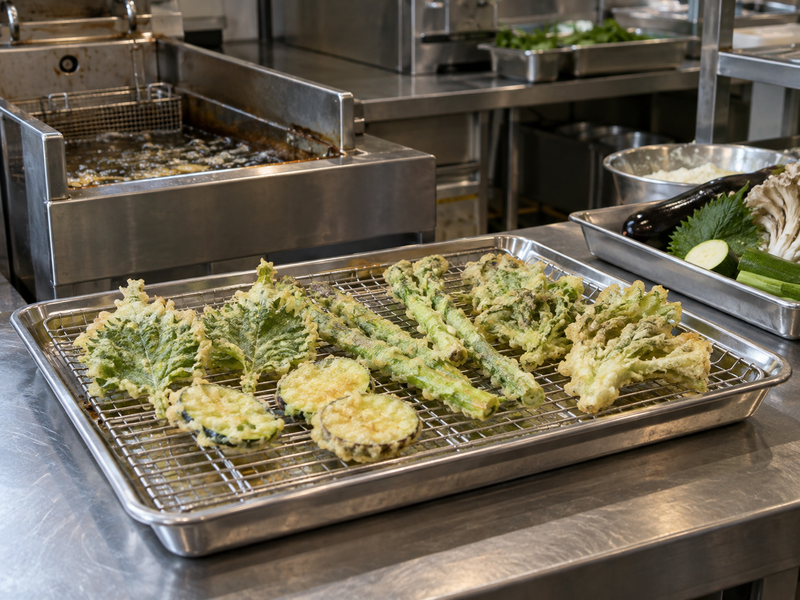
Measure the conditions around each batch
Record actual oil temperature with suitable equipment, batch load, cooking time, and recovery between batches. Use the kitchen’s validated food and equipment procedures rather than treating one online temperature as universal. A full basket and a few loose pieces can behave differently even if the thermostat display begins at the same setting.
Kikkoman’s foodservice method specifies ice water for its batter mix, restrained mixing, and drying the food before coating. Those instructions belong to that product and method. Read your own mix specification before copying a water ratio or changing the handling routine.
| Record | Why it belongs on the sheet | Compare consistently |
|---|---|---|
| Oil reading before loading | Describes the starting condition | Same measuring position |
| Food mass in each batch | Identifies loading differences | Same prepared item |
| Batter age and temperature | Separates mixing from frying effects | Fresh comparison batches |
| Drain arrangement | Affects surface oil and steam | Same rack and spacing |
| Delay before tasting | Represents service conditions | Defined handoff interval |
Photograph the crust under the same lighting after draining. Keep a texture description beside the picture. A crisp surface and a soft coating can look nearly identical in a small menu image.
6. How can the kitchen separate bitterness from frying faults?
Taste a plain control beside the tea sample
Taste the control first, followed by the lowest tea addition. If every sample has an unpleasant aftertaste, investigate the base ingredients and frying conditions before blaming matcha. If the control is clean and only the strongest green coating tastes harsh, reduce the tea and repeat the comparison. Keep sauce out of this first tasting so sweetness or salt does not conceal the cause.
A dark crust also needs a diagnosis. Compare actual cooking time, the ingredients in the batter mix, and the condition of the frying oil. Matcha color alone is not a reliable guide to browning. Do not correct an overcooked sample by adding more green powder to the next batch; that creates another variable without fixing the cooking process.
Ask tasters to describe the finish after swallowing. Tea bitterness, a stale oil note, excess salt, and a thick floury coating require different corrections. Give each person an unmarked sample and a short form before discussing preferences. The most senior cook should not announce a favorite first. Keep rejected pieces with their trial code until the comparison finishes so written defects remain easy to identify.
7. Should matcha salt accompany the tempura?
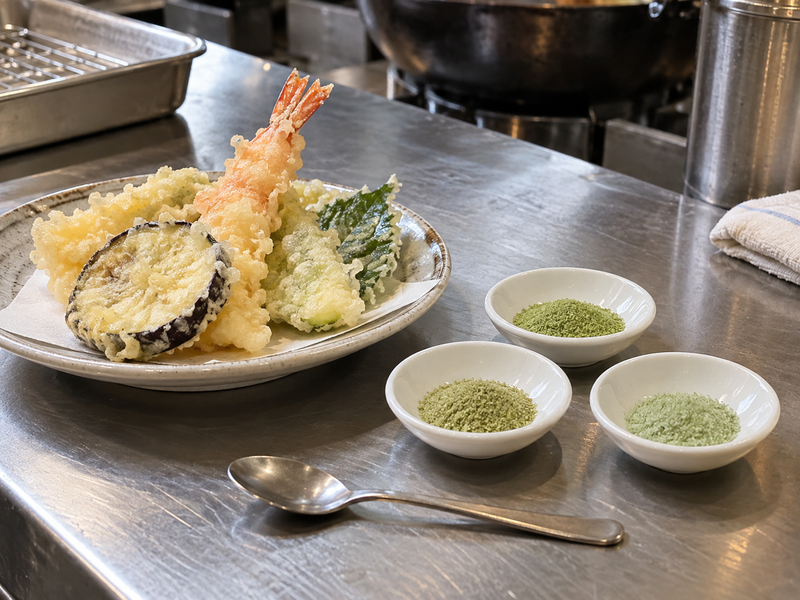
Test finishing seasoning separately
A separate seasoning lets the guest control salt and keeps an unfried tea component available at the table. Marukyu Koyamaen’s application leaflet includes matcha salt as a tempura accompaniment. That provides a documented application, not a required ratio for your menu. Your tea, salt grain size, sauce, and portion all change the result.
For an unvalidated taste comparison, prepare small mixtures with different proportions while serving the same amount of seasoning beside each plate. Record their formulas by weight. A fine salt and a coarse flake salt should be evaluated as separate ingredients because equal spoonfuls do not establish equal salt delivery.
| Serving approach | Advantage to test | Possible drawback |
|---|---|---|
| Tea in batter only | Consistent coating flavor | Heat changes the final appearance |
| Plain batter with tea salt | Guest controls seasoning | Uneven application between bites |
| Tea batter plus tea salt | Two points of tea flavor | Excess bitterness or salt |
| Sauce served separately | Guest chooses dipping amount | Extra container and plating time |
Keep the seasoning dry during service. Give it a dedicated utensil and protect it from fryer steam. Replace contaminated portions rather than returning them to the main container.
8. How long does the crust remain acceptable in service?
Follow the actual route to the guest
Test the dish at the fryer, after plating, and after the normal handoff to a table or pickup counter. This is a quality observation exercise, not a food-safety holding allowance. The kitchen must still follow its approved controls for cooked food. Record elapsed time and describe the crust without turning a small trial into a guaranteed delivery promise.
Place sauce, citrus, and wet garnishes where they will sit in the final dish. A dry test rack cannot predict contact with a dressed salad or steaming noodles. Check whether the underside stays crisp and whether stacked pieces trap moisture. Small changes in plate arrangement may preserve texture better than increasing the batter thickness.
For takeaway, compare the actual intended containers. Let staff carry the packed portion through a realistic pickup sequence, then open it and taste. Inspect condensation and where the coating touches the box. A vented package needs its own assessment for leaks, heat retention, and transport. If the crust consistently fails during delivery, restrict the dish to immediate restaurant service until the problem is resolved.
9. What does a saleable portion really cost?
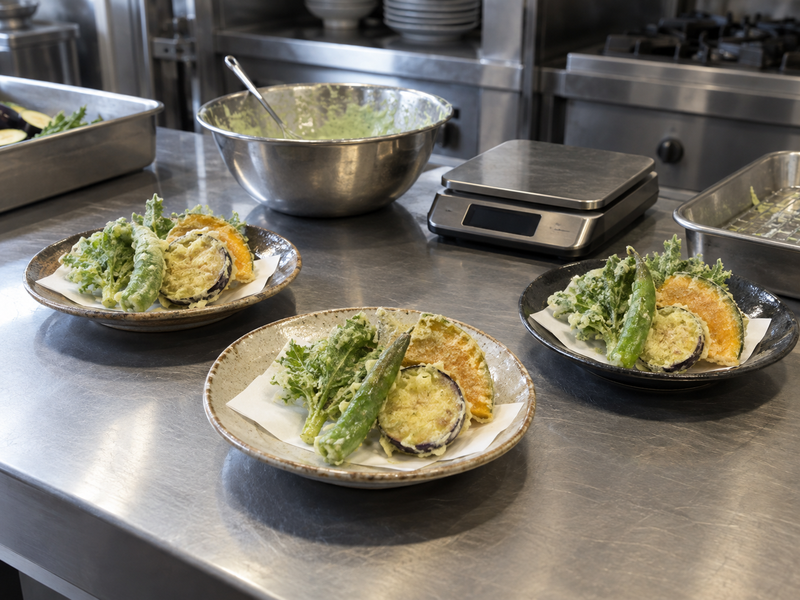
Include batter waste and rejected pieces
Calculate matcha cost from the amount issued to the trial, then divide by acceptable portions produced. Using only the powder attached to the finished food ignores wet batter discarded at the station. Track that loss before negotiating a cheaper powder; a smaller mixing batch may reduce cost without changing the ingredient.
| Cost item | Measurement | Common omission |
|---|---|---|
| Prepared vegetables or shrimp | Usable grams per portion | Trimming and damaged pieces |
| Batter ingredients | Issued minus recoverable dry stock | Discarded wet batter |
| Matcha seasoning | Weighed portion issued | Unused side portions |
| Frying operation | Allocated oil and labor | Trial rejects and recovery time |
| Packaging | Actual chosen pack | Separate sauce cup |
Count saleable pieces using the same appearance and texture criteria established during tasting. Broken fragments may have another approved use, but they should not quietly inflate the yield for a full-price tempura plate. Keep any recovery calculation separate.
Compare the cost of a small regular portion with a larger sharing plate. A larger plate may need more time at the pass and lose crispness before the final piece is eaten. The menu price must support the service format customers can enjoy.
10. What should be approved before the first menu run?
Issue a short working specification
Give the kitchen one approved combination of food cut, batter base, matcha product, dose, mixing method, and serving arrangement. Attach photographs of acceptable crust thickness and an example of a rejected heavy coating. Include equipment settings and checks already validated by the foodservice operator. Keep development notes elsewhere so cooks do not have to choose among obsolete versions.
Confirm ingredient information for the actual mix and accompaniments, including wheat, egg, seafood, sesame, or soy where relevant. A green coating does not change those requirements. The purchasing team can use the site’s matcha certificate of analysis guide to organize lot documentation, while the chef signs off cooked performance.
Run the selected dish with the staff member who will prepare it during ordinary service. Watch the quantity mixed, time at the pass, and finished portion count. Ask that cook to identify the approved powder without relying on bag color or a handwritten nickname.
Send Matcha Village the chosen batter application, current dose, sample photographs, and expected monthly demand. Request suitable powder samples and repeat the approved cooking comparison before placing the first production order.
Frequently asked questions
Q1: Can a sweetened matcha latte mix be used in tempura?
It needs a separate development trial. Sugar and any milk ingredients change the coating and its ingredient declaration. Unsweetened matcha gives a clearer starting point when the aim is to compare tea dose alone.
Q2: Does more matcha guarantee a greener fried crust?
No. Judge the finished coating because batter composition and frying conditions also affect appearance. A stronger addition can introduce bitterness before producing the visual result you want.
Q3: Should the batter be tasted before frying?
Use cooked comparison pieces for sensory approval. Raw batter is unsuitable for a tasting exercise. Keep raw preparation utensils away from finished tempura and ready-to-eat garnishes.
Q4: Can one batter cover vegetables and shrimp?
Possibly, after separate trials for each item and an appropriate allergen workflow. Piece shape, preparation, and cooking needs differ. A convenient shared recipe still needs product-specific checks.
Q5: Can the trial establish a takeaway holding time?
It can describe quality under the conditions tested. It cannot establish a general safety limit or guarantee every delivery route. Approve packaging and service controls with the operator responsible for the menu.