
Matcha gnocchi gives a restaurant a savory way to serve green tea, but the dough must still behave like good gnocchi. Potato moisture, flour addition and portion size affect the plate as much as the tea. A bright raw dough is not enough evidence to place a standing order for an ingredient.
For a cafe kitchen, pasta producer or matcha buyer, development should follow the product from cooked potato to the final sauced portion. The following approach separates those decisions and proposes small comparisons. Its quantities are development starting points, not a tested recipe or a commercial process specification.
Contents: 1. What kind of matcha gnocchi will your kitchen sell | 2. How should you control the potato component | 3. What small matcha trial can you run first | 4. How do you mix without hiding dough problems | 5. Which shapes are practical for repeated service | 6. How should you assess cooking and pan finishing | 7. Which sauces let the tea remain recognizable | 8. What changes when portions are prepared ahead | 9. How should a buyer compare matcha lots and costs | 10. What should the final kitchen specification contain
1. What kind of matcha gnocchi will your kitchen sell?
Define the dough before buying ingredients
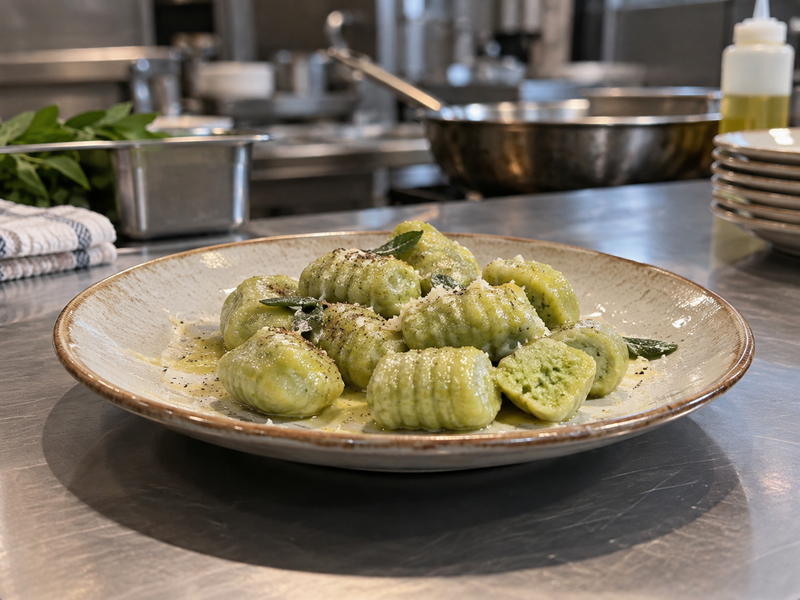
A potato and wheat dough, a ricotta dough and a dough made with alternative flours are different products. They need separate handling instructions. Naming all three simply green gnocchi on an internal worksheet makes it too easy for a cook to substitute the wrong flour or add water to solve the wrong problem.
Rezel Kealoha’s matcha gnocchi recipe uses potato with almond flour and arrowroot. That is a useful example of a tea flavored dough, but it does not establish how a wheat flour version will perform. Record your own base clearly, including egg, flour type and any cheese.
| Product decision | Kitchen consequence | Buying question |
|---|---|---|
| Wheat potato dough | Flour and mixing matter | Which flour specification? |
| Alternative flour dough | Binding needs separate trials | Which starch and nut ingredients? |
| Plain boiled service | Surface remains exposed | Is the tea flavor pleasant alone? |
| Boiled then pan finished | Another heat step changes appearance | Does the center stay tender? |
Choose the service style before judging samples. A delicate dough intended for immediate plating may be unsuitable for a busy station that holds portions and finishes them in a pan. Ask the chef to identify the actual handling sequence, including any chilled or frozen stage.
2. How should you control the potato component?
Weigh the usable cooked potato
Buying a kilogram of potatoes does not mean a kilogram enters the dough. Peeling, cooking and trimming change the usable weight. Write the formula against prepared potato weight, then record the raw purchase weight separately for costing. This avoids silently increasing flour whenever a batch happens to contain wetter potatoes.
Choose one potato supply and one cooking method for the first comparison. Record whether the potatoes were baked, steamed or boiled and whether they were peeled before cooking. These details matter more than an instruction that merely says to cook until soft. Keep the preparation sequence reproducible when a second employee takes over.
King Arthur Baking’s potato gnocchi method weighs a prepared portion after cooking and uses a ricer or light mashing. Use that distinction in your records: raw potato intake and the potato entering the dough are separate measurements. Its complete recipe is its own formulation, not a validation of added matcha.
Spread the prepared potato as your kitchen procedure allows and observe visible moisture before mixing. Do not leave it at room temperature indefinitely to chase a drier texture. If one delivery repeatedly needs a different flour addition, investigate the potato and preparation before blaming the tea supplier.
3. What small matcha trial can you run first?
Change one addition at a time
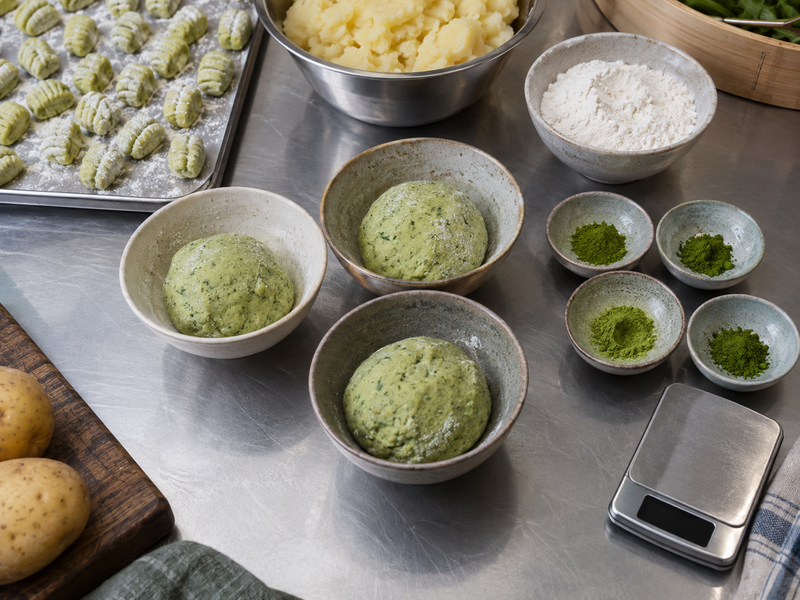
Begin with a potato dough that your kitchen already cooks successfully. Make four equal base portions with the same cooked potato, flour, egg and salt. The suggested additions below are an unvalidated comparison, intended to find a useful flavor direction. They are not a claim that every dough can accept the largest dose without adjustment.
| Trial | Prepared dough before tea | Matcha addition | Main observation |
|---|---|---|---|
| Control | 250 g | 0 g | Normal handling and cooked texture |
| Low | 250 g | 1 g | Detectable tea after sauce |
| Medium | 250 g | 2 g | Balance of flavor and tenderness |
| High | 250 g | 3 g | Bitterness and extra dryness |
For better dispersion, reserve part of the formula flour and blend the tea into it before final incorporation. Apply the same flour reservation to the control. Avoid repeatedly kneading a finished dough solely to remove dark specks; that changes the handling history of the higher dose samples.
Record additions by weight, not by spoonful. Keep bench flour separate from formula flour and weigh its use if sticking becomes a problem. A sample that needs a large extra dusting may taste acceptable while carrying a much higher flour content than the worksheet suggests.
4. How do you mix without hiding dough problems?
Use visible endpoints
Sift clumped matcha before combining it with the dry ingredient portion. Distribute that mixture across the potato rather than tipping a dense mound into one corner. Fold and gather using a consistent method. The useful endpoint is a cohesive dough with reasonably even color, not an arbitrary number of minutes copied from a larger mixer.
If the dough tears or smears, write down when it happened. A wet smear at the first fold and cracking after repeated dusting are different observations. Adding flour can make both easier to handle temporarily while producing different cooked results. Reserve enough material to cook a sample before making a large correction.
Avoid tasting raw dough to judge tea strength. The FDA’s flour handling guidance explains why uncooked flour requires care. Evaluate flavor in properly cooked samples and keep raw dough tools separate from ready to eat garnishes.
A production mixer also needs its own trial. A batch that gathers quickly by hand may spend too long against the bowl in a machine. Record batch mass, attachment, speed and stop point. Photographs of the dough at that point are more useful to a new operator than a description such as soft but firm.
5. Which shapes are practical for repeated service?
Compare handling as well as appearance
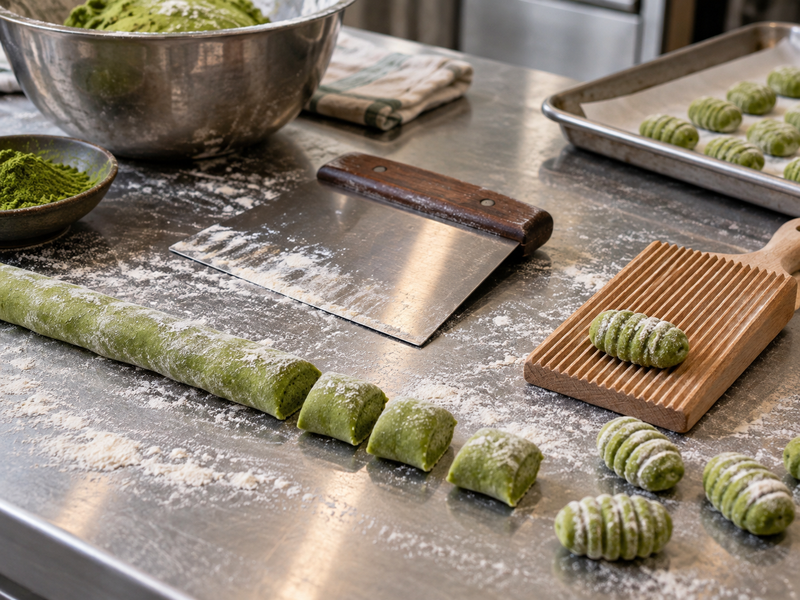
Ridges can make the product recognizable, but they also add labor. Plain cut pillows may suit a quick lunch service; individually rolled pieces may suit a smaller plated course. Test both using the same dough so the decision reflects shaping work rather than a hidden formula change.
| Shape variable | What to record | What a failure suggests |
|---|---|---|
| Rope thickness | Diameter and variation | Uneven cooking across pieces |
| Cut length | Sample piece weights | Inconsistent portion counts |
| Ridge pressure | Splitting or sticking | Dough or dusting adjustment |
| Tray spacing | Contact between pieces | Clumping during transfer |
Use a scale to check several pieces from the beginning, middle and end of a shaping run. A neat tray can still contain a substantial weight spread. For costing, portion by the agreed weight; for plating, also check whether the number of pieces looks consistent enough for the menu photograph.
Keep dusting modest and documented. Loose flour left on the outside can cloud cooking water and alter the surface when sauce is added. Do not solve a tray release issue by coating every piece heavily without recording that addition. Try the tray surface and handling sequence as separate variables.
6. How should you assess cooking and pan finishing?
Cut open the test pieces
Use the same pot, water volume and batch load for the first comparisons. Record when pieces enter the water, when movement changes and when they are removed. Floating is an observation; it does not replace assessing whether your particular dough and piece size have cooked through under the approved kitchen procedure.
Cut several cooked pieces and inspect the centers. Look for an even texture without a dense, pasty core. Then taste a safely cooked piece without sauce. This reveals whether the tea is bitter, the dough is heavily floured or the potato character has disappeared before a strong topping can conceal those defects.
If pan finishing is planned, give every sample the same draining method and pan treatment. A wet surface and a dry surface will behave differently on contact with fat. Record sticking, breakage and whether browned areas overwhelm the green appearance. The most colorful boiled sample may not remain the preferred sample after this second step.
Repeat with the load expected during service. A quiet test with six pieces says little about a pot filled during a rush. Watch how quickly the cooking conditions recover and whether staff can remove a batch cleanly without breaking pieces or leaving small fragments behind.
7. Which sauces let the tea remain recognizable?
Taste the whole forkful
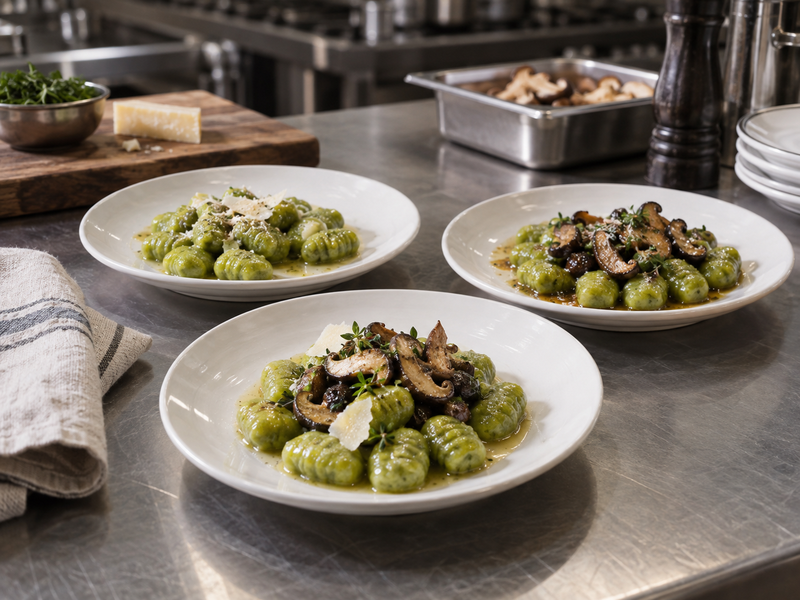
Choose a simple sauce for the initial assessment, then introduce the intended garnish. Butter, miso, cheese, mushrooms and toasted seeds can all contribute strong flavors. Their usefulness depends on the final balance, not on whether each ingredient sounds compatible with green tea in isolation.
| Sauce direction | Useful question | Adjustment to test |
|---|---|---|
| Light butter coating | Can guests identify tea? | Reduce coating weight |
| Miso butter | Is salt dominating? | Compare a lower miso addition |
| Cream sauce | Does tea disappear? | Alter sauce to gnocchi ratio |
| Mushroom topping | Is the plate too earthy? | Simplify garnish quantity |
Serve equal cooked gnocchi weights with measured sauce portions. Ask tasters to assess a complete forkful, then compare a piece from the edge of the plate. Sauce pooling can make those bites very different. A thick coating may also conceal the product color that persuaded the customer to order it.
Do not add more matcha automatically when a heavily seasoned sauce masks it. A lighter sauce, a smaller garnish or a different serving arrangement may solve the problem without increasing bitterness. Keep any finishing tea powder as a separate trial; dry powder on the surface creates a different eating experience from tea mixed into the dough.
8. What changes when portions are prepared ahead?
Follow the intended storage route
Freshly shaped, chilled and frozen gnocchi need separate evaluations. Label samples by preparation route and cook them according to a documented kitchen procedure. Do not assume the timing that works for a freshly made piece also works for a frozen piece with the same external dimensions.
Observe whether pieces adhere to the tray, crack during transfer or shed flour into the cooking water. Keep a count of broken pieces alongside the saleable yield. A method that produces attractive samples but loses many pieces during handling can become expensive before ingredient prices enter the discussion.
For a packaged product, involve the responsible food safety and technical team in defining storage conditions, cooking instructions and shelf life. A recipe article cannot establish those specifications. Packaging, hygiene, distribution temperatures and the finished formulation all need consideration beyond a successful kitchen tasting.
Compare appearance under the same light before and after the actual preparation route. Photograph cut centers as well as the outside. If a supplier sample looks green in the bag but performs poorly after freezing and cooking, send those observations with the formula and process details. That gives the supplier a concrete application problem to investigate.
9. How should a buyer compare matcha lots and costs?
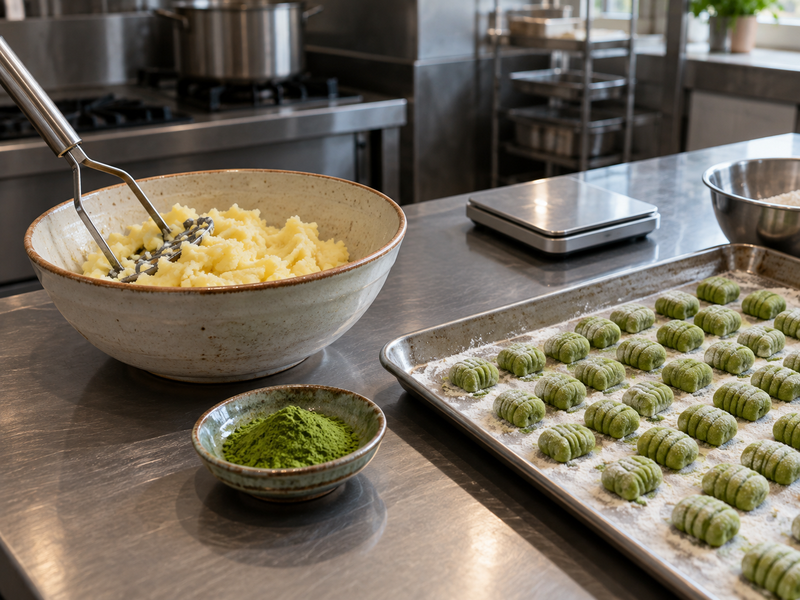
Cost the saleable plate
Request samples with lot identification and available specification documents. Evaluate each in the same dough and cooking sequence. The Matcha Village certificate of analysis guide provides a starting point for discussing documents; the purchase decision still needs results from this particular food application.
| Cost component | Measure in the trial | Reason to retain it |
|---|---|---|
| Prepared potato | Usable weight from purchase | Captures peel and cooking losses |
| Tea | Grams per dough batch | Connects dose with ingredient price |
| Shaping labor | Minutes per saleable portion | Compares ridged and plain pieces |
| Breakage | Rejected cooked weight | Exposes handling loss |
| Sauce and garnish | Actual plated weights | Prevents undercosting the dish |
Calculate tea cost from kilograms purchased and grams actually used. Then divide the full ingredient cost by saleable portions, not the theoretical number cut from the dough. A lower priced powder that requires a larger addition or causes a less acceptable flavor may offer little practical saving.
Retain a reference sample under the supplier’s recommended conditions and repeat the application check when the lot changes. Ask whether origin, packing format or specification has changed rather than assuming every difference comes from kitchen technique.
10. What should the final kitchen specification contain?
Write for the next cook
Create a one page production sheet with prepared potato weight, dry ingredients, tea lot, egg amount if used, and the handling sequence. Include the permitted adjustments and identify who can approve them. A note saying add flour as needed is too open ended for a product whose texture depends on that choice.
Add shaping dimensions, portion weight, cooking procedure and the actual sauce portion. Keep a photograph of an acceptable cut center with the sheet. Staff should be able to compare a batch against an observable result without relying on the person who developed it being present every shift.
Schedule a short service rehearsal before printing the menu. Have another employee prepare and finish the dish while the developer observes without correcting every movement. Record the points that need explanation: tray release, pot loading, draining and sauce pickup often deserve clearer instructions than the mixing stage.
For the next supplier discussion, send the selected tea dose, cooked appearance, flavor notes and forecast based on realistic portion sales. Request the smallest useful application sample from the proposed production lot, then prepare that sample through the complete approved route before accepting a larger order.
Frequently asked questions
Q1: Can I add matcha to an existing gnocchi recipe?
Yes, as a development trial. Start with a small weighed addition and compare cooked pieces with the unchanged base. Added powder may alter handling as well as flavor.
Q2: Is matcha gnocchi automatically gluten free?
No. Wheat flour versions contain gluten. Alternative flour recipes need their own ingredient, cross contact and labeling review before any claim is made.
Q3: Should the matcha go into the dough or sauce?
Either route can be tested, but they produce different products. Keep the dose and location explicit so cooks do not add the full quantity twice.
Q4: Can floating tell me the gnocchi is finished?
Use it as a cooking observation, then follow the validated kitchen procedure for that formula and size. Inspect cooked centers during development rather than relying on floating alone.
Q5: Can a cafe buy finished frozen portions?
It can discuss that format with a suitable manufacturer. Confirm specifications, handling instructions, distribution conditions and lot samples; a fresh kitchen recipe does not establish a frozen product specification.