
A matcha highball can give a bar a recognizable tea note in a light, fizzy whiskey drink. Getting a single attractive glass is easy; serving the same drink on a busy Friday is harder. Matcha can clump, settle, stain ice unevenly or disappear behind sweetener. Soda loses its lift while a drink waits for pickup. These ten checks turn a menu idea into a measured bar trial, a service method and an ingredient purchase that an operator can repeat. The site’s matcha cocktail overview covers broader drink options; this guide focuses on a whiskey-and-soda highball. It makes no wellness claim about an alcoholic drink.
Table of contents
- What should the matcha highball promise on the menu?
- Which matcha should the bar test with whiskey and soda?
- How should matcha be dispersed before the drink is built?
- What starting formula makes a useful bar trial?
- How can the bartender keep the highball lively?
- How should whiskey, citrus and sweetness be balanced?
- What happens to the glass during a ten-minute service hold?
- How should ingredients be prepped and held for service?
- What does each saleable highball actually cost?
- What should a bar ask a matcha supplier to provide?
1. What should the matcha highball promise on the menu?
Define the guest experience before the garnish
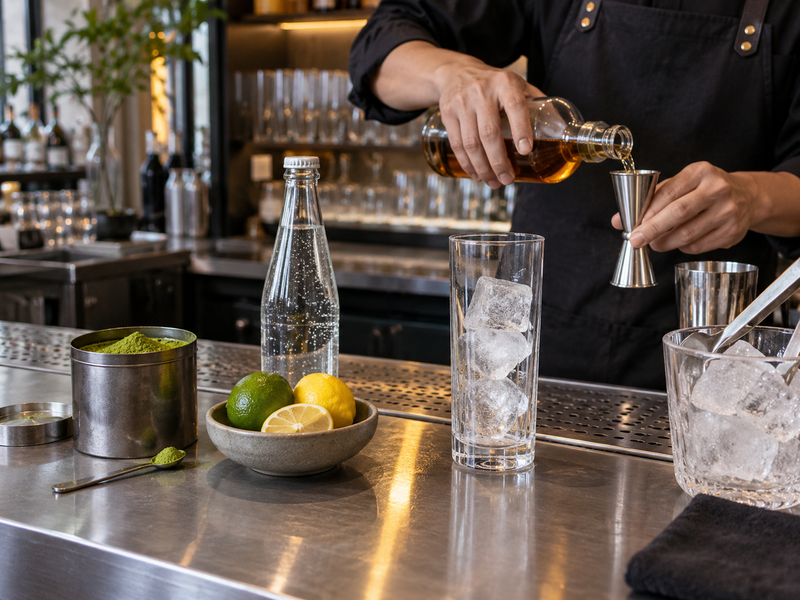
Write a plain-English description of the intended glass: whiskey-forward or tea-forward, dry or lightly sweet, sharp or soft on the citrus, with a clear carbonated finish. A matcha highball should still drink like a highball. If the result feels like a sweet matcha latte with whiskey added, a different name and service format may be more honest. The menu team can test two descriptions with staff, then ask whether the drink in the guest’s hand matches them. This catches a common gap between a green photograph and the actual first sip.
Choose the glass, ice and target serve volume before calculating a recipe. Tall, narrow glassware helps the drink look and feel distinct from a short sour; large, sound ice leaves more room for the liquid and slows dilution. Green color will look different beneath warm lamps than in the daylight of an R&D kitchen. Set an acceptable visual range rather than forcing staff to chase one vivid shade with extra powder.
2. Which matcha should the bar test with whiskey and soda?
Select for the finished glass, not the dry powder
The most expensive sample is not automatically the best bar ingredient. Whiskey brings oak, grain and sometimes smoke; soda expands the aroma but thins body. Taste candidate matcha powders at the intended dose in that complete system. One sample may look bright when dry yet read bitter after carbonation; another may give a clean tea finish without hiding the spirit. Compare color at pour and after a short hold under the same lights. Use the same whiskey, soda, ice and glass for every comparison so a matcha decision is not really a change in the rest of the recipe.
Matcha Village’s supplied information describes culinary, premium and other matcha options and application-selection support. Ask for named samples and current specifications rather than relying on a grade label alone. Record lot identity, powder dose and tasting result alongside the trial. If the bar runs several locations, procurement needs the exact product identity that the beverage team approved.
| Matcha trial check | What the bartender records | Buying implication |
|---|---|---|
| Dry powder | Lot, color, aroma, visible clumps | Identifies the actual sample |
| Fresh highball | Tea note, whiskey clarity, color | Shows fit at service |
| Short hold | Sediment, ring, flavor shift | Tests pickup delay |
| Repeat build | Dose variation between staff | Determines training need |
3. How should matcha be dispersed before the drink is built?
Make the powder a controlled ingredient
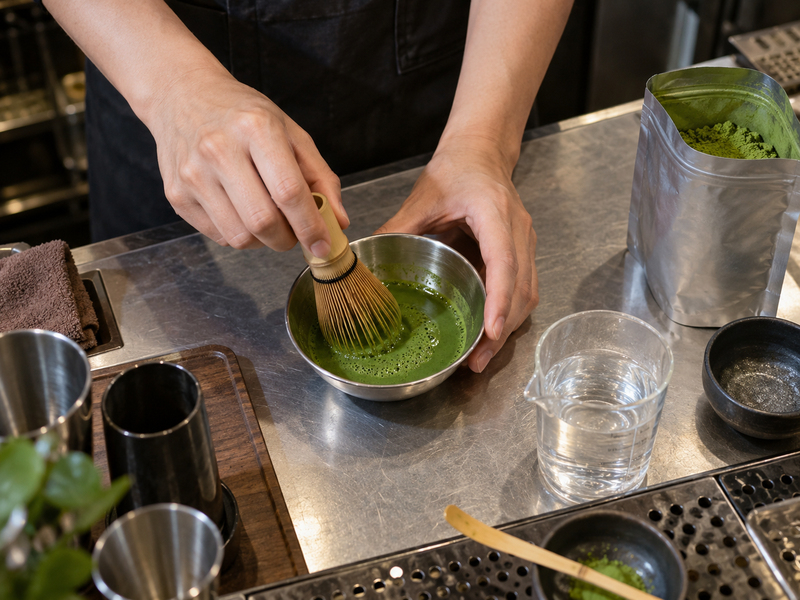
Dumping matcha straight onto ice often leaves floating green islands and dark specks stuck to the glass. For a pilot, weigh a single-serve dose, add a small measured amount of cool water and whisk or shake until no dry powder remains. Then combine this premix with the other non-carbonated components. The small water addition belongs in the recipe record because it changes final dilution. Avoid pouring soda into a shaker or blending it at speed; the point is to disperse tea before carbonation enters the drink.
Staff should agree on one premix tool and one visual endpoint. Inspect the base of the cup for dry powder before it reaches the glass. If a recipe uses syrup to wet matcha, specify the syrup concentration and addition order. A sweeter liquid may help initial wetting yet also make an unintentionally sweet drink. Test the method during a simulated rush, not just when one developer has several quiet minutes to polish the sample.
4. What starting formula makes a useful bar trial?
Run a controlled range instead of copying a home recipe
A useful pilot fixes the glass, ice and whiskey first, then changes one ingredient at a time. For example, a bar might start with 40 mL whiskey, 100 mL chilled soda and a weighed 0.4 g matcha dose dispersed in a small measured volume of water. Those are trial inputs, not a production specification or a universal best recipe. Add citrus and sweetener only after the tea-and-spirit base has been tasted. The final liquid volume must leave headroom for ice, bubbles and any garnish in the selected glass.
Record measurements in grams and milliliters, not just teaspoons or a bartender’s eye. Powder density and spoon packing vary. Note the brand and proof of the whiskey because a different bottle changes strength and flavor. That reveals whether the spec can survive ordinary service.
| Pilot variable | First test | What to hold constant | Reject signal |
|---|---|---|---|
| Matcha | Low, middle, high weighed doses | Spirit and soda | Bitter edge or tea lost |
| Soda | Two chilled volumes | Matcha premix | Flat or watery finish |
| Citrus | None, then measured additions | Sweetener level | Acid overwhelms tea |
| Sweetener | Dry base, then small measured additions | Citrus level | Dessert-like finish |
5. How can the bartender keep the highball lively?
Build the carbonated part at the last moment
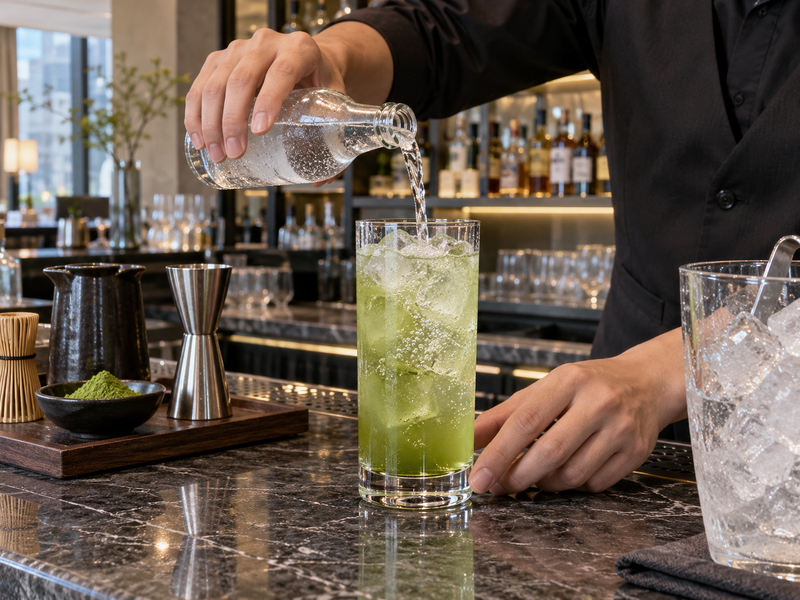
Chill the soda and glass before a rush. Fill the selected glass with the approved ice, add the matcha and whiskey base, then add soda close to handoff. A gentle lift with a bar spoon can combine layers without beating out the bubbles. The precise order should be chosen in a side-by-side bar trial: adding a dense matcha base after soda may leave streaks, while a vigorous final stir can make a good drink taste tired. Watch both the top of the glass and its bottom; a vivid surface hiding a pale lower layer is not a consistent serve.
Use opened soda promptly according to the venue’s service standard. A bottle that has sat uncapped may make the same written recipe noticeably flatter. Check that ice is clean, solid and sized for the glass; fragmented ice melts rapidly and changes the ratio. If the bar uses a garnish, it should contribute to aroma or the menu promise, not cover a dispersion problem.
6. How should whiskey, citrus and sweetness be balanced?
Taste for the tea note through the whole sip
Matcha supplies vegetal and gently bitter notes; whiskey can add sweetness, grain, smoke or oak. The pairing that works with one whiskey may be harsh with another. Begin with the spirit named for the intended menu item and evaluate the drink at the actual serving temperature. If citrus brightens it but erases the tea, reduce citrus before increasing matcha. If syrup softens bitterness but makes the finish sticky, test a smaller dose or a different syrup concentration. The aim is not to make every element equally loud. Guests should still recognize a whiskey highball with a distinct matcha accent.
Use a short tasting sheet with written observations from at least two people who did not make the drink. Ask about first aroma, mid-palate, finish, sweetness and whether a second sip remains appealing. Retaste after a realistic bar wait: a sweetener that seemed balanced at minute zero may stand out as bubbles fade. Keep optional lemon, honey or other modifiers separate in the spec until the team has chosen one route.
| Observation | Possible adjustment to trial | What to check again |
|---|---|---|
| Tea disappears | Slightly raise weighed matcha or lower sweetener | Bitterness and green sediment |
| Whiskey dominates | Change spirit or reduce pour within menu concept | Drink identity and cost |
| Finish is sharp | Review citrus and spirit interaction | Fresh and held sample |
| Drink tastes flat | Check soda temperature and build sequence | Bubble retention |
7. What happens to the glass during a ten-minute service hold?
Test the time between mixing and the table
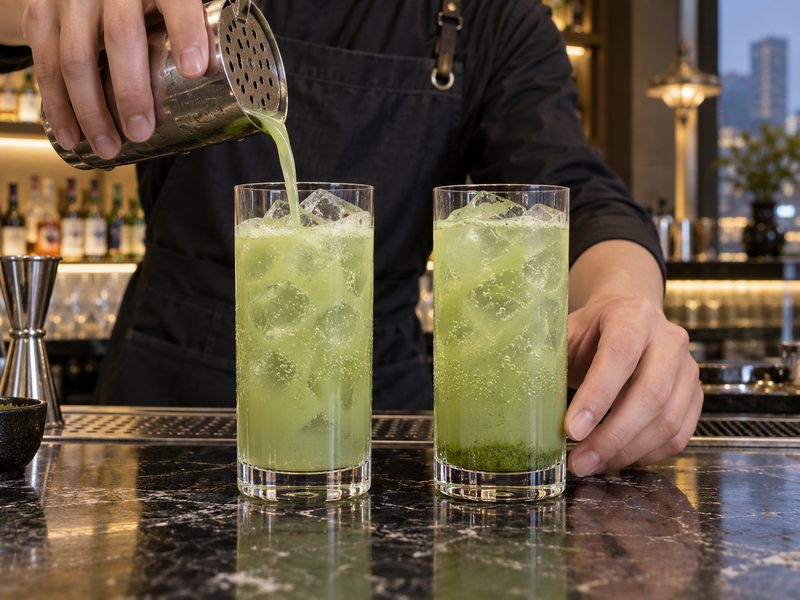
A polished R&D sip taken immediately at the bar is only one condition. In a restaurant, a drink may wait for the server, a companion order or a busy pass. Make two identical glasses and inspect one at pickup, then the other after a ten-minute hold under actual service conditions. Taste both without secretly rebuilding the older sample. Matcha is suspended powder; some settling is plausible and should be assessed against the guest experience, not hidden in a marketing image.
If the held drink is poor, the first fix may be workflow. The bar can prepare the non-carbonated components but add soda and ice close to handoff. A different matcha sample or dose may also help. Do not solve a visibly separated drink by telling servers to stir it without testing whether that destroys carbonation or shifts garnish. Define a maximum pickup window that the operation can meet, and include a remake condition in staff training. This is a practical quality check, not a claim of long-term beverage stability.
8. How should ingredients be prepped and held for service?
Separate fast service from uncontrolled batching
For multiple covers, weigh single-serve matcha doses or prepare a documented premix according to the venue’s food-safety procedure. Label internal prep containers with ingredient, preparation time and the venue’s required use-by information. Make a small enough amount for the expected shift and assess whether the premix settles between pours; a large pitcher can send strong tea to the first guests and weak tea to the last. In the US, the FDA Food Code is a retail food-safety model, while the venue must follow rules adopted in its jurisdiction. The bar must determine its own safe preparation, cold holding and discard rules under local requirements. An article cannot validate a premix shelf life.
Keep spirit and soda measures independent of a premix unless the operation has a tested batched method and its licensing rules permit that approach. Do not batch carbonation into a still container. Train for a simple sequence that a relief bartender can follow: check powder dose, disperse, measure spirit, build over sound ice and finish with freshly opened chilled soda.
| Prep item | Service control | Record worth keeping |
|---|---|---|
| Matcha powder | Sealed, clean scoop, identified lot | Lot and opening date |
| Matcha premix | Defined batch size and holding rule | Make time and discard time |
| Soda | Chilled, opened near use | Acceptable bottle turnover |
| Spirit | Measured pour and approved bottle | Pour size and replacement rule |
9. What does each saleable highball actually cost?
Cost the operational glass, not a photo sample
Calculate the matcha cost from the approved weighed dose and purchase unit. Add the measured whiskey, soda, citrus, sweetener, garnish and realistic ice and disposable costs where the venue tracks them. Then consider waste: powder left in a premix cup, opened soda that goes flat, rejected test glasses and a drink remade after a long hold. A low ingredient quote can be misleading if the method takes too long or has a high remake rate. Menu margin also depends on the venue’s own pricing, labor and tax structure, so no universal target can be supplied here.
Run the calculation at pilot volume and at the forecast weekly sales, then compare the implied powder demand with the supplier’s pack size and replenishment terms. If the bar operates across sites, include the cost of training and consistency checks. One highball made by a senior bartender may look profitable on paper; a chain needs the method to work with normal staffing and actual purchasing packs.
| Cost line | Calculation input | Common omission |
|---|---|---|
| Matcha | Grams per glass × delivered price per gram | Premix residue |
| Whiskey and mixers | Measured mL × purchase cost | Overpour and flat soda |
| Service extras | Citrus, ice, garnish, disposables | Garnish rejects |
| Waste and remake | Actual trial/service record | Held drinks and training pours |
10. What should a bar ask a matcha supplier to provide?
Make the enquiry match the actual application
Send the supplier the proposed highball brief: whiskey style, approximate matcha dose, whether citrus and syrup are present, planned service volume, intended markets and the color and taste the menu needs. Ask for named matcha samples suitable for cold beverage testing, current specifications, pack options, lead times and the documents needed by the buying team’s market. Matcha Village’s provided company information includes matcha grades, blends, bulk supply and application support; the bar should confirm which current product and commercial terms fit this use. Do not infer a particular certificate or test result from a general portfolio description.
Run the selected sample through the same build and ten-minute hold check before approval. Record the powder lot used, accepted formula, training photo and substitute policy. If the next lot tastes or disperses differently, compare it with that retained reference before silently changing the bar dose. A concise enquiry and a measured service trial give procurement a clear buying target and give bartenders a drink they can make to the same standard. The next step is a controlled trial across several shifts, followed by a purchase decision based on both guest response and operational yield.
FAQ
Q1: Is a matcha highball the same as a matcha latte cocktail?
No. This version is a whiskey-and-soda highball with a measured matcha accent and carbonated finish. A creamy latte-style drink needs a separate formula, glass and menu description.
Q2: Can matcha be shaken directly with soda?
Disperse the powder with a small non-carbonated liquid portion first. Shake or whisk that base, then add chilled soda near service to retain carbonation.
Q3: Is ceremonial-grade matcha required?
No grade name alone settles the choice. Compare identified samples in the finished highball for tea flavor, color, dispersion and cost.
Q4: Can a bar make matcha premix for the whole day?
Only if its own food-safety procedure and testing support the planned holding method. Begin with small documented batches and check settling between pours.
Q5: What information helps a supplier quote accurately?
Share the trial dose, expected glass count, target market, desired flavor and color, pack preference and requested documents. Ask that any quote identify the sampled product.