
A matcha mug cake can give a café a made-to-order dessert without keeping a whole cake on display. The small format also exposes mistakes: a few grams of extra liquid, a different cup or another microwave may turn a soft cake into a rubbery one. This guide helps café, foodservice and retail dessert buyers develop a repeatable single-serving product. Matcha Village can provide matcha candidates for application trials; the operator must approve the formula, equipment method and finished product under its own food safety procedures.
Table of contents
- What should the guest receive?
- Which preparation model fits the service counter?
- How should matcha be chosen for a mug cake?
- Which formula variables deserve separate trials?
- How do the vessel and fill weight affect the result?
- How can a café validate its microwave method?
- What should staff do on a busy shift?
- How do you cost an approved serving?
- What should holding and takeaway trials check?
- What belongs in the final ingredient and service brief?
1. What should the guest receive?
Define the serving experience before the recipe
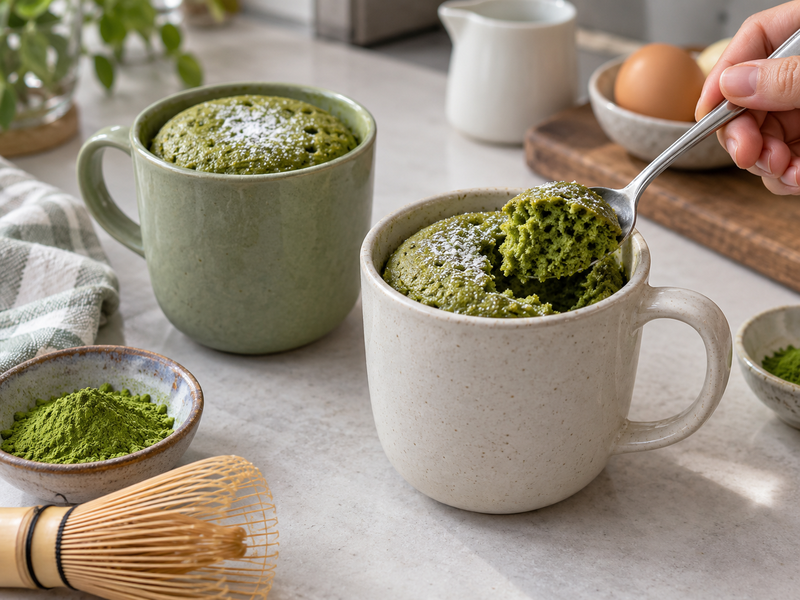
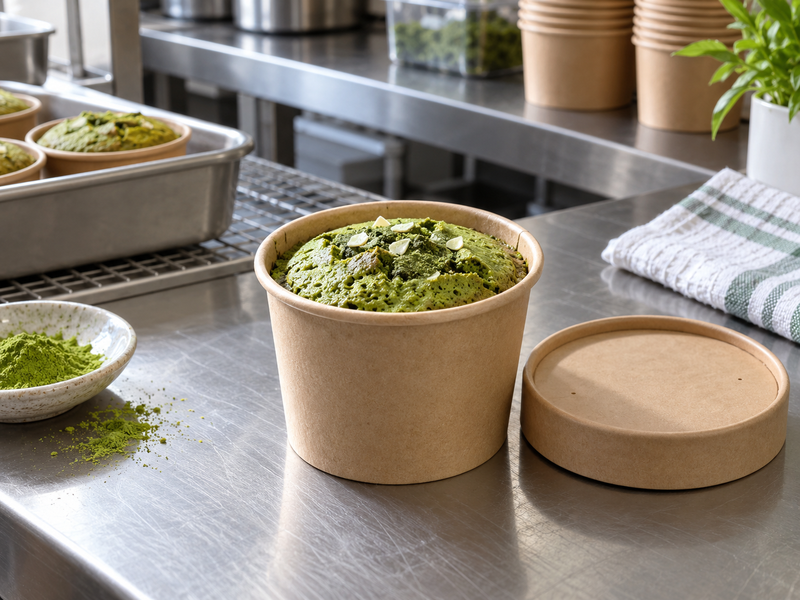
Decide whether the cake arrives in a reusable ceramic mug, a foodservice cup or another approved vessel. Write down the target portion weight, rise, crumb, tea intensity and topping. A customer should be able to reach a consistent cake below the top garnish rather than finding dry flour at the bottom or a wet pocket in the center. Photograph a cut or spooned sample at the intended handoff time. That reference gives staff a practical target even when the surface rises differently from one bake to the next.
The menu description should match the eating experience. A warm, soft cake served immediately asks for a different process from a prepared retail pot that customers heat later. Decide whether the offer is plain, paired with cream or finished with fruit. A cold topping may cool the cake quickly; a sauce may hide uneven tea flavor. Taste the base first, then the complete serving. Record how long the customer waits after ordering. Speed matters in a café, but an unreliable fast dessert can create more remakes than a slower approved method.
2. Which preparation model fits the service counter?
Choose where the measuring work happens
Three routes deserve comparison: staff weigh every ingredient at the counter, a kitchen prepares dry portions in advance or a controlled ready batter is portioned for service. Each route shifts labor, storage and error points. A dry portion can make a rush easier, but it still needs a specified liquid and mixing method. A ready batter may shorten assembly while its hold time and separation behavior require validation. Weigh a trial serving from each route and observe how much product remains on tools and bowls.
Keep the recipe code attached to the serving method. A preportioned dry mix should identify its own ingredient and allergen information; a staff member cannot infer that every unmarked green powder is the same formula. Check how the team will replenish prepared portions during a shift and prevent old stock from being mixed with a new recipe version. Select the route that produces an acceptable cake with staff, space and equipment actually available at the site.
| Preparation route | Likely operating benefit | Trial question |
|---|---|---|
| Weigh at order | Flexible recipe testing | Can staff work accurately at rush speed? |
| Preweighed dry portion | Less counter weighing | Does liquid and mixing stay consistent? |
| Ready batter | Shorter assembly | Does the batter hold and portion reliably? |
| Supplier premix | Simplified ingredient list on site | Does the offered SKU meet the approved cake? |
3. How should matcha be chosen for a mug cake?
Judge tea flavor in the cooked serving
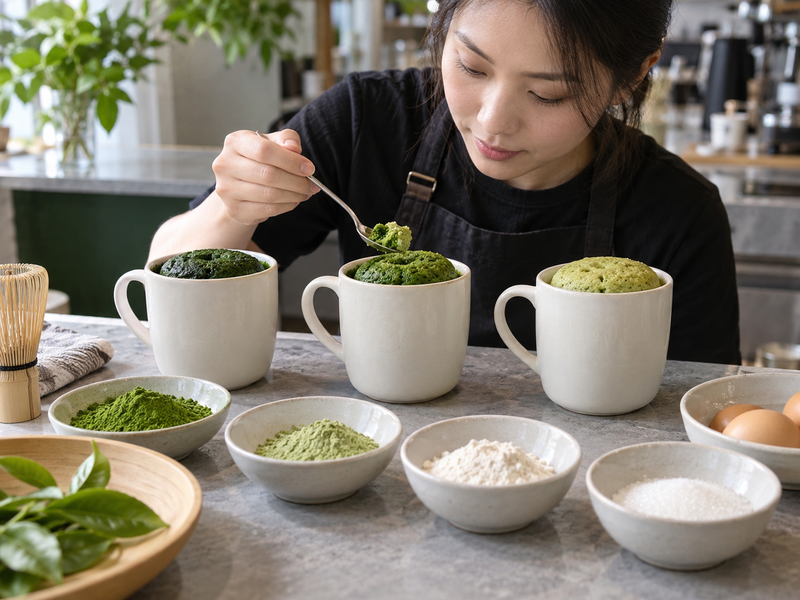
Ask for matcha candidates against the actual mug cake formula, expected dose, toppings and intended price position. Test coded portions with identical vessel, fill mass and microwave method. Compare the dry powders for identification, then judge the finished cake after the same brief rest. A sample that looks bright before cooking may appear duller in a cake; chocolate, vanilla or sweet cream can also change what a guest notices. Record both the color and the tea flavor, including any rough aftertaste.
Decide whether matcha belongs only in the cake or also in a topping. Adding tea to both may strengthen the theme but can raise cost without making the complete bite better. When a candidate needs a higher dose, compare it at the accepted sensory result as well as at the original equal-dose test. Matcha Village can discuss culinary and other product options for the trial. The café should approve a specific offered sample through the finished serving, not through a grade label or a photograph of powder.
4. Which formula variables deserve separate trials?
Change one cause before judging the outcome
Flour or another starch source shapes the crumb. Sugar affects sweetness and structure, while fat and liquid influence tenderness. A leavening system changes rise and the chance of overflow. Egg-based and egg-free recipes may need different mixing and cooking methods. Build a baseline formula with weighed amounts, then alter one variable per trial. Otherwise a soft cake after a revision offers little explanation about which change helped.
Record the brands and lots of major ingredients during development. Plant beverages may contain sugar, gums or fat that differ from dairy. A sweetened matcha blend cannot simply replace pure matcha at the same mass without changing both flavor and solids. Assess the cake after a consistent rest, using the same spoon and serving temperature. Check the center as well as the edge. If a formula works only in one vessel or microwave, treat that limitation as a process finding before proposing it for several locations.
| Variable | Keep constant during the trial | Observe in the finished cake |
|---|---|---|
| Matcha dose | Base formula and vessel | Tea character and color |
| Liquid | Dry ingredients and fill mass | Center set and tenderness |
| Fat | Liquid and cooking method | Moistness after handoff |
| Leavening | Vessel and fill depth | Rise, overflow, coarse holes |
| Base type | Portion and service point | Flavor and texture |
5. How do the vessel and fill weight affect the result?
Treat the cup as part of the process
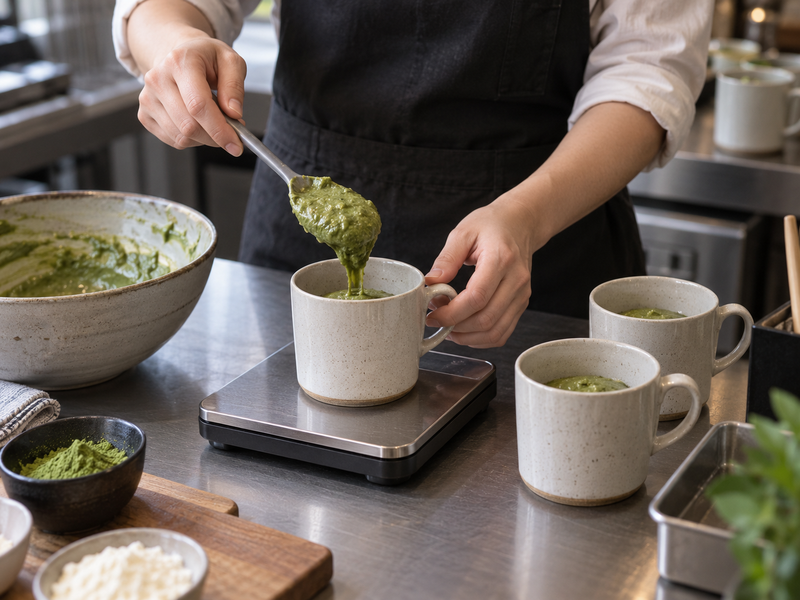
The same batter can spread thinly in a wide mug or form a deeper center in a narrow one. Select a food-contact vessel approved for the intended microwave use and record its capacity, internal shape and normal fill weight. Check the available headspace during the highest rise observed in trials. A cup that looks generous before cooking may spill, while a large empty rim can make the sale portion appear small. Use a scale to compare portions rather than relying on a spoonful count.
Trial the real service vessel, including any lid or sleeve added after cooking. Do not place metal decorations or unsuitable packaging in the microwave. If the café uses reusable mugs, confirm the handling and washing route; if it uses disposable cups, confirm that the chosen product is intended for the actual heating process. Photograph side and top views of the approved serving. The vessel specification belongs in the recipe because changing it can change both cooking and perceived value.
6. How can a café validate its microwave method?
Verify the method on each equipment route
Microwaves differ in rated power, cavity size, turntable behavior and load pattern. Establish a trial method on the equipment the café will actually use. Record the model, vessel, fill mass, starting batter condition, cooking sequence and rest before service. Compare several consecutive orders, since the first test of a quiet day may not represent a busy counter. Inspect the center, edge and top for a coherent cake rather than setting a time from a home recipe as a universal rule.
An apparently dry surface can conceal a wet center. The operator’s food safety team must validate relevant controls for its specific formula and market, especially if the recipe contains egg or other ingredients needing controlled cooking and storage. For quality, note overflow, rubbery edges, uneven color and any unhydrated dry mix. If two stores have different microwaves, test each equipment route or set a documented procedure that accounts for the difference. A staff instruction should describe the approved observable result and what to do when a serving falls outside it.
| Method detail | Record | Why it matters |
|---|---|---|
| Equipment | Model and relevant settings | Repeatability across sites |
| Vessel and fill | SKU, capacity, batter mass | Heating depth and overflow |
| Starting condition | Fresh mix or held batter | Cooking behavior |
| Cooking sequence | Approved steps and rest | Center and edge quality |
| Release check | Defined visual and texture signs | Staff decision at service |
7. What should staff do on a busy shift?
Reduce decisions at the point of order
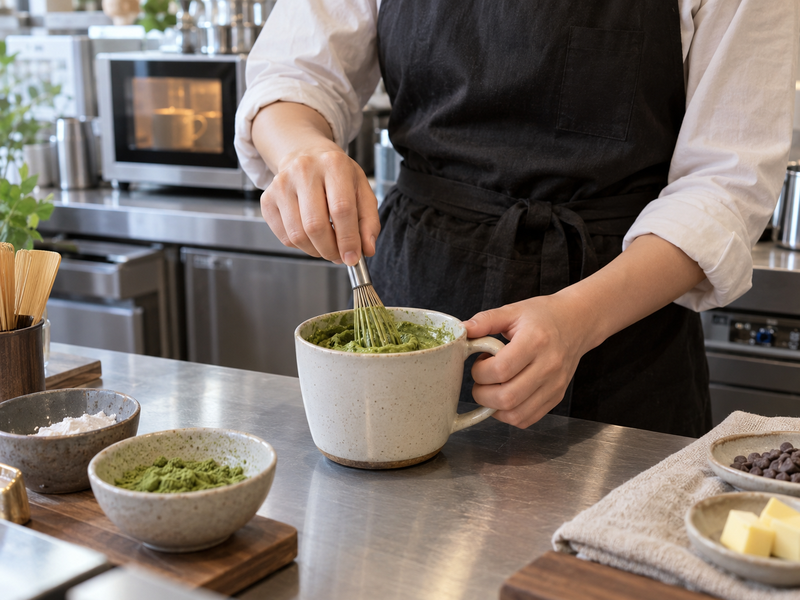
Give staff a short station method: identify the approved portion, add the specified liquid if using dry mix, mix with the correct tool, use the assigned vessel, follow the microwave procedure, check the cake and add the measured topping. Put the recipe version and allergen handling instructions where the shift team can find them. Test the whole process during realistic order volume, including handwashing, tool cleaning and equipment sharing with other menu items. A recipe that works only when one developer has the station to themselves is not ready for rollout.
Observe where mistakes occur. Powder may remain in the bottom corner of a mug, two portions may be added by accident or a topping may be applied before the cake rests. Record time spent and remake reasons, then revise the method or mise en place. If staff need several tools for one item, check where each lives and how it is cleaned between orders. The goal is a repeatable made-to-order dessert whose quality does not depend on a particular employee remembering unwritten steps.
8. How do you cost an approved serving?
Count food, labor and remakes
Use actual quantities for matcha, flour or premix, liquid, fat, sweetener and topping. Add the cost of the cup or mug service route, packaging for takeaway, direct labor and any waste according to the business’s costing method. A theoretical scoop weight can understate matcha use if staff routinely overfill. Weigh several real orders and record saleable servings. Include remakes from overflow, undercooked centers or damaged containers so the commercial team can see the effect of process reliability.
Compare matcha candidates at the dose required for the approved flavor. If a lower-priced powder needs more product, the relevant figure is cost per acceptable serving. A supplier premix may lower station labor but shift cost into the ingredient price and reduce recipe flexibility. Model each option with the same service format and realistic order volume. Menu price and margin remain decisions for the café’s sales channel; a bench calculation cannot promise a result in every store.
| Cost line | Use in the worksheet | Common blind spot |
|---|---|---|
| Matcha | Approved dose and quoted SKU price | Extra dose for flavor |
| Other ingredients | Weighed serving inputs | Overfilled portions |
| Vessel and finish | Cup, sleeve, lid, topping | Takeaway materials |
| Labor | Actual station steps | Cleaning and preparation |
| Losses | Remakes and unsold prepared mix | Theoretical perfect yield |
9. What should holding and takeaway trials check?
Follow the serving beyond the microwave
The best eating point for a mug cake may be soon after preparation, but the business must observe its own product through the full sale route. Taste servings after the expected handoff delay and, if takeaway is planned, after packing and travel. Record loss of softness, condensation under a lid, sinking, topping migration and a cup too hot or awkward to handle. Compare the plain cake and the finished serving. A cold topping can improve the bite or make the crumb seem firm; that outcome belongs in the trial notes.
If the business proposes a packaged retail product for later reheating, treat it as a separate development route with its own formulation, instructions and product-specific validation. A café’s fresh-service result cannot establish storage life or consumer heating directions. The operator’s food safety and regulatory teams must review the final product and market. Keep photographs and sensory notes at defined checkpoints rather than relying on memory from the first warm spoonful. Remove an unsuitable pack or holding route before launch.
10. What belongs in the final ingredient and service brief?
Connect the approved cup with purchasing
Send a prospective matcha supplier the intended application, pure matcha or blend preference, use-rate range, target tea flavor, market, estimated order pattern and desired ingredient pack. Request the offered SKU’s specification and relevant lot documents. Ask how samples will be identified in later orders and what change notification, packing and delivery terms the quotation covers. Certification or destination testing requests should identify the exact product and scope for review. Matcha Village can shortlist options for a trial, while the buyer approves one through the finished cake.
The internal service brief should hold the controlled formula or mix code, vessel SKU, fill mass, mixing step, equipment route, approved cooking method, release check, topping portion and allergen instructions. Add a photograph of the finished serving and a log for remakes during rollout. Assign an owner to retest when a cup, plant beverage, premix or matcha SKU changes. The next step is a small multi-shift service trial with recorded quality and cost, followed by a product-specific purchasing decision.
| Brief element | Owner | Evidence before rollout |
|---|---|---|
| Finished serving | Product team | Approved photo and sensory target |
| Formula and cup | Café operations | Weighed recipe and vessel SKU |
| Microwave route | Food safety and operations | Equipment-specific validated method |
| Matcha supply | Purchasing and supplier | Sample code, specification, lot records |
| Economics | Commercial team | Saleable-serving and remake record |
FAQ
Q1: Can one microwave time work at every café? Test the approved recipe, vessel and equipment route at each relevant site. A time copied from another model does not prove an equivalent cake.
Q2: Is a premix easier than weighing at each order? It can reduce counter work, but the café still needs measured liquid, mixing, storage and finished-product checks.
Q3: Which matcha grade should a mug cake use? Compare identified candidates in the cooked serving at the planned dose and price point. Grade names alone do not settle performance.
Q4: Can a fresh mug cake be sold for later reheating? That is a separate packaged-product project requiring its own formula, handling and validation.
Q5: What should a sample request include? Share the cake formula or mix route, vessel, toppings, target flavor, market and likely order pattern.