
A matcha cocktail uses powdered green tea as a flavor and visual ingredient in a mixed drink. The powder gives a drink a grassy, mildly bitter edge and an opaque green color, but it does not behave like a clear tea infusion. It can settle, clump, or look dull when held. That makes a good first glass a poor test of whether a bar can serve fifty of them on a Friday night. A bar should choose the tea, acid, sweetness, mixing route, and hold time as one system, then test it under real service conditions. Mizuba Tea’s roundup of matcha cocktails offers examples of the category; the development checks below are for operators building their own spec.
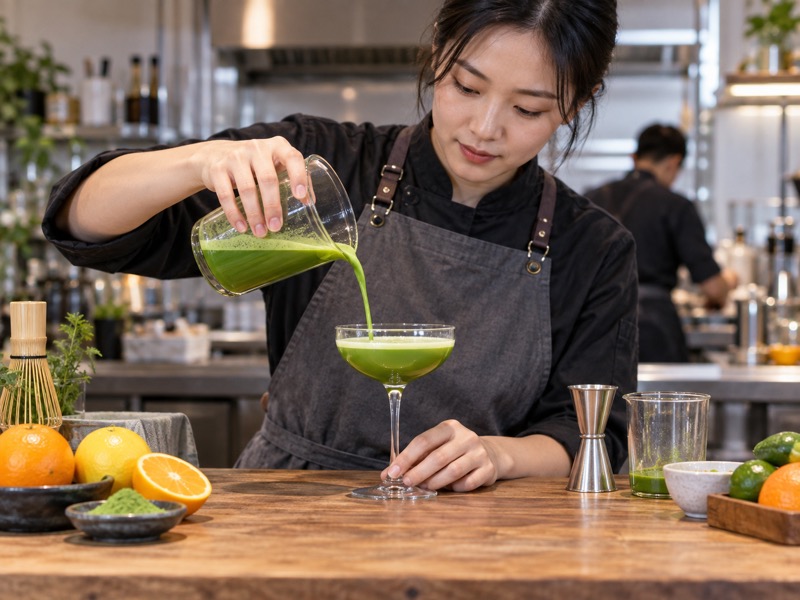
For: bar managers, beverage developers, restaurant buyers, and tea suppliers. Decision: whether a matcha cocktail can keep its taste and appearance from the first order to the last.
1. What should the drink promise on the menu?
Give the guest an honest cue
Start with the drinking occasion. Is this a bright aperitif, a creamy after-dinner drink, or a low-alcohol option? A guest ordering a citrus-forward cocktail expects a different balance from someone ordering a dessert-style martini. Write a one-sentence target before testing: for example, “a crisp citrus drink with a recognizable tea finish and no powdery texture.” This target gives tasters something concrete to judge. It also keeps the team from adding matcha merely for the color.
Name the tea clearly. Matcha is ground tea, so the drink will usually be cloudy. Do not describe it as a transparent green tea infusion. If the recipe contains dairy, nuts, egg, or another major allergen, the menu and service team need accurate information. If it contains alcohol, follow the rules that apply to the venue and market. A bar can borrow the broad idea of a matcha cocktail from a recipe collection, but its own menu description must match what it pours.
| Menu aim | Guest expectation | Development test |
|---|---|---|
| Bright aperitif | Fresh acid, light body | Taste after ice dilution |
| Creamy dessert drink | Smooth, richer finish | Check tea against fat and sugar |
| Low-alcohol serve | Complete flavor at lower strength | Compare body and balance |
2. Which matcha works in a mixed drink?
Taste it in the finished glass
Do not buy solely by the color of dry powder or a grade name. Ask for identified lots, then compare them at equal grams per serving in the proposed cocktail. Citrus, spirits, sugar, and ice can hide a delicate tea. A very forceful tea may stay noticeable but leave a harsh finish. Taste the shaken drink immediately and again after a realistic time on the bar. Also compare the aroma before the first sip; a powder with a pleasant dry smell may not keep that character once chilled and diluted.
Keep a reference sample. Record the tea lot, dosage, pack size, date opened, and storage conditions used for each trial. When buying at scale, ask the supplier for specifications, lot traceability, packaging details, and the documents needed by the venue. A supplier’s general quality claim cannot substitute for a test in your specific formula. If a second tea is needed for supply continuity, approve it through the same blind tasting and service trial. The cheaper kilogram may require a larger dose or create more waste.
3. How should matcha be dispersed before shaking?
Make a smooth pre-mix
Matcha is suspended powder, not an ingredient that dissolves completely. Dumping a dry spoonful into a cold shaker often leaves dark specks on the ice and a gritty last sip. For a controlled trial, weigh the powder and first blend it into a small, measured amount of liquid compatible with the drink. Whisk or mix until no visible lumps remain, then add the pre-mix to the other ingredients. Compare this route with any bar-speed alternative using the same tea and dose.
Watch the entire pour. A drink can look smooth at the top while heavy particles collect in the last few milliliters. Pour a standard serving, then inspect the shaker and the final sip. If the glass is served over ice, observe whether tea collects around the ice as the drink sits. Decide whether each order should be made fresh or whether a small pre-mix may be held. That decision needs a timed test, not a guess from one busy shift. Clean equipment between trials so clumps from an earlier sample do not bias the next one.
| Defect | Likely first check | Trial response |
|---|---|---|
| Dark specks | Dry powder in cold liquid | Sift and pre-disperse |
| Gritty finish | Particle load or weak mixing | Compare dose and method |
| Layer at bottom | Standing time | Shorten hold; remix before pour |
4. What balance lets the tea remain recognizable?
Change one lever at a time
Build a small tasting matrix around tea dose, sweetness, and acidity while keeping the base spirit and serving size fixed. Start with a reasonable draft formula, then make measured changes one at a time. Too much citrus can make a green drink taste sharp and obscure the tea. Too much sweetener can leave a flat, candy-like finish. Strongly flavored spirits may dominate. None of these outcomes means the tea is necessarily poor; the recipe may simply be asking the tea to compete with too many loud ingredients.
Taste after dilution. Ice adds water and changes balance. Judge the drink at the dilution and temperature a guest receives, not only from a room-temperature tasting spoon. Where a recipe uses fruit puree or syrup, check each supply lot for variation in sweetness and acidity. A cocktail built around a seasonal fruit needs a range or a tasting adjustment rule that staff can apply without redesigning it during service. Record the accepted formula in grams or milliliters per portion rather than “one scoop” or “a splash.”
5. Which spirits and mixers should a bar compare?
Let the concept choose the base
Neutral spirits can give tea more room, while botanical or barrel-aged spirits introduce their own aroma and bitterness. Both can work; they lead to different drinks. Make small equal-strength trials rather than assuming a popular matcha combination will fit the menu. Mixers matter just as much. Coconut milk can make the drink rounded but cover tea. Soda can make a brisk drink, yet suspended powder may leave uneven foam or sediment. A creamy mixer changes not only taste but allergen handling and the cleaning routine.
Compare complete recipes. Keep the final serving volume, alcohol level, sweetener, and matcha dose as consistent as possible while changing the base. Blind taste with staff who will serve the drink. Ask which version they can describe in one plain sentence and which survives five minutes at the table. A fashionable combination is less useful than a repeatable one. Avoid claiming any spirit “brings out” a specific tea compound unless the sensory trial actually supports that language.
| Base or mixer | Potential advantage | Check before approval |
|---|---|---|
| Neutral spirit | Leaves room for tea | Thin body after dilution |
| Botanical spirit | Adds aromatic range | Competing bitter notes |
| Creamy mixer | Smooth texture | Tea masking and allergens |
| Soda | Light, brisk service | Foam and settling |
6. Can a matcha cocktail be batched safely?
Separate flavor stability from food safety
Batching may speed service, but a pre-mixed drink can settle and change color or flavor. Make a trial batch in the actual holding vessel. Sample from the top and bottom at set times. Record temperature, appearance, aroma, and taste, then test whether a documented remix restores uniformity. If the recipe contains perishable juice, dairy, or other sensitive ingredients, use the venue’s food-safety procedure to set preparation, storage, and discard rules. A visual check alone cannot establish safety.
Design the pour routine. Decide which components may be batched and which should be added at order time. A measured tea pre-mix might suit a short rush, whereas a complete cocktail containing fresh juice could need a different route. Do not extend a home recipe’s storage suggestion to commercial service without validation. Label the internal batch with preparation time and formula version so staff can trace a poor pour to its actual production record. Train the team on the same mixing and discard steps; a recipe that depends on one expert bartender is fragile.
7. How should the drink be garnished and photographed?
Show the real product
Matcha gives a distinctive color, but lighting can make that green look far brighter in a photo than it appears under bar service. Photograph the finished glass in the venue’s normal light and after the expected table wait. Choose a garnish that adds aroma or a useful cue to the drink. A large dusting of dry matcha can look striking for a moment but leave powder on the lip of the glass. Fruit garnish can make sense when fruit is part of the recipe; it should not promise a flavor the drink does not contain.
Check the last sip. A good first photograph is not enough if the last sip is muddy or a garnish sheds particles into the glass. Try the intended glassware, ice shape, garnish, and straw or no-straw service as a complete unit. Ask a server to carry it the normal distance. If the color separates during the walk, solve that before arranging a marketing shoot. Honest imagery reduces disappointment and gives the bartender a practical standard to match.
8. What should the supplier and bar records contain?
Write a usable spec
The bar needs more than a brand name for its tea. Keep the supplier, item code, lot, pack format, storage guidance, reorder lead time, and agreed sample standard. Record the accepted drink formula, pre-mix method, ice, shake or stir route, glass, garnish, and maximum hold. If the tea changes, run a short comparison before switching. A change in particle behavior or bitterness may require a different mixing route even when both powders are sold as matcha.
Define pass or fail. Use a simple tasting sheet that asks whether the tea is recognizable, the drink is balanced, no lumps remain, and appearance holds through the service window. Photograph each accepted batch under similar light. Where a packaging or origin claim is made on the menu, keep documents for the specific tea lot and market. Do not turn a supplier’s sales language into a menu claim without checking it. A compact record can save hours when a new bartender, tea lot, or bar location produces a different drink.
| Record | Why it matters | Owner |
|---|---|---|
| Tea lot and sample | Compare incoming changes | Buyer |
| Formula version | Reproduce the drink | Bar lead |
| Hold-time trial | Set batch routine | Beverage developer |
| Menu claims | Support what guests see | Manager |
9. How much does a sellable serving cost?
Count the actual pour
Cost the tea by grams in an accepted serving, then add spirits, mixers, garnish, ice, packaging if takeaway is permitted, labor, and expected loss. A cheap tea that needs twice the dose may cost more per glass. A generous garnish may also make the drink slow to produce and raise waste. Time the routine under normal service, including pre-mix preparation and cleanup. The margin from a carefully priced cocktail can disappear when staff must remake separated drinks.
Measure over a shift. Compare theoretical yield with glasses actually sold. If a batch is discarded, include that loss. If a more protective tea pack costs more per kilogram but stays fresh through the bar’s use rate, it may be the better buy. Portion control matters: a small variation in tea or syrup is enough to change both taste and cost. Use a scale and measured tools in the pilot, then decide which measurements staff can maintain in routine service.
10. What pilot should precede menu launch?
Test the busiest version of reality
Run the proposed matcha cocktail as a short live-service pilot with the actual team, ice, glassware, and holding plan. Have more than one bartender make it from the written spec. Compare the first, middle, and last drinks from a pre-mix or batch. Ask servers whether guests understand the menu description and whether the glass arrives as photographed. Record remakes, delays, settling, and complaints alongside taste scores. These observations can reveal problems that a quiet tasting cannot.
Approve only what repeats. Keep the accepted tea sample, formula, images, and staff method together. Set clear reasons to retest, such as a new tea lot, new citrus source, changed glass, or different batch size. The next action is a measured pilot, not a broad launch based on one attractive glass. A matcha cocktail earns its menu space when ordinary staff can make it consistently and a guest can enjoy the full pour without a powdery surprise.
| Pilot checkpoint | Pass question | Evidence |
|---|---|---|
| First order | Is the tea clear in flavor? | Blind tasting |
| Rush period | Is preparation repeatable? | Timed orders |
| Table wait | Does color and texture hold? | Timed visual check |
| Last sip | Is sediment acceptable? | Full-glass tasting |
For a narrower bar application, the matcha martini guide gives another drink format to test.
Reference: Seven Matcha Green Tea Cocktail Recipes You Have to Try is a category reference. The operating checks above are independent.
FAQ
Q1: Does a matcha cocktail need a sweetener? Not always. Sweetness should be set against the chosen tea, acid, spirit, and dilution in the finished drink.
Q2: Why does matcha settle in a cocktail? It is suspended powder. Pre-dispersion and a tested hold and remix routine can reduce uneven pours.
Q3: Can the complete drink be batched? Test flavor and appearance over the proposed hold, and apply the venue’s food-safety rules to every perishable ingredient.
Q4: Which tea grade is best for cocktails? Choose by blind trials in the actual formula and by supplier consistency rather than a grade name alone.
Q5: What is the fastest way to improve service? Standardize the powder dose and pre-mix first, then train the team on the same mixing and pour method.