
Matcha donuts are often sold by their color. A bakery has to sell the second bite as well. If the tea disappears behind a thick sugary glaze, if the cut crumb turns brown before the afternoon rush, or if the ring takes on oil during frying, the photograph will not save the product. The baked matcha doughnuts recipe in the current search results shows one home-style direction. This guide looks at a commercial decision: baked or fried, tea in the dough or glaze, a defined portion, and a repeatable test for the day the donut is actually sold. The goal is a pleasant pastry with an honest matcha flavor, not the greenest item in the case.
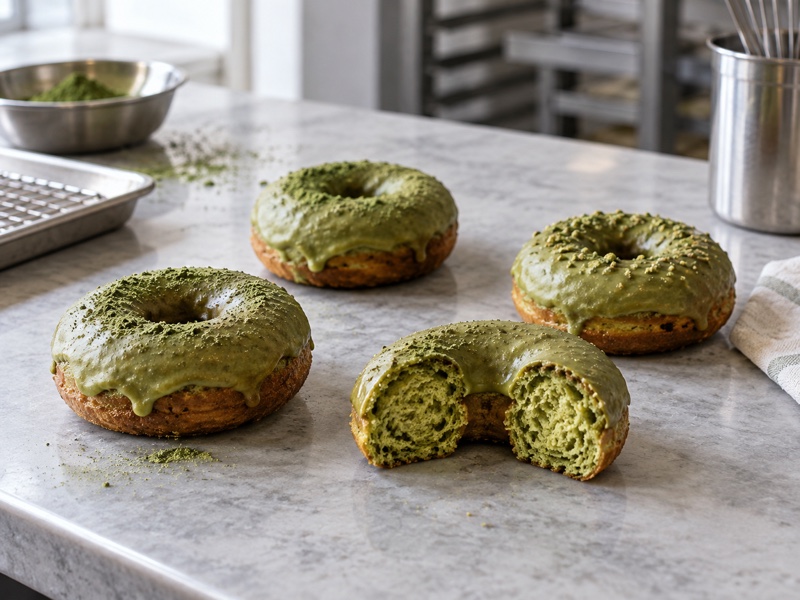
1. What kind of matcha donut is the bakery making?
Choose the format before choosing powder. A baked cake donut has a relatively tight crumb and can carry matcha in the batter. A fried yeast donut offers a different chew, surface, oil exposure, and proofing schedule. A plain donut with matcha glaze is a third product: the tea is mostly on the outside and its flavor may vanish after the glaze dries. These formats have different line equipment and different failure modes. A bakery can sell more than one, but the specification should not pretend they share one process.
Write a short description the pastry team can taste against: “soft baked crumb, distinct tea finish, thin glaze” or “light fried ring with a tea-led coating.” Decide whether a customer should taste matcha before the glaze, and whether the cut center needs to be visibly green. Compare the actual display case and packaging. A donut judged warm from the oven may be very different after six hours in a box. The product brief should state when it must still be good.
| Format | Main texture target | First process risk |
|---|---|---|
| Baked cake ring | Tender, even crumb | Dryness and dull color |
| Fried yeast ring | Light chew, clean finish | Oil pickup and proofing drift |
| Plain ring with tea glaze | Distinct coating flavor | Sticky or patchy glaze |
2. Should matcha go into the batter, glaze, or both?
Matcha in the batter puts tea throughout the pastry, but heat can mute flavor and change color. Matcha in the glaze stays more visible and may taste stronger at first bite, though a sweet coating can quickly dominate. A dual approach can work if each component has a job; it also increases ingredient cost and the number of mixing steps. Do not start by doubling tea everywhere. Make a small three-way tasting: batter only, glaze only, and a moderate amount in both. Hold the base donut, sugar, and portion size steady.
Taste the samples after cooling and after the planned display period. Ask tasters whether they can identify tea without being told which sample is matcha. If the batter-only version tastes good but looks dull, decide whether appearance needs a light glaze. If the glaze-only version tastes like sugar with a green first note, reduce sweetness or increase tea carefully. The best design may be a modest powder dose in a clean vanilla-style batter and a thin, not opaque, glaze.
Record grams of matcha per finished donut rather than percent of dry mix alone. The same batter percentage can produce a different per-piece dose when fill weight or bake loss changes. Keep the approved lot sample: a new powder may disperse or taste differently even at the same weight.
3. How does the powder behave in a donut batter?
Matcha is a fine dry powder that can clump in a wet mix. Sift it with flour or make a controlled slurry, depending on the batter and mixer. Watch for powder trapped on the bowl wall or inside a piping bag. Uneven distribution gives one green donut and another almost plain. Set the mixing order, tool, speed, and time on the production card. Overmixing to chase streaks can toughen a cake-style crumb; fix the dispersion step before extending the entire mix.
Compare the powder in a plain test cup and in the full donut. Milk, fat, egg, sugar, and leavening can soften or shift the tea note. A powder that seems too assertive in water may be right in batter, while a mild one may disappear after baking. Ask the supplier for a lot-linked sample, specification, pack format, and storage advice. Matcha Village’s bulk matcha options can be tested in the bakery’s exact formula rather than bought on grade names alone.
| Batter check | Record | Defect it may explain |
|---|---|---|
| Matcha dispersion | Sift or slurry method | Green spots and bitter pockets |
| Mix time | Speed and minutes | Tough crumb or uneven batter |
| Fill mass | Grams per cavity or ring | Variable bake and cost |
| Batter hold | Time and temperature | Changed rise or color |
4. What changes between baking and frying?
A baked donut relies on pan fill, oven profile, and batter structure. A hot oven can brown the exterior before the center sets; a slow bake can dry the ring and flatten tea flavor. Set the pan type, fill weight, rack position, and endpoint using the bakery’s equipment. Compare cut centers from the first and last tray. The edge and center cavities of a pan may behave differently. Do not approve the product solely from the best-looking ring.
A fried donut requires oil management, dough proofing, and drain time. Test color and oil pickup over a normal production run, not just the first batch in fresh oil. Matcha in fried dough may show less vivid color than in a photo of raw batter. If the product relies on a green glaze, the base donut still has to taste good and finish clean. Keep records of oil temperature, batch load, time, and drain method under the bakery’s established frying and food-safety controls.
Do not copy a baked home recipe into a fryer or the reverse. Water, sugar, fat, and leavening are balanced around the cooking method. A format change is a new development project. The same applies if a bakery changes from a small metal pan to a large industrial depositor: portioning and heat exposure can shift enough to require retesting.
5. How can the glaze stay thin and taste of tea?
Glaze should support the pastry. Start with a measured sugar-to-liquid base and add matcha gradually until tea is clear without grit. A thick glaze may look polished in a photo but deliver a first bite that is mostly sugar. A thin glaze can reveal the donut’s surface and dry faster; it may also show streaks if the tea was not dispersed. Test the exact dipping or pouring method staff can repeat. Weigh the donut before and after coating to learn actual glaze pickup.
Check the dry-down at the temperature and humidity of the store, then in the box used for takeout. A glaze that sets on an open rack may become tacky under a lid. A dusting of dry matcha can turn bitter and messy on a customer’s fingers; it is not a substitute for a balanced coating. If white chocolate is used, name it and cost it as a separate ingredient. Its sweetness and fat change the eating experience, and the allergen and label file may change as well.
| Glaze observation | Likely cause | Next test |
|---|---|---|
| Patchy green | Poor tea dispersion | Sift and mix slurry first |
| Sweet first bite, no tea | Coating too thick or weak | Weigh pickup; adjust dose |
| Sticky boxed donut | Moisture trapped | Test cooling and pack timing |
| Bitter surface | Excess dry powder | Remove dusting; taste glaze |
6. Why do matcha donuts lose their green color?
The final shade reflects powder, heat, formula, and holding. A vivid bowl of dry matcha is not a reliable preview of baked dough. Surface browning can mask green; alkaline ingredients and long heat exposure can change appearance. Glaze can fade or darken as it dries or is exposed to light. Compare matched samples in the same case lighting at cooling, sale time, and day two if the product is intended to last that long. Record the cut crumb and the exterior separately.
Color should not be chased by adding tea indefinitely. More powder can make a donut bitter and expensive while the heat profile still dulls the surface. Try one variable at a time: powder lot, dose, oven profile, or coating method. Keep a retained standard photographed under neutral light. If marketing shows a bright green slice, the normal production batch must be able to deliver that appearance without editing the image.
The bakery should also decide how much variation is acceptable. Handmade rings need not be identical, but a tan batch next to a green reference demands investigation. Keep lot information, recipe version, and oven or fryer record so the cause can be traced rather than guessed.
7. What does the donut look and taste like on day two?
Many donuts are sold the same day; some move through wholesale or packaged channels. Define the expected window before the trial. Test a donut at the earliest sale point, after the normal display period, and after the longest proposed hold. Check crumb moisture, oiliness, glaze texture, tea flavor, color, and the box interior. A cake donut can dry while a glazed fried donut can grow sticky. The customer experiences the held version, not the line sample.
Packaging is part of the test. A tight lid may protect from contamination while trapping moisture; an open bakery case changes drying and odor pickup. The same donut should be tested in the actual bag or box. Follow the operation’s food-safety and date-marking plan; a home recipe’s storage note does not establish commercial shelf life. For distribution, validate the full process and destination conditions, including transport and retailer handling.
| Time point | Sensory check | Operational question |
|---|---|---|
| After cooling | Tea, crumb, coating | Is the recipe worth scaling? |
| Normal case hold | Color, dryness, stickiness | Is the sale window realistic? |
| Day two, if sold | Flavor and package condition | Is the claim supported? |
8. How should a bakery portion and cost the recipe?
Start with batter or dough weight per unit and actual finished yield. A donut that is eight percent heavier than planned may seem harmless until it is multiplied by a full week of production. Include matcha in dough and glaze, flour, sugar, fat, egg or milk, oil or oven energy, packaging, labor, rejects, and unsold stock. For a fried product, measured oil pickup can matter. For a baked product, pan fill and bake loss matter. Calculate cost per saleable donut, not per theoretical piece of raw mix.
Run a pilot at the normal batch size and count rings that meet the visual and weight standard. If a low-cost matcha requires double the dose, its unit price is misleading. If a premium powder looks greener but disappears under glaze, it may not earn its cost. Ask tasters to compare blind before looking at supplier pricing. A buyer can then set a tea specification that reflects the donut’s finished performance, not a ceremonial label.
Set a pricing discussion after the product passes. A high retail price can support careful labor, but it cannot rescue inconsistent size or a glaze that transfers to the bag. Customers returning for a second matcha donut are a better signal than comments on the first promotional image.
9. What should be written on the production card?
The card should identify the approved powder and dose, batch size, ingredient weights, mixing order, depositor or piping method, cook setting, endpoint, cooling time, glaze mix and pickup, packaging time, and rejection rules. Photographs of the approved cut center and glaze can help, but keep them under consistent lighting. Record allergens from the complete formula and any topping. If the team changes milk, chocolate, or shared equipment, the label and cross-contact plan may need review.
Train a second baker with the card. If the result changes, the instruction is incomplete. Watch the parts people normally improvise: how long matcha is sifted, how full each mold is, how warm the donut is when dipped, and whether glaze left from the previous batch is reused. These details often explain more variation than the headline recipe. A short, exact card is more useful than a long description of how attractive the donuts should look.
| Production field | Required value | Shift check |
|---|---|---|
| Matcha lot and dose | Approved grams per batch | Same flavor and color |
| Piece weight | Target and tolerance | First, middle, last unit |
| Cooking endpoint | Time plus observed result | Cut center and moisture |
| Glaze pickup | Grams per donut | Thin, even coating |
10. When is a matcha donut ready for the menu?
Approve it after a controlled batch, a held-sample tasting, and a service trial. Ask tasters to identify tea in the finished donut without prompting. Check whether the most ordinary ring on the tray still meets the standard, not just the best one. Put a saleable unit in its actual box and open it at the expected handoff time. Count yield, waste, prep minutes, and glazing rework. If the product needs delicate hand finishing that the bakery cannot staff, revise the design before launch.
The first practical experiment is a three-way comparison of tea in batter, glaze, and both. Use one powder lot, one base formula, identical finished weights, and the normal display hold. Taste blind, then look at color and calculate cost. The result will show whether the recipe needs more matcha, less sugar, or a different format. A good matcha donut earns its green color with flavor and a texture customers want again.
FAQs
Are baked and fried matcha donuts interchangeable? No. Their formulas, texture targets, heat exposure, and cost drivers differ. Develop each format separately.
Can matcha go only in the glaze? Yes, but test whether the donut still tastes of tea after the glaze dries and whether the base pastry supports the coating.
Why did the green crumb turn brown? Heat, formula, powder lot, and holding can all contribute. Compare matched batches and change one variable at a time.
Should a bakery use its most expensive matcha? Only if the finished donut shows a clear sensory or visual advantage at the working dose and price.
How long can the finished donut be sold? Set the window through the bakery’s quality and food-safety testing for the actual recipe and package. Do not borrow a home recipe’s storage time.