
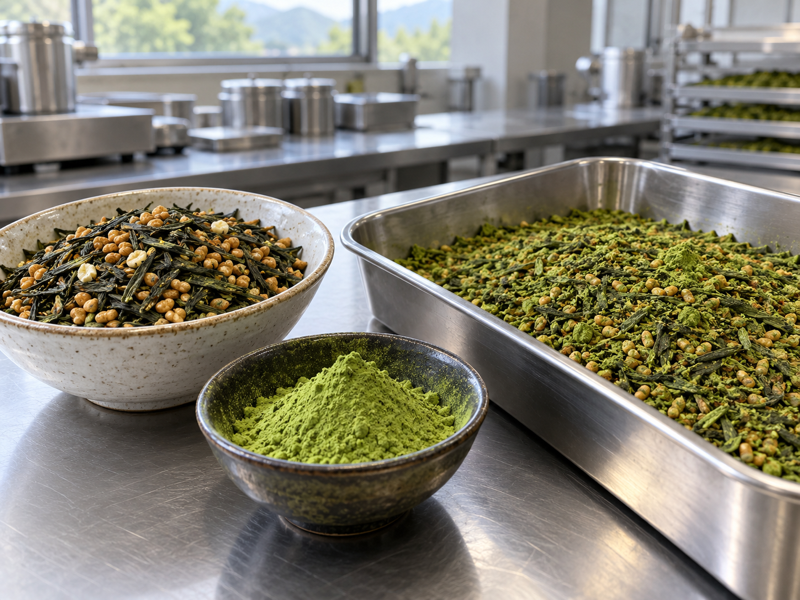
Matcha genmaicha is a blend of green tea, roasted rice, and added matcha powder. It retains the toasted-rice character of genmaicha while the fine tea powder can add green color and a stronger tea presence. A buyer should not expect one fixed recipe behind the name: proportions, leaf type, roast, powder grade, and packaging can vary. This guide focuses on what the blend does inside café drinks and food formulas: dispersion, sediment, flavor after dilution, and process fit. The underlying genmaicha category is described by Japan's agriculture ministry.
Contents
- 1. What ingredients make a tea matcha genmaicha?
- 2. How does it taste compared with plain genmaicha?
- 3. Does matcha change caffeine in genmaicha?
- 4. What happens to matcha powder during brewing and mixing?
- 5. Which applications suit the blend?
- 6. What happens to matcha powder in storage?
- 7. How can a buyer compare suppliers objectively?
- 8. How can a product team formulate around the blend?
- 9. Which process records show that the application works?
- 10. What decision process leads to a good launch?
1. What ingredients make a tea matcha genmaicha?
The base contains green tea and roasted rice, with matcha added as a fine powder. Plain genmaicha contains the first two components and need not contain matcha. Green tea may come from different leaf materials, and rice can be prepared in different ways. The name tells a buyer the broad composition but does not reveal blend ratios. A package that says “matcha genmaicha” should have an ingredient statement that confirms actual matcha, not merely a green color or matcha-like flavor.
Ask for the exact SKU specification and a sample that represents production. Look closely at the dry blend. Fine powder can coat the rice and leaves unevenly, settle at the bottom of a bag, or transfer to packaging surfaces. A scoop from the top may not resemble a scoop from the bottom after shipping. Mix according to the supplier's directions and sample multiple positions during evaluation. If a brand requires a certain matcha percentage, tea origin, or rice type, put that requirement in its purchasing specification. The category name alone cannot enforce it.
| Component | Role in the blend | Buying question |
|---|---|---|
| Green tea leaf | Brewed tea structure | What leaf material is used? |
| Roasted rice | Toasted aroma | How consistent is the roast? |
| Matcha powder | Green color and tea character | How is it distributed and protected? |
2. How does it taste compared with plain genmaicha?
Plain genmaicha often foregrounds the roasted grain note. A matcha-added version can feel more tea-forward and look greener, but those effects depend on how much powder is present and how the drink is prepared. Some matcha-iri products remain gentle and rice-led; others lean into matcha's vegetal character. A dark rice roast may compete with delicate matcha, while a faint roast may disappear in an iced or milk application. Taste rather than name should decide the fit.
Compare both products under a matched hot brew first. The genmaicha versus matcha comparison can help a buyer explain the ingredient distinction to a product team. Score roasted aroma, vegetal taste, bitterness, color, mouthfeel, and finish. Then repeat in the actual format: iced tea, milk tea, or packaged drink. Milk may soften tea notes while retaining roasted aroma; ice can dilute both. A visibly green drink may create a customer expectation of stronger matcha than the product actually delivers. If that gap matters for a menu, choose a different ratio or describe the drink more precisely. Keep the control sample and recipe beside your decision record.
3. Does matcha change caffeine in genmaicha?
Matcha adds another source of tea caffeine. Fine powder may enter the cup rather than remain in the strainer, so an added-matcha blend should not inherit a caffeine figure from plain genmaicha. The effect on a sold serving depends on the matcha amount, tea-leaf amount, dose, steeping and agitation, filtration, and portion volume. It cannot be read from the shade of green alone.
Japan's agriculture ministry publishes a 10 mg per 100 mL value for a genmaicha infusion under a stated method. That figure does not establish the value for matcha genmaicha. The US FDA warns that caffeine in specific drinks varies. If a brand needs a numerical claim, it should test the finished beverage at its actual serving size and keep the report tied to the formulation. For ordinary menu copy, “contains caffeine from green tea and matcha” is clearer than an unsupported “low caffeine” promise.
| Caffeine question | Can the name answer it? | Better evidence |
|---|---|---|
| Does it contain caffeine? | Yes, tea ingredients imply it | Ingredient list |
| How much per cup? | No | Tested finished cup |
| Is it less than plain matcha? | No | Matched serving comparison |
| Can it be called caffeine free? | No | Do not assume such a claim |
4. What happens to matcha powder during brewing and mixing?
Matcha is fine enough to pass through many tea strainers. A hot infusion of the leaf-and-rice blend can therefore become a suspension when matcha enters the cup. That changes color, body, sediment, and the amount of tea solids consumed. Start with the supplier's method; Japan's agriculture ministry gives 90–100°C and about 30 seconds to one minute as a starting point for conventional genmaicha. Treat the matcha-added version as a separate trial rather than extending steep time until the liquid looks greener.
Weigh the blend, hold the filter type constant, and measure what happens after the drink stands. Compare a freshly mixed sample with one served after the proposed café hold. For a milk drink, note whether powder gathers at the bottom or clings to a clear cup. For a bottled drink, compare samples before and after the intended mixing and process steps. A team cannot compare two formulations fairly if it discards the passing powder in one trial and retains it in the other. Record the preparation used for every sensory and caffeine test.
5. Which applications suit the blend?
Loose tea retail is the most direct fit when the ingredients are visually appealing and the blend remains even in a pack. A café can offer a hot cup or an iced tea with a stronger green appearance than plain genmaicha. Milk tea may also work, though milk can hide subtle tea notes and make the rice aroma the main attraction. A dessert developer might use a suitable powder or infusion, but needs to test how heat, fat, sugar, and storage affect flavor and color.
The application determines the evaluation standard. Tea retail needs clear brewing guidance, attractive dry appearance, and stable aroma during shelf life. Foodservice needs repeatable scooping, quick preparation, and acceptable waste. RTD manufacturing needs process compatibility, stability, filtration decisions, and food safety controls. Matcha Village lists both matcha and genmaicha powder in its wider product portfolio; a buyer should confirm whether a quoted matcha genmaicha blend, custom formulation, or separate ingredients meet the intended application. Do not assume a catalog category is a ready-to-launch RTD formulation.
| Application | Useful form | Main test |
|---|---|---|
| Retail loose tea | Blended leaf, rice, matcha | Evenness after transport |
| Café hot or iced | Service-ready blend | Repeatable cup and sediment |
| Milk tea | Strong tested base | Roast and matcha visibility after milk |
| RTD | Validated ingredient or extract | Process and storage stability |
6. What happens to matcha powder in storage?
Fine powder has a large exposed surface and can change visibly or sensorially when storage is poor. In a mixed tea, it can collect in corners of a bag and separate from larger rice pieces. A buyer should assess both package protection and physical distribution. Look at samples from the beginning and end of a pack, and check aroma and color after the proposed storage period. A one-day tasting cannot prove the stated shelf life.
Ask the supplier how the blend should be packed, stored, and mixed before filling retail packs or preparing service batches. Verify the shelf-life basis for the exact SKU and packaging. Keep an unopened retained sample from an approved lot, and compare it with later deliveries under the same conditions. If a customer complaint concerns weak color in the final cup, investigate whether powder settled before scooping. If aroma is stale across the whole bag, investigate age and storage. Those are different defects with different remedies. Use lot codes and records to determine how widely an issue extends.
7. How can a buyer compare suppliers objectively?
Begin with a purchase brief specifying target flavor, visual appearance, use, packaging, annual or pilot volume, and required documents. Blind-code samples and use a standard hot brew. Then test finalists in the finished application. Score not only flavor but blend evenness, powder dusting, residue, storage behavior, cost per accepted serving, and whether the supplier can maintain a defined specification. A beautiful sample is less useful if the production lot shifts dramatically.
Request a second lot before a broad launch. Ask how the supplier controls matcha distribution, roasted-rice consistency, and changes to the tea component. Where exact formulation ratios are proprietary, require a sensory target and measurable acceptance criteria. Keep a reference sample and approved recipe. Confirm lead times and pack format in writing. Importers should request the documents needed for their destination market and check scope rather than accepting a broad certification claim. The best supplier is the one whose exact product performs in your process, not necessarily the one with the greenest dry sample.
| Evaluation area | Evidence | Decision rule |
|---|---|---|
| Flavor | Matched blind tasting | Meets target in final format |
| Distribution | Top/middle/bottom pack samples | No damaging segregation |
| Documentation | Current SKU records | Supports import and label review |
| Repeatability | At least two production lots | Acceptable sensory range |
8. How can a product team formulate around the blend?
Choose a fixed application base before optimizing the tea. In a latte, hold milk and sweetness constant while comparing matcha genmaicha doses. In ice cream, hold fat, sugar, and processing constant while assessing color, aftertaste, and any grit. In an iced drink, measure ice dilution and taste after the normal carry time. These tests reveal whether the matcha adds useful tea presence or merely a vivid green cue that disappears after processing.
If the blend has too little roasted-rice aroma, a higher dose may also raise bitterness and settling. Request a different tea-to-rice or matcha profile before forcing the same material into every formula. Write down ingredient mass per serving, mixing order, filter choice, and observed loss. A finished product may need a different ingredient format from the loose tea that made a good tasting cup. Keep consumer wording tied to the actual formula, but let the application trial decide which version to buy.
9. Which process records show that the application works?
A beverage or dessert team needs more than a dry-tea specification. Keep the actual trial recipe, ingredient lot, mixing sequence, equipment, filter or sieve, temperature, and finished yield. Photograph sediment at a fixed hold time and record sensory scores after the processing step that the commercial product will undergo. For a bottled drink, retain samples from the intended package and distribution condition. For frozen desserts, note particle feel after storage and normal serving, not only immediately after freezing.
Link each trial result to the offered SKU. A change in matcha share, leaf cut, or rice roast may alter a milk drink even if the supplier still calls it matcha genmaicha. Ask for a change-notification process and run a short application check on a representative new lot. If a numerical caffeine claim matters, test the finished serving using a suitable method. The process record tells the team whether the ingredient performs in the sold product; a generic brochure cannot answer that question.
| Process record | What it captures | Decision supported |
|---|---|---|
| Recipe and lot | Exact inputs and dose | Repeatability |
| Dispersion check | Settling at service hold | Drink presentation |
| Processed sample | Flavor after heat or freezing | Formula approval |
| Finished serving test | Product-specific measured value | Quantitative claim review |
10. What decision process leads to a good launch?
Choose the application first. Write a short target profile for toast, green tea, color, and mouthfeel. Source at least two representative blends, use one controlled hot-brew method, and then test finalists in the real product. Check how powder behaves during handling and storage. Request SKU-specific documents and a second lot before broad distribution. Price against cost per accepted serving and include waste from separation or short hold life.
When the candidate passes, approve the blend, brew recipe, pack format, and marketing language together. A buyer can request samples from Matcha Village or other qualified producers, but should treat every supplier claim as something to verify for the exact item. The result should be a repeatable toasted-green-tea experience that customers can recognize from one purchase to the next.
Frequently asked questions
Q1: Is matcha genmaicha pure matcha? No. It is a blend with green tea, roasted rice, and added matcha.
Q2: Is it the same as plain genmaicha? No. Plain genmaicha need not contain matcha powder.
Q3: Does matcha genmaicha contain caffeine? Yes. Both its green tea and matcha are tea caffeine sources.
Q4: Why does powder settle in the pack? Fine particles can separate from larger rice and leaves during handling; test pack evenness.
Q5: Can it be used for milk tea? Yes, if the finished drink retains the intended toasted and tea character after milk and ice.