
Matcha French toast sounds like an easy brunch addition until the first busy Saturday. Thick bread stays wet in the middle, thin bread falls apart, and a generous spoonful of tea can taste bitter under syrup. A café needs a repeatable breakfast plate, not one attractive test photo. Start with a defined bread, custard, cook method, and service time. Then compare finished portions under real shift conditions. This guide gives operators a practical trial plan for matcha French toast, including ingredient controls, food safety, staff instructions, and cost per accepted plate.
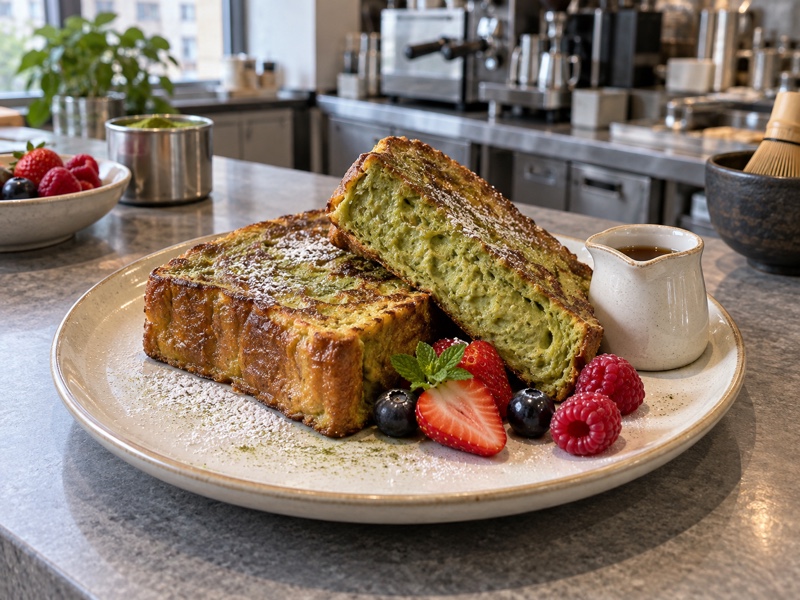
1. What should matcha French toast taste and look like?
The dish should still read as French toast: cooked egg custard in bread, a lightly browned exterior, and a soft but set center. Matcha adds tea aroma, a green tone, and slight bitterness. It should not create a raw powder aftertaste. Decide whether the tea belongs in the custard, a finishing sauce, or both. Putting tea into every component usually obscures the bread and raises cost without adding a distinct flavor. Start with the plate. Write a one-sentence menu description that describes the version customers will actually receive.
Turn an idea into a testable plate
Specify the bread type, slice thickness, portion count, custard pickup, cooking surface, topping weight, and time between pan and table. Use the same plate and lighting for each trial photograph. A kitchen can make one version aimed at dine-in brunch and another designed for a short takeaway trip. Test them separately. A plate that needs an elaborate garnish might work at a small café yet fail in a high-volume counter service. Ask tasters to identify matcha before telling them the flavor; otherwise, a bright green color may do more work than the tea itself. The goal is a recognizable tea note after syrup and fruit are added.
2. Which bread works for café service?
Bread is the main structural decision. Brioche supplies richness but can turn fragile after a long soak. A firm sandwich loaf offers predictable cost and sizing but may give a less generous eating experience. Challah or a similar enriched loaf can sit between those extremes. The useful comparison is not price per loaf; it is cost per portion that survives soaking, turning, cooking, and plating. Check the cut edge. Uneven slices create uneven cooking even when the pan timer stays fixed.
Compare bread by failure rate
Request a consistent slice specification from the bakery and trial it across several deliveries. Weigh a dry slice, then weigh it after the standard dip to estimate custard pickup. Cook three portions from each bread and record breakage, center texture, browning, and holding behavior. Day-old bread can absorb custard differently from fresh bread, so define which condition the kitchen will use. Do not quietly substitute a different loaf on weekends; the recipe may need another soak time. If an outsourced bakery changes thickness, ask for a corrective specification before changing the kitchen method to compensate.
| Bread option | Service advantage | Watch during trial |
|---|---|---|
| Brioche | Rich flavor and soft bite | Breakage and wet center |
| Challah-style loaf | Moderate structure | Variation between deliveries |
| Firm sandwich loaf | Standard portion cost | Thin slices drying in the pan |
3. How should a kitchen mix the matcha custard?
Dry matcha dropped directly into cold egg and milk can clump. Those small pockets show up as dark spots and bitter bites. Sift the tea, disperse it in a measured amount of liquid, then combine that smooth mixture with the rest of the custard. A small hand blender can work for a central batch if the kitchen can clean it properly; a whisk may be simpler for a few portions. Choose a method staff can repeat. Watch the batch, not the bowl. A perfectly mixed sample does not prove that a large service batch will stay uniform.
Set an actual mixing sequence
Write the sequence on the prep card: measure tea, sift, make a smooth slurry, add the remaining liquids, add eggs, mix, and check for visible powder. Define the batch size, approved container, mixing time, date label, and discard rule through the site’s food safety plan. Matcha settles, so include a brief remix step before portioning. The same custard may perform differently on the first and last plate if no one does that step. Run a small trial with the kitchen’s actual milk choice; sweetness and fat affect how strongly customers perceive the tea. A dairy-free version needs its own test because changing the milk changes custard behavior as well as the allergen statement.
4. How much matcha belongs in the recipe?
There is no honest universal dose for every tea, bread, and topping. A strong, bitter powder may need less than a mild powder with good green color. Start with three measured trial levels in the same base custard and compare cooked portions side by side. Record grams of powder per finished plate, not just teaspoons in a mixing bowl. This makes supplier changes and menu costing possible. Taste after toppings. A plain slice may have enough tea flavor, then lose it beneath sweet sauce.
Score flavor before color
Ask tasters to rate tea aroma, bitterness, sweetness balance, bread texture, and aftertaste without seeing the powder label. If they describe grassy bitterness before tea aroma, more powder is unlikely to fix the plate. Change the powder specification or reduce syrup. If a vivid color requires a dose that customers reject, do not use color as the success measure. For purchasing, compare two approved matcha lots in the complete recipe. A low-cost powder can become expensive when it requires a higher dose or produces inconsistent plates. Keep the sample and score sheet with the menu decision so the next buyer understands why the powder was chosen. The site’s best matcha powder guide offers a broader supplier checklist.
| Trial variable | Hold constant | Record |
|---|---|---|
| Tea dose | Bread, custard, topping | Flavor and cost per plate |
| Powder lot | Dose and cook method | Color, aroma, bitterness |
| Milk base | Tea and bread | Custard pickup and texture |
5. What cooking method gives a set center without a burnt surface?
The outside can brown before the custard inside has cooked through, especially with thick slices or a sweet enriched loaf. A heavily sugared pan can make the surface look finished early. Use a controlled pan or griddle setting and time each side, then check the thickest section of the trial portion. A second finish in an oven may help a very thick product, but it adds equipment demand and another staff step. Measure the center. Color alone cannot establish whether an egg-containing dish has met the kitchen’s food safety standard.
Validate the method with real equipment
Train staff on the actual griddle, not a home skillet used during recipe development. Map hot and cool zones, set a portion load, and record the outcome at opening and during a rush. A crowded surface recovers heat differently. Use the site’s food safety program to set cooking and holding controls; U.S. operators can consult the FDA’s foodservice egg-temperature guidance alongside applicable local rules. If a plate must wait before pickup, test what happens to its crust and center. A product that arrives limp after a short pass hold may need a different bread or plating sequence rather than a hotter griddle.
6. Which toppings support the tea instead of hiding it?
Fruit, cream, syrup, and powdered sugar can make a breakfast plate attractive, but each changes the balance. A heavy maple pour can flatten the tea into background bitterness. Fresh berries bring acidity; a lightly sweetened cream can soften bitterness; a small matcha sauce can reinforce aroma if it is smooth. Choose one main topping route and keep the rest optional. Plate the default first. Photos and menu copy should show what a standard order includes, not an expensive styling version.
Measure the topping in the finished portion
Weigh syrup or sauce rather than asking cooks to pour until the plate looks right. Keep wet toppings away from toast until service when possible. For takeaway, place sauce in a separate closed cup and test the full journey in the actual package. A crisp surface can soften within minutes under warm syrup. Compare the standard plate with a reduced-sugar version if that claim matters to the menu. Do not call a version low-sugar based only on a small dusting of powder; the bread, custard, syrup, and toppings all count. If customers routinely request extra sauce, consider whether the baseline tea dose or bread texture needs work before enlarging the topping portion.
| Topping route | Benefit | Possible failure |
|---|---|---|
| Measured berry portion | Fresh contrast | Excess juice softens bread |
| Light cream | Rounds tea bitterness | Dairy allergen and added labor |
| Separate syrup cup | Better takeaway texture | Extra packaging and cost |
7. Can the team prepare it before a rush?
Prep work should reduce service time without weakening quality or food controls. Bread can be cut to specification; toppings can be portioned; the approved custard can be mixed and labeled under the kitchen’s plan. Pre-soaking slices is a separate decision because bread continues to absorb liquid while it waits. A slice that holds its shape at minute one may collapse by minute twenty. Run a queue test. The breakfast rush is the real recipe environment.
Time each handoff
Observe an operator making five consecutive orders while other menu items share the station. Record the time to retrieve bread, mix custard, dip, cook, plate, garnish, and clean the area. Note when an order occupies the griddle and whether another cook can finish it from the prep card. If matcha French toast depends on one skilled person, the menu is fragile. A short training video or photograph of the correct cooked edge can help, but a measured station setup matters more. Decide who remixes the custard during service and how the team communicates that a batch has expired. Do not add an untested holding period just to improve queue numbers on paper.
8. What food safety and allergen controls belong on the prep card?
French toast commonly contains egg, milk, and wheat. Some breads include nuts or soy; toppings can introduce more allergens. Ingredient labels from the bakery and suppliers must be reviewed before a menu claim is approved. Use separate utensils and the site’s cross-contact procedure where needed. A plant-based milk substitution does not make an egg custard vegan. State the real ingredients. The menu should not leave staff to explain an undocumented substitution during a busy shift.
Put controls where staff can use them
The prep card should identify approved egg products, storage and labeling rules, cooking checks, cleaning steps, and the person responsible for a failed temperature or expired batch. Local regulations and the site’s food safety plan govern the exact limits. The FDA source above is a useful U.S. reference, not a replacement for jurisdiction-specific rules. Recheck the procedure when a bakery changes its loaf or a purchasing team switches custard ingredients. If raw egg contacts a shared station, schedule cleaning so finished ready-to-eat toppings are protected. Train front-of-house staff on the standard allergen answer and a clear escalation route for customers with allergies.
| Control point | Responsible role | Evidence to keep |
|---|---|---|
| Bread and topping labels | Purchasing | Current supplier specification |
| Custard batch and storage | Prep lead | Batch label and discard rule |
| Cooking check | Service cook | Validated method and spot checks |
9. How should a buyer calculate real plate cost?
Powder cost matters, but it is only one line. Count bread, eggs, milk, tea, syrup, garnish, cooking loss, packaging, and labor. Divide by accepted plates, not plated attempts, during the pilot. If one bread breaks in eight, its effective cost rises. If a premium matcha needs half the dose of a cheaper powder, compare the cost at the chosen flavor target. Keep waste visible. A dish that looks profitable on a spreadsheet can lose margin through short-life berries or unused custard.
Build a decision sheet that survives supplier changes
List the unit cost and actual quantity for each component, then add the station time observed in the queue trial. Use a range for seasonal fruit rather than a single optimistic price. Note which ingredients can be shared with existing drinks or desserts; a topping already used elsewhere may reduce waste. Request matcha samples with lot information, availability, and reorder lead time. One good test batch does not establish supply continuity. Set a maximum landed cost per accepted plate before negotiating a supplier quote. If the recipe misses the target, remove complexity with low customer value before cutting the tea dose blindly.
| Cost line | Measure in pilot | Decision question |
|---|---|---|
| Matcha | Grams per accepted plate | Does the flavor justify the dose? |
| Bread and custard | Yield after breakage | Is the chosen loaf reliable? |
| Toppings and packaging | Used portion, not pack price | What is discarded at close? |
10. What should the launch trial prove?
A launch decision needs evidence from more than a tasting panel. Test the plate at regular service volume, ask customers whether they taste tea, and compare repeat orders with ordinary brunch items. Record remakes, complaints, and time at the pass. If a greener plate sells once for its appearance but has poor repeat demand, reconsider the formula. Keep the trial small. A limited menu period allows the café to adjust bread, tea, and topping before printing permanent menus.
Close the loop with a written standard
The final specification should include a photograph of the standard plate, approved ingredient list, powder lot acceptance check, custard sequence, dip target, cook method, topping weights, allergen statement, and cost model. Give one person ownership of revisions. Check the plate again after a supplier change or seasonal topping swap. A practical next step is to run three controlled samples, select one, and serve it through a real breakfast shift. Then decide from observed quality and margin. The consumer-facing Sift & Simmer matcha French toast recipe shows one home-style interpretation; a café still needs its own service and safety validation.
Q1: Can a café make matcha French toast with ordinary sandwich bread? Yes, if the selected thickness survives dipping and gives the intended texture. Test yield against an enriched loaf before choosing on price alone.
Q2: Should matcha go into the custard or only the sauce? Custard usually gives tea flavor throughout the bread. A sauce can add aroma but needs its own portion and sweetness control.
Q3: Can a plant milk make the recipe dairy-free? Possibly, but every bread, custard, topping, and cross-contact step must also be checked. Egg remains in a standard custard.
Q4: Why does the center stay wet? Thick bread, excessive custard pickup, or a hot surface that browns too quickly can cause it. Validate the chosen bread and cooking method together.
Q5: What should be tested before a chain rollout? Check accepted-plate yield, flavor, cooking safety, service time, takeaway texture, allergen information, and cost across more than one shift.