
Horchata matcha combines a cinnamon-led rice drink with whisked matcha. A single attractive glass does not establish a menu product: rice solids can settle, milk alternatives change body, and a layered presentation can disappear before a customer drinks it. For a café chain or beverage brand, the useful starting point is a defined cup, followed by controlled trials of the horchata base, tea, assembly, and holding time. The questions below form a product brief that purchasing and operations can share.
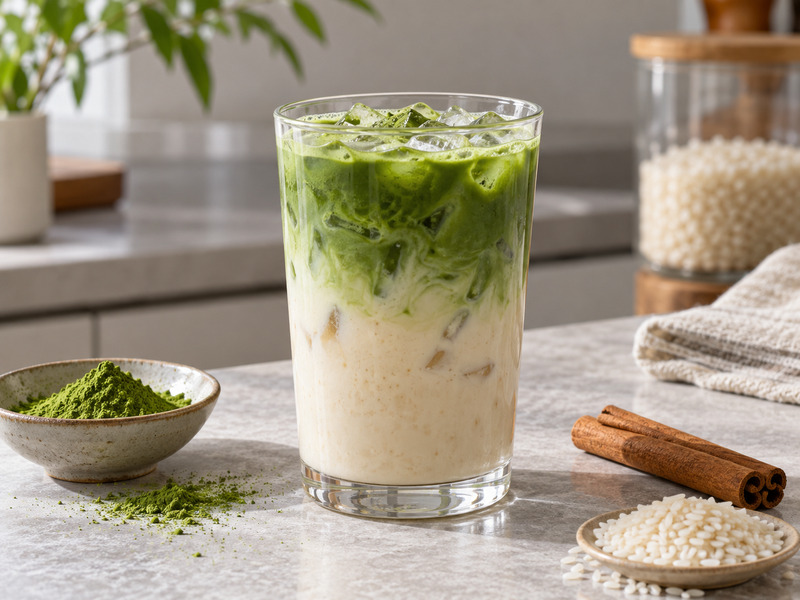
1. What should “horchata matcha” mean on a menu?
Horchata varies by region and by maker. Some recipes use rice and cinnamon; others include nuts, seeds, dairy, or ready-made concentrates. A menu description should tell customers what the store actually serves. If the intended drink is a cinnamon rice beverage with a matcha layer, say that. If a purchased base contains almond or milk, disclose it through the normal menu and allergen process. The name alone cannot tell an operator what must be bought or prepared.
Define the cup before choosing ingredients
Write down the cup size, ice amount, intended sweetness, whether the drink is stirred, and whether the layers are part of the promise. State whether the base is made in each store, centrally produced, or purchased. That decision changes equipment, shelf-life work, and labor. A brand may choose a deliberately blended drink if it serves better through delivery; a café with counter service may value a clean layered handoff. Both are valid, but the recipe and photo should match. Ask a small panel to describe the drink without prompting. If nobody identifies cinnamon or matcha, the formula needs work before a launch claim does.
2. Which horchata base fits the sales channel?
A scratch rice base gives a kitchen control over cinnamon strength and sweetness, but it also creates soaking, blending, straining, cleaning, and refrigerated holding tasks. A foodservice concentrate can shorten preparation if its flavor and ingredient list fit the concept. A packaged ready-to-pour base may suit outlets without prep space, although transport and opened-pack waste enter the economics. Compare the formats in the finished cup, not by tasting each base alone. Matcha and ice can expose a base that is thin or overly sweet.
Test the format in an ordinary shift
For scratch production, measure rice input, liquid recovered after straining, labor minutes, and discarded solids. For a supplied base, record delivered pack size, the time between opening and use, and whether staff shake it before every pour. Count the steps in a busy station. An appealing recipe that occupies a blender for several minutes per order may be unsuitable for a chain. A central kitchen can remove some store labor, but it creates a distribution and validated shelf-life project. The procurement comparison should use accepted drinks per pack or batch. A cheap ingredient that leaves half an opened container unused is not cheap in service.
| Base route | Operational benefit | Trial question |
|---|---|---|
| Made in store | Flexible cinnamon and sweetness | Can staff reproduce yield and hold safely? |
| Central kitchen | One controlled recipe | Does distribution preserve texture? |
| Supplied concentrate | Fewer preparation steps | What is the real dose and opened-pack loss? |
3. How should rice and cinnamon be handled?
Rice supplies the characteristic base in many horchata styles, while cinnamon can range from mild to dominant. Neither should be treated as a decorative flavor cue. Rice-derived solids affect opacity and sediment; cinnamon particles can add a gritty finish or collect at the bottom. Decide whether the product uses an infused cinnamon note, a filtered spice preparation, or a formulated flavor. Run the choice through the intended equipment and strainer. If the product is supplied ready to use, request its ingredient declaration and process description rather than assuming it was made like an in-store recipe.
Separate flavor work from safety validation
Use measured rice, water, cinnamon, sugar, and any milk alternative in bench trials. Change one variable at a time so a sweeter batch is not mistakenly credited to better rice extraction. Photograph a transparent cup at handoff and after the planned service interval. Taste the top and bottom separately. Rice drinks and dairy or plant-based additions require a food safety plan suited to the actual formula and route; a home soaking schedule cannot stand in for commercial validation. Qualified staff should set handling, refrigeration, and discard rules. Include the water source and cleaning method in the operating card because both affect repeatability across stores.
4. Which matcha works against a sweet cinnamon base?
The horchata base can cover quiet tea notes. A powder that tastes elegant in water may disappear after cinnamon, sugar, and ice arrive. Conversely, a strongly bitter powder can make the last sip unpleasant when sweetness falls away. Test pure matcha options at the intended dose in the finished drink. Ask for a lot-specific sample and keep a coded control. The objective is recognizable tea flavor through the entire cup, with a color that suits the menu image after realistic mixing.
Compare powders without changing the recipe
Prepare candidates with the same powder weight, initial water volume, temperature, base, and ice. Serve them in random order and have tasters score aroma, cinnamon balance, tea presence, bitterness, texture, and final sip. Then make a second round at the lower sweetness level customers can request. If a powder only works when heavily sweetened, it limits menu flexibility. Cost the candidates only after sensory approval. A higher price per kilogram may still yield a lower cost per accepted cup if less powder delivers the intended flavor. Keep the acceptance notes with the supplier lot number; “bright green” alone is too thin a purchasing specification.
| Matcha test | Hold constant | Reject if |
|---|---|---|
| Tea presence | Powder mass and horchata dose | Cinnamon erases tea flavor |
| Texture | Mixing tool and service time | Dry clumps or coarse last sip |
| Color | Cup, ice, lighting | Appearance misses menu standard |
5. How should product development build the recipe?
Begin with a target cup rather than a large batch. Weigh each component: horchata base, matcha, mixing water, ice, and optional topping. A small trial grid can change matcha dose along one axis and base sweetness along the other. This reveals whether a stronger tea needs a less sweet base or merely a different mixing order. Record the taste immediately and after the interval typical of pickup or delivery. The best bench version may not be the version that survives a lidded cup.
Make each trial answer one question
Do not alter cinnamon, milk alternative, and powder in the same round. Put the control drink in every session so tasters can notice when water, ice, or equipment changes. Weigh the finished cup and photograph it under standard lighting. If a matcha layer is part of the offer, specify how much of the tea concentrate enters the cup and where staff pour it. A layered drink should still taste balanced after stirring. Convert the selected trial into a one-page recipe with ingredients, sequence, tool, timing, and expected appearance. Have a barista who did not attend development make it without coaching. Their questions reveal gaps in the procedure.
6. What happens to texture during holding and delivery?
A horchata base may settle; matcha particles can settle too. If the drink is served layered, the boundary may blur as ice moves or a courier carries the cup. These are observable properties, not proof that the ingredient is defective. The business has to decide which changes customers will accept and which require a process adjustment. Build a reference cup, photograph it at handoff, then check it after the expected wait. Compare a stationary cup with one carried in a delivery bag. Taste after stirring as well as before.
Set a practical acceptance window
Record separation, sediment, foam, flavor distribution, and whether a brief shake restores the drink. A “shake before drinking” instruction may help with mild settling, but it should not excuse large clumps or an uneven powder dose. If the base separates in an opened container, test the first and last pours from that container. If the matcha layer sinks too quickly, changing the concentration or assembly order may help; increasing thickness can also alter mouthfeel. Trial each adjustment separately. The acceptance window should match the channel: a counter drink and a thirty-minute delivery order face different demands.
| Observation | At handoff | After target wait |
|---|---|---|
| Layer boundary | Photograph reference | Decide acceptable blending |
| Sediment | Check transparent cup bottom | Taste final sip |
| Flavor | Score after stir | Confirm tea and cinnamon remain balanced |
7. Which food safety and allergen controls matter?
A horchata recipe may contain rice, almond, dairy, oat ingredients, coconut, or other additions. The ingredient list cannot be inferred from the drink name. In the United States, tree nuts and milk are among the major allergens described in FDA allergen guidance. A chain also has to assess shared blenders, pitchers, and dispensers when offering substitutions. Menu staff need the approved ingredient list for each variation, including any syrup or topping. A plant-based base does not guarantee a dairy-free finished cup if a cream topping is added.
Write controls for the actual preparation route
Food safety personnel should review soaking, blending, chilling, transport, opened-pack handling, and cleaning according to the formula and jurisdiction. Do not assign a shelf life because another rice drink uses one. In-store scratch batches need preparation dates and a discard rule; a retail product needs process and shelf-life validation in its final package. Train employees to identify the current batch and to report a container that was left outside the approved temperature range. At launch, check the actual station layout: a safe written rule is ineffective if the refrigerator is too far from the point of use during a rush.
8. Which service format should a chain approve?
The same formula can be served as a mixed drink, a layered drink, or a bottled product. Each format changes customer expectations and equipment. A layered café version needs a consistent pour and a cup that shows it. A blended version may be more reliable for delivery. Bottling moves the project into packaging, stability, and label validation. Decide the format before ordering cartons or filming the menu photo. A brand should avoid promising a crisp layer if the drink will be shipped through a channel that blends it before arrival.
Run the pack and station trial together
Test the final cup, lid, straw opening, and ice. Check whether the straw pulls mostly base from the bottom while matcha remains above; instruct customers to stir if that is how the approved drink is meant to taste. For bottled concepts, inspect the actual filled pack after transport and storage. Label placement can hide the best view of the product or make sediment more obvious. In a café, time the full build during a typical order queue, including cleanup. A recipe that requires two separate rinses after each cup may disrupt service even when its ingredient cost is attractive.
| Format | Main promise | Approval test |
|---|---|---|
| Layered café cup | Visible two-tone handoff | Pour consistency and stirred flavor |
| Mixed takeaway cup | Balanced drink during travel | Taste after movement |
| Packaged beverage | Ready-to-drink convenience | Validated safety, stability, and label |
9. How should buyers calculate cost and demand?
Cost per kilogram of matcha says little about the finished drink. Count powder, rice base, sugar, milk alternative, ice, cup, lid, labor, and normal waste. Use accepted cups from a real batch rather than theoretical yield. A scratch base loses material during straining and cleaning; a supplied base may leave opened-pack residue. Include remakes from visible clumps or incorrect layering in the pilot. Then compare the drink with the menu price and likely sales mix, including customizations that change cost.
Model quiet and busy stores separately
A busy store may use a large pack before its approved opened-life ends. A quiet outlet might discard part of the same pack. One pack size need not serve both. Record actual daily demand during a limited test and identify peak periods. If staff slow down for the drink, the labor cost may be more material than a small change in tea price. For a new beverage, forecast cautiously and include a fallback plan for unused ingredients. A limited launch can reveal whether customers reorder, ask for less sweetness, or reject the texture. Those observations are more useful than a single promotional sales spike.
10. What should be in the supplier and launch file?
The purchasing brief should identify the chosen powder, the horchata base route, pack sizes, target sensory profile, and expected volumes. Request current specifications, ingredient declarations, lot identity, relevant test records, and origin support for any origin claim. Ask how formulation or raw-material changes will be communicated. Bulk matcha supply can be considered against the approved recipe, but a supplier quote does not replace the finished-cup trial. Keep a retained sample from the selected lot.
Close the loop between purchasing and operations
Sign off on the recipe card, allergen matrix, cleaning procedure, service photo, pack, price model, and training result together. Give each item an owner. If a new matcha lot, base formula, cup, or dispenser changes the drink, repeat the relevant test before rolling it through the chain. Sales teams should receive one accurate menu description and the approved ingredient list; store teams should receive a measured method they can execute. That is the point at which a promising horchata matcha becomes a reliable offer rather than a one-day tasting success.
| File item | Owner | Recheck trigger |
|---|---|---|
| Matcha lot and sensory reference | Purchasing and R&D | New lot or supplier |
| Base recipe and safety plan | R&D and quality | Formula or route change |
| Cup build and menu copy | Operations and marketing | Pack or presentation change |
FAQ
Q1: Does horchata matcha have to contain dairy?
No. Horchata bases vary. Specify every ingredient in the actual formula and describe the finished drink accurately.
Q2: Can a café prepare the rice base in advance?
Yes, if its food safety team validates the preparation, chilling, storage, and discard procedure for that formula and location.
Q3: Why does the drink settle?
Rice and matcha particles can move out of suspension. Test the intended holding time and establish an acceptable appearance and stirring instruction.
Q4: Which matcha grade should a chain buy?
Choose by coded tasting in the finished horchata, current documentation, repeatability, and cost per accepted cup. Grade names alone cannot settle the choice.
Q5: What is the most useful pilot measure?
Track repeat purchase alongside preparation time, remakes, final-sip taste, and waste. These show whether the drink works beyond its menu photo.