
A matcha frappe should taste like tea even when served cold, sweet and thick. That sounds simple until a busy bar changes the ice scoop, the milk brand or the blender cycle. The drink then arrives watery, bitter or too stiff for a straw. The Allrecipes matcha frappé combines milk, ice, vanilla syrup and matcha in a single serving. A café needs one step further: a written build that holds across shifts, cup sizes and powder lots. This guide sets out ten checks for developing and selling that drink without relying on a green photograph as proof of flavor.
Contents
- 1. What drink are customers expecting?
- 2. Which matcha should be tested?
- 3. What belongs in a control recipe?
- 4. How do you disperse matcha before blending?
- 5. How do you control ice and thickness?
- 6. How do milk and syrup change the taste?
- 7. What blender process should staff follow?
- 8. How should the drink be served and held?
- 9. How do you calculate the real serving cost?
- 10. What should the final service trial prove?
1. What drink are customers expecting?
Define the glass before the formula
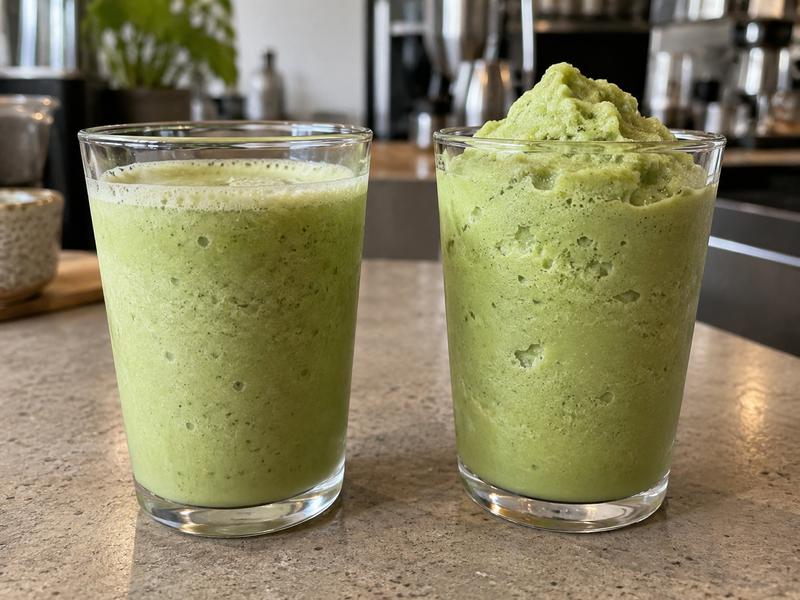
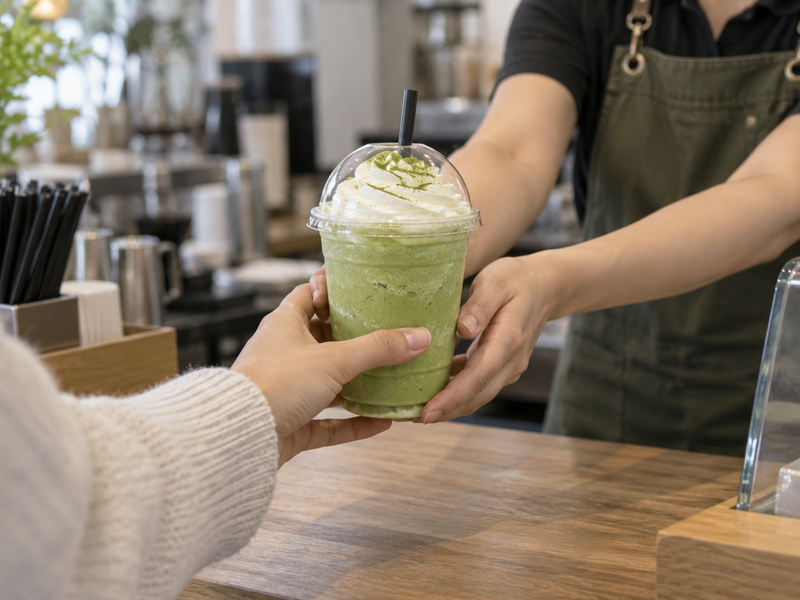
“Frappé” is used for several cold blended drinks. For this menu item, define it as a blended matcha, milk, ice and sweetener drink, with an optional topping. State whether the expected texture is pourable, spoonable or thick enough for a wide straw. Those choices drive the ice amount and blender time. An iced matcha latte with cubes left whole is a different drink; a matcha milkshake made with ice cream is another. Call the product what it is and photograph the finished serving at the temperature and texture customers will receive.
Choose a primary cup size for development. A recipe that works in a small glass may not scale linearly into a taller cup: more ice can dilute the tea, while the same powder dose disappears in a larger volume. Write a target taste sentence such as “tea remains clear after vanilla, with a smooth icy texture and no dry green flecks.” Taste with and without the proposed whipped cream. A sweet topping may make the first sip unlike the last, which matters if it is part of the promised drink.
2. Which matcha should be tested?
Buy for a cold, sweet application
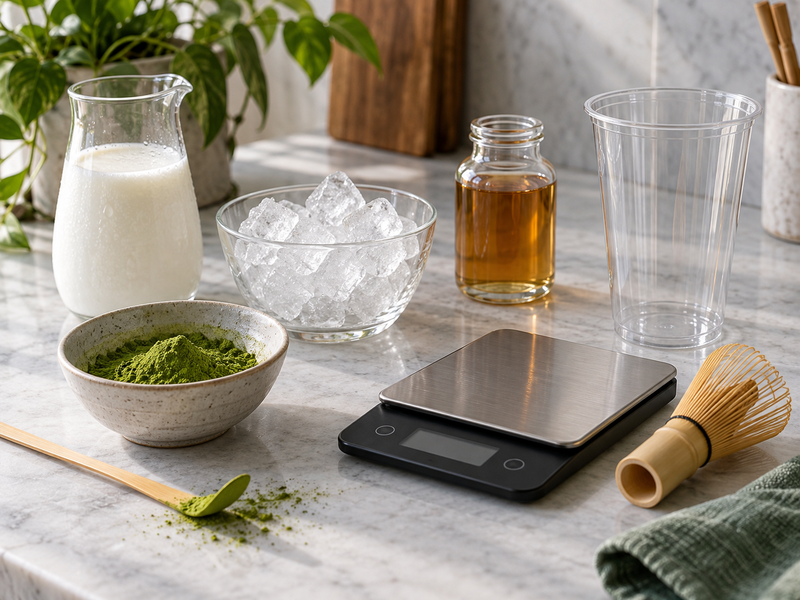
Compare actual supplier samples in the finished drink. Note whether the package contains pure matcha or a prepared sweetened mix. A blend changes the sugar calculation and may introduce ingredients that need an allergen review. Ask for the lot, origin information, ingredient statement, pack size and storage directions. Taste each pure powder in water to notice strong off notes, then judge it in the frappé. Cold milk and vanilla mask some flavors and expose others; a water score alone is not a purchasing decision.
Use a fixed powder mass, not a heaped spoon. If one sample needs more powder to remain perceptible, compare cost at the accepted dose, not price per kilogram. Examine color after blending and after a few minutes in the cup, but do not treat a brighter raw powder as a guarantee of better service color. Our matcha grades guide helps frame a sample request. The tasting record should identify the precise lot and recipe so another buyer can repeat it when a new powder arrives.
| Sample check | Write down | Decision |
|---|---|---|
| Ingredient statement | Pure tea or blend | Formula and allergen review |
| Powder mass | Grams per drink | Repeatable tea dose |
| Tea flavor | First and last sips | Balance with milk and syrup |
| Texture | Grit or green flecks | Dispersion method |
| Lot details | Supplier and pack code | Reorder and comparison |
3. What belongs in a control recipe?
Record mass, volume and output
A useful control recipe lists the cup, powder grams, milk volume, syrup volume or mass, ice mass, blender jar and cycle. The Allrecipes example offers a home starting point with milk, ice, vanilla syrup and matcha. For a café, weigh the ice and tea. “Five cubes” can mean different amounts depending on the machine; “one teaspoon” can change with clumps and packing. If the recipe includes whipped cream, specify its portion separately from the blended base.
Make three drinks from the control card on different shifts. Weigh or measure the final output and compare it with the serving line in the cup. An overfilled jar leads to waste; an underfilled cup tempts staff to add milk after blending, which changes both texture and tea strength. Log the room temperature and ice source if they change materially during the day. Adjust one variable at a time. A batch that improves after changing matcha, syrup and ice together does not tell the team which change mattered.
| Recipe field | Control entry | Why it is needed |
|---|---|---|
| Cup and fill line | Size and visual mark | Stable serving |
| Matcha | Gram weight | Flavor and cost |
| Milk | Measured volume | Consistency and allergens |
| Ice | Gram weight and source | Texture and dilution |
| Blender cycle | Setting and seconds | Reproducible texture |
4. How do you disperse matcha before blending?
Make a smooth concentrate first
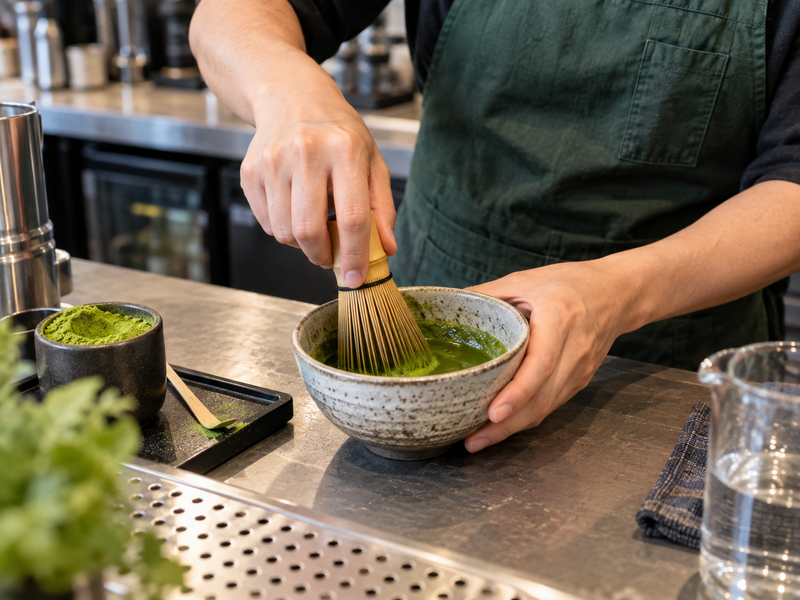
Dry matcha dropped onto cold milk or ice may cling to the jar wall or form pockets that survive blending. Test a short pre-dispersion step: sift the weighed powder into a small vessel, add a measured amount of recipe liquid and whisk until smooth. That liquid counts toward the drink total. If warm water helps, keep its volume and temperature consistent, then consider how it affects ice melt. Do not add an unmeasured “splash” just because the powder is slow to wet.
Compare the concentrate method with a direct-to-blender method using the same final formula. Pour the drinks into clear glasses, then look for green spots on the wall and at the bottom. Taste the first and last sips. The extra whisking step earns its place only if it improves consistency enough to justify the labor. If a supplier suggests a proprietary instant mix that disperses differently, record it as a separate formula. Training should show staff what an acceptable smooth concentrate looks like before the blender starts.
5. How do you control ice and thickness?
Set a target that can be measured in service
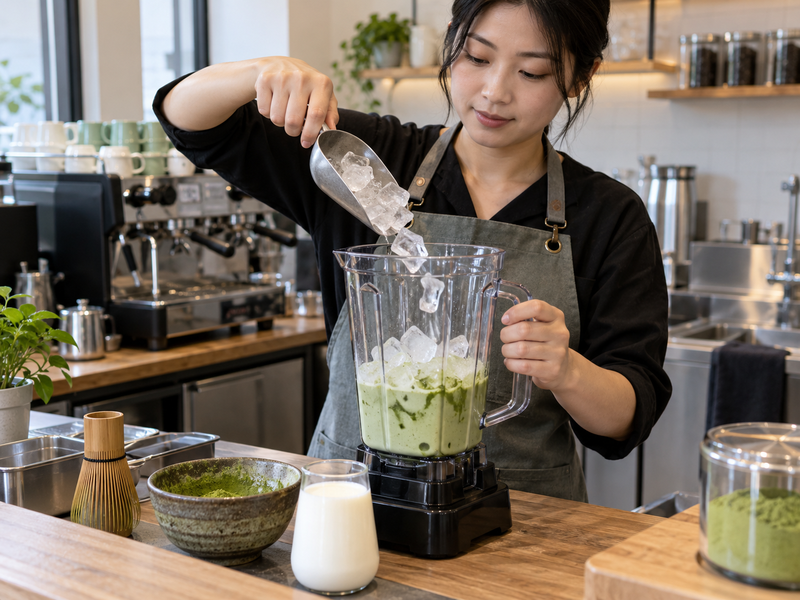
Ice is both ingredient and processing variable. Small crushed pieces, hard large cubes and partially melted bin ice do not behave the same in a blender. Choose one source and a weighed portion. Test the drink immediately after blending and after the expected time between making and handoff. Note how readily it pours and whether a straw can draw it without effort. A texture that looks impressive standing high above the cup may be frustrating to drink. A thin version may separate before the customer reaches a table.
If the drink is too stiff, change one variable: slightly less ice, a different blend cycle or an adjusted liquid amount. Do not add milk casually after blending; it can create a diluted layer. If it is watery, check ice condition and actual weights before adding stabilizers or extra powder. Matcha changes flavor and color, not the physics of poor ice control. Use a simple reference photo at the fill line and a timed pour test during training. The target is repeatable service, not a laboratory viscosity number.
| Symptom | First variable to check | Trial adjustment |
|---|---|---|
| Watery bottom | Melted ice or excess milk | Reweigh components |
| Spoon-stiff top | Too much ice | Lower ice in a controlled trial |
| Large ice pieces | Cycle or jar load | Adjust blend process |
| Foamy overflow | Excess air and fill | Reduce jar load or cycle |
6. How do milk and syrup change the taste?
Taste the recipe in the ingredients you sell
Milk contributes sweetness, body and a flavor of its own. A dairy milk and an oat drink can make the same matcha dose taste different. If the menu offers both, develop and cost both versions. Do not assume that replacing dairy volume for volume preserves the intended sweetness or texture. The same is true of syrups. Vanilla can round a sharp tea edge, but a high syrup dose may turn matcha into decoration. Set a sweetness target by tasting a measured series, then lock the accepted syrup portion.
For an unsweetened option, make and taste a separate recipe instead of removing syrup at the till. Sweetener may affect how the blend feels as well as tastes. Label the chosen milk and topping ingredients accurately. If a plant drink or whipped topping contains other allergens, review the actual supplier label. The objective is a tea-forward drink that remains acceptable to the guest, not the lowest possible sugar number presented without context. Avoid nutrition claims unless the final served recipe has been properly assessed for the market.
| Variant | Change to test | Keep fixed |
|---|---|---|
| Dairy base | Milk brand and fat level | Matcha and ice dose |
| Plant base | Chosen drink and sweetness | Cup and blender process |
| Less sweet | Syrup step-down | Matcha lot |
| No topping | Remove cream portion | Blended base |
7. What blender process should staff follow?
Turn an appliance setting into a repeatable method
The blender model, jar fill and cycle affect the final texture. Record a sequence: liquid, matcha concentrate, syrup and ice; or another order validated on your equipment. Blend for a defined cycle, inspect, and use one controlled finishing pulse if needed. A vague instruction to “blend until smooth” lets different baristas produce different drinks. Repeated long blending can melt more ice and warm the jar. Running too briefly leaves pieces or powder residue. The right process is the shortest one that reliably meets the target in the actual cup.
Train on the busiest expected load, not just one careful sample at a quiet bench. Time the full service step, including measuring, whisking, blending, pouring and cleaning the jar. If two drinks are blended together, verify that dividing the output still gives each cup the correct tea dose and fill. Check whether a double load uses the same cycle or needs a separate approved setting. Clean and sanitize equipment following local foodservice rules and the machine maker’s directions, especially when milk variants and allergens share a jar.
8. How should the drink be served and held?
Serve promptly and define the limits
A frappé continues changing after blending. Ice melts, the liquid layer settles and a whipped topping slumps. Decide whether it is an immediate handoff drink or suitable for a short delivery journey, then test the exact cup, lid and travel time. A dome lid may accommodate whipped cream but create more plastic and a poor seal. A flat lid may compress the topping. Test actual use rather than selecting packaging solely from a product photograph.
Do not preblend a dairy drink and assume that it will hold its quality in a refrigerator. If the business wants a prepared matcha concentrate, validate its preparation, storage and service under the applicable food safety plan; the final frappe should still be blended to order if that is what the menu promises. For a delivery trial, inspect the drink at handoff and arrival, noting separation, spill risk and straw access. If the drink fails, shorten the service radius or reformulate. A thinner “delivery version” should have its own recipe card and menu description.
9. How do you calculate the real serving cost?
Cost the accepted cup, not the powder bag
Price per kilogram of matcha does not tell a café what a frappé costs. Calculate tea grams per accepted serving, plus milk, syrup, ice, topping, cup, lid, straw and labor. Add rejected drinks from the pilot and any likely waste from an opened pack or expired topping. When comparing powders, use each at its accepted flavor dose. A cheaper powder that requires twice as much may not reduce cost. One that requires extra syrup to cover bitterness may also alter the product customers wanted.
Time the drink at a realistic order volume. A recipe that needs two minutes of whisking and a long blender cycle may limit throughput during a rush. Record cleanup time as well, particularly when a shared blender makes dairy and plant-based variants. Evaluate the menu price against both ingredient margin and service capacity. If the drink only works with an expensive topping, ask whether customers value that topping or whether the base can carry the product on its own.
| Cost line | Measurement | Common omission |
|---|---|---|
| Matcha | Grams at approved dose | Powder lost in measuring |
| Milk and syrup | Actual measured volume | Variant differences |
| Ice and topping | Serving portion | Overportioning |
| Packaging | Cup, lid and straw | Delivery pack |
| Labor and waste | Pilot minutes and rejects | Blender cleanup |
10. What should the final service trial prove?
Give staff a pass or fail standard
Ask a barista who did not develop the recipe to make it from the card. Observe without coaching. The drink should meet the target fill, look even, have no powder pockets, pour and draw through the chosen straw, and taste of matcha after the sweetness. Repeat at the start and end of a busy period. Check a dairy and any plant-based variant separately. If staff cannot reproduce it, the card or the process needs revision before launch.
The finished specification should include the approved powder lot or substitution procedure, ingredient versions, gram and volume measures, cup, ice source, whisking method, blender cycle, topping and handoff time. Put an image of the accepted texture beside the written flavor description. After launch, track remakes and customer comments for a week, then compare them with the pilot. A change in powder, milk, ice machine or blender warrants a small recheck. That is faster than discovering several weeks later that the menu name stayed the same while the drink quietly changed.
FAQ
Q1. Can matcha be poured dry into the blender? Test it on your equipment. A measured pre-dispersion step often makes it easier to spot and prevent powder pockets.
Q2. How much ice belongs in a matcha frappe? Set a gram weight for the intended cup and test the texture at handoff; cube counts are unreliable.
Q3. Is a sweetened matcha mix equivalent to pure matcha? No. The mix changes the ingredient, sugar and possible allergen calculation.
Q4. Can a dairy-free version use the same recipe? Run a separate trial with the chosen plant drink and record the accepted measurements.
Q5. Can the drink be made ahead? Test any concentrate under your approved handling plan, then blend the final ice drink for the service window you promise.