
Matcha for offices works only when employees can make a decent cup without turning a shared pantry into a cleaning problem. Facilities may buy a large bag because its unit price looks attractive, while employees need a small container, simple instructions, dry scoops, and a place to wash tools. This guide helps workplace buyers define a drink format, size the opening order, assign pantry ownership, and evaluate repeat supply. It treats matcha as a beverage choice, without promises about focus, energy, or staff performance. Research on matcha storage temperature supports protecting powder quality; the actual pack instructions must come from the selected supplier.
Contents
- 1. What cup should the office program serve?
- 2. How many servings should the buyer plan?
- 3. Which powder should a shared pantry test?
- 4. What equipment fits an office counter?
- 5. How should portions and instructions be presented?
- 6. Where should unopened and opened powder sit?
- 7. Who cleans the shared station?
- 8. How should milk and allergen information be handled?
- 9. When should facilities reorder matcha?
- 10. What should a multi-office supply plan record?
1. What cup should the office program serve?
Select one reliable starting format
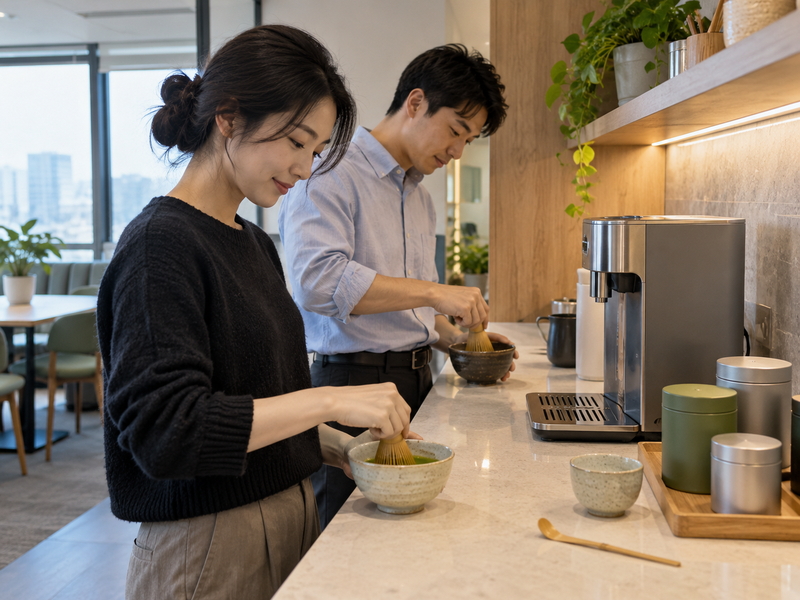
Decide whether employees will make a plain matcha, a latte, or both. That choice affects powder, milk, equipment, cleaning, and instructions. A plain cup can use measured powder and water in a suitable vessel. A latte adds another ingredient and often another container. Start with a format that the pantry can support during a busy morning. Observe whether people have space to prepare the drink without blocking the coffee queue or leaving green powder on nearby equipment.
Specify the cup size and target taste before requesting samples. A powder that tastes balanced in water may fade behind a sweetened milk base. A ready-made sweetened mix should be assessed as a separate product because its ingredients and dose differ from straight matcha. For a workplace serving many preferences, offer a base recipe with optional milk or sweetener rather than assuming everyone wants one prepared flavor. A short in-person trial with ordinary employees will show whether the proposed format fits the space and the time people actually have.
| Cup format | Needed at station | Trial question |
|---|---|---|
| Plain matcha | Powder, water, vessel, mixing tool | Can staff prepare it consistently? |
| Matcha latte | Powder, milk option, mixing tool | Does it taste right at the chosen dose? |
| Sweetened mix | Mix and stated preparation method | Do ingredients fit workplace needs? |
2. How many servings should the buyer plan?
Estimate adoption from observed use
Headcount alone overstates demand. Not everyone drinks tea, some work remotely, and interest after a launch tasting may not continue at the same rate. Buy a controlled opening quantity, record cups prepared or powder issued for several weeks, and then set a reorder estimate. Include peak occupancy days and any catered meetings as separate uses. If pantry attendants portion drinks, the count is easy to collect; for self-service, weigh or record the container at regular intervals.
Convert servings into grams of powder with the tested recipe. Then compare that use rate with inner-pack size and supplier lead time. A company with several floors may need small working containers at each station and sealed stock in one central storeroom. A single large open bag on every floor can create more exposure and waste than the price saving warrants. Record any loss from spills or preparation mistakes. The number that matters for the next purchase is powder actually consumed by the program, not the maximum cups a sales deck says the office could serve.
| Planning input | How to collect it | Why it changes the order |
|---|---|---|
| Occupied workdays | Facilities schedule | Separates daily from occasional demand |
| Cup count | Counter log or measured issue | Shows actual uptake |
| Powder per cup | Approved recipe in grams | Converts cups to kilograms |
| Spillage | Pantry record | Prevents repeated stock surprises |
3. Which powder should a shared pantry test?
Compare finished cups, not grade words
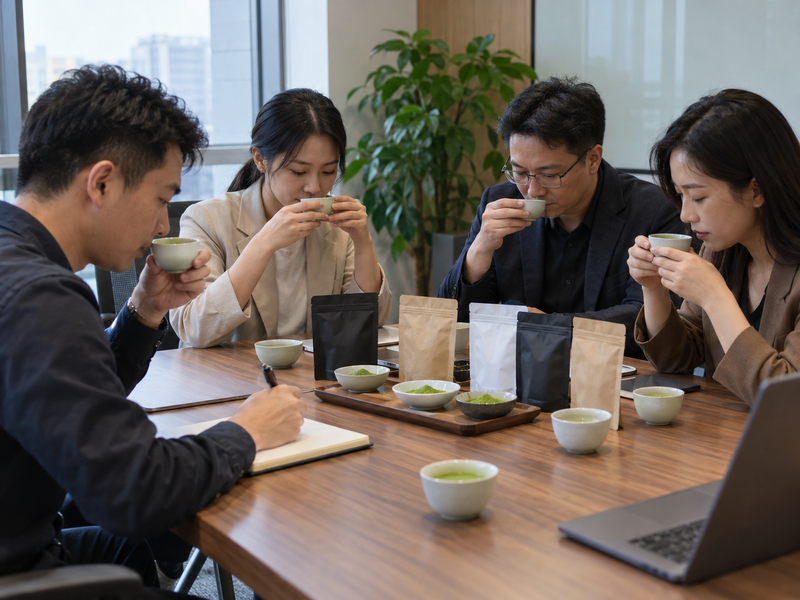
Request two or three samples designed for the selected cup format. Code them and prepare each with the same powder mass, water, milk where relevant, and cup size. Ask employees to note flavor, texture, and whether they could make it without help. Keep the test short enough that employees will finish it during an ordinary break. A premium label or elaborate tasting vocabulary does not prove the product suits a shared pantry. A powder requiring careful technique may perform poorly when visitors follow a simple card.
Ask suppliers for product codes, ingredient statements, inner-pack options, storage instructions, and a sample from the product they intend to quote. Hold one sealed reference sample and a recipe card. If a supplier later changes the powder or pre-mix, test the replacement before circulating it across offices. The purchase decision should include price per approved cup and the time required to prepare and clean it. A slightly more expensive powder can still be the practical choice if the staff-approved dose and workflow use less material or fewer steps.
4. What equipment fits an office counter?
Choose tools the site can store and clean
A shared whisk, handheld frother, shaker, or dispensing setup each creates a different task. Trial the actual device with the proposed powder and cup. Ask whether it disperses powder without splashing, where it dries, who checks its condition, and whether spare parts are available. An attractive bamboo whisk can be appropriate for a supervised tea corner, yet a high-traffic self-service station may need a simpler tool and a clear cleaning method. Avoid buying a tool solely from a catalog photograph.
Measure the counter footprint, power outlets, water access, sink distance, and storage shelf. Keep electrical equipment clear of spills and follow the workplace’s ordinary safety rules. A tool that lives in a closed damp drawer is hard to maintain; a tool left loose by the sink may go missing. Label the station so the matcha container, measuring utensil, mixing tool, and waste bin have obvious places. Make one cup during the busiest break before approving a full-office rollout. The trial reveals more than an equipment list.
| Tool option | Space or service need | Maintenance question |
|---|---|---|
| Bamboo whisk | Bowl and drying location | Who rinses and dries it? |
| Handheld frother | Power and cup clearance | Who cleans the head? |
| Shaker | Lidded vessel and wash space | Can users prevent residue? |
| Attended station | Staff and scheduled service | Is staffing sustainable? |
5. How should portions and instructions be presented?
Make the first cup repeatable
Print a brief recipe card with powder mass, water amount, mixing sequence, optional milk, and the cup the office supplies. A scoop can help employees, but test its fill against a scale and explain whether it should be level. Keep the card beside the powder rather than in a launch email nobody can find later. Use pictures of the actual office equipment if visual instructions help. Avoid a long ritual description that employees must read while others wait behind them.
Self-service users will improvise. Run a small observation trial and watch for dry powder on the bottom, a concentrated paste that cannot be mixed, or repeated scoops that make the drink unpleasant. Adjust the card only after testing the change. A prepared serving count also helps purchasing: when the normal portion is clear, facilities can estimate stock and identify unusual waste. If an office provides both plain and sweetened products, keep them in visibly different containers with their own ingredient details so people do not treat one as an unlabeled substitute for the other.
6. Where should unopened and opened powder sit?
Separate reserve stock from the daily container
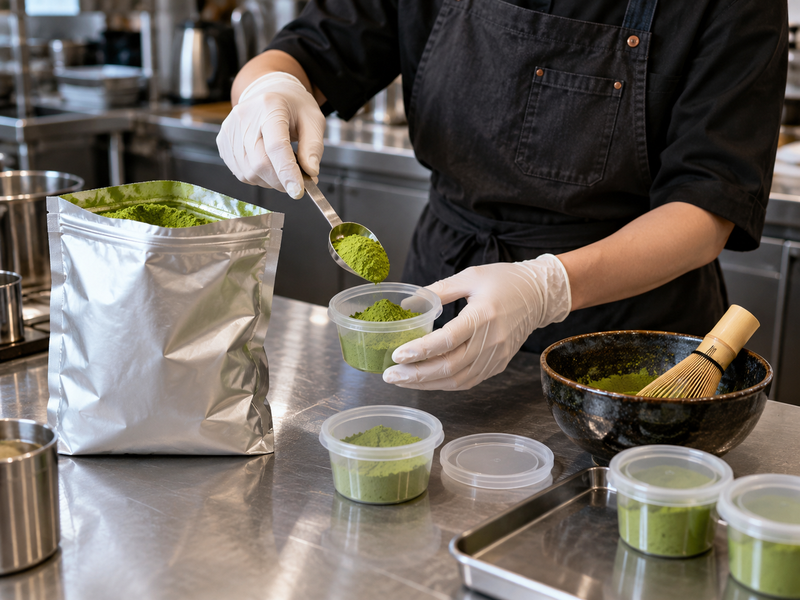
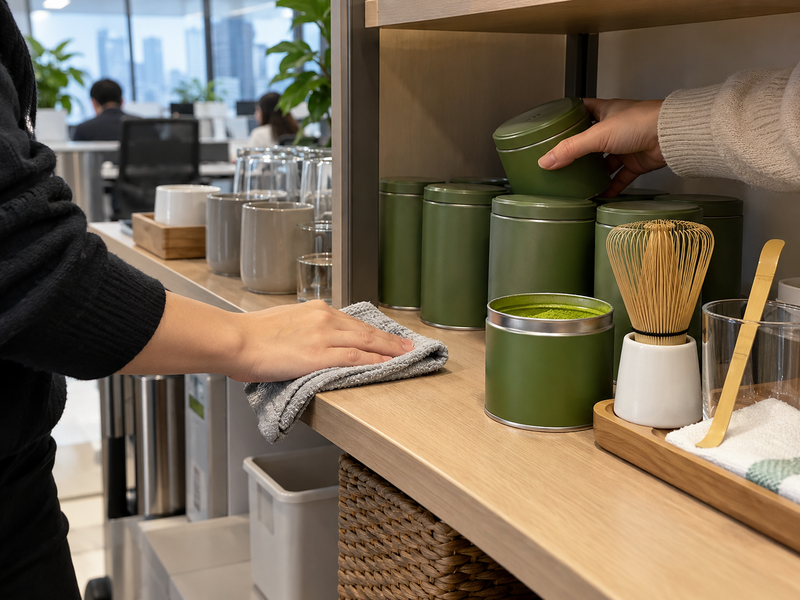
Follow the supplier’s storage instructions for sealed packs and keep cartons in a dry, protected location away from cleaning products and direct sun. Give the pantry a small opaque working container or inner bag that staff can close promptly. Mark its product code, lot, and opening date in a traceable record. A large bulk sack beside the kettle invites frequent opening and moisture exposure. Store the remaining sealed bags in the approved location and issue one at a time.
Experimental work on temperature and light and water activity found changes in measured matcha quality under tested storage conditions. Those studies support controlling exposure; they do not set a universal open-pack period for an office. If the pantry is hot or humid, ask the supplier how its specific pack should be handled. Do not move a chilled sealed bag into warm air and open it without considering condensation. Record any damaged seal or unexpected odor and hold the affected lot for review.
| Stock location | Container | Record |
|---|---|---|
| Central reserve | Sealed supplier packs | Lot, date, quantity |
| Pantry working stock | Small closed container or inner bag | Opening date and lot |
| Quality hold | Isolated original pack | Reason and reviewer |
7. Who cleans the shared station?
Assign the task before launch
A self-service sign saying “please clean up” rarely answers who washes the frother at closing or checks a sticky lid. Facilities should decide which tasks belong to each user and which belong to a pantry attendant or cleaning contractor. Write the schedule for utensils, food-contact surfaces, storage containers, and nearby counters. Provide a place for tools to dry and a procedure for replacing worn or damaged equipment. The chosen drink format should fit the labor the office can actually provide.
Use the site’s food-service policy and local requirements to set the procedure. The FDA Food Code provides a model for foodservice practices in the United States, but its applicability to a particular office pantry depends on local rules and how the service operates. Keep the practical test visible: after a busy break, does the station remain ready for the next person? If the answer is no, change the setup, staffing, or menu before adding more powder and tools.
8. How should milk and allergen information be handled?
Label the full drink choice
Straight matcha and a matcha latte are different ingredient propositions. Milk, soy or nut-based beverages, sweetened mixes, toppings, and shared equipment can change what an employee needs to know. Keep ingredient statements available for the powder and each optional base. If the office uses refillable bottles or unlabeled jars, transfer the name and ingredient information into a reliable pantry record and avoid anonymous containers. Ask the workplace’s food-safety lead to assess cross-contact practices where they matter.
The FDA’s food-allergy guidance explains why ingredients and cross-contact both require attention. It does not certify a particular office drink as safe for any individual. An employee with a question should be able to identify the actual product and its source label. Do not advertise a drink as allergen-free because the tea powder itself contains only tea. The pantry needs a truthful account of the whole recipe and of any shared tool that handles other ingredients.
| Item | Information to keep | Owner |
|---|---|---|
| Matcha powder | Supplier ingredient statement and lot | Purchasing |
| Milk or alternative | Brand and ingredient label | Pantry team |
| Sweetened mix | Complete mix label | Purchasing |
| Shared tools | Cleaning procedure | Facilities |
9. When should facilities reorder matcha?
Use measured demand and a lead-time buffer
Set a reorder point from actual weekly use, supplier lead time, and a modest agreed buffer. Check the balance of sealed packs, not just the partly filled working jar. A pantry may appear well stocked while its central reserve is empty, or the opposite. Keep lot and date information visible so the next issue uses appropriate stock. If office attendance changes after a hiring wave or remote-work policy shift, recalculate the consumption rate rather than repeating an old standing order.
Compare the next order with the remaining dated life and pack size. A discounted carton may outlast the office’s realistic use. Ask the supplier to state the product and delivery schedule it can actually support, especially if several sites are ordering at once. Track service complaints such as gritty cups or damaged bags alongside unit consumption. Stock records alone cannot show whether people enjoy the drink. One monthly review can align facilities, procurement, and the vendor before a small pantry problem becomes a company-wide purchase mistake.

10. What should a multi-office supply plan record?
Give each location a simple issue log
Record the approved SKU, inner-pack size, lot, cases sent to each office, local opening date, usage, and any quality hold. Name the site contact who can report a problem. A shared supplier specification should define the powder that passed the original cup trial; if the supplier proposes a replacement, test it in the office recipe first. Give small and large offices different delivery quantities if their measured use differs. Uniform cartons are convenient for purchasing but can leave a slow site with excess stock.
Plan a limited rollout to one or two locations, review preparation and cleaning, then extend the program. Matcha Village buyers can share office count, proposed drink format, estimated servings, pack preference, and destination for a specific quotation. Ask the supplier to confirm the actual SKU, storage instruction, minimum order, and delivery schedule. The result should be an office beverage program that a new facilities coordinator can understand from one recipe card and one inventory sheet, without relying on the person who ran the launch tasting.
Give pantry staff the opened-pack steps in our matcha storage guide alongside the office recipe card.
FAQ
Q1. Is matcha suitable for every office? Trial one drink format in the actual pantry. The result depends on employee preference, counter space, cleaning, and purchasing support.
Q2. Should an office buy the largest available bag? Choose an inner pack the site can use and close under the supplier’s storage guidance; a lower unit price may not offset waste.
Q3. Does an office need a bamboo whisk? No specific tool is mandatory for every service style. Test the tool that staff can use, clean, and store reliably.
Q4. Can facilities promise matcha will improve productivity? This procurement plan makes no such claim. Describe the beverage and its ingredients accurately.
Q5. How should the first reorder quantity be chosen? Use measured powder issued during the pilot, expected occupied days, supplier lead time, and remaining dated life.
Test one pantry before buying for every office
Choose a cup, buy a small quantity of the tested powder, and observe two weeks of real service. Record cups, powder used, cleaning time, and complaints. Those notes will tell the next buyer how much to order, which pack size works, and whether the program can be maintained without adding an unplanned task to the pantry team.