
A Canadian buyer may sample matcha in September and receive the first commercial shipment in February. The sample says little about who will import the food, what label will appear on a retail tin, or whether the warehouse can trace a mixed-lot delivery. This matcha wholesale Canada guide follows one order from product brief to release. It is for cafés, retailers and brands choosing between a domestic distributor and direct import. Use the Canadian Food Inspection Agency’s food-import overview and the Canada Border Services Agency’s commercial-import guide for current requirements tied to your goods and role.
Contents
- 1. Who is buying, importing and receiving the matcha?
- 2. Which matcha product does the business actually need?
- 3. How should the importer check Canadian food requirements?
- 4. Which classification and border details need confirmation?
- 5. What evidence should arrive before the goods move?
- 6. How should buyers compare domestic and direct-import routes?
- 7. How should the Canadian label be reviewed?
- 8. What should a winter receiving plan include?
- 9. How should lots move through cafés and retail accounts?
- 10. When is the first order ready for approval?
1. Who is buying, importing and receiving the matcha?
Draw the route through the Canadian business
Write down the legal buyer, supplier, destination warehouse and customer type before discussing a volume discount. A café buying sealed bags from a Canadian distributor has a different set of tasks from a brand importing finished tins under its own name. A third arrangement is an ingredient imported for local repacking. The roles should be clear on the purchase order and in the contact list: who asks the overseas supplier for records, who works with customs, who handles the food-import review, and who can place stock on hold.
Start with one physical route. If powder moves through a central warehouse to several cafés, record which lot reaches each site. For retail cases, record the saleable unit and customer. The CFIA importing-food overview helps the appointed importer identify its obligations; the CBSA commercial guide covers customs. Neither replaces a route-specific review.
2. Which matcha product does the business actually need?
Test the final use, not the supplier’s grade name
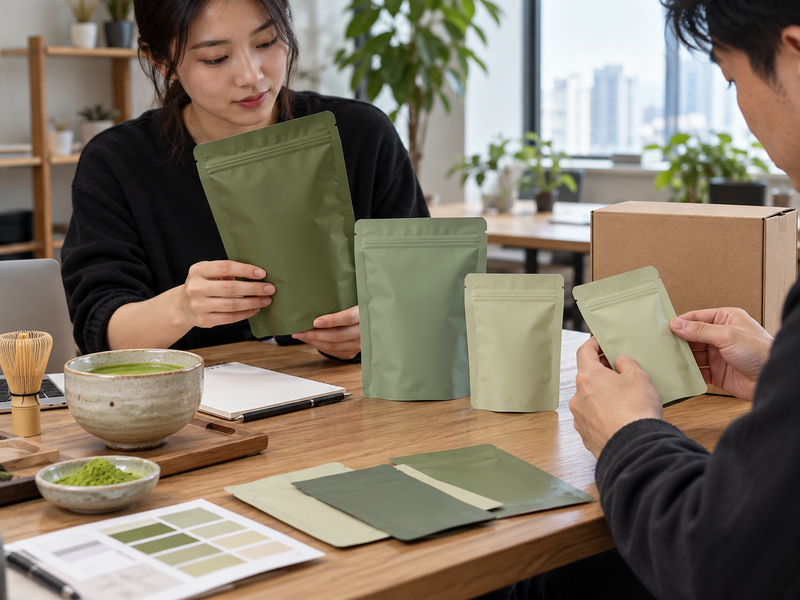
Define each SKU by application. A café latte powder, a pure matcha retail tin, and a sweetened drink mix should not share one specification merely because the packaging says matcha. Record ingredient composition, sensory target, pack weight, lot-code format, declared origin, date marking and storage instruction. Ask for a sample linked to a known production lot, then test it in the menu drink or finished product you intend to sell. That trial is a buyer check, not proof of regulatory compliance or future batch identity.
Use a fixed recipe and blind comparison if several powders are being considered. Note color, aroma, clumping, bitterness and how the powder performs in milk or the intended process. Once a candidate is approved, keep a reference sample under controlled conditions and write down tolerances that matter. If a supplier later proposes a different blend or pack, repeat the relevant trial. An importer with a beautiful launch sample and no product specification has little basis for accepting or rejecting the first commercial lot.
| SKU question | Evidence to collect | Buyer decision |
|---|---|---|
| Pure or mixed product? | Ingredient list and specification | Separate product records |
| Intended use? | Recipe or production trial | Approve functional fit |
| Pack size? | Physical sample and case plan | Match turnover and storage |
| Lot coding? | Label proof and example record | Enable traceability |
| Supplier change? | Written notice and new sample | Decide whether to re-test |
3. How should the importer check Canadian food requirements?
Use the business activity and product to find the rule
Do not decide licence, preventive-control or recordkeeping needs from a generic wholesale blog. The CFIA provides a step-by-step guide to importing food, a list of food business activities that require a licence, and a guide for food importers preparing preventive controls. Have the person who will import matcha work through those resources using the exact activity, food and destination. Record the answer and the date checked. A domestic distributor can explain the import route it used, but a downstream retailer should still manage its own food-business responsibilities.
Make this a gate before the supplier fills the order. If the importer needs more information about the establishment, formulation, test scope or traceability, request it before shipment. A generic certificate packet cannot resolve every Canadian requirement. A current document can still apply to the wrong site or lot. Keep the activity assessment, adviser notes and supplier evidence in the order file.

| Requirement review | Official starting point | Record to keep |
|---|---|---|
| Import activity | CFIA importing-food steps | Named importing entity |
| Licence applicability | CFIA activity list | Decision and review date |
| Preventive controls | CFIA importer guide | Plan owner and open actions |
| Supplier documents | Agreed product specification | Version and lot link |
4. Which classification and border details need confirmation?
Check the current entry rather than reusing another shipment
Describe the exact goods for the customs representative: pure or blended powder, ingredients, origin, pack sizes, total weight and intended use. The CBSA guide to importing commercial goods sets out the business process. The 2026 Canadian Customs Tariff is the current tariff publication to consult, but classification and any applicable treatment must be checked for the particular goods. Do not publish one duty percentage as though it covers every matcha blend and route.
The CFIA’s Automated Import Reference System is another product-and-origin check. Give the customs adviser enough detail to identify outstanding requirements. Estimate landed cost from supplier price, transport, brokerage, applicable border charges, onward freight and observed handling loss. Mark unknown amounts provisional. If a gift set adds utensils or a mix adds sugar, request a separate classification review.
| Border input | Buyer source | Why it changes the review |
|---|---|---|
| Ingredients and form | Approved specification | Defines the actual goods |
| Origin and seller | Supplier record | Affects entry information |
| Pack configuration | Packing plan | Changes shipment description |
| Destination and importer | Route sheet | Assigns the responsible party |
| Current tariff check | CBSA and customs adviser | Supports landed-cost estimate |
5. What evidence should arrive before the goods move?
Connect the documents to the commercial lot
Request the final invoice, packing list, product specification, label proof and a record of which lots will be shipped. Confirm supplier name, SKU, pack count, net weight and lot codes agree across them. Where the agreed specification calls for a certificate of analysis or other test evidence, check the reported lot, test scope, date and issuing party. A report from last season may help you understand a supplier’s process, but it cannot establish the results for a different shipment. Ask for an updated record or hold the point open until the named lot exists.
Send documents to the importer, customs representative and receiving team before dispatch. The importer checks entry readiness, the warehouse checks count and lot marks, and the buyer checks the promised product. Date revised documents and identify the governing copy. If bag size or artwork changes, revise the order and packing plan. The CFIA food-import guide describes the official process.

6. How should buyers compare domestic and direct-import routes?
Compare the service each route actually provides
A Canadian distributor may offer smaller cases, local stock and a single domestic invoice. Direct import may give the buyer more control over origin, pack or order timing. Neither route is automatically cheaper or safer. Compare the same approved SKU, delivered quantity and service period. Include supplier response time, replacement process, lot-document availability and the time from purchase order to usable stock. A local quote can still hide inconsistent lot supply; a direct quote can omit customs and onward delivery.
Run a small trial through the intended route. Record delivery time, which documents arrive without prompting, carton condition and staff handling. Ask who resolves a lot discrepancy or damaged-case claim and how affected stock can be replaced. Use those observations in the route decision. A promise of “Canada-wide service” needs a named warehouse, delivery window, escalation contact and replacement procedure.
| Comparison point | Canadian distributor | Direct import |
|---|---|---|
| Minimum practical order | Ask for case quantities | Ask for production and shipment minima |
| Lot documents | Request through distributor | Request from producer or exporter |
| Border work | Clarify distributor’s role | Assign importer and adviser |
| Replenishment | Check domestic stock policy | Include production and transit |
| Problem resolution | Domestic contact and returns | International claim route |
7. How should the Canadian label be reviewed?
Treat consumer tins and bulk bags as different outputs
The CFIA’s food-labelling requirements checklist and bilingual-labelling guidance are the starting points for a finished retail pack. Have the responsible Canadian reviewer apply them to the actual product and market, including any exceptions or additional requirements that fit the case. A supplier’s English-only export tin or US label should not be approved by visual similarity. Check the final ingredients, net quantity, responsible business details, date and lot fields, and any claims before printing.
For matcha used only as a bulk ingredient, maintain clear identity, weight, lot and storage information through receiving and production. If the powder will later be repacked into retail tins, decide who owns the finished label and which production record connects the bulk lot to each finished unit. Print an artwork proof at full size, then inspect a filled sample. A correct PDF is not enough if a seam covers the date code or small text disappears on a curved tin. Keep the signed version and require a fresh review when the formula, pack or market changes.
| Label check | Review against | Hold if unclear |
|---|---|---|
| Product name and ingredients | Approved SKU | Formula or wording mismatch |
| Language and layout | Current CFIA guidance | Missing required information |
| Net quantity and business details | Filled pack and order | Wrong size or entity |
| Lot and date marks | Production proof | Unreadable or absent code |
8. What should a winter receiving plan include?
Inspect the goods after the real transit conditions
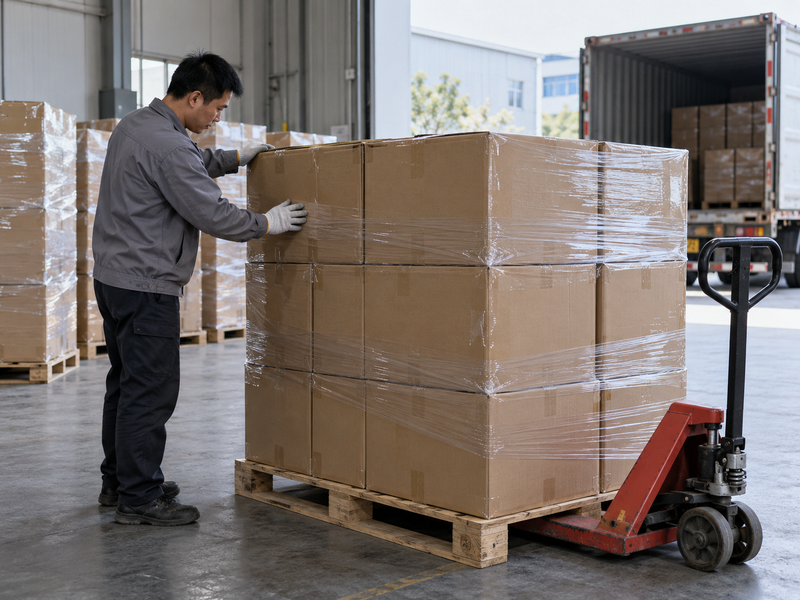
Winter delivery is a reason to plan the receiving handoff, not a claim that every matcha shipment needs a cold chain. Ask the supplier for the storage and transport instructions validated for its pack. Tell the carrier where the cartons must be delivered and whether the receiving site will be open. Avoid leaving cases on a loading dock while staff search for a purchase order. Check for wet cartons, crushed corners, seal damage and legible lot marks as soon as practicable. Photograph exceptions before moving stock into general inventory.
If a sealed bag has moved between cold and warm conditions, follow the supplier’s opening guidance and avoid creating condensation inside the pack. Do not use a visual check as a safety test. Put questionable cases on hold, record the lot and case identifiers, and ask the supplier or quality lead to assess them against the agreed acceptance rule. The warehouse should know who can release stock and who contacts the carrier. A receiving trial during the first commercial order often exposes missing information that a sample courier delivery never showed.
9. How should lots move through cafés and retail accounts?
Make tracing a routine stock action
The CFIA’s traceability fact sheet describes the importance of records that identify food movement. For the buyer, begin with the lot on each received case. Record put-away location, transfers to each café or retailer, and the lot opened or sold. If several lots arrive in one order, do not merge them under one internal code that cannot be unpacked later. A stock transfer should carry both quantity and lot, even when the receiving site only wants a few bags.
Set a reorder point using observed weekly use and realistic supply time. Compare that point with the supplier’s date marking and pack size, so a large order does not sit idle. Use first-expiring stock where suitable under the supplier’s instructions, while keeping lots physically distinguishable. Run a simple trace exercise: select a lot and ask staff to find the supplier record, remaining cases and all sites that received it. Record any missing link and fix the form before scaling the programme. This is more useful than claiming “full traceability” without testing the records.

10. When is the first order ready for approval?
Close the open items before paying for scale
The purchase approver should see the tested SKU, intended use, importer identity, route, current CFIA and customs review, label version, lot evidence, landed-cost range and receiving procedure. Highlight any assumption that still depends on a supplier answer or official check. Approve a pilot quantity if the purpose is to prove the chain; approve a larger order only after the pilot shows that the product, documents and service can repeat. Keep the supplier’s promises in the purchase order or attached specification where staff can find them.
After delivery, compare the plan with actual results. Note transit time, total landed cost, damaged packs, document corrections, recipe performance and the time taken to release stock. Tell the supplier which points need correction before the next shipment. A business buying from a domestic distributor can use the same review, with the importer questions directed to the distributor. The goal is a repeatable purchase, not a one-time bargain that leaves the next buyer to rediscover every detail.
| Approval gate | Evidence to see | Decision owner |
|---|---|---|
| Product and recipe | Approved trial and specification | Buyer or product lead |
| Import and customs | Current route-specific review | Import lead |
| Retail label | Signed physical proof | Canadian label reviewer |
| Lot and receiving | Trace and hold procedure | Warehouse lead |
| Commercial order | Delivered-cost and demand plan | Purchasing lead |
A written receiving check helps the importer compare arriving cartons with the approved specification; our matcha incoming inspection guide provides a starting format.
FAQ
Q1. Can a Canadian café buy wholesale matcha from a local supplier? Yes. A domestic purchase may simplify the café’s ordering route. Ask the supplier for the product specification, lot information, storage instruction and a clear process for complaints or recalls.
Q2. Does every Canadian matcha buyer need the same food-import licence? The answer depends on the activity and product. The importer should use the CFIA’s licence-activity guidance for its specific business instead of relying on a general claim.
Q3. Is there a fixed Canadian duty rate for matcha? Check the actual goods and current CBSA tariff with the customs representative. A pure powder, blend or gift set should not be assumed to share a classification.
Q4. Does a bilingual label proof finish the review? It is one part. Compare a printed proof with the filled pack, ingredient record, net quantity, business details, date and lot fields, and the current CFIA requirements for that product.
Q5. What should a first shipment prove? It should prove that the powder works in the intended recipe, required records arrive on time, the landed cost is understood, cases reach the warehouse intact, and each lot can be traced and released.
Before asking for the final quote, send a one-page buying brief to the supplier or distributor: SKU, use, pack, forecast pilot volume, destination, document list and the person who may approve each lot.