
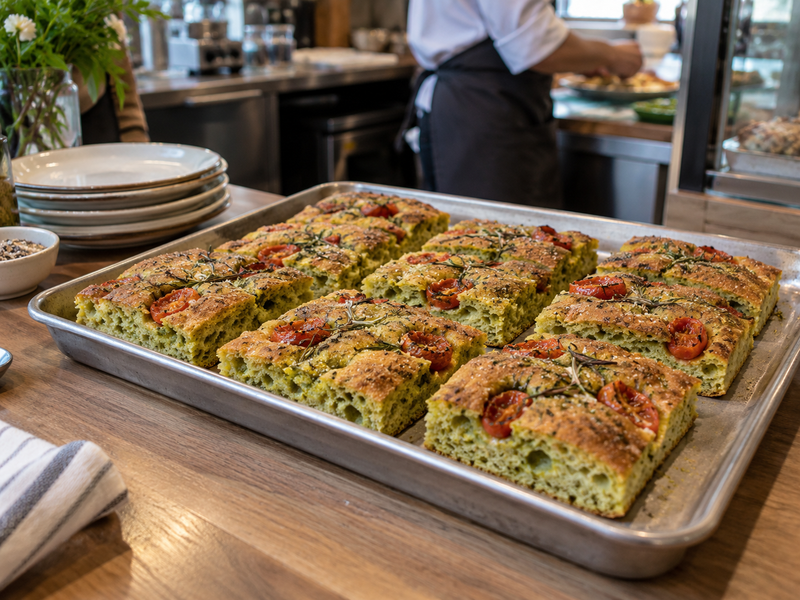
Matcha focaccia for a café sandwich needs more than a green crumb. Oil can hide weak dough structure, surface dimples can disappear during proof, and day-two bread may make a poor lunch item even if the first tray tastes good. A measured trial should compare tea dose, pan height, topping and service texture. Nakamura Tokichi Honten’s recipe pairs matcha with olive oil and coarse salt in a small-sheet focaccia. Use it as an application reference, then test the café’s own flour, pan, oven and sandwich build before ordering powder at scale.
Contents
- 1. What job should matcha focaccia do on the menu?
- 2. How should the first dough formula be measured?
- 3. Which matcha dose survives the bake?
- 4. How should oil and folds be controlled?
- 5. What proof height suits the intended portion?
- 6. How can dimples and toppings stay consistent?
- 7. What bake and cooling checks matter?
- 8. How should day-two texture be tested?
- 9. What is the real yield and ingredient cost?
- 10. What belongs in the café production sheet?
1. What job should matcha focaccia do on the menu?
Test the bread in its final use
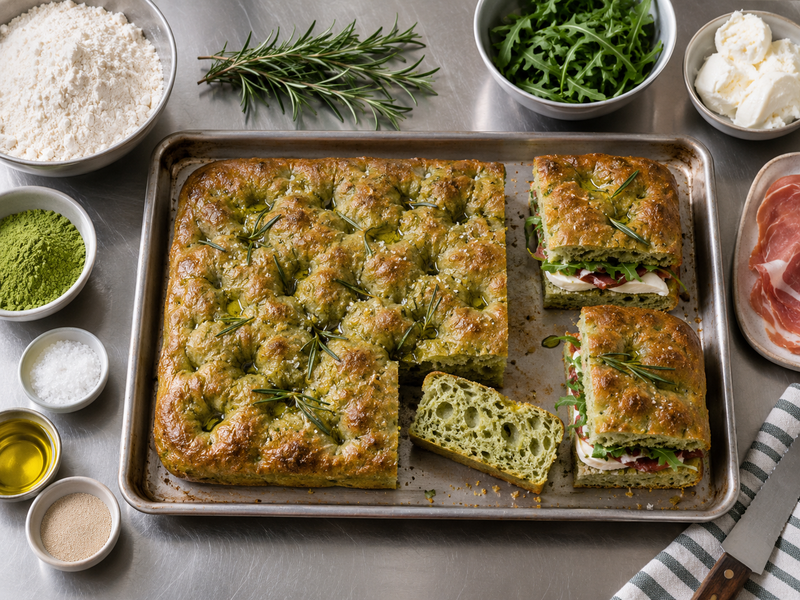
Decide whether the bread is a shared side, a cut sandwich square or a packaged retail slab. A thin, crisp focaccia can work beside soup yet tear around a moist sandwich filling. Set target pan size, baked height, piece dimensions and the number of portions before mixing. Photograph a passing slice from top and side. For sandwiches, build the exact menu item, wait through a realistic handoff and check whether the crumb compresses or the top breaks. For shared plates, test dipping and tearing instead.
The Nakamura Tokichi recipe combines flour, a matcha ingredient, water, salt, yeast and olive oil, finishing with coarse salt. It reports a light savory aroma. That is an application example, not proof that every powder or café dough will taste the same. Ask tasters to score tea, oil, salt and any herb together after cooling. A loaf can be visibly green but have no tea character once filled with cheese or cured vegetables. Define the pass condition in the assembled product.
| Menu check | Measure | Failure signal |
|---|---|---|
| Finished height | Millimeters at center and edge | Uneven sandwich slices |
| Portion | Cut dimensions and mass | Variable menu cost |
| Crumb | Compression after filling | Dense or collapsing bite |
| Tea flavor | Blind tasting note | Lost under toppings |
2. How should the first dough formula be measured?
Keep baker’s percentages visible
The Nakamura Tokichi formula uses 200 g bread flour, 180 g water, 4 g of its matcha ingredient, 4 g salt, 3 g dry yeast, a little sugar and 20 g oil split between dough and finish. That is a high-water small batch. Record it accurately as a reference, but start a commercial pilot with the bakery’s own tested focaccia flour and pan. Express every ingredient against flour weight, then weigh actual grams for the planned batch. A powder sold as a matcha blend may contain ingredients beyond tea, so check its specification before assuming the same dose as pure matcha.
Keep one flour lot, pan and mixing method fixed during the first trial. Record water temperature, dough mass, pan area, dough weight per unit of pan area and loss on the bowl or tools. These details determine finished thickness more reliably than the phrase “one tray.” If a larger batch handles differently, make a production-size repeat before selecting it for the menu. Record the time needed for mixing, folds, panning and cleanup; a high-hydration dough that needs extra attention may change labor cost.
| Formula line | Reference or trial entry | Why record it |
|---|---|---|
| Flour | Grams and supplier lot | Controls baseline |
| Water | Grams and temperature | Affects handling |
| Matcha | Grams and formulation | Controls color and flavor |
| Oil | Dough and finish grams | Explains crust and dimples |
3. Which matcha dose survives the bake?
Compare cooled bread, not mixed dough
For a pure-matcha trial, compare 1%, 2% and 3% of flour weight, with all other ingredients and pan loads fixed. These are proposed test points, not an industry standard. Sift powder with flour for even distribution, then photograph the dough before and after baking under consistent light. Taste cooled pieces from the center and edge. A darker crust can obscure the green crumb; a high tea dose may taste sharp against coarse salt. Score the bread both plain and with the planned sandwich or dip.
Ask suppliers for lot-coded samples, ingredient statements and price by pack size. Bake two candidate grades at the same dose rather than comparing a costly high-dose sample with a cheap low-dose one. Note whether the powder disperses without flecks and whether flavor remains noticeable after a second-day service test. Convert the accepted dose to matcha cost per saleable square. A powder that looks bright in a bowl may offer no advantage after the bakery’s hot bake. The final purchase grade should meet a defined product test and cost target.
4. How should oil and folds be controlled?
Make handling repeatable across batches
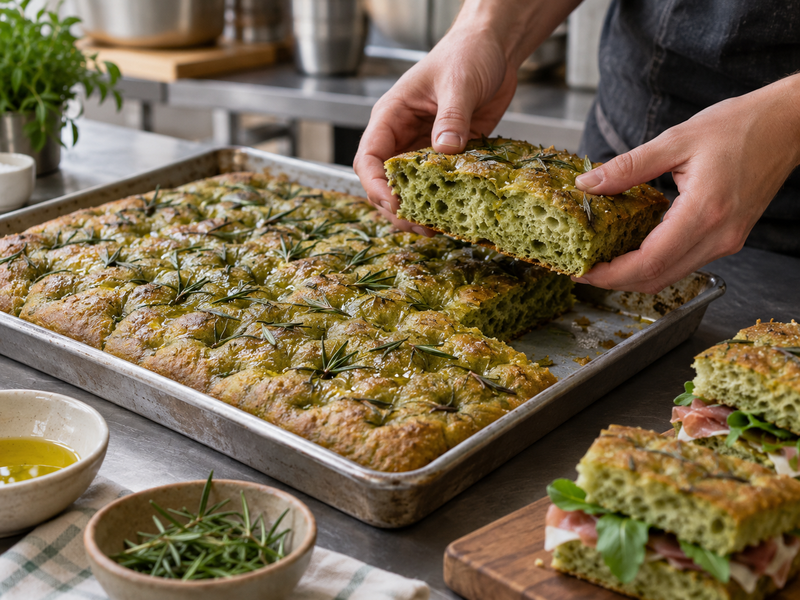
Oil changes how this wet dough moves in the bowl and releases from the pan. The Nakamura Tokichi method adds most oil to the dough after initial mixing and reserves the rest for finishing. Record the actual sequence, oil grams and mixing or folding intervals in the café’s pilot. Compare the dough’s spread and surface tension after each fold rather than adding flour because it sticks. If two operators handle it differently, the resulting loaf height and bubble distribution may diverge even with identical ingredients.
Use a marked container to track expansion before panning. During transfer, keep the dough in one piece where practical and note any tearing or loss of gas. King Arthur’s focaccia method also uses folds and olive oil to build a tall, tender bread; its process is a useful comparison, not an automatic match for a matcha dough. Test the chosen method at a full pan load. Record whether oil pools in corners or the surface dries during rest, then adjust only one handling step at a time.
| Handling point | Record | Next decision |
|---|---|---|
| Oil addition | Grams and stage | Compare dough strength |
| Folds | Count and interval | Compare bubble structure |
| Transfer | Tears or dough loss | Improve panning method |
| Pan oil | Grams | Check release and base |
5. What proof height suits the intended portion?
Measure the dough in the chosen pan
Proof should produce a height that works for the menu item, not merely a large bubble. Mark the pan wall at several positions and record dough height after panning, before dimpling and after baking. If the bread is meant for sandwiches, cut a trial square horizontally and check whether each half can carry filling. A taller loaf may produce a useful split; an overexpanded sheet can collapse during cutting. For shared plates, a lower profile may be easier to portion and crisp.
The reference lets its small dough rise before spreading and gives it a brief rest before baking. A café should validate its own time against dough temperature, yeast amount, pan material and room conditions. Take photos of surface bubbles and the first cut crumb. If the center lags behind the edge, check pan load and proof environment. Repeat with several pans in the actual production rack. A proof setting that succeeds with one pan may fail when pans crowd a cabinet or a baker starts dimpling the first tray before the last is ready.
6. How can dimples and toppings stay consistent?
Check whether the pattern survives the rest
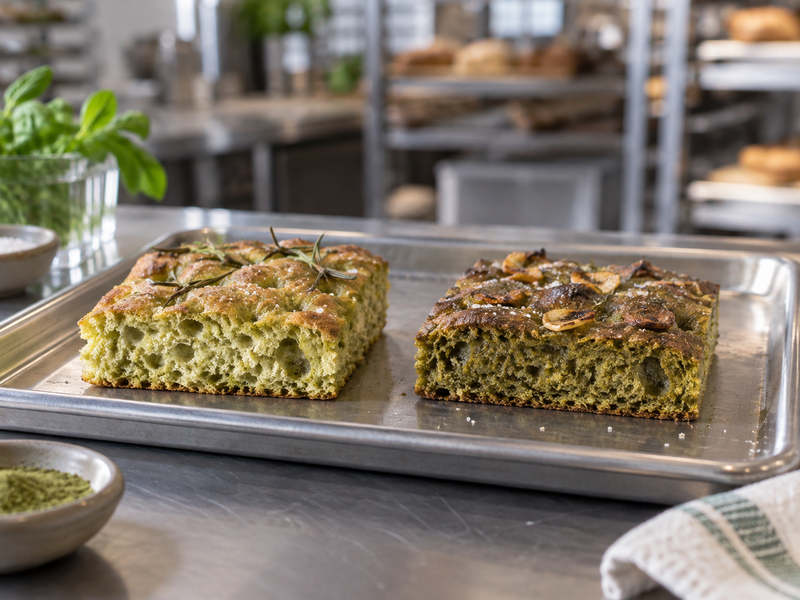
Focaccia dimples hold surface oil and give a recognizable top. The reference presses dimples, adds oil and coarse salt, then rests the dough briefly. For a production trial, define finger spacing, pressure and whether dimpling occurs once or twice. Photograph the surface immediately after dimpling and just before baking. If marks vanish, compare proof stage and pressure before adding more oil. If deep holes expose the pan, a gentle hand or heavier dough load may be needed.
Test toppings in a simple matrix. Rosemary may work with tea and salt, while a heavy wet vegetable can hide green color and soften the surface. Weigh topping mass per pan and record what falls off during cutting. Taste with the final menu use; a herb that suits a shared bread may fight a sandwich filling. Keep an unadorned control so the team can tell whether any topping improves the product. Get ingredient and allergen information for oils, cheeses or seeded finishes before finalizing the menu.
| Surface trial | Weighed addition | Evaluate |
|---|---|---|
| Salt only | Grams per pan | Tea and oil balance |
| Rosemary | Grams per pan | Aroma after bake |
| Wet vegetable | Drained grams | Moisture and color |
| Extra oil | Grams per pan | Dimple hold and base |
7. What bake and cooling checks matter?
Score the bottom as well as the top
Nakamura Tokichi gives a short hot bake for its thin sheet and offers an optional hotter finish for color. A thicker café pan will need its own endpoint. Record oven setting, measured bake time, pan position and load. Inspect top color, lifted edges, underside and center crumb after a fixed cooling period. The surface may brown before a thick center finishes. A pale top can still have a dry crumb if the pan conducts heat strongly from below. Weigh the sheet before and after baking to compare loss across trials.
Cool on a rack or in a way that does not trap steam against the base. Photograph the underside after release and note any oily patches or sticking. Cut only after the crumb can hold its shape; otherwise a warm knife may compress it and exaggerate density. If a second pan bakes differently, map its oven position before changing the formula. The best endpoint is the one that serves the intended sandwich or plate after cooling, not merely the one with the brightest green surface at oven exit.
8. How should day-two texture be tested?
Use the café’s actual storage and service routine
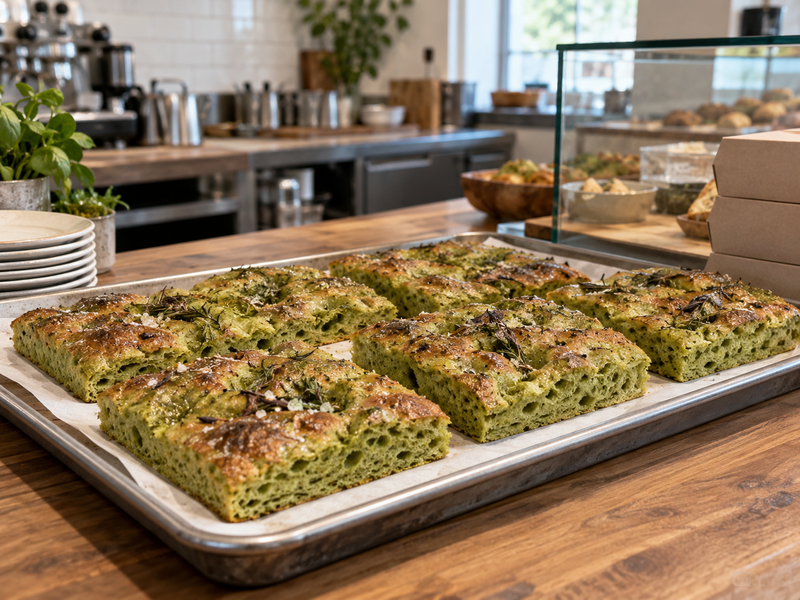
The reference mentions reheating leftover focaccia the next day. A café needs to test its own bread, packaging and service. Mark portions from one bake and store them under the business’s approved plan. Compare a fresh piece, a held piece and a held piece reheated in the intended equipment. Record mass, time, texture, crust response and matcha flavor. If the sandwich build contains wet ingredients, assemble one portion at the planned handoff interval and inspect the bread after waiting.
Quality observations do not establish safe shelf life. Any filled sandwich or topping may bring separate temperature-control requirements under local rules and the site’s food-safety plan. Keep those records apart from a texture score. If the day-two crumb becomes firm, test a different packing method or shorter sales plan before increasing oil across the formula. If reheating restores the crust but dries the center, compare equipment settings and portion thickness. An attractive second-day photograph cannot replace a bite test with the actual menu filling.
| Day-two test | Record | Decision |
|---|---|---|
| Plain held piece | Texture and mass | Storage effect |
| Reheated piece | Equipment and time | Service recovery |
| Built sandwich | Waiting interval | Moisture resistance |
| Reject count | Pieces | Forecast adjustment |
9. What is the real yield and ingredient cost?
Count clean squares from the full pan
Cost the bread per saleable portion after trimming, cutting and service. Weigh raw dough, baked sheet, edge trim, topping loss and finished squares. Measure each square’s dimensions and mass; uneven cuts can turn a predictable pan into inconsistent sandwiches. Time mixing, folding, panning, topping, cooling and packing during a full batch. Matcha cost per portion follows the actual dose divided by saleable count. The price of tea matters, but broken pieces and labor can move margin more sharply.
Compare a sandwich cut with a shared-plate cut from equal pan sizes. One may create more trim or require a taller proof. Keep these as separate products in the cost sheet. If a distributor or café buyer asks for a fixed portion count, run the chosen cut on several production pans before promising it. Record the bread’s day-two reject rate by batch. The business can then decide whether to bake smaller daily batches or use an approved held-service routine rather than assuming every piece sold at oven exit remains saleable later.
10. What belongs in the café production sheet?
Transfer the passing trial to the morning shift
List flour and matcha supplier lots, ingredient grams and baker’s percentages, water temperature, mixing sequence, fold schedule, oil split, dough mass per pan, proof observations, dimple method, topping deposit, bake record, cooling, portion grid and service method. Include photos of a passing proofed surface, baked underside and sandwich cross-section. Add the planned number of saleable pieces and reasons for rejecting a sheet or square. A second baker should be able to use the sheet without interpreting words such as “a little greener.”
Repeat the chosen formula with the normal oven load and a different operator. Compare proof height, dimples, crumb, tea flavor and day-two performance. If the powder supplier changes lot or grade, run the same baked comparison before switching. Matcha Village can discuss bulk powder grades and sample options for bakery applications; the café should buy against a tested formula and current ingredient documents. Keep any sandwich filling and allergen information in the finished menu specification, not only on the bread sheet. The product is ready for a controlled menu trial when it behaves consistently after cutting and service.
The matcha powder for baking guide can help narrow a powder shortlist; judge each sample in the baked focaccia.
FAQ
Q1: Can matcha focaccia be savory? Yes. The cited recipe pairs matcha, olive oil and salt; test your selected powder with the intended topping and menu use.
Q2: How much matcha should go into the dough? Use weighed flour-percentage trials and select the dose after tasting cooled bread.
Q3: Why did the dimples disappear? Compare proof stage, dough height and finger pressure before changing the formula.
Q4: Can day-two focaccia be served? Test quality under the café’s approved storage and service process; apply local food rules to the finished item.
Q5: How should a buyer compare powders? Bake lot-coded samples at equal dose and compare flavor, crumb color and cost per saleable portion.