
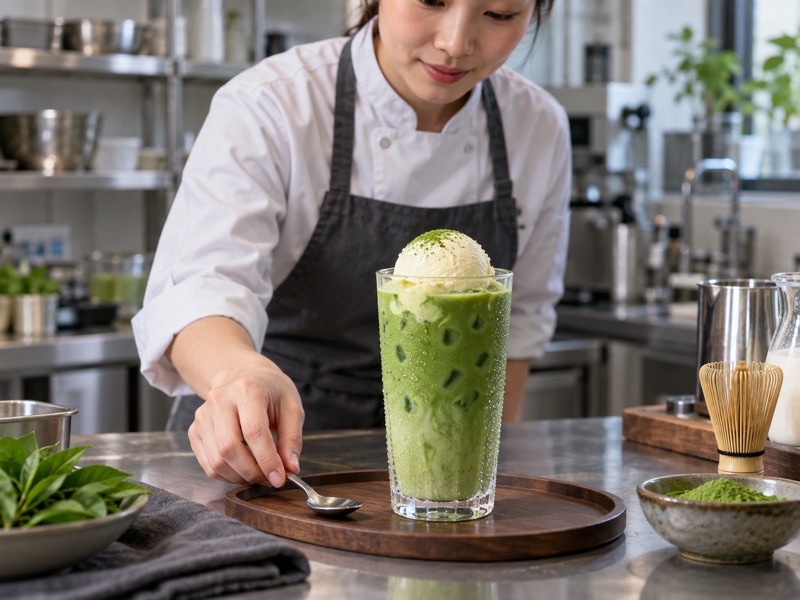
A matcha float is a drink topped with ice cream or another frozen scoop. It gives guests a drink, a dessert, and a visual moment in one cup. It also creates a short window between assembly and the first sip: the scoop melts, the tea changes strength, and a too-sweet base can turn the last spoonful flat. Naoki Matcha’s green tea float recipe shows the consumer idea. A café or dessert operator needs to test the exact tea drink, frozen component, cup, spoon and handoff route it plans to sell.
For: cafés, dessert shops, beverage developers and ingredient buyers. Decision: whether the float keeps tea flavor and a satisfying texture through normal service.
1. What should the guest experience first?
Set the balance before decorating
Decide whether the first taste should be tea-forward, creamy or fruit-led. The frozen scoop will change the drink as it melts, so the concept needs a beginning and an ending. A plain matcha base may be slightly stronger than a stand-alone iced tea because melting ice cream brings sweetness and fat. That adjustment should come from a measured tasting, not a general rule. Make a prototype in the actual cup and ask tasters to sample the first sip, the middle, and the final spoonful.
Choose an honest menu name. If the product is called a matcha float, the tea should remain identifiable. If the main flavor is vanilla ice cream with a pale green drizzle, the name may overpromise. State whether the frozen component is dairy or plant-based and whether toppings bring allergens. The menu photo should show a normal serving, including the amount of ice cream an employee can repeatedly portion.
| Moment | Desired experience | Check |
|---|---|---|
| First sip | Tea and cold refreshment | Taste before melting |
| Midpoint | Tea and cream together | Stirred spoonful |
| Last portion | Pleasant sweetness, no grit | Full-cup tasting |
2. Which matcha works beneath ice cream?
Test the finished float
Ice cream can mute a subtle tea, especially as it melts into the drink. Compare identified matcha samples at equal grams in the same base and with the same scoop. Taste the drink without ice cream first, then as a float. A powder with a strong dry aroma may not carry through the frozen dairy or plant base. Another may retain tea presence but leave a bitter finish. The accepted sample should pass in the actual menu cup, not only as whisked tea in a bowl.
Keep lot and dose records. Ask the supplier for specification, pack and storage guidance, lot traceability, and the documents needed by the buying program. Retain an approved sample. When the tea changes, remake the float with the same ice cream and cup; small changes in color or bitterness can be more obvious once the pale scoop starts to melt. Cost tea at the accepted grams per float rather than judging the invoice price alone.
3. How should the tea base be mixed?
Prevent a gritty bottom
Matcha is suspended powder. If it is stirred directly into cold milk or water without a good mixing method, clumps can settle below the ice cream. Weigh the powder and make a smooth pre-mix with a measured amount of suitable liquid. Then combine it with the rest of the drink and ice. Inspect a clear trial cup for dark flecks before adding the frozen scoop. The final drink should not hide a mixing defect under a topping.
Check the last sip. A float is often eaten with a spoon as well as drunk through a straw. Test both routes. If tea collects beneath the ice cream, a guest may get a weak first sip and a powdery ending. Decide whether the menu expects the guest to stir and, if so, provide a spoon and a clear service cue. If a pre-mixed base is held in a bottle, validate agitation, hold time, refrigeration and food safety according to the shop’s process.
| Mixing issue | Likely cause | First trial |
|---|---|---|
| Dark spots | Dry powder clumps | Pre-disperse |
| Pale top, dark bottom | Settling | Recheck assembly order |
| Dry final sip | Excess tea or poor mixing | Dose and texture test |
4. What should the frozen scoop contribute?
Choose flavor and melt together
Vanilla ice cream can give a clear contrast; matcha ice cream can make a more intense tea dessert; fruit sorbet can add acid and color. None is automatically the best choice. Make equal-weight scoop trials and taste them through melting. The frozen product’s sweetness, fat and temperature affect the tea beneath it. A very hard scoop may sit like a block while the drink warms. A very soft scoop may dissolve before the server reaches the table.
Record the scoop standard. Set a portion weight, storage and service conditions, and a clear visual target. Test a scoop made by several staff members. If a frozen product is supplied externally, ask for its ingredient and allergen information, pack size and handling instructions. If made in-house, use the venue’s approved food-safety and shelf procedures. Do not use a product’s visual appeal as evidence that it will remain stable in the completed float.
5. How do ice, cup and temperature change the drink?
Test the serving format
Ice controls temperature and dilution but competes for room with the frozen scoop. A tall cup can look impressive while leaving little liquid. A wide cup may make the scoop easier to eat but harder to carry. Choose the actual glass or takeaway vessel early in development. Measure tea base, ice and scoop separately, then check the final fill. Observe condensation, overflow and how easily a spoon or straw reaches the bottom. A float that is awkward to eat may be left unfinished even if the recipe tastes good.
Time the melt. Make the standard cup and sample it at handoff and after the normal table wait. Use the shop’s real ambient conditions. If the cup is for takeaway, test the route and lid; a tall scoop may hit the lid or leak as it softens. A drink intended for immediate dine-in may not be suitable for delivery. It is better to limit a format than to sell a collapsed version of the photographed product.
| Format | Main constraint | Test |
|---|---|---|
| Dine-in glass | Carry and spoon access | Table-walk trial |
| Takeaway cup | Lid clearance and leaks | Packed-route trial |
| Delivery | Melt time | Realistic journey check |
6. How should sweetness be balanced?
Taste through melting
The tea base, syrup, ice cream and garnish all contribute sweetness. Make a base with a measured sweetener level, then add the actual scoop. Taste at several time points as the scoop melts. A drink that seems sharp at first can become balanced later; another can begin pleasant and finish cloying. If the frozen component is very sweet, the tea base may need little or no added sugar. Record the accepted formula rather than telling staff to “sweeten to taste” during service.
Check variations separately. A fruit swirl or chocolate topping changes the balance again. If the menu offers a reduced-sugar version, determine whether a lower-sugar ice cream or a different base is required. Removing syrup alone may not change the total sweetness much. Review nutrition or sugar claims with the full product formula and local requirements. Flavor balance should guide the recipe; a claim should follow documented ingredients.
7. Can the float be made quickly during a rush?
Design an assembly sequence
Place measured tea base, ice, scoop, garnish and service tools in a flow staff can follow. A frozen scoop left on the counter while a barista remakes a clumpy tea base will melt before the drink is finished. Make the tea first, prepare the cup, then add the frozen component close to handoff. Time the whole order during normal service. The sequence should prevent spills and support portion control as well as speed.
Train with consecutive cups. Ask several employees to assemble five floats each. Weigh scoops, inspect fill and appearance, and taste one complete cup from each run. If a complex garnish makes the last order late or messy, simplify it. A small amount of attractive topping can be worthwhile; a fragile decoration that slows every order may not survive the rush. Write the steps on a card and photograph a typical accepted cup.
8. What should be checked for food safety and allergens?
Treat the complete dessert as one product
The tea drink may be simple, but the frozen scoop can bring milk, nuts, soy or other allergens. Toppings and shared tools add further cross-contact questions. Map the full ingredient list and have the venue’s responsible team review menu wording and handling. Follow the frozen product supplier’s storage guidance and the shop’s refrigeration and sanitation rules. A plant-based ice cream does not make the float suitable for every diet if the tea base, topping or shared equipment says otherwise.
Keep the serving window clear. A float changes rapidly after assembly. Define when it should be handed over and what staff should do if an order sits. A melted, warm cup may be poor quality even if no immediate safety issue is visible; safety decisions, however, need the venue’s actual controls. Do not infer shelf life from a photograph or a home recipe. If a prepared tea base is batched, validate that component separately.
9. What is the true cost per float?
Count what staff portion
Calculate matcha at the approved dose, tea base, scoop weight, toppings, cup, spoon, labor and waste. Frozen servings often vary when staff portion by eye. Weigh several routine scoops and calculate the range in cost. Include melted or discarded scoops and tea base that cannot be used by close. A more expensive but easier-to-portion frozen product may reduce variation. Compare suppliers by cost per accepted serving and handling, not only case price.
Model slow days. A shop with uneven demand may lose opened tubs or prepared base. Smaller packs can be worth the price if they fit the use rate and protect quality. If the float is sold at a premium, its taste and presentation need to justify that position. A careful cost sheet also shows whether the same ingredients can support other menu items without making the float feel like a leftover assembly.
| Cost line | Measure | Watch for |
|---|---|---|
| Matcha | Grams per accepted cup | High dose to overcome ice cream |
| Frozen scoop | Actual weight | Portion drift |
| Labor | Full assembly time | Rush bottleneck |
| Waste | Melted or unsold portions | Quiet-day margin |
10. What pilot should decide the launch?
Eat the whole serving
Run a short live pilot with the actual tea, frozen product, cup and staff. Taste at handoff, midpoint and finish; observe melting, leakage, sediment and guest handling. Measure scoop and liquid portions, preparation time, waste and order comments. Include a busy period and the normal table or takeaway wait. If the float is intended for delivery, test that route before listing it there. A development bench cannot reproduce every service delay.
Approve a practical spec. Keep the tea lot standard, base formula, scoop product and weight, cup, assembly order, appearance photo, handoff time and retest triggers together. The next action is a controlled shop trial with a pass or fail criterion for both tea flavor and service. A matcha float earns its place when the final spoonful is as considered as the first photograph.
| Pilot moment | Pass question | Evidence |
|---|---|---|
| Handoff | Does it match the menu? | Standard photo |
| Five-minute wait | Is texture still appealing? | Timed tasting |
| Final spoonful | Is tea clear, not gritty? | Full-cup test |
| Close | Is waste manageable? | Portion and discard log |
A menu team can compare the float with the matcha affogato guide.
Reference: How to make the best matcha green tea ice cream float is a recipe reference. The commercial development checks above are independent.
FAQ
Q1: Does a matcha float need matcha ice cream? No. The tea can be in the drink, the scoop, or both, provided the finished flavor matches the menu name.
Q2: Why does the last sip taste too sweet? The frozen scoop and toppings melt into the base; balance sweetness across the full serving.
Q3: Can it be sold for delivery? Only after the actual packaging and travel route show acceptable quality and safe handling.
Q4: Why does matcha collect at the bottom? Powder can settle if it is poorly dispersed or the drink waits too long.
Q5: What should buyers cost first? The accepted matcha dose and actual frozen scoop weight per sellable cup.