
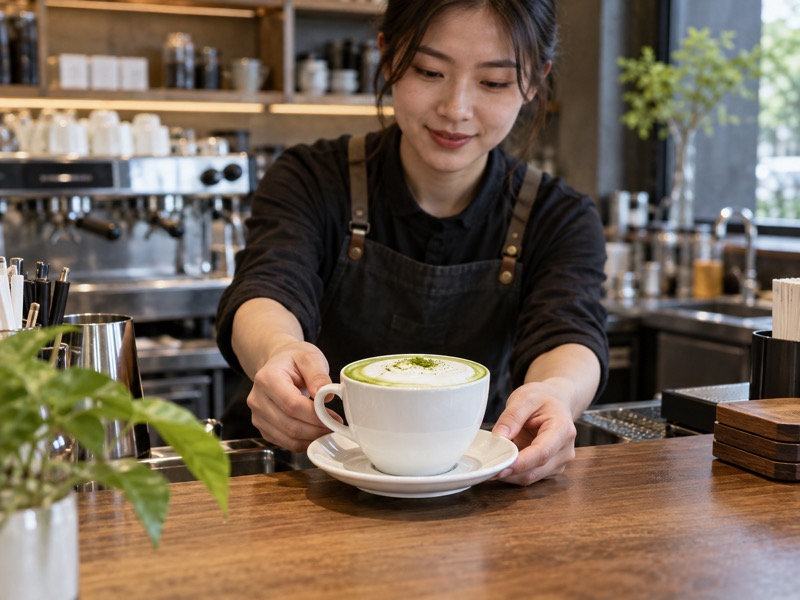
A matcha cappuccino is a café drink that pairs a concentrated matcha base with textured milk and a more prominent foam cap than many matcha lattes. The name borrows a familiar coffee format, so guests expect a small, warm, foamy drink. The tea itself is prepared differently from espresso: matcha powder is suspended in water rather than extracted under pressure. Caffè Aiello’s matcha cappuccino guide introduces the recipe. For a shop, the question is whether that ratio and texture can be made consistently without burying the tea under milk.
For: café owners, barista trainers, beverage developers and tea buyers. Decision: whether a smaller foamy matcha drink deserves its own menu position beside the standard latte.
1. How is this drink different from a latte?
Define the shop’s version
There is no single global formula for a matcha cappuccino. The useful distinction is a smaller serving with a visible, integrated foam layer and a clear tea taste. Write the cup size, tea dose, liquid base, milk volume and foam target before training. If the shop’s cappuccino is simply its large matcha latte poured into a different cup, customers may not understand the extra menu item. Compare the two finished drinks side by side and ask staff to describe the difference without marketing adjectives.
Keep the promise practical. A cappuccino-style cup should be pleasant from the first sip to the last. A large dry foam cap can make the first sip mostly milk and leave strong tea at the bottom. Test the full drink after it has stood for a normal handoff interval. If the distinction is real, describe it plainly on the menu: smaller, warm, and foam-forward. Do not imply that matcha contains espresso or that the drink has a standardized coffee ratio.
| Menu item | Intended difference | Taste check |
|---|---|---|
| Matcha latte | Larger, milk-forward | Tea remains recognizable |
| Matcha cappuccino | Smaller, finer foam cap | Balanced through the cup |
| Plain matcha | Tea and water | Direct tea profile |
2. Which matcha gives the right tea presence?
Test at serving temperature
Ask for identified powder samples and make each with the same base and milk. A delicate tea may disappear under foam and milk; a stronger powder may leave a bitter finish in a small cup. Compare color, aroma, mouthfeel, bitterness and tea clarity in the finished cappuccino. Taste at the temperature served to guests. A dry powder’s green color and a grade label are useful clues, but neither proves that a specific tea works in this recipe.
Keep an approved sample. Record tea grams, water amount, milk, cup, preparation route and lot code during the comparison. Ask the supplier for specification, pack size, storage guidance and supply lead time. If the drink is promoted as a premium offering, the sourcing story and the actual cup should support each other. Calculate tea cost at the accepted dose. A more expensive powder may be economical if it works at a smaller amount; a cheap powder may require a heavy dose that damages texture.
3. How should the tea base be prepared?
Make it smooth before milk
Matcha is ground leaf suspended in water. If dry powder is dropped into milk, dark clumps can remain even beneath a beautiful foam cap. Weigh the powder and mix it with a measured amount of water using a whisk or a validated bar tool. Sift if the chosen tea and process benefit from it. Check the base for lumps before steaming milk. The method should be fast enough for service and precise enough that two staff members produce the same strength.
Avoid a watery base. A large pre-mix volume can dilute a small drink, while an extremely thick paste can be difficult to integrate. Make a short series of measured trials and judge the full cappuccino. Record water source, temperature and mixing time. The accepted base should pour into the cup without dry pockets or gritty residue. If a pre-made base is considered for rush periods, validate its short hold, remix and food-safety routine separately.
| Base problem | First check | Trial action |
|---|---|---|
| Dry flecks | Powder added too quickly | Pre-mix and inspect |
| Weak tea | Excess base water or low dose | Rebalance measured recipe |
| Bitter last sip | Settling or high dose | Taste full cup and adjust |
4. What milk texture belongs on top?
Fine foam beats a tall pile
A cappuccino-style drink needs foam that feels integrated with the liquid, not a dry mound that sits apart. Steam the shop’s actual milk to a smooth microfoam, then pour promptly. Large bubbles look rough and change how the drink tastes. Thin milk can erase the distinction from the regular latte. Train staff with a visual and tactile target for the finished cup. The same steaming time will not always produce the same texture when milk temperature, volume or brand changes.
Taste after the foam settles. Take a first sip, then a later sip after the cup stands briefly. If the foam collapses into a flat milk layer or tea collects at the bottom, the formula or assembly order needs work. A good surface pattern can be welcome, but it should follow a balanced drink. Keep the foam standard simple enough to teach during a shift, including how to judge a cup that should be remade.
5. How should the tea-to-milk ratio be set?
Use the final cup as the unit
Set matcha in grams, water in grams or milliliters, and milk as an actual poured amount for one cup size. Trial a small range around the first formula while keeping the cup constant. Taste for tea presence, sweetness, body and finish. A cappuccino uses less total liquid than a large latte, so a dose copied from the latte may become too forceful. Conversely, a tiny dose under a large foam cap can taste like plain milk. Do not rely on “one shot” without defining the shot.
Measure what baristas serve. Weigh several finished cups and compare fill level. If staff vary milk volume to draw a better pattern, the tea ratio and margin change. Record the recipe that passes in normal service, not only in a controlled tasting. If customers may add syrup, make a separate sweetened trial. Sugar can soften bitterness but also hide the reason to choose this drink over a standard flavored latte.
| Trial | Hold fixed | Judge |
|---|---|---|
| Tea dose ladder | Cup and milk | Tea clarity and finish |
| Milk ratio ladder | Tea and cup | Body and foam balance |
| Sweetened option | Base recipe | Whether tea remains clear |
6. Can plant milks deliver the same experience?
Test each candidate on its own
Plant drinks vary in sweetness, protein, fat and steaming behavior. An oat drink may add body; a soy drink may foam differently; a coconut drink can bring a strong flavor. Use the actual products the shop stocks and compare them with the dairy version at the same cup size. Adjust each recipe if needed, then decide which versions meet the menu standard. Do not promise identical foam or taste across bases before a service trial.
Handle claims and allergens. A plant drink order is not automatically suitable for a guest with an allergy if equipment is shared or another ingredient contains the allergen. Train staff on the actual ingredient statements and the café’s cross-contact controls. If a premixed matcha powder contains milk ingredients, switching the liquid to oat drink does not make the beverage dairy-free. Accurate information and a reliable preparation method matter more than a visually identical foam cap.
7. How should the drink move through the bar?
Design the sequence for warm service
Put powder, scale, water, whisk, cup and milk where staff can work in order. Prepare the matcha base and steam milk so neither waits long. If milk sits, its foam may separate. If the tea base sits, powder can settle. Time the complete process during quiet service and rush periods, including cleanup. A small cappuccino can cool quickly, so handoff should follow preparation promptly. Use the shop’s approved handling and temperature practices.
Make a training card. State dose, base method, milk amount, foam endpoint, pour order, cup, garnish if any, and acceptable appearance. Let several staff make consecutive drinks from the card. Where the drink is takeaway, test the lid and travel time. A foam-forward product may lose its point if the lid hides or flattens the surface. The shop may decide to offer it only for dine-in; that is an operational choice, not a recipe failure.
8. What should the menu and photo communicate?
Show the cup customers receive
Photograph the drink in the serving cup under normal café light. Avoid an image that exaggerates green color or shows a large latte when the menu sells a smaller cappuccino. Describe it as a warm, foam-forward matcha drink. If sweetener is optional, say so. If the recipe contains a premix, check its ingredients before making a vegan or dairy-free statement. Give baristas one plain sentence to explain the difference from the latte.
Compare ordering behavior. In a pilot, listen for whether customers understand the option. If many expect espresso, adjust the description. If guests ask for an iced version, test it rather than simply pouring the hot formula over ice; foam and dilution will change. A good menu entry helps customers choose and helps staff make the same product each time.
| Menu element | Clear statement | Avoid |
|---|---|---|
| Size | Actual cup size | Generic “regular” |
| Texture | Fine foam and warm service | Promise of fixed foam height |
| Ingredients | Tea, milk and sweetener status | Unsupported dietary claims |
9. What does a sellable cup cost?
Include portion variation
Calculate tea, water, milk, syrup if used, cup, labor and routine waste at the accepted formula. Compare the cost and price position with the existing matcha latte. A smaller cup may use less milk but similar tea and staff time. If the cappuccino requires extra practice or produces frequent remakes, include that in the decision. Weigh real cups prepared by different staff rather than assuming the recipe is followed exactly.
Check supplier fit. A tea with good taste but a pack too large for the shop’s use rate can create waste after opening. A milk that steams reliably may reduce remakes. Evaluate price per accepted cup and supply continuity. If the café chooses a premium menu price, the guest should receive a distinct taste and texture, not only a renamed standard latte.
10. What pilot should decide whether to launch?
Serve it beside the current latte
Run a short menu trial using the actual tea, milk, cup and staff. Prepare several consecutive drinks at opening and during a rush. Record preparation time, cup weight, tea flavor, foam texture, temperature under the shop’s method, and customer descriptions. Taste the first and last sips after a normal handoff wait. Compare the new drink with the standard latte without telling tasters which one should be “premium.” If the distinction is difficult to perceive, revise the recipe or menu role.
Approve the whole route. Keep the powder lot standard, dose, water, milk, foam cue, cup, photo and retest triggers together. The next step is a controlled café pilot with a clear pass standard for flavor and service. A matcha cappuccino belongs on the menu when it gives guests a reliably different cup and the team can make it without slowing the bar.
| Pilot check | Pass question | Evidence |
|---|---|---|
| Flavor | Is tea clear through the cup? | Full-cup tasting |
| Foam | Does texture hold at handoff? | Timed visual check |
| Service | Can staff repeat it? | Consecutive cups |
| Positioning | Is it distinct from latte? | Blind comparison |
For a related milk-based format, compare the matcha green tea latte guide.
Reference: Matcha latte cappuccino: what it is and how to make it introduces the format. The café development checks above are independent.
FAQ
Q1: Does a matcha cappuccino contain coffee? Not by definition; the café should state clearly if its own recipe adds espresso.
Q2: Is it simply a smaller matcha latte? It can be similar, but a separate menu item should have a tested difference in foam, ratio and experience.
Q3: Can oat milk be used? Yes, if the actual oat drink makes the intended taste and foam in a service trial.
Q4: Why does tea collect at the bottom? Matcha is suspended powder; check dispersion, dose and delay before serving.
Q5: How should tea quotes be compared? Use the accepted grams and actual cost per finished cup, including remakes and pack waste.