
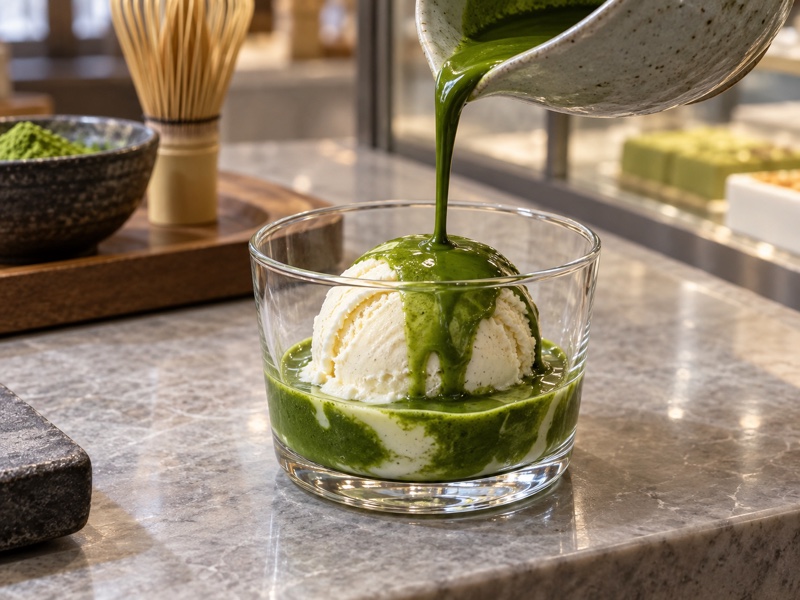
Matcha affogato is a small dessert with a narrow serving window. A measured pour of warm tea over cold ice cream can be fragrant and balanced; too much water turns it into a pale puddle before it reaches the table. The matcha affogato recipe in search results shows the basic idea. A café needs to decide its scoop size, tea concentration, pour temperature, vessel, and exact handoff point. The dessert is made in seconds, but consistency requires preparation before the order arrives.
1. What should a finished matcha affogato be?
Choose whether the customer receives tea already poured or a small pitcher to pour at the table. The first is faster and easier to control; the second protects the contrast between frozen dessert and liquid during a walk across the room. Set a target serving weight and describe the intended eating experience: some intact ice cream, a concentrated tea pool, and a spoonable mixture after a few minutes. A completely melted cup is a different product. Taste the first spoon and the last one.
For takeaway, consider whether the dessert is viable at all. A sealed cup with hot liquid and ice cream may arrive as a drink. Test it over the expected travel time before placing it on a delivery menu. The most useful product brief states the serving channel and maximum time from pour to customer. The visual standard should reflect that window, not a photograph taken at the instant of pouring.
| Service format | Advantage | Test before sale |
|---|---|---|
| Poured at bar | Fast, controlled dose | Walk to table |
| Table-side pour | Customer sees contrast | Staff time and spill risk |
| Takeaway kit | Components stay separate | Packing and travel time |
2. Which frozen base lets the tea stand out?
Vanilla ice cream is a common choice, but its sweetness, fat, and vanilla intensity vary. A rich premium scoop can mute a delicate matcha; a very sweet one can turn the tea bitter by contrast. Test the brand and flavor the café can stock consistently. Sorbet or plant-based frozen dessert makes a different profile and may melt at another rate. Check all ingredients before describing the dish as dairy-free or vegan.
Measure the scoop rather than relying on its shape. A large soft scoop melts faster and changes the tea-to-dessert ratio. Store and temper the frozen base according to its handling requirements, then use the same scoop size for each trial. Taste the plain base, the first mixed spoon, and the last liquid portion. If tea disappears under vanilla, reduce the base’s competing flavor or use a stronger tested tea concentrate before adding more sugar.
3. How concentrated should the matcha pour be?
The tea volume should coat and pool without drowning the scoop. Run a small matrix of powder dose and water volume. Keep the ice cream weight fixed and taste the complete cup. A very thick slurry may leave bitter spots; a weak tea brings color and water with little flavor. Use grams of matcha and milliliters of water per order. A scoop-sized dessert needs more precision than a large latte because a small error is a large share of the liquid.
Sift the powder if the approved lot clumps. Whisk with a measured amount of water and serve at the tested temperature. Prepare a control sample and compare it after one and three minutes over the frozen base. Record whether the tea still smells fresh and whether the final liquid tastes balanced. A supplier sample should be tested in this exact dish, not only as a straight tea. Cost the powder at the chosen dose per saleable portion.
| Trial variable | Keep fixed | Record |
|---|---|---|
| Powder dose | Water and scoop | Tea strength and bitterness |
| Water volume | Powder and scoop | Pool size and dilution |
| Pour temperature | Powder and water | Melt speed and aroma |
4. Which pour temperature works in service?
Warm liquid releases tea aroma but melts ice cream quickly. Cool liquid preserves shape but may feel flat and leave an unblended patch of powder if prepared poorly. Test several temperatures with the actual vessel and scoop. Measure at pour rather than assuming the kettle setting equals the liquid temperature in a small pitcher. Time the result from pour to first spoon. If service normally takes two minutes from bar to table, evaluate the dish then.
Do not use extreme heat to create a dramatic melt. It can turn a small dessert into a thin drink before customers see it. If the café prepares tea concentrate ahead, the holding process needs a food-safety and quality rule, and the tea may settle. A fresh whisk can be slower but more reliable for a premium item. Compare labor during a realistic rush before choosing the method.
5. What vessel and scoop geometry help?
A narrow glass or shallow bowl changes how the tea reaches the frozen base. A tall cup can hide the scoop and trap a warm pool at the bottom; a wide bowl spreads liquid and speeds melting. Test the vessels already in the operation. Check spoon access, the amount of tea visible, and whether the customer can pour without splashing if the tea comes separately. The best photograph is not necessarily the easiest dish to eat.
Standardize the frozen portion. A firm scoop with a predictable weight gives a different surface area from a soft quenelle. If the product uses two small scoops, test whether they melt faster than one large scoop of the same mass. Keep the garnish minimal so it does not interfere with the tea and ice cream. A brittle cookie can work if served separately; one stuck into the scoop may become soggy before handoff.
| Vessel check | Why it matters | Failure to catch |
|---|---|---|
| Bowl depth | Liquid pool around scoop | Tea hidden or too shallow |
| Spoon access | Customer can combine | Narrow opening |
| Carry test | Stable route to table | Spill or premature melt |
6. Should the tea be poured by staff or customer?
The choice is operational. Staff pouring gives control over dose and appearance but starts the melt clock earlier. A separate pitcher gives customers agency and keeps the frozen base intact, yet requires an extra vessel to wash and an instruction that is clear without a long explanation. Test both with normal staffing. Time the assembly, walk, and first bite. A table-side ritual that slows service may be appropriate for a seated dessert menu and unsuitable for a grab-and-go counter.
If customers pour, use a stable small pitcher and a measured fill line. Train staff to say what is in it and how to use it. If staff pour, set a release point: the dessert should go directly to the customer, not wait behind multiple drink orders. The product card should identify who does the final pour and when. That simple assignment prevents a good recipe from failing in a busy shift.
7. Which toppings improve the dish?
Toasted nuts, a crisp wafer, sesame, or a little chocolate can add contrast. Each also adds sweetness, allergens, labor, and sometimes a competing flavor. Test toppings in the fully melted last spoon, not only on the untouched scoop. A cookie placed in the tea pool may become soft immediately. If a topping does not improve the end of the dish, it may be there for the photograph alone.
Keep powder dusting restrained. Dry matcha on cold ice cream can make an intensely bitter first bite and leave dusty patches. A measured tea pour already provides the matcha. If the dessert needs more tea flavor, adjust the concentrate or frozen base first. Any menu photograph should show what the kitchen will actually send during regular service, including the same garnish quantity.
| Topping | Possible benefit | Test |
|---|---|---|
| Crisp wafer | Texture contrast | Soggy after pour? |
| Nuts or sesame | Roasted note | Allergen and tea balance |
| Chocolate | Familiar dessert cue | Does it dominate matcha? |
8. How should the operation handle temperature and allergens?
Keep the frozen base under its approved storage and service process. A small melted pool is part of the dish; prolonged warm holding is not. Define the maximum assembly-to-handoff time and remake rule. Clean scoops and shared equipment according to the operation’s allergen and sanitation procedures. Dairy, nuts, soy, coconut, and gluten can enter through the frozen base or topping. The tea itself does not establish the dietary status of the dessert.
If matcha is described as caffeinated, keep the message accurate without inventing a precise number from another powder. A numerical caffeine claim should use a defensible basis for the actual lot and serving. For packaged or delivered components, ingredient labeling and cold-chain requirements are more involved than an in-house plated dessert. Keep the initial product in the channel the team can control unless testing supports expansion.
9. What does one saleable dessert cost?
Cost the weighed frozen portion, matcha grams, water, garnish, serving vessel or takeaway pack, labor, and remakes. A small affogato can be expensive if it uses a premium ice cream and a high tea dose, but its selling price should reflect actual portion and service. Measure the frozen base left in tubs and the number of saleable scoops per pack. If table-side service is offered, include the staff time and washing of pitchers.
Watch waste during quiet periods. Pre-whisked tea may settle or lose quality; scooped ice cream cannot be held indefinitely at service temperature. A build-on-order approach can keep waste low, provided the bar can make it quickly. Track order-to-handoff time and remakes during a short trial week. A recipe that passes a tasting but repeatedly melts in the queue needs a different workflow.
| Cost line | Unit | Overlooked loss |
|---|---|---|
| Matcha | Grams per pour | Unused concentrate |
| Frozen base | Grams per scoop | Tub and scoop loss |
| Garnish | Grams per serving | Over-portioning |
| Service | Minutes, vessels | Remakes after delay |
10. When is matcha affogato ready to sell?
Ask staff who did not develop it to make several orders at normal pace. Weigh scoops and tea pours, time each order, and assess the first spoon at the customer’s likely moment of eating. Then taste the final liquid. Compare the result in the intended vessel and, if relevant, in takeaway packaging. Document the accepted appearance after one or two minutes, not only the instant of assembly.
For a tea change, test a lot-linked sample from Matcha Village’s wholesale selection against the current powder in the same frozen base. Approve the dish when the team can hit the flavor, texture, temperature, speed, ingredient information, and unit cost together. A precise two-component dessert can be easier to sell than a complicated one if the final pour has a clear owner and a clear timing rule.
FAQs
Can matcha affogato use gelato? Yes. Test the gelato’s sweetness, serving temperature, scoop weight, and melting behavior with the same tea pour.
Should the tea be hot? It should be at the temperature that gives the desired aroma and melt at the actual handoff time. Test rather than guessing.
Can a café pre-mix the tea? Only with a documented quality and safe-holding process. Check settling and flavor before service.
Is the dessert dairy-free? Only if the frozen base, toppings, and handling support that claim.
Why is the final cup watery? The tea volume may be too high, the pour too hot, or the dish may have waited too long after assembly.