
A seasonal matcha eggnog can turn grainy during cooking or taste like sweet milk once it is cold. A café also needs a method that staff can prepare, chill and serve under its approved egg-and-dairy controls. Begin with a cooked base, test tea dose in the finished chilled drink, and document the route from kettle to cup. The Sift & Simmer matcha eggnog recipe demonstrates a small-batch custard drink with yolks, milk, cream, spices and matcha. The questions below turn that example into a product trial for a seasonal menu, not a ready-made commercial safety plan.
Contents
- 1. What should matcha eggnog taste and feel like?
- 2. Which eggnog base suits the menu?
- 3. How much matcha should a trial use?
- 4. When should matcha enter the process?
- 5. How should the cooked base be controlled?
- 6. What does chilling reveal about quality?
- 7. Should a café serve it hot or cold?
- 8. How should staff handle egg, dairy and allergens?
- 9. What should buyers ask of a matcha supplier?
- 10. What must the launch sheet record?
1. What should matcha eggnog taste and feel like?
Set a service-temperature target
Eggnog is rich, sweet and spiced; matcha adds tea solids, bitterness and green color. Those features compete in a cold cup. Define the drink at the temperature guests receive it. Decide whether tea should lead, sit behind nutmeg and cinnamon, or finish after the dairy sweetness. Have tasters score those attributes separately. A bright green sample with no clear tea flavor is not an accepted matcha drink merely because it photographs well. Check the last sip too, where settling may leave a gritty concentration.
Agree on body. A café may want a pourable drink over ice, a small chilled dessert beverage, or a warm mug with a light foam. Each needs a different thickness. Put measured portions in the chosen glass, add any ice or garnish, and taste at the handoff point and after the normal customer wait. Record whether the spice clings to the surface, whether tea collects at the bottom, and whether a straw changes the experience. These are internal sensory checks; they do not establish safe holding. The winning recipe should have a clear target for flavor, mouthfeel and appearance that another shift can recognize without the developer present.
| Finished attribute | Ask tasters | Visible or measurable check |
|---|---|---|
| Tea presence | Is matcha identifiable? | Blind score in finished drink |
| Sweetness | Does it hide the tea? | Same base across tea trials |
| Body | Can staff pour it cleanly? | Flow through chosen vessel |
| Suspension | Is the last sip gritty? | Inspect empty glass |
2. Which eggnog base suits the menu?
Define ingredients before changing tea
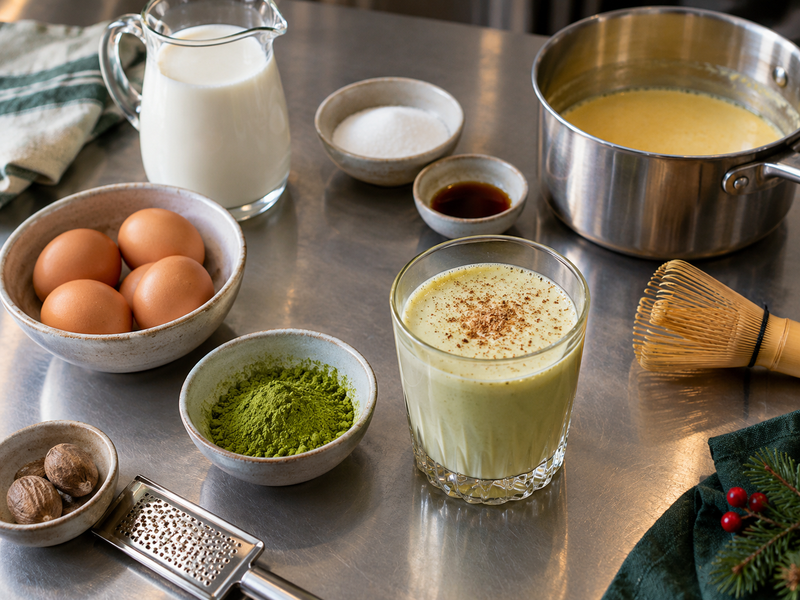
Choose a documented base rather than treating “eggnog” as one fixed ingredient. A house-cooked yolk, milk and cream base gives a team control over sweetness and spice; a purchased pasteurized product may simplify service but requires label and supplier review. Plant-based nog is a separate formulation with different fat, protein and flavor. Test each base with the same matcha lot before comparing tea grades. Otherwise a powder may appear weak because one base contains stronger vanilla or spice. The reference recipe offers one cooked-yolk model, not an instruction to substitute any carton of nog at the same dose.
Write a percentage formula for the base and record the source of every dairy and egg ingredient. Keep a plain control batch so the team can identify what matcha changes. If the plain base already separates during chilling, do not expect tea to repair it. Ask whether the product will be made daily at one café, centrally prepared for several outlets, or bought ready to pour. The scale changes cooling, mixing, packaging and record needs. A small saucepan result can guide taste, but a larger production vessel needs its own validation. Matcha Village’s matcha custard guide covers related egg and starch texture checks that may help developers frame this base trial.
3. How much matcha should a trial use?
Compare equal finished servings
Make three pilot samples with low, middle and high tea doses while holding base, cup size, spice and service temperature constant. Mark the levels as experimental values chosen by the team, not recommended doses for every café. Weigh powder against finished batch mass; teaspoons vary with fill and packing. Taste blind if possible. A warm sample may seem aromatic while the same drink tastes muted after chilling. Let the intended service condition decide the dose. Check color in normal café light, not under a studio lamp.
If the high-dose sample feels chalky, changing the powder or its dispersion may work better than adding sugar. If the lowest dose has no recognizable tea finish, raising the dose can be justified only after checking whether the base overwhelms it. Note the cost per cup at each accepted level. A powder that needs more grams in a rich base may change ingredient cost even when its price per kilogram looks attractive. Record the actual powder lot, because a later lot must be checked against the agreed taste and shade. Repeat the chosen dose in a full batch before printing a seasonal menu description.
| Trial variable | Keep unchanged | Compare |
|---|---|---|
| Tea dose | Base, spice, cup | Flavor, color, grit |
| Powder lot | Dose and mixing | Tea finish after chilling |
| Base sweetness | Powder and dose | Tea clarity versus sweetness |
| Service temperature | Formula and portion | Aroma and perceived body |
4. When should matcha enter the process?
Test dispersion without changing safety steps
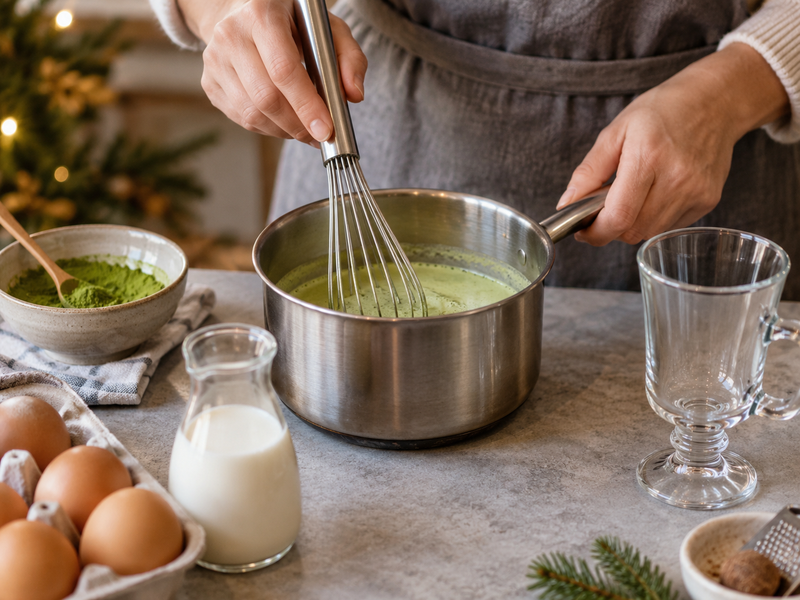
Matcha is fine ground tea, not a soluble flavor. Scattering it onto a thick hot base can create green pockets that are hard to break. Weigh the dose and disperse it in a measured portion of the recipe liquid before mixing. A small whisk or blender may work, but excessive blending can add foam that changes the pour level. Scrape mixing vessels so the actual batch receives the documented amount. Inspect a clear sample for particles before deciding the blend is smooth.
Compare early and later tea mixing only within the site’s approved process. Early mixing faces the full heat cycle and may change aroma or color. A late mixing may preserve some character but could create a new post-cook contamination risk if ingredients or equipment bypass the validated step. Do not move the mixing point merely for a greener photograph. Have the quality lead approve the route, then record how the tea paste is prepared and added. Taste the finished chilled drink, not just the kettle sample. If one route yields specks while another is smooth, inspect mixing and viscosity before ordering a more expensive powder.
5. How should the cooked base be controlled?
Use the site’s approved egg process
Egg and dairy handling deserve a documented process before this drink reaches a menu. The USDA’s shell-egg guidance warns against raw or undercooked eggnog made with untreated eggs and discusses pasteurized eggs as an option. The FDA Food Code provides a US retail model for cooking, cooling and holding; applicable local rules and the site’s food-safety plan govern the operation. Choose the approved egg ingredient and heating endpoint with the quality lead. Do not infer that a thickened appearance alone proves the process was safe.
During trials, record batch mass, vessel, measured product temperature, heat time and stirring method. Scrape the pan edge where egg can set before the center reaches the same condition. If the base curdles, inspect hot spots, agitation and mixing pace; pushing more matcha into it will not restore smoothness. Transfer and cool the batch through an approved route. Keep the sensory experiment separate from the critical safety records so a pleasant tasting panel cannot override a failed temperature log. Train staff to stop and escalate a missed endpoint rather than blending away curdled flecks.
| Production record | Who checks it | Reason |
|---|---|---|
| Egg and dairy lot | Prep lead | Traceability and allergen review |
| Approved cook endpoint | Trained operator | Process control |
| Cooling record | Shift lead | Matches site plan |
| Finished sensory sample | Product team | Flavor and texture acceptance |
6. What does chilling reveal about quality?
Inspect more than the surface
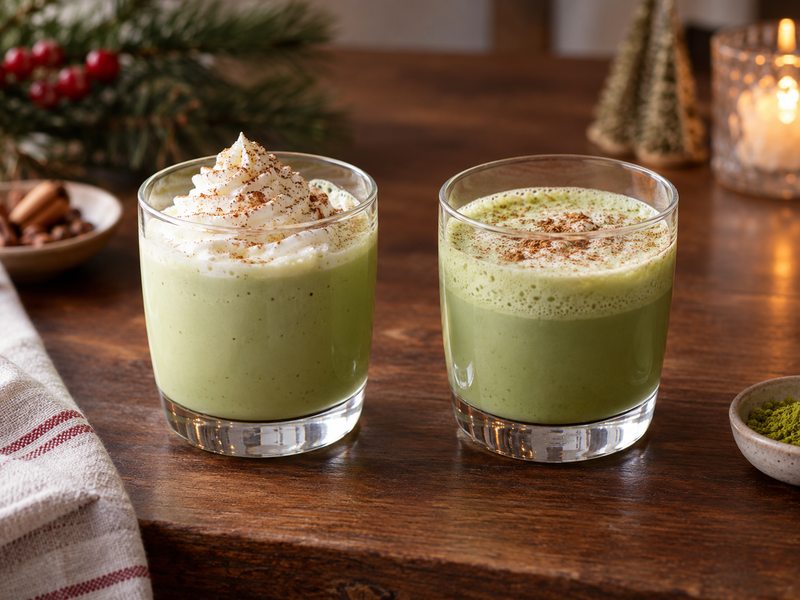
The base may look smooth in a warm saucepan and show a skin, sediment or separation after chilling. Fill a clear trial container at the planned portion mass, then inspect the top, center and bottom after the site’s intended cooling route. Stir one sample and leave another untouched. This comparison reveals whether the service procedure needs a measured remixing step. It also shows whether a heavy tea deposit forms that a guest would encounter in the last sip. Do not hide defects under whipped cream during the test.
Taste the drink at the temperature it will be sold. Record whether cinnamon or nutmeg grows too strong after rest and whether dairy aroma hides matcha. Check the actual bottle or jug as well as a tasting cup; a narrow neck may trap a thick base or make cleaning difficult. If ice is part of service, add the planned mass and check dilution. A recipe that passes undiluted may taste thin in a large iced glass. These observations define product quality only. Storage duration and safe holding must come from the operation’s approved controls and product-specific validation, not from a household recipe’s stated refrigerator time.
7. Should a café serve it hot or cold?
Treat them as separate menu builds
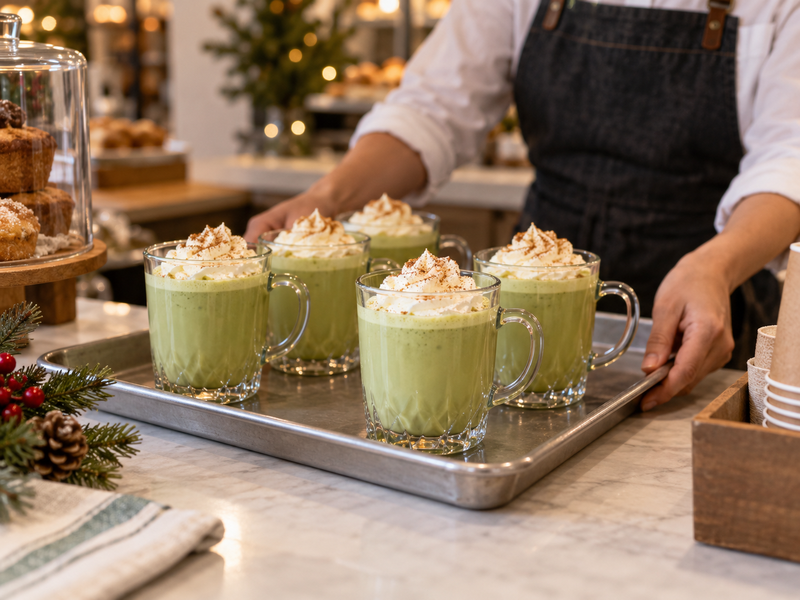
A chilled cup, an iced pour and a warm mug expose different faults. Chilled service may mute tea aroma and reveal sediment. Ice dilutes both sweetness and tea and can leave spice on the surface. Reheating can change custard texture, and a warm drink may show bitterness that cold service masks. Run each format with a measured final volume, a fixed garnish and a named handoff temperature approved by the site. If only one format meets the sensory and process target, launch that one. Do not advertise “hot or iced” until both have passed.
Map the station steps. Can a barista pour the chilled base without shaking a container unpredictably? Does warming happen in a vessel that can be cleaned between dairy drinks? Can staff prepare five orders without leaving a jug out of its controlled holding location? Time the ticket-to-handoff route during a busy simulation. A rich drink may suit a smaller serving than a standard latte; check menu price against finished portion size rather than stretching it with milk after the fact. Document any alcohol option as a separate recipe and compliance review, since the cited recipe’s base is nonalcoholic.
| Format | Trial question | Typical defect to inspect |
|---|---|---|
| Chilled neat | Does tea remain clear? | Sediment at glass base |
| Over ice | Does dilution flatten flavor? | Watery final sip |
| Warm | Does texture remain smooth? | Grainy or over-spiced finish |
| Topped | Does garnish fit the drink? | Cream hides tea aroma |
8. How should staff handle egg, dairy and allergens?
Make ingredient identity visible
Every operator should know whether the batch contains egg, milk, soy or nuts from a substitute base or garnish. The FDA allergen overview identifies egg and milk among major US allergens; other markets have their own rules. Keep ingredient declarations for purchased nog, flavor syrups and toppings with the recipe. If the café offers a plant-based option, verify the actual ingredient list and use an approved cross-contact procedure rather than assuming a plant label makes the drink suitable for every guest.
Label each prepared jug with the information required by the site, including batch identity and its approved use window. Keep clean utensils for tasting; dipping a service spoon into a batch invites contamination and confuses portion control. A guest-facing menu description should say what the drink contains in plain language. Staff should be able to answer whether it includes eggs without guessing from the color. If a supplier changes a bought nog, return the drink to the ingredient and allergen review before service. No sensory improvement justifies skipping that check.
9. What should buyers ask of a matcha supplier?
Request a lot-linked sample for the finished drink
Tell the supplier the base type, proposed tea dose, cook route, service temperature, expected order volume and destination market. Ask for product identity, lot number, pack size, storage guidance and the documents required by the buyer’s quality policy. Test candidate powders at equal doses in the approved nog, not solely in water. A delicate powder may taste appealing when whisked plain and disappear under cream and nutmeg. A stronger sample may perform better at a lower dose; compare accepted cost per cup, not invoice price alone.
Keep a record of color and flavor after cooking, chilling and service. Request another lot for confirmation if the schedule permits. If an origin or certification claim appears on the menu, match it to current evidence for the purchased product. Matcha Village’s pure matcha options can be screened through the same application test; a grade label does not replace a finished beverage tasting. The supplier discussion becomes more productive when the buyer can say, for example, that tea fades after chilling or that a powder leaves visible sediment in a specified base.
| Supplier item | Evidence | Trial decision |
|---|---|---|
| Lot-linked powder | Sample and specification | Same-dose beverage tasting |
| Pack size | Available formats | Matches seasonal throughput |
| Quality documents | Required market records | Buyer review before order |
| Delivered price | Quote and freight | Cost per accepted cup |
10. What must the launch sheet record?
Make the seasonal recipe repeatable
Write the accepted ingredient identities and gram weights, finished batch yield, matcha-paste method, approved egg process, cooling route, service portions and garnish. Link the sheet to the food-safety records rather than replacing them with a short recipe. Include photographs of an accepted chilled pour and any approved warm version under the café’s usual light. State what staff should do if the base separates, a temperature record fails or a substitute nog arrives. Those cases need a decision path, not a reassuring instruction to stir and serve.
Run a supervised shift with the final card. Ask a barista who did not develop the drink to prepare several orders and note unclear steps. Taste the last cup as well as the opening sample. Review the batch log, actual cups sold, waste and remaining base before setting a permanent prep quantity. If seasonal demand is lower than expected, smaller batches may protect quality more effectively than stretching a jug across service. Close the supplier brief with the accepted tea sample, final dose and expected purchasing period. This gives the next production run a clear starting point.
FAQ
Q1. Can a café use raw eggs for matcha eggnog? Use an egg process approved for the site and market. USDA guidance warns against untreated raw or undercooked eggnog.
Q2. Should matcha go in before or after cooking? Compare quality only within a validated process. Later mixing needs its own safety review.
Q3. Why does chilled eggnog taste less like tea? The base, spice and serving temperature can change perception. Recheck the same powder at measured doses in the finished drink.
Q4. Can one batch serve hot and cold orders? Test both routes separately for texture, flavor and process control before offering both.
Q5. How long may a prepared jug be sold? Set that decision through product-specific validation and the applicable food-safety plan, not a recipe citation.