
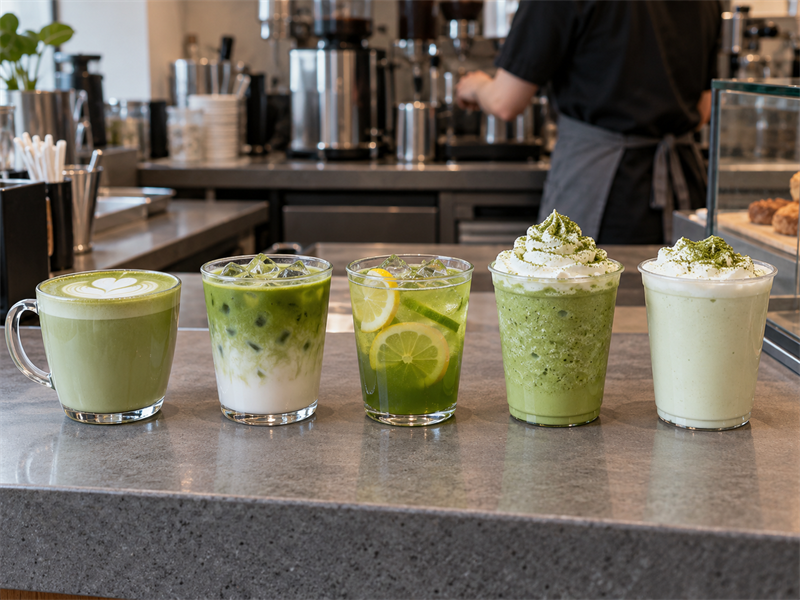
Matcha drink recipes combine powdered tea with water, milk, fruit, or a prepared base. A café can adjust a drink in the cup; a chain or beverage manufacturer needs repeatable color, flavor, speed, and cost. This guide lays out five bench concepts and the controls needed before a menu or packaged launch. Every quantity is a starting point for testing, not a validated formula for your equipment or market.
Choose the channel before the flavor: A made-to-order latte, a dispenser mix, and a bottled drink have different stability and food-safety demands.
Contents
- What makes a matcha drink recipe commercially useful?
- Which matcha should you test for beverages?
- How can a café standardize a matcha latte?
- How can a chain pilot an iced matcha latte?
- How can a menu team pilot matcha lemonade?
- How can a foodservice buyer pilot a matcha frappe?
- How can a brand pilot a matcha protein shake?
- How do you control settling, sweetness, and service speed?
- What must be checked before a packaged launch?
- How should a buyer compare matcha suppliers?
1. What makes a matcha drink recipe commercially useful?
Write a cup-level specification
The formula should tell an operator what to weigh, how to disperse powder, which liquid temperature to use, and what the finished cup should look like. Include vessel size, ice weight if relevant, finished volume, sweetness target, and serving time. A recipe that says “whisk some matcha into milk” may work for an experienced barista but cannot be audited across a chain.
Test the whole service: Weigh ingredients for several consecutive cups during a busy simulation. Measure preparation time and inspect undissolved powder, foam, color, and sediment after the drink waits for the likely pickup interval. Train staff on one sequence before adding toppings. A drink that performs only when prepared slowly by a specialist is a weak chain recipe.
Set the intended market before writing claims. Matcha naturally contains caffeine; its amount varies by powder and use level. The FDA caffeine overview notes tea as a natural caffeine source. Avoid assigning a precise caffeine figure to a cup without product testing or a reliable supplier result. Avoid health or energy claims based solely on matcha’s reputation.
| Channel | Service need | Trial question |
|---|---|---|
| Café | Fast cup preparation | Can a new operator reproduce it? |
| Chain | Consistent taste | Do stores use the same dose? |
| Foodservice | Simple prep and holding | Does a batch settle? |
| Packaged beverage | Process stability | Does color and texture hold in pack? |
2. Which matcha should you test for beverages?
Compare it in the intended liquid
A powder that tastes smooth in water may seem faint in sweetened milk. A stronger tea note may suit a frappe but taste harsh in lemonade. Request identified matcha lots and prepare each in the exact base planned for sale. Hold dose, water quality, sweetener, cup size, and mixing method constant. Score aroma, bitterness, aftertaste, appearance, and any settling.
Ask what the grade means: “Premium” and “ceremonial” can help a supplier organize a catalog but do not replace a beverage specification. Ask for the particle-size method if a supplier uses fine-grinding claims, plus a current specification, certificate of analysis, origin statement, and storage guidance. Matcha Village lists different matcha grades and blends in its company materials; buyers still need application trials and lot-linked documents.
Powder color is only one input. Research on Tencha color characteristics connects raw-tea processing with color quality. Finished-drink appearance also depends on dilution, milk opacity, acidity, lighting, and time. Do not approve a powder from a dry sample photograph. Test a cup immediately after mixing and at the last point a customer may drink it.
| Test matrix | Matcha property to watch | Acceptance record |
|---|---|---|
| Water | Aroma and bitterness | Blind taste score |
| Dairy milk | Flavor clarity | Color and taste at service |
| Plant milk | Foam and sediment | Cup after waiting |
| Acidic mixer | Color shift | Immediate and held photo |
3. How can a café standardize a matcha latte?
Make a measured base recipe
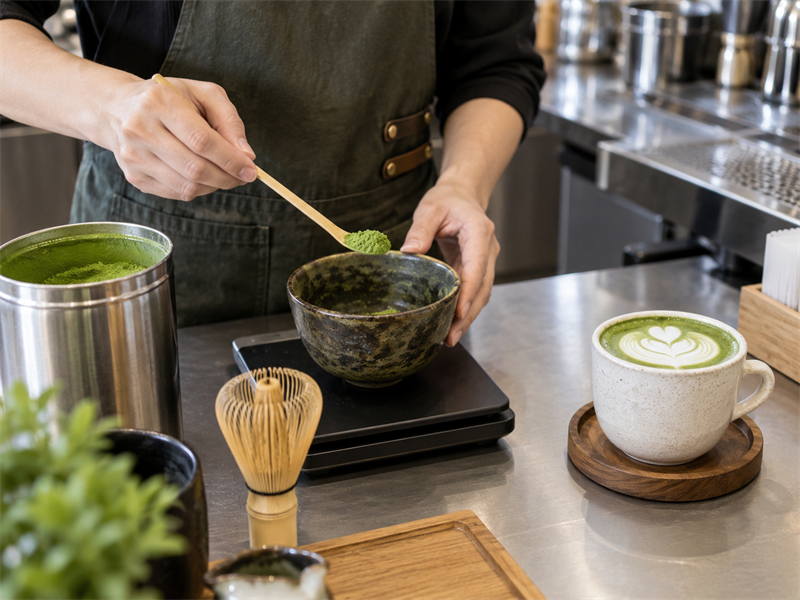
For a 250 mL hot-cup trial, start with 2–3 g matcha, 30–40 mL water for dispersion, and milk to final volume. Adjust sweetness separately. These numbers are a pilot range, not a universal “correct” latte. Sift powder if clumping appears, disperse it fully in water, then combine with heated milk. Weigh the matcha rather than relying on a scoop that may pack differently between shifts.
Give operators a visual endpoint: The dispersion should be smooth before milk enters. Compare a whisk, shaker, and powered mixer under actual service conditions. Record the chosen method, prep time, and cleaning needs. If the drink tastes bitter, check dose and water temperature alongside powder choice. A sweeter milk may hide bitterness while adding cost and changing nutrition information.
Test dairy and alternative milks as separate menu items. Oat or soy beverages differ in sweetness and foam behavior, and they add distinct ingredient and allergen questions. The FDA major allergen list identifies milk and soy as U.S. major allergens. A chain should document cup, utensil, and equipment handling for menu communications. Do not advertise an alternative milk version as allergen-free without a validated control program.
4. How can a chain pilot an iced matcha latte?
Control dilution before choosing sweetness
Ice weight changes the drink more than many menu descriptions acknowledge. For a 350 mL service trial, compare 2.5–3.5 g matcha, a measured dispersion liquid, milk to target volume, and a fixed ice weight chosen for the cup. Make three cups in sequence and weigh the finished drink. Taste immediately and after the likely customer pickup interval. The objective is a repeatable flavor after ice begins to melt.
Keep the order fixed: Add a smooth matcha dispersion to the cup at the same point each time. Layering can be attractive for photography, but a customer may receive a weak top and concentrated bottom if the drink is not mixed. Decide whether the standard presentation is layered or stirred, and train staff accordingly.
For a chain, test the base at different store water temperatures and during peak service. If a premixed concentrate is used, establish refrigerated holding and discard rules through the food-safety team. Use a bottle or squeeze container that staff can clean and date reliably. A café recipe becomes an operating procedure once it moves across locations; ingredient measurements, holding time, and cup build all belong on one card.
5. How can a menu team pilot matcha lemonade?
Watch acidity and color
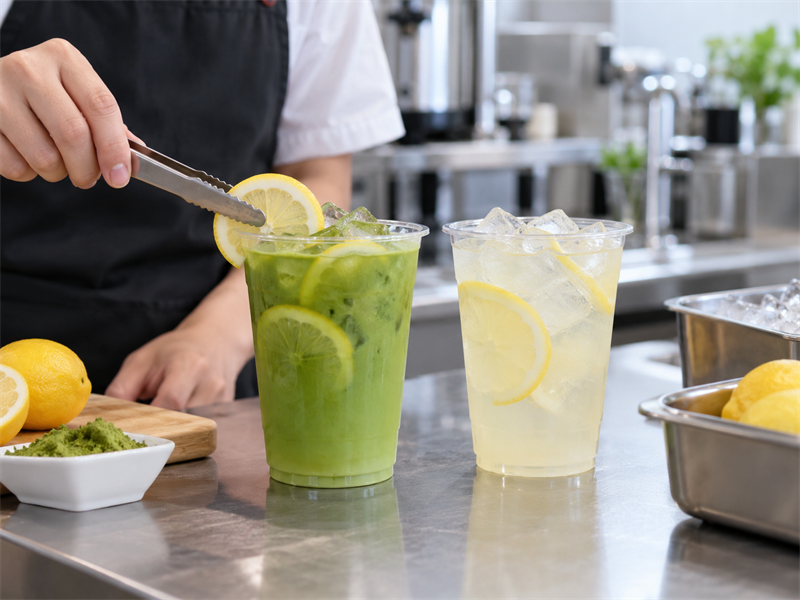
Matcha lemonade pairs tea bitterness with acid and sweetness, but the color can shift as the drink stands. Start from a house lemonade whose acid and sugar levels are already approved. Add a controlled matcha dispersion at 2–3 g per 300 mL finished drink for a bench comparison. Prepare samples with the same lemonade batch, then photograph and taste them immediately and after the expected service delay.
A bright first minute is not the whole test: Observe any sediment, foam ring, or muddy color after the cup waits. If the appearance changes quickly, consider a made-to-order build rather than a premixed dispenser. Do not assume a stabilizer will solve the issue without a full formulation and label review. A lower matcha dose may give a cleaner drink than a stronger one if bitterness competes with the acid.
Use real menu conditions in the trial: the intended ice, cup, lid, and garnish. Citrus wedges can alter perceived acidity and create additional prep work. If a retailer plans a bottled lemonade, this café concept does not establish a safe shelf-stable beverage. Packaged acidified drinks require process design and applicable regulatory review specific to their formulation and market.
| Variable | Keep fixed while testing | Watch for |
|---|---|---|
| Lemonade base | Sugar and acidity | Tea balance |
| Matcha dose | Measured grams | Bitterness and color |
| Hold time | Planned service interval | Settling and dullness |
| Ice | Weight and size | Dilution |
6. How can a foodservice buyer pilot a matcha frappe?
Design around the blender and serving window
A frappe can use milk or a plant-based base, ice, matcha, and sweetener. Begin with an existing plain frappe formula and trial 2.5–4 g matcha per 350 mL serving. Keep ice weight, blender speed, and blend time fixed. Check texture in the serving cup after ten minutes, not only in the blender pitcher. A drink that separates before a customer reaches the table needs process work.
Count the hidden costs: Large ice pieces may require a longer blend; a thick base can slow pouring and cleaning. Toppings add labor and packaging. Compare a plain frappe with one topping at a time, then cost the full build. If matcha flavor disappears under syrup and whipped cream, the problem may be menu architecture rather than powder quality.
For a foodservice distributor, write the recipe in equipment-neutral terms where possible and test it on a representative blender. A chain might approve a premix to cut prep steps, but the premix needs its own ingredient, allergen, and storage specification. Keep a record of powder per finished serving so purchasing can calculate matcha demand from forecast cup sales.
7. How can a brand pilot a matcha protein shake?
Treat protein as a formulation variable
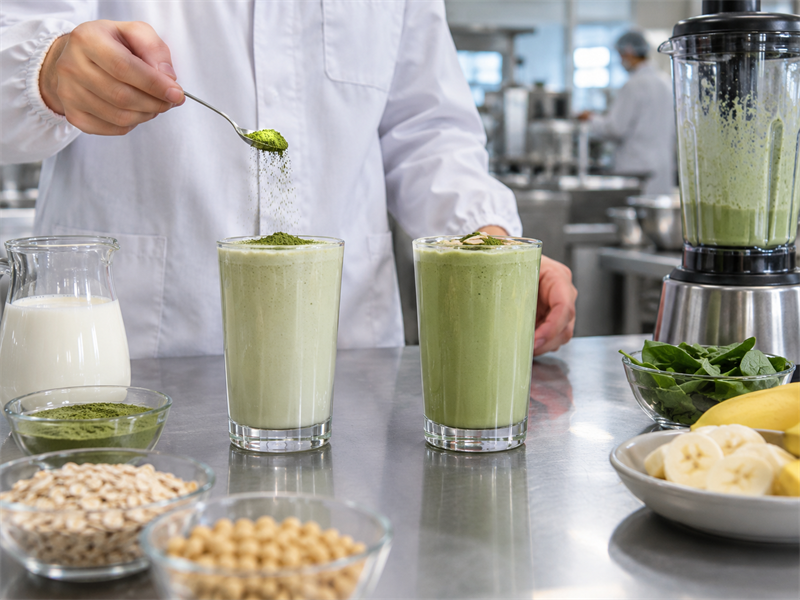
Protein powders bring their own flavor, viscosity, and sediment. Start from a validated protein-shake base and trial a measured matcha dose, such as 2–4 g per 300 mL bench serving. Keep protein source, sweetener, and total solids fixed while comparing matcha lots. A dairy protein base and a pea protein base should be tested separately; they can change tea flavor and texture in different ways.
Taste after the shake sits: Some powders hydrate slowly. Score mouthfeel and settling immediately, after the planned service wait, and after any intended refrigerated holding. If a gritty finish appears, identify whether it comes from protein, matcha, or both through control samples. Extra sweetener may mask roughness but can move the product away from its nutrition target.
Do not infer a health benefit from adding matcha. If marketing wants caffeine, protein, or functional claims, obtain the necessary product-specific data and market review. The FDA caffeine page notes that tea contributes naturally occurring caffeine, but it does not give a fixed value for this particular shake. A packaged version needs process and shelf-life work beyond this foodservice pilot.
8. How do you control settling, sweetness, and service speed?
Separate the three problems
Settling may reflect powder dispersion, particle behavior, viscosity, or a long hold. Sweetness depends on the whole base, not matcha alone. Service speed depends on preparation steps and staff practice. Address them in separate trials. Otherwise a team may buy a more expensive tea to solve a mixing problem or add syrup to hide a poor dose choice.
Build a simple test card: Weigh each ingredient, time preparation, photograph the finished drink under fixed lighting, then score taste and sediment at defined intervals. Make the trial with both an experienced and a newly trained operator. If one succeeds and the other fails, simplify the method before changing powder.
Cold drink handling also matters. USDA guidance on temperature and food safety explains the concern with perishable foods held warm. Have the quality team set specific rules for milk, concentrates, and prepared drinks in your market and operation. Staff should not guess how long a pitcher can remain on the counter.
| Failure | Test before reformulating | Possible next step |
|---|---|---|
| Powder clumps | Dispersion method | Preblend in small liquid portion |
| Sediment | Hold interval and base viscosity | Adjust service or base |
| Overly sweet finish | Full serving taste | Reduce syrup or sweetened base |
| Slow preparation | Timed cup build | Remove steps or use measured prep |
9. What must be checked before a packaged launch?
Move from cup recipe to process design
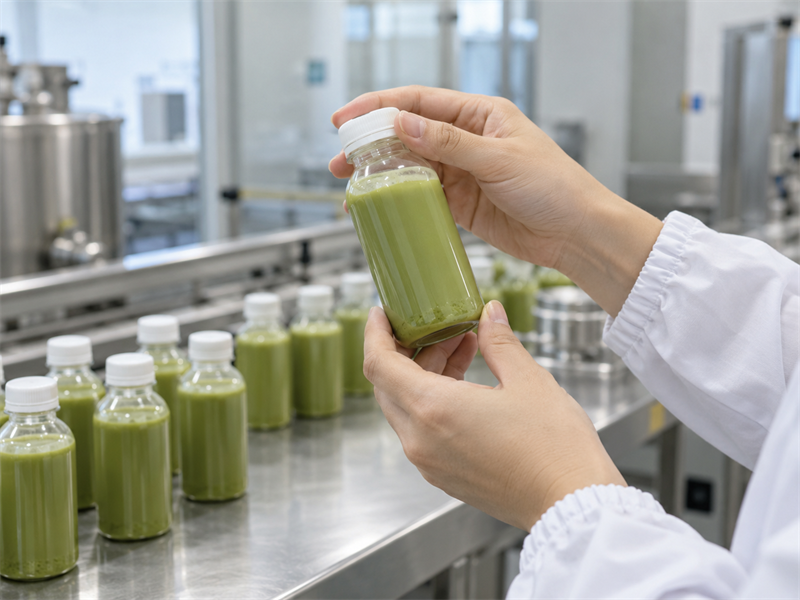
A bottled or canned matcha drink needs a validated process, packaging, microbial controls, and a demonstrated shelf life. A café latte formula does not establish safety after filling. The same applies to acidic matcha lemonade and protein shakes. Work with a qualified beverage processor and the regulatory team for the market of sale. Define whether the drink will be chilled or shelf stable before choosing pack or equipment.
Read the full ingredient list: Milk, soy, and other allergens may enter through dairy, plant milk, protein, stabilizers, or flavorings. The FDA U.S. allergen guidance describes declaration and cross-contact concerns. An “organic matcha” ingredient also does not make a finished drink organic. Check USDA organic labeling categories or destination-market rules before approving artwork.
Evaluate color, sediment, flavor, package interaction, and safety over the proposed shelf life using actual production samples. Keep retention samples from identified lots. If a product claims caffeine content, test or substantiate it for that formulation. Supplier specifications support this work but cannot replace the finished beverage study.
10. How should a buyer compare matcha suppliers?
Send identical briefs to every candidate
Share recipe type, serving size, powder dose range, target flavor and color, expected volume, destination market, and process conditions. Ask each supplier for identified samples and the same document list: current specification, lot-linked analysis, origin, storage instructions, and relevant certification records. Compare results in identical cups with the same operators. Price per kilogram means little until the required dose per serving is known.
Keep the comparison commercial: Record lead time, minimum order, pack size, sample-to-production continuity, and the process for approving a new lot. Matcha Village describes matcha, latte powder, blends, and OEM support in its supplied company materials. Ask which product type fits your operating model. A ready-made sweetened blend may save bar time, while unsweetened powder gives a formulator more control.
If you import powder into the United States, coordinate supplier review with whoever holds the importer role under FDA Foreign Supplier Verification Program rules. Verify any supplier capacity or certification claim through current documents tied to the product and facility. The final buying choice should combine finished-cup quality, operating cost, and a documented supply route.
| Buying question | Compare using |
|---|---|
| Which powder tastes better? | Blind cups at equal dose |
| Which costs less per drink? | Approved grams per serving |
| Which supply is repeatable? | Lot control and lead time |
Start with one matcha drink recipe that fits the channel, then run the same measured cup test across candidate matcha lots. Send Matcha Village the resulting brief and request samples suited to that process. The cup, its operating time, and the supplier documents should all pass before the menu or pack is approved.
FAQ
Q1: How much matcha belongs in a latte?
The 2–3 g per 250 mL hot-cup range above is a pilot starting point; adjust it through measured taste trials.
Q2: Can one matcha powder work across every drink?
Possibly, but test it in water, milk, acidic drinks, and frozen blends before standardizing.
Q3: Why does matcha settle in an iced drink?
Check dispersion, base viscosity, dose, and waiting time. Compare control cups before changing powder.
Q4: Is a café recipe ready for bottling?
No. Packaged drinks need process design, safety validation, packaging tests, and shelf-life evidence.
Q5: What should a buyer request from a supplier?
Ask for identified samples, current specifications, lot-linked documents, lead times, and an application recommendation.