
A matcha cake recipe adds powdered green tea to a cake batter for tea flavor and green crumb. A small bakery can judge a single cake after cooling. A chain or private-label buyer must get the same rise, slice, color, and taste from routine batches. This guide gives a bench formula and an approval path for that larger job. The formula is a trial, not a validated production specification.
Start with the cut slice: A beautiful surface means little if the crumb is dense, streaked, or weak after packing.
Contents
- What should a production matcha cake deliver?
- Which ingredients make a useful pilot formula?
- Which matcha should you test for cake?
- How do you mix the batter consistently?
- How do you set a reliable bake profile?
- How do you select fillings and frosting?
- How do you prevent a dry or dull cake?
- What changes when the cake is packed or frozen?
- What documents and labels need review?
- How should buyers approve a matcha cake supplier?
1. What should a production matcha cake deliver?
Define the slice before the batter
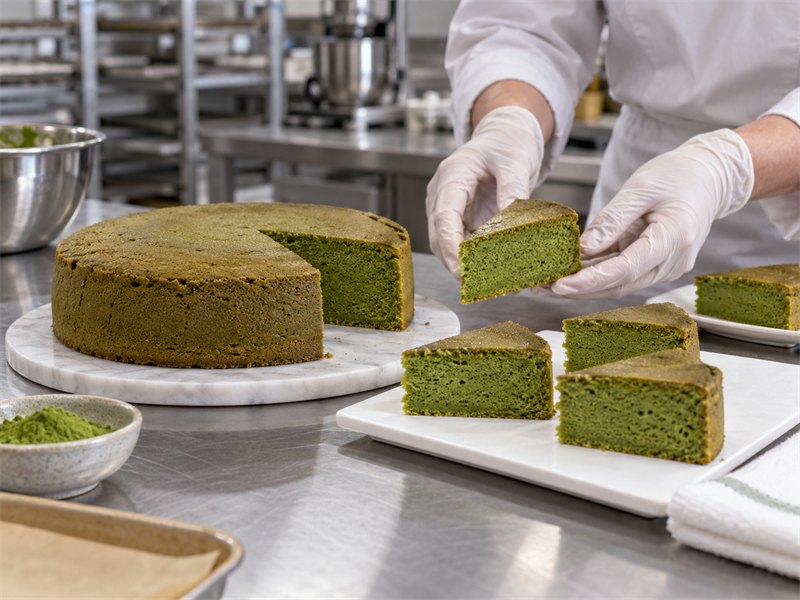
Decide whether the finished product is a café layer cake, a loaf, a snack square, or a frozen dessert slice. Each format changes thickness, cooling time, decorating labor, and packaging. Write a target portion weight and a sensory description: green crumb, clear tea aroma, sweetness level, and mouthfeel. Add a reference photograph under fixed lighting, but keep an actual retained sample for comparison where possible.
Ask how it will be sold: A café can finish slices on site. A retail loaf must travel without frosting smears or broken edges. A frozen slice must look presentable after thawing. Test the product at its serving temperature, not only warm from the oven. A cake that tastes tender on day one can become dry in a display case or soggy beneath a filling.
Give quality and operations objective checks after pilot runs: cake height, portion weight, visible holes or streaks, crumb color, and pack condition. Those ranges belong to the product, not to a generic recipe. Repeat the trial before locking them. A team that writes “moist and bright green” without a reference or measurement will argue over ordinary variation later.
| Format | Buyer priority | Common trial failure |
|---|---|---|
| Café layer cake | Clean slice and stable frosting | Slumping or dry exposed edge |
| Retail loaf | Packable shape | Breakage and color loss |
| Snack square | Portion consistency | Uneven height |
| Frozen slice | Good thawed texture | Weeping or frosting damage |
2. Which ingredients make a useful pilot formula?
Fix a base before varying matcha
For a butter-style bench cake, start with a house vanilla formula that already rises reliably. If no house base exists, the table gives a trial worksheet per 1,000 g flour. It should be adjusted for flour strength, pan size, mixer, and desired density. Treat matcha as a controlled variable, not as a reason to change sugar, fat, and liquid in the same trial.
| Ingredient | Pilot quantity per 1,000 g flour | Role |
|---|---|---|
| Butter | 750 g | Flavor and tenderness |
| Sugar | 850 g | Sweetness and structure |
| Whole egg | 800 g | Structure and emulsification |
| Milk | 500 g | Hydration |
| Matcha | 35–55 g | Tea flavor and color |
| Baking powder | 30 g | Lift; verify against base |
| Salt | 12 g | Flavor balance |
Hold one thing steady: Bake one control without matcha, then matcha cakes at several inclusion levels. Compare volume, crumb, color, and taste after complete cooling. If the highest dose becomes bitter, a different powder may work better than more sugar. Weigh ingredients and record batch yield. Cups and spoonfuls hide the variation a buyer needs to control.
This is a pilot formula, not an instruction to sell a cake without process and safety validation. The amount of leavening especially depends on the chosen base and flour. Ask the bakery team to approve the final recipe through normal development and quality procedures.
3. Which matcha should you test for cake?
Judge powder after baking
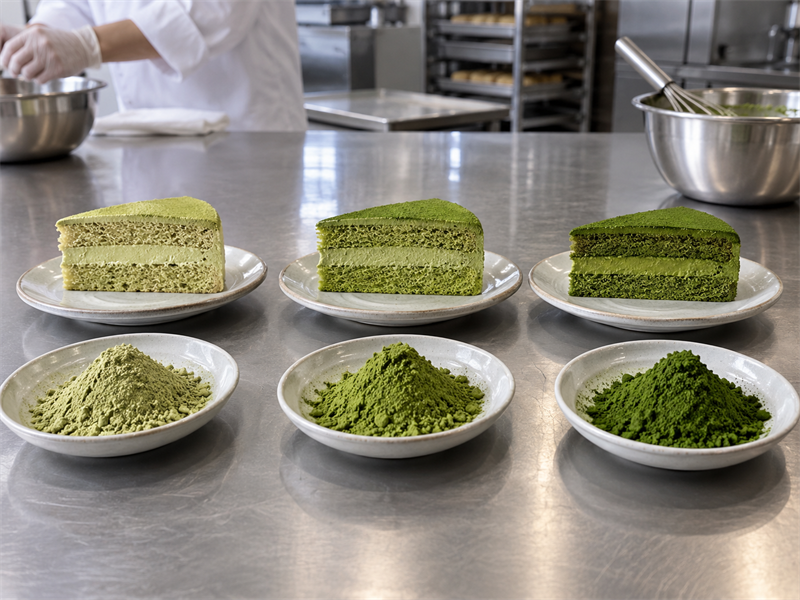
A dry matcha sample may look vivid but taste faint once mixed with butter, egg, sugar, and flour. Ask suppliers for identified lots, then bake each lot in the same base, with the same inclusion and oven profile. Compare a cut slice under fixed light after cooling and again after the planned sale period. Record tea aroma, bitterness, and any grassy or stale notes.
Grade names are a starting label: Matcha Village lists culinary, premium, and other matcha products in its company materials. Those commercial categories do not predict your cake. The useful question is which candidate meets the final slice specification at an acceptable dose and delivered cost. A powder that needs twice the inclusion to show flavor may not be cheaper per cake.
A Tencha color study links raw tea processing conditions to color quality. Its findings do not supply a cake-baking specification. Oven exposure and the rest of the formula still matter. Request a current ingredient specification, lot-linked certificate of analysis, origin, storage directions, and documents required by your destination market. Keep powder samples sealed and stored consistently during comparison.
4. How do you mix the batter consistently?
Record appearance and temperature
Cream butter and sugar using a defined starting butter condition and mixer setting. Add egg in stages, scraping the bowl so batter stays uniform. Preblend matcha with the dry ingredients to prevent green clumps, then add dry and liquid ingredients using the sequence approved for the base cake. Stop at a consistent batter appearance. Record batter temperature and weight deposited in each pan.
Neither too little nor too much mixing helps: King Arthur Baking explains in its cake batter guide that undermixing can leave weak cake structure, while mixing method affects gluten development. A recipe card should therefore describe the endpoint, not only a number of minutes. A large mixer and a small bench mixer will not deliver the same energy in the same time.
Inspect the bowl bottom and finished batter for flour or matcha streaks. If green spots persist, improve dry preblending and scraping before increasing total mixing time. Excess mixing can change cake texture. Deposit batter promptly using the same pan preparation and fill weight in every comparison. If the bakery scales up, repeat the mixing trial at a normal production load rather than assuming bench behavior carries over.
| Stage | Record | Reason |
|---|---|---|
| Butter preparation | Temperature and softness | Changes creaming |
| Egg addition | Rate and bowl scraping | Affects uniform batter |
| Dry addition | Order and endpoint | Limits streaks |
| Deposit | Batter weight per pan | Controls cake height |
5. How do you set a reliable bake profile?
Measure the middle of the cake
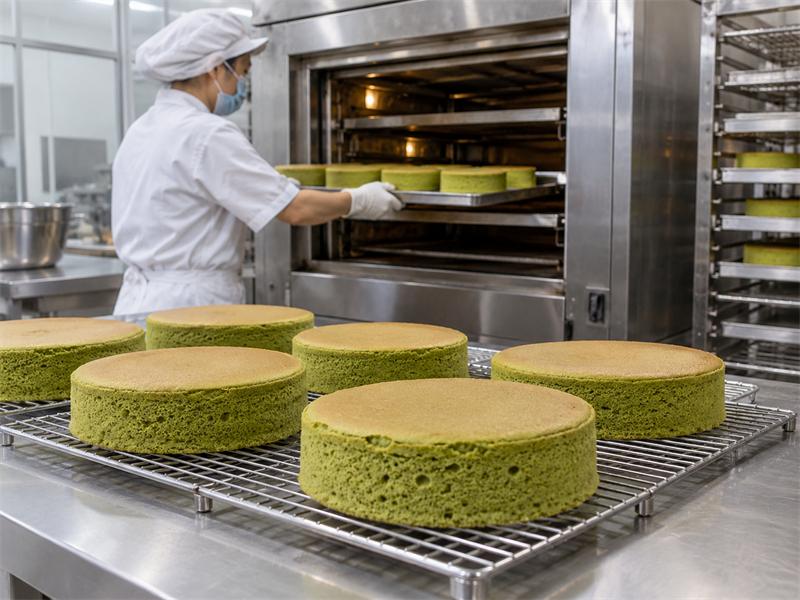
Use the same pan, fill weight, rack position, and oven load for each pilot. A loaf has a different heat path from a shallow sheet cake, so do not transfer time and temperature blindly. Record oven setting, actual bake time, cake height, surface color, and the endpoint your bakery uses for doneness. Check the center and bottom, where underbaking or excessive browning can hide.
Cool before scoring: Cake structure changes as it cools. Cut a sample at a fixed interval, then compare height, crumb uniformity, moisture perception, and tea aroma. If one side rises higher, inspect pan placement and oven airflow. If the cake sinks, check mixing, leavening, and bake completion one at a time. The King Arthur Baking discussion of cake mixing gives useful diagnostic context, but your oven data decides the final profile.
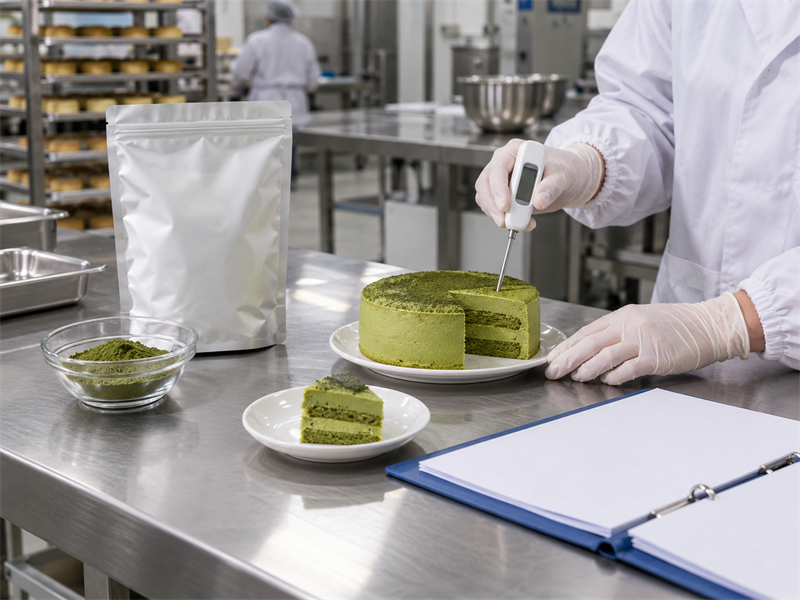
Do not judge safety from color alone. A bakery’s food-safety plan should cover ingredient receiving, process, cooling, and storage for the chosen cake. Keep a retained sample of each pilot so the team can compare freshness during the proposed selling window.
6. How do you select fillings and frosting?
Balance the whole slice
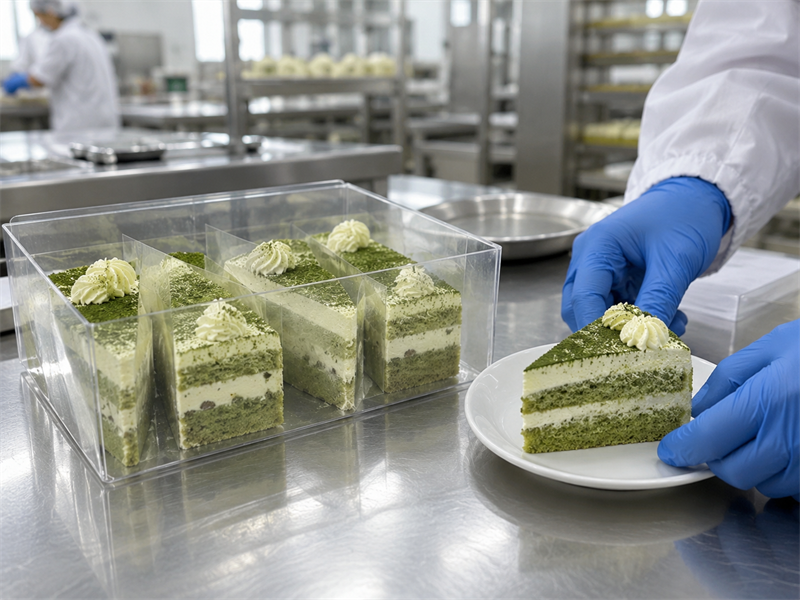
A plain matcha crumb can disappear beneath a thick, sweet frosting. Start with a control slice, then compare a lightly sweetened cream, white chocolate ganache, and a fruit filling at measured weights. Taste the complete planned serving. A spoonful of frosting tested alone cannot tell you whether the finished slice still tastes of tea.
Check the seam: Filling moisture can migrate into cake, and a soft layer can slide during packing. Hold assembled slices under intended display or transport conditions. Inspect the boundary between layers, frosting stability, and the cut face after the expected sale period. If strawberries or other fresh fruit are used, a local food-safety review and shorter holding plan may be needed. Do not invent a shelf-life extension based on cake alone.
Decorations affect labor and claims. White chocolate adds milk and possibly soy depending on its recipe. Nuts add another allergen and potential cross-contact concern. A private-label customer may ask for a clean front-of-pack image, but the best decorative choice is one a normal production shift can apply consistently. Cost the full slice, including frosting yield and waste, before choosing a premium matcha grade.
7. How do you prevent a dry or dull cake?
Diagnose cause before changing matcha
Dryness may come from excess bake, low fill weight, flour choice, long display, or packaging that loses moisture. Dull color can come from the powder, formula, heat, storage, or lighting. Do not respond to both problems by raising matcha dose. That can make flavor harsher while leaving texture unchanged.
Use paired samples: Bake the same batter in identical pans at two controlled endpoints. Compare color and texture after cooling and after storage in the intended pack. If the greener cake is underbaked, the team needs a different process or powder, not a misleading photograph. Compare the powder lots only after the bake profile is stable.
Track weight loss from batter deposit to cooled cake. That number helps teams discuss moisture differences without relying only on words like “fresh.” It is a process measurement, not a shelf-life result. Retain a reference slice and record storage conditions. If a formula changes, repeat the sensory and pack checks rather than assuming the previous approval still applies.
| Symptom | Check before changing powder | Possible trial |
|---|---|---|
| Dry crumb | Bake endpoint, fill, pack | Reduce heat exposure |
| Dense line | Mixing and bake completion | Adjust process |
| Dull green | Powder lot and heat | Compare matched bakes |
| Bitter finish | Matcha dose and sugar balance | Test lower dose or new lot |
8. What changes when the cake is packed or frozen?
Test the route to the customer
A cake made for display, a cake wrapped in film, and a frozen slice experience different conditions. Use the proposed pack in shelf-life trials. Check moisture change, green appearance, aroma, condensation, frosting transfer, and breakage. Run a transport or handling trial if the cake will travel through distribution. A pack that looks premium but crushes cake edges is a commercial failure.
Thaw the exact pack: For frozen cake, freeze production-like slices in final packaging and thaw them using the operator’s intended method. Check weeping, crumb texture, frosting appearance, and label legibility. Do not extrapolate from an uncovered bench slice. Temperature cycling can expose problems that a single controlled freeze misses, so quality should set the test plan for the actual route.
For chilled cakes with dairy filling, hold and display conditions require food-safety control. USDA temperature guidance explains the risks of perishable foods held warm. Local regulations and your validated product plan determine exact cooling and holding procedures. Document any display limit on the operator sheet.
9. What documents and labels need review?
Connect the powder lot to the finished cake
Request a current matcha specification, lot-linked analysis, origin statement, allergen statement, storage guidance, and any agreed contaminant testing. Keep supplier documents with the batch record so a color or flavor complaint can be traced to the ingredient lot and bake date. Matcha Village’s stated certification list should be checked against current certificates for the exact product and facility before a customer-facing claim appears.
Review the complete cake label: Flour, egg, milk, nuts, soy ingredients, and toppings may trigger allergen declarations. The FDA’s U.S. allergen guidance identifies major allergens and describes cross-contact concerns. Packaging sold elsewhere needs review under that market’s rules. If the brand wants an organic cake, USDA labeling rules show why certified organic matcha by itself is insufficient for a U.S. final-product claim.
An importer bringing matcha into the United States should also review applicable FDA Foreign Supplier Verification Program requirements. Keep legal and quality decisions with the responsible teams; a recipe article can flag the question but cannot approve a label or import process.
10. How should buyers approve a matcha cake supplier?
Test an identified lot through normal production
Send the supplier the intended cake format, matcha inclusion range, target color, flavor, forecast volume, pack, and destination market. Ask for identified samples and documents. Bake each candidate in the same formula. Then repeat the chosen one in a normal-size batch with the production crew, not only with a development chef. Keep accepted and rejected slices as photo references.
Price the slice, not only the kilogram: If one powder requires a larger dose, calculate ingredient cost per finished portion. Add yield, labor, packaging, and waste. Confirm minimum order, lead time, and the procedure for a new matcha lot. Ask how the supplier handles out-of-spec color, aroma, or documentation. A good sample without a repeatable supply route does not solve a buyer’s problem.
Matcha Village can discuss matcha grade, bulk supply, blends, and private-label options. Its company materials describe those services, but a buyer should verify relevant capabilities through current records and a production trial. Once quality, operations, purchasing, and sales agree on the finished cake, reference the approved specification on the purchase order.
| Approval owner | Evidence needed |
|---|---|
| Development | Finished-slice sensory record |
| Quality | Lot documents and label review |
| Operations | Normal-load bake result |
| Purchasing | Cost and supply terms |
Run the matcha cake recipe through a normal production load and inspect a cooled, packed slice. Send Matcha Village the resulting target and request identified samples with current documents. Approve the finished cake and its supply specification together.
FAQ
Q1: What matcha works best in a cake recipe?
The best choice meets color, flavor, cost, and supply requirements in a finished-cake trial; grade labels alone do not decide it.
Q2: Why does matcha cake turn dull?
Check powder lot, formula, bake exposure, storage, and lighting through matched tests.
Q3: Can the pilot formula above be sold directly?
No. It needs equipment trials, food-safety review, packaging work, and shelf-life validation.
Q4: Does organic matcha make a cake organic?
No. The finished product must meet the rules for composition, certification, handling, and labeling.
Q5: What should a bakery send a matcha supplier?
Send the cake format, formula use level, target slice, expected volume, destination market, and required documents.