
Matcha cucumber lemonade sounds straightforward until a café has to make the tenth glass as cleanly as the first. Cucumber pulp blocks a pour spout, lemon varies between deliveries, and matcha settles while a pitcher waits for service. A measured extraction, a strain decision and a build order give the bar team control. The Daily Burn recipe blends cucumber and mint with lemon, water, sweetener and matcha. This guide uses that flavor combination as a starting point for an original café trial focused on texture, acidity and chilled assembly.
Contents
- 1. What should matcha cucumber lemonade deliver?
- 2. Which cucumber preparation works best?
- 3. How should lemon and sweetness be balanced?
- 4. How do you disperse matcha without grit?
- 5. What should be strained and when?
- 6. How should a single drink be assembled?
- 7. Can the café batch any components?
- 8. How do ice and takeaway change the drink?
- 9. Which purchasing and handling checks matter?
- 10. What belongs in the service specification?
1. What should matcha cucumber lemonade deliver?
Define a glass the team can reproduce
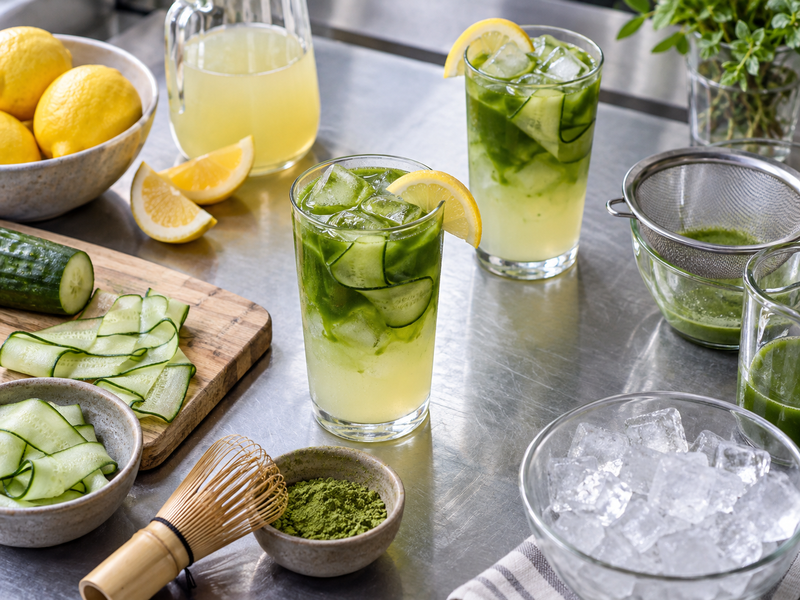
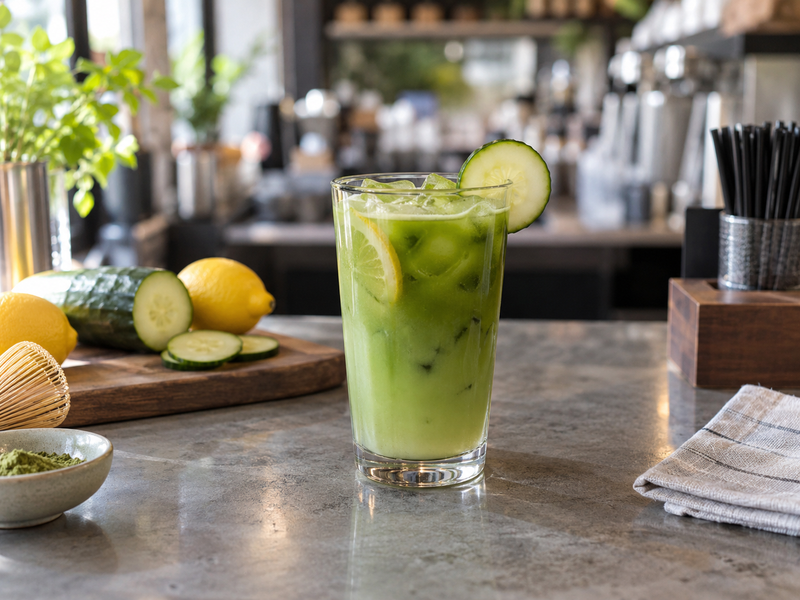
Set a finished volume, ice fill, color target and tasting brief before changing ingredients. A successful glass should make cucumber recognizable without tasting like vegetable juice, keep lemon lively without drowning the tea, and remain pleasant after several minutes on a table. That target depends on the intended customer and cup. A clear iced café glass emphasizes visual separation; an opaque takeaway cup makes taste and texture more important. Photograph both after assembly and after the usual handoff delay.
Use a small panel to score cucumber aroma, lemon sharpness, matcha presence, sweetness and sediment. Give everyone the same ice mass and tasting time. One person should record whether the drink needs stirring and how much foam or pulp is visible. The reference recipe blends all ingredients together, which is one valid approach; a café should compare it with a strained version before committing. Taste the last third. If that sip is thick with green sediment, the recipe needs process work even if the first sip is appealing.
| Service target | Trial record | Why it matters |
|---|---|---|
| Finished volume | Milliliters | Controls yield |
| Ice fill | Grams | Changes dilution |
| Sediment after 10 minutes | Photo and score | Predicts last sip |
| Cucumber and lemon | Blind tasting notes | Reveals imbalance |
2. Which cucumber preparation works best?
Compare juice with muddled or blended fruit
Juiced cucumber gives a lighter body and a cleaner pour. Muddled cucumber creates fresh aroma at the bar but can leave uneven chunks. A blender extracts more material and produces a greener, thicker base; it may also need finer straining. Prepare equal raw cucumber weights by each route and measure liquid yield. Then build otherwise identical drinks. Record preparation minutes, waste, visible particles and how well the cucumber shows up against lemon and matcha. These are operational comparisons, not claims that one method is inherently superior.
The FDA’s fresh-produce advice calls for washing produce under running water and scrubbing firm produce such as cucumbers with a clean produce brush. Apply the site’s produce handling plan before cutting or juicing. Decide whether skin stays on: it changes color and can add bitterness. Use the same cucumber type and ripeness in the first trial, then repeat with a second delivery. Measure actual yield. A cucumber count in a recipe hides changes in size and usable juice.
| Preparation | Likely service benefit | Check in trial |
|---|---|---|
| Juiced | Clean liquid base | Yield and separation |
| Muddled | Made-to-order aroma | Piece size and speed |
| Blended | Stronger body | Pulp and straining loss |
3. How should lemon and sweetness be balanced?
Hold acid constant while testing tea
Fresh lemons differ in juice yield and perceived acidity. Weigh or measure the juice added to each test glass rather than specifying “one lemon.” Use the same sweetener concentration for a first comparison. A suggested café experiment might compare 15 ml and 25 ml lemon juice in the same finished cup; those figures are test points, not a universal formula. Record any pH reading as a quality observation, not as proof of safety or shelf stability. The finished drink also contains cucumber and tea, so its behavior cannot be inferred from lemon alone.
Sweetness should support the cucumber instead of replacing it. Compare a plain sugar syrup with the sweetener already used at the bar, adjusting each to a similar sensory sweetness through blind tasting. The Daily Burn recipe uses agave; that is a reference choice rather than an obligation for a commercial menu. Taste with ice after its first melt because dilution can expose a sharp lemon edge. Change one variable. If lemon and syrup move together, the panel cannot tell which change helped.
4. How do you disperse matcha without grit?
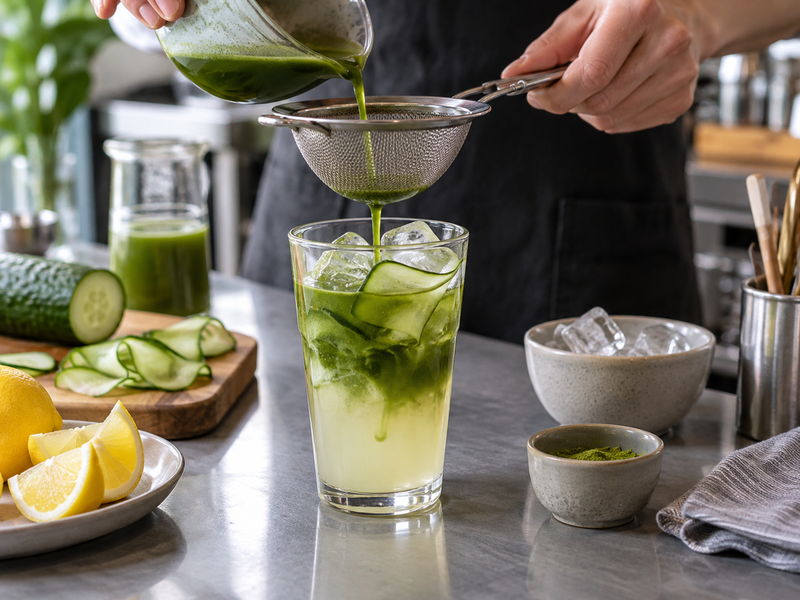
Make a small slurry before adding the cold base
Dropping matcha directly into iced lemonade often leaves floating islands and dry cores. Sift a weighed dose, whisk it with a small measured amount of water, then add it to the drink at a fixed stage. Compare two powder doses, perhaps 2 g and 3 g per chosen cup size, with the same cucumber and lemon base. These are starting trials, not industry standards. Record mixing time, surface foam, green color and the sediment left after ten minutes. Matcha is a suspension, so some settling may remain even with a clean initial mix.
Ask the supplier for a current lot specification and sample. Test grades in the actual acidic drink rather than choosing on dry color or price per kilogram alone. A vivid whisked cup may become hard to taste once lemon and cucumber are added. Matcha Village’s stated product range includes application grades and blends, but the selected ingredient still needs a bench test and a documented purchase specification. Check the straw. Fine grit that escapes a spoon tasting can be obvious through a narrow straw.
| Matcha check | Record | Decision cue |
|---|---|---|
| Powder dose | Grams per cup | Tea clarity |
| Slurry water | Milliliters | Dispersion and dilution |
| Ten-minute settling | Visual score | Service consistency |
| Blind tasting | Tea versus lemon | Grade selection |
5. What should be strained and when?
Choose the texture deliberately
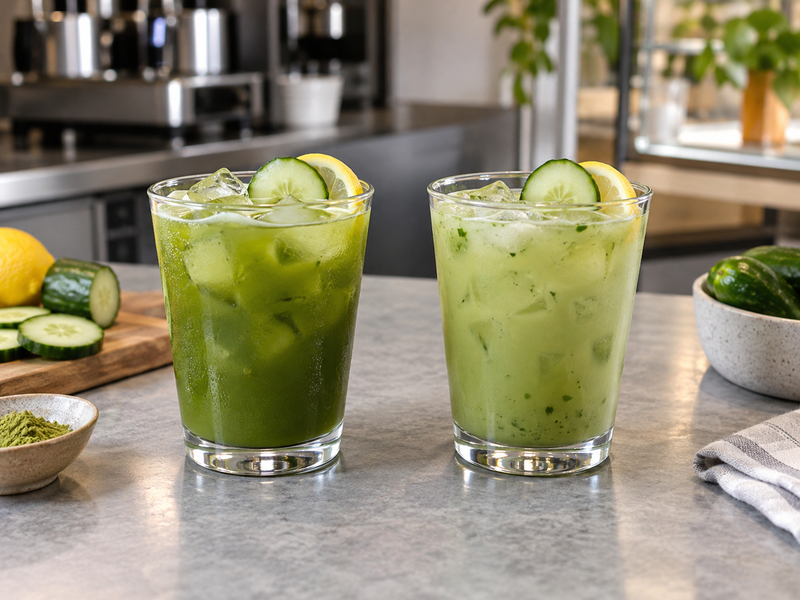
Strain cucumber juice or blended cucumber before adding matcha if a clean refresher is the target. Passing the completed drink through a fine sieve can catch cucumber pulp but may also hold back matcha and foam, making dose unpredictable. Compare an unstrained cucumber base, a coarse sieve and a fine sieve. Weigh the liquid before and after each pass and inspect the retained material. A fine mesh costs yield and labor, so use it only if the texture gain matters to customers.
Mint, if used, introduces another particle source. The reference recipe blends mint leaves; a café can instead steep or garnish with mint if leaf fragments make the drink look muddy. Keep mint optional in a first technical trial so the team can judge cucumber and tea clearly. Test a straw, open cup and takeaway lid with the chosen base. Look inside the lid. Pulp caught at the drinking opening can make a smooth-looking glass feel poorly finished to the customer.
6. How should a single drink be assembled?
Write the order around repeatable dilution
Choose whether the bar pours cucumber-lemon base over ice and finishes with matcha, or combines all liquids before icing. A layered presentation requires density and careful pouring; it may disappear when the customer stirs. A fully mixed drink is easier to taste consistently. Trial both with the same ingredient weights and cup. Record how long each build takes, how many utensils it uses and whether a novice operator can repeat the appearance. Set an acceptable finished volume rather than filling to a visual line after variable ice scoops.
One possible trial sequence is measured cucumber base, measured lemon syrup, weighed ice, then a freshly whisked matcha slurry. Treat it as a prototype, not a mandated recipe. A separate tasting of the mixed drink is useful because customers do not always keep visual layers intact. If the first pour creates excessive foam, add the slurry more slowly or change its temperature before adding more ingredients. Time the build. A drink that looks excellent after five minutes of fuss may fail during a queue.
| Build variable | Version A | Version B | Record |
|---|---|---|---|
| Mixing | Combined base | Layered finish | Taste and appearance |
| Ice | Weighed scoop | Weighed alternate | Dilution at 10 minutes |
| Matcha | Fresh slurry | Premeasured dose | Build time |
7. Can the café batch any components?
Batch the stable workflow, then validate holding
Premeasure lemon-sweetener base or prepare cucumber liquid in a labeled food-safe container under the site’s food-safety plan. Keep matcha separate until the service test proves a pre-mixed pitcher acceptable. A batch of completed drink may settle and lose the crisp cucumber impression while waiting. Make a small pitcher and compare its first, middle and last servings by weight, color and taste. Stir according to a written method between pours, then see whether the final glass matches the first.
Record preparation time, container size, refrigeration condition and discard decision according to the operation’s rules. The FDA Food Code is a US retail model; local law and the café’s plan govern actual holding. Do not assign a shelf life from this article. A prepped component also needs a batch label and lot link for lemon, cucumber and matcha. Test the busy hour. A batching method is valuable only if the staff can keep it consistent while serving other drinks.
8. How do ice and takeaway change the drink?
Evaluate the cup at handoff and after travel
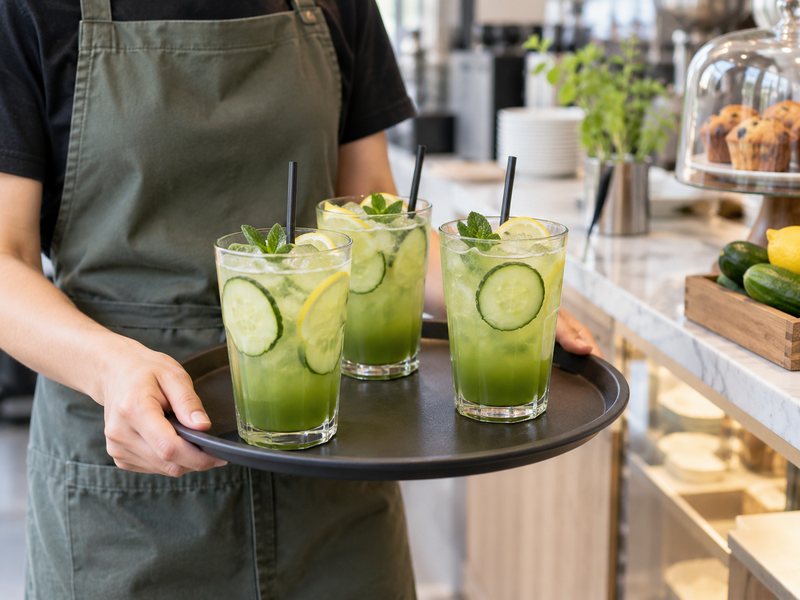
Ice is an ingredient in this drink, not decoration. Compare two weighed ice fills and taste after zero, ten and twenty minutes. More ice can keep the drink colder but also changes the liquid volume available in the cup; smaller pieces may melt faster in a warm environment. Keep cup shape and starting liquid temperature constant. Record total drink mass, apparent fill and sweetness after the test. Decide on garnish only after this base is stable. Cucumber ribbons look fresh but may block the lid or introduce extra handling.
For takeaway, close the actual lid and carry the cup through a short route resembling pickup. Check for leakage, foam at the sipping hole and green sediment on the bottom. If layers are the visual promise, photograph before and after movement. If they blur quickly, menu photography should show a realistic drink. Carry it around the room. A static bench photo cannot reveal what a customer receives after a delivery handoff.
| Cup test | Immediate | After 10 minutes | After travel |
|---|---|---|---|
| Appearance | Layer and fill | Separation | Smear and foam |
| Flavor | Acid and tea | Dilution | Last sip |
| Function | Lid fit | Straw flow | Leakage |
9. Which purchasing and handling checks matter?
Specify fresh inputs and tea lots
A purchasing sheet should name cucumber type and usable weight, lemon juice format, sweetener concentration, matcha grade, and acceptable substitution process. Fresh produce quality varies; a case that delivers lower cucumber yield changes both cost and flavor. The FDA produce guidance advises washing produce before cutting, including cucumbers, and keeping appropriate produce refrigerated. Train staff on the operation’s washing and separation procedures rather than improvising at the beverage station.
Ask matcha suppliers for lot codes, ingredient details, pack size and documents relevant to the buyer’s market. Test a replacement lot in the full drink before changing the approved specification. Calculate matcha cost per saleable glass, including leftover slurry and rejected builds. A lower price per kilogram may not win if the drink needs a heavier dose to taste like tea. Record the substitutions. A staff member who changes lemon juice brand or syrup concentration has changed the drink, even if the menu name stays the same.
10. What belongs in the service specification?
Give each operator the same measuring points
Document grams or milliliters of cucumber base, lemon, sweetener, matcha slurry, water and ice for one serving. Include the cucumber extraction and straining method, glass or cup size, garnish, build order, mixing instruction and finished volume. Add two photos: a passing drink at handoff and an acceptable appearance after the expected wait. State when components are made, labeled and discarded under the business’s food-safety plan. A service sheet should fit on the station, with a longer trial record kept for product development.
Before scaling to multiple shops, ask two operators to make the drink without coaching. Compare their build times, finished weights and panel scores. Repeat with a new cucumber and lemon delivery. If it passes, seek matcha samples and supply terms matched to the approved formula rather than changing the drink to fit a generic powder recommendation. Matcha Village can discuss ingredient selection and bulk purchasing; site testing determines whether a particular lot performs. Keep the failed glass on the record. The reason it failed is often the best training note.
The matcha beverage formulation guide can inform powder and dispersion trials before the lemonade pilot.
FAQ
Q1: Should matcha cucumber lemonade be strained? Compare a clean strained cucumber base with an unstrained one. Decide from texture, yield and service time.
Q2: Can matcha be mixed into a cold pitcher? It can be trialed, but check settling and flavor from the first pour through the last.
Q3: How much lemon belongs in a café glass? Set a starting measured range and taste it with the actual cucumber, tea and ice. There is no single correct volume.
Q4: Why does the final sip taste gritty? Matcha and cucumber particles can settle. Check slurry dispersion, straining and the time between build and drinking.
Q5: Can the drink be sold in a takeaway cup? Yes, after testing the chosen cup, lid, travel time, appearance and handling procedure.