
A matcha shipment can be physically ready for pickup while its entry is still held for missing or mismatched information. A US buyer needs one owner for product details, one for the FDA filing, one for the customs entry, and a documented handoff among them before freight moves. The MATSU buyer guide describes that split from a supplier’s point of view. This matcha customs clearance plan turns it into a checklist for importers, café groups, and product brands. Confirm rules for the specific shipment with a licensed customs broker and the relevant agencies; requirements and trade measures can change.
Contents
- 1. What does matcha customs clearance include?
- 2. Who owns each step of a US import?
- 3. Which product facts should be settled before purchase?
- 4. How does FDA Prior Notice fit the schedule?
- 5. What should the buyer check about FSVP?
- 6. What does the customs broker need?
- 7. How should shipment documents be reconciled?
- 8. What happens if a shipment is held?
- 9. What should happen after release?
- 10. How can repeat orders clear more smoothly?
1. What does matcha customs clearance include?
Treat the border as several linked decisions
For a commercial US import, customs clearance is the process that gets a shipment entered, reviewed, and released under applicable CBP and FDA requirements. It begins before the carrier arrives. The buyer identifies the product and responsible importer; the supplier provides consistent product and shipment records; the filer sends the required data; and the broker or importer tracks agency responses. A container reaching a port or a parcel receiving a tracking number is not the same as legal release.
The FDA’s importing-food overview says imported foods may be inspected and detained when they do not meet US requirements. FDA also says it does not preapprove individual food shipments. That makes a supplier claim of “FDA approved matcha” a poor substitute for current facility, product, and entry information. Begin with one question: who will see the release status and authorize delivery to your warehouse? Name that person in the purchase file. They should have the broker’s contact, carrier reference, lot number, and the receiver’s appointment details. A clear owner prevents a released shipment from sitting while teams assume somebody else booked the final leg.
2. Who owns each step of a US import?
Write names next to obligations
The supplier knows what it produced and packed. The importer bears responsibility for compliance. A licensed broker can submit an entry on its behalf, but CBP says the importer remains ultimately responsible. A forwarder arranges movement; that does not automatically make it the FSVP importer.
Assign a contact to each transfer: supplier to forwarder, supplier to broker, broker to importer, and importer to warehouse. Make the handoff visible: put the latest invoice, packing list, specification, and lot documents in a shared folder. Ask the broker to confirm entry route and classification before dispatch.
| Party | Main contribution | Confirmation to retain |
|---|---|---|
| Supplier | Product and shipment facts | Signed commercial documents, lot details |
| Importer | US compliance ownership | Named FSVP contact and receiving plan |
| Broker or filer | Agency submissions | Filing references and status messages |
| Forwarder or carrier | Transport details | Booking, arrival, and delivery notices |
3. Which product facts should be settled before purchase?
Define the tea before it becomes a shipment
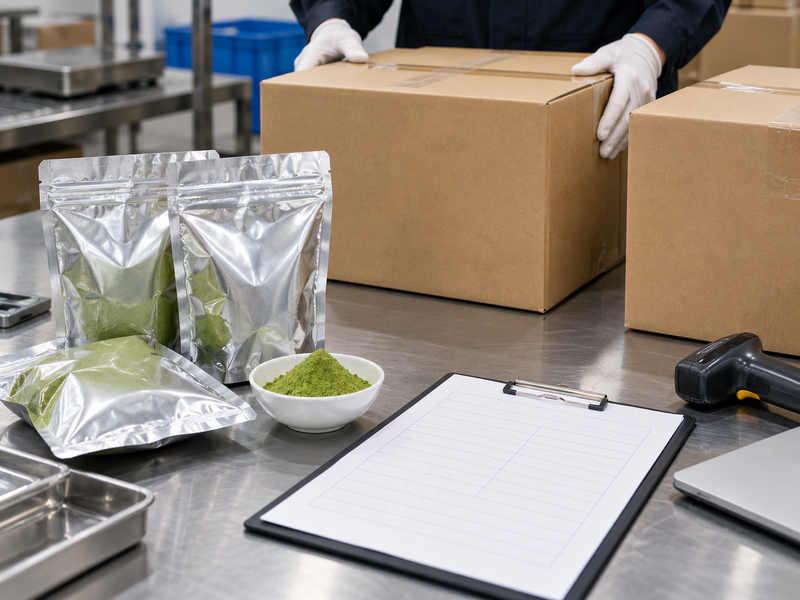
Matcha is often described in sales language: ceremonial, café grade, premium, or organic. Clearance needs plainer facts. Ask for product name, ingredients, facilities, origin, pack sizes, net weight, lot code, intended use, and label claims. A sweetened blend may need different treatment from pure tea. An organic claim needs market-relevant evidence.
Match the purchase order to the label and specification. If a sample was pure matcha but the production order is a sweetened premix, notify the broker before the invoice is issued. The broker can check classification and entry data for the actual goods rather than a product that no longer exists. The FDA food-import page makes clear that imported food must meet US labeling and safety requirements. Check the label early: a mismatch is easier to fix in artwork than in a warehouse after arrival. Save photos of the approved production pack and its outer case marks with the order file. Do not assume the export description on a quotation is detailed enough for US entry.
4. How does FDA Prior Notice fit the schedule?
Give the filer complete data before arrival
FDA generally requires advance notification for food offered for import into the United States. Its Prior Notice page explains the purpose and filing routes. The exact timing and information depend on transport mode and circumstances, so the broker or filer should confirm the applicable deadline for each shipment. Prior Notice is not a quality certificate. It gives FDA shipment information before the food reaches the border.
The filer needs consistent product, facility, shipper, carrier, quantity, and arrival information. If any of those changes after a draft is prepared, tell the filer immediately. A late flight change, split shipment, or changed manufacturing facility may require an update or new submission. The FDA contingency guidance says food arriving without adequate notice may be refused and held. Work backward from dispatch: set an internal document deadline earlier than the legal filing deadline so the broker can resolve errors. Keep the confirmation number and the exact product description tied to the shipment, not in one employee’s email inbox.
| Before dispatch | Owner | Evidence |
|---|---|---|
| Confirm product and facility data | Supplier and importer | Approved specification |
| Confirm arrival mode and carrier | Forwarder | Booking record |
| Submit Prior Notice as applicable | Filer | FDA confirmation |
| Reconcile last changes | Importer and filer | Updated shipment record |
5. What should the buyer check about FSVP?
Identify the responsible US party
The Foreign Supplier Verification Program concerns verification of foreign suppliers for covered foods. The FDA FSVP rule summary explains who may qualify as the FSVP importer, key duties, and exemptions. Do not infer from an invoice that the supplier, broker, or courier has accepted that role. The US owner or consignee may be the FSVP importer in many ordinary cases, but the actual arrangement needs review against the rule.
Before ordering, record the responsible US entity, its contact information, and the method used to evaluate the supplier and food. A certificate of analysis can be part of the file, yet it does not replace the full verification program where one is required. Ask for lot-level records and facility details you can trace back to the shipment. If your business imports through a distributor, clarify who is the importer of record and who is the FSVP importer; those roles can differ. Put the answer in writing: otherwise a broker may discover the gap after freight has departed. For a new matcha ingredient, have a qualified compliance person assess hazards and documentation before issuing the purchase order.
6. What does the customs broker need?
Provide facts that support classification and value
A broker needs a commercial invoice, packing list, transport document, importer identity, product description, country information, quantities, values, and any agency data required for the particular entry. They may request further details on ingredients, processing, packaging, or claims. Ask the broker to confirm the applicable Harmonized Tariff Schedule classification and current duty treatment. An old blog rate or another importer’s code should not be copied into your landed-cost model without review; classification and trade measures can change.
CBP’s guidance for commercial food imports notes that requirements vary with the food and its origin and that an importer can file directly or use a broker. For a recurring matcha SKU, send the broker a controlled product sheet and flag every formulation or pack-size change. Avoid vague descriptions: “green powder” leaves too much room for questions. The invoice should distinguish pure matcha from a flavored or sweetened beverage mix. Confirm who pays freight, insurance, fees, and duties under the agreed trade term, then compare the broker’s entry data to the commercial deal before filing.
| Broker question | Useful buyer answer | Why it matters |
|---|---|---|
| What exactly is in the pack? | Current ingredient and product specification | Supports product declaration |
| Where was it made? | Facility and origin records | Supports agency data |
| How is it packed? | Unit and case quantities | Reconciles invoice and entry |
| What is the transaction value? | Invoice and agreed trade term | Supports customs valuation |
7. How should shipment documents be reconciled?
Compare the same facts across every page
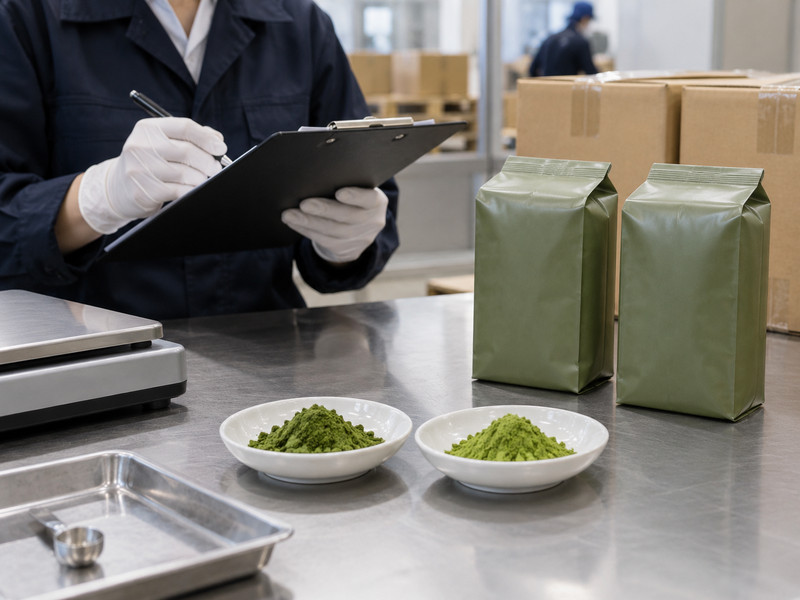
Before freight moves, lay the purchase order, commercial invoice, packing list, bill of lading or air waybill, label artwork, and any lot-linked quality document side by side. Check product name, SKU, case count, net weight, lot number, shipper, consignee, and country information. Small differences may be explainable, but unexplained differences can slow a review or make receiving records unreliable. A quality certificate for lot A does not establish the result for lot B, even if both cases carry the same brand.
Use a one-page reconciliation sheet with a column for each document and an owner for resolving differences. If an item is not applicable, mark it rather than leaving a blank that looks like an omission. Keep a record of changes and the final version sent to the broker. One practical rule: do not let a revised invoice travel only by email while the forwarder and warehouse still use the old version. Put the approved files in one folder and send a short version note to all parties. When a shipment contains multiple matcha lots, connect each lot to its case count and pallet position so a later hold or quality question can be scoped precisely.
8. What happens if a shipment is held?
Separate the reason before choosing a response
A hold can arise from missing entry information, a document mismatch, an FDA examination, or another agency issue. Do not tell the supplier to relabel, return, or destroy goods based on a brief carrier message. Get the formal status, agency, entry number, reason stated, response deadline, and storage location from the broker or filer. The FDA import overview says imported food may be inspected or detained if it appears noncompliant. That is a process to handle with records and agency direction, not a signal to improvise paperwork.
Assign one person to control responses and log every contact. Ask the broker which documents or samples are actually requested. Keep the supplier ready to provide manufacturing, ingredient, and lot information quickly. If sampling occurs, record the affected lot and quantity and make a receiving plan that keeps the goods segregated until release. Protect the clock: fees and storage charges can grow while teams debate an email. At the same time, speed does not justify an unsupported statement. A corrected fact should be backed by a source document; a guessed origin or facility number can create a larger problem than the original delay.
| Hold signal | Immediate fact to obtain | Next owner |
|---|---|---|
| Missing or inconsistent data | Official request and entry reference | Broker and importer |
| FDA examination | Scope, location, and release status | Broker and receiving team |
| Lot or label question | Pack photo and lot-linked specification | Supplier quality contact |
| Delivery delay after release | Final carrier and warehouse appointment | Forwarder |
9. What should happen after release?
Close the import file at the warehouse
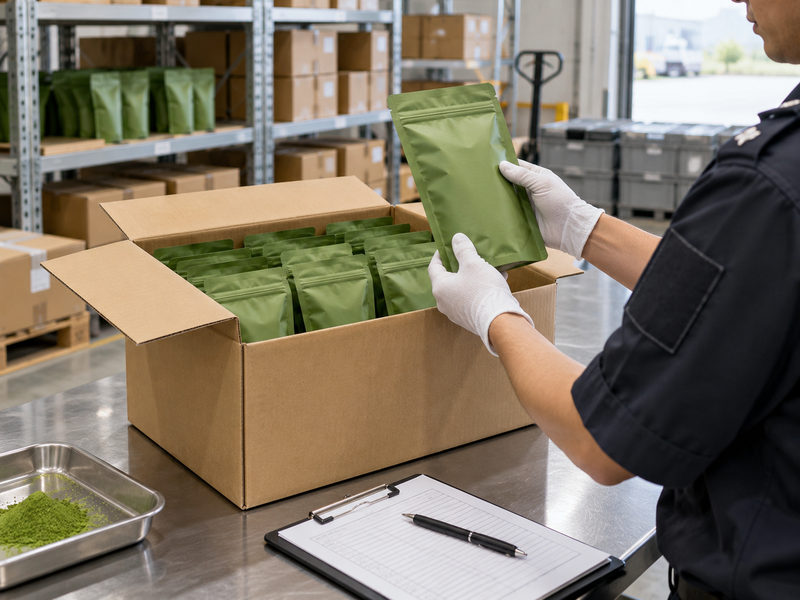
Release does not prove the tea meets your purchasing specification. At receipt, count cases, inspect external damage and seals, confirm lot codes, and compare the delivery to the approved purchase order. Record the arrival date and any handling conditions noted by the carrier. If cartons are wet or crushed, photograph them before moving or opening them and notify the appropriate parties under the purchase terms. The quality team should decide whether material can be used, sampled, or quarantined; that decision belongs in a receiving record.
Archive the customs entry and agency confirmations with the corresponding invoice, packing list, freight record, COA if supplied, and warehouse receipt. This connects the landed lot to both compliance and production records. Run a short debrief: was any field requested twice, did the broker receive the final pack count, and did the shipment spend unplanned time between release and delivery? Change the next order’s handoff checklist based on actual delays. A café group buying modest quantities still benefits from this record, particularly when several stores share one imported lot and later need the same batch information.
10. How can repeat orders clear more smoothly?
Keep a controlled SKU file and update it deliberately
A repeat order should begin with a previous entry file, not with copying every detail without review. Store the approved product description, ingredient declaration, facility details, origin evidence, pack configuration, broker classification decision, FSVP owner, and normal document set under a controlled SKU number. For each new lot, replace the variable facts: quantity, value, manufacturing and packing dates, lot codes, carrier, and arrival details. Ask the supplier to flag process, ingredient, facility, and label changes before invoicing.
Measure handoff performance as well as border time. Track days from final documents to dispatch, number of document corrections, agency holds, release date, and time from release to warehouse receipt. Those measures identify whether the problem lies in preparation, filing, transport, or receiving. On the next order: send the broker the new lot file and a change list, then ask for a written pre-dispatch confirmation. Keep a backup broker contact and a plan for holiday arrivals. This process does not guarantee release; it gives each responsible party current facts and enough time to check them.
| Repeat-order control | Stable record | Refresh for each shipment |
|---|---|---|
| Product definition | Ingredients, specification, pack format | Any change notice |
| Responsible parties | Importer, broker, FSVP owner | Contact availability |
| Shipment facts | Document template | Lot, count, value, carrier |
| Outcome | Prior entry and debrief | New status and receipt record |
For the wider purchasing brief, read our US matcha wholesale guide.
FAQ
Q1: What is matcha customs clearance? It is the US entry and agency review process that must be completed before imported matcha can be released for delivery.
Q2: Does a customs broker take over the importer’s responsibility? No. A broker may file on the importer’s behalf, but CBP says the importer remains responsible for compliance.
Q3: Is FDA Prior Notice the same as FDA approval? No. Prior Notice supplies advance shipment information; FDA does not preapprove each food shipment.
Q4: Who should be named for FSVP? Determine the responsible US party under the FDA rule for the actual transaction; do not assume the broker or supplier fills that role.
Q5: Can the same documents be reused for every lot? Reuse a controlled template, then update and reconcile lot, quantity, value, carrier, and any product changes each time.
Build the next matcha customs clearance file before issuing the shipping instruction. Ask your broker to review the current SKU and entry facts, assign a person to monitor agency status, and close the record only after the warehouse has counted and checked the released lot.