
A guava matcha can look striking in a trial glass and still fail at a busy café counter. Fruit pulp blocks a straw, a sweet jam masks the tea, or a different guava lot changes the drink overnight. Start with measured ingredients, choose one texture target, and test the finished cup after the ice begins to melt. The guava matcha latte by ispillice shows a useful home recipe built around guava jam. This guide turns that idea into a repeatable drink for cafés, beverage developers, and wholesale buyers. Its numbers are starting points for trials, not claims that every ingredient behaves alike.
Contents
- 1. What should a guava matcha taste and feel like?
- 2. Which guava ingredient should a café buy?
- 3. Which matcha works with guava and milk?
- 4. How do you build a repeatable iced recipe?
- 5. How can you control pulp, seeds, and clumps?
- 6. How do sweetness and acidity change the balance?
- 7. Should the drink be layered or mixed?
- 8. What service procedure keeps cups consistent?
- 9. What should buyers include in the cost and stock plan?
- 10. How should a team test before launch?
1. What should a guava matcha taste and feel like?
Set the sensory target before changing ingredients
Guava brings a floral, tropical fruit note; matcha brings a vegetal tea note and sometimes a savory edge. Milk softens both. A successful café version lets a guest identify fruit and tea in the same sip without chewing through seeds or finding an undissolved lump at the bottom. That target sounds simple, yet it requires a decision about texture. A pulpy drink may suit a dessert menu, while a smooth latte must pass easily through the chosen straw and lid.
Write a short target card: fruit and tea intensity, sweetness, texture, cup size, and presentation. Try this check: prepare one cup, wait five minutes, stir it as a customer would, and taste again. Ice has begun diluting the drink and guava sediment may have settled. Keep a plain matcha latte as a control.
2. Which guava ingredient should a café buy?
Compare formats by solids, sweetness, and handling
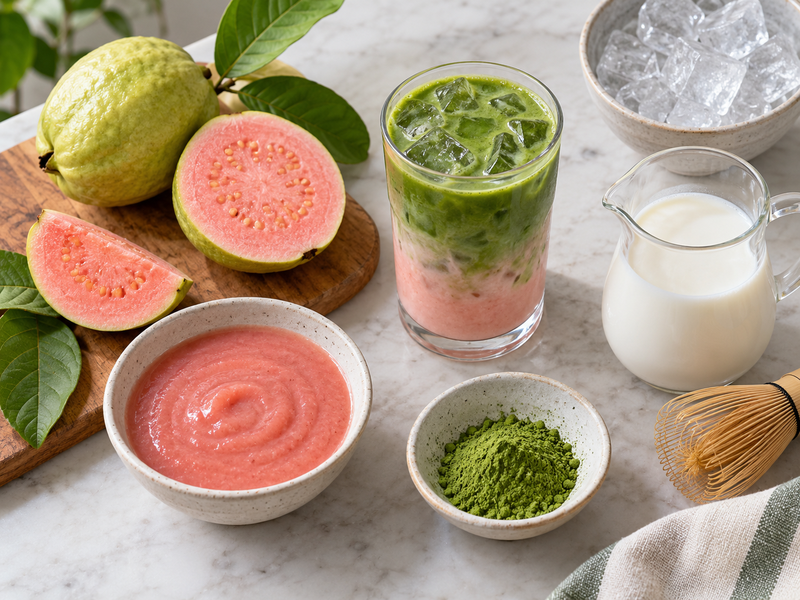
Jam, purée, syrup, and juice concentrate each solve a different service problem. Jam is thick and often sweet enough to need no extra syrup, but pectin and fruit pieces may stick to a cup wall. Purée gives a closer fruit character and a useful color, yet seeds and pulp need screening. Syrup is easy to pump and portion but may have less fruit character. Concentrate can carry a strong flavor in a small dose; its dilution and sugar content depend on the supplier. The USDA commercial item description for fruit purées lists guava-specific soluble-solids and pH criteria for a defined procurement product. Those figures are a purchasing reference, not a universal value for all guava ingredients.
Request ingredients, °Brix if available, pulp description, pack size, handling instructions, and lot code. Taste candidates in the finished drink. At the buying desk: approve a guava lot against an agreed finished-cup sample, not only its label.
| Guava format | Advantage in service | Main check before approval |
|---|---|---|
| Jam or spread | Spoonable and concentrated | Fruit pieces, pectin texture, sugar level |
| Smooth purée | Fruit-led taste and color | Seeds, pulp size, separation |
| Syrup | Fast measured dosing | Actual fruit content and flavor intensity |
| Juice concentrate | Compact storage and strong flavor | Dilution, acidity, added sugar |
3. Which matcha works with guava and milk?
Test tea after the fruit joins the cup
A matcha that tastes delicate in water can disappear under guava and milk. A darker, more astringent sample may remain obvious but make the finish rough. Neither a grade name nor a green photograph answers that trade-off. Ask each supplier for a current sample linked to a lot or specification and test it in the precise milk, guava base, cup size, and ice load planned for sale. Matcha Village offers several matcha grades and can discuss application fit; the selected grade still needs a trial in your own formulation.
Start with two candidates at the same weighed dose, then compare tea presence, bitterness, color, sediment, and cost per accepted drink. Check whether a sweetened mix is being proposed; its sugar changes the comparison. Keep the test blind: code samples before tasting. If tea is hard to notice after five minutes, adjust fruit or milk before increasing powder. More tea can raise cost without fixing an over-sweet recipe.
4. How do you build a repeatable iced recipe?
Use a trial formula that fits your cup
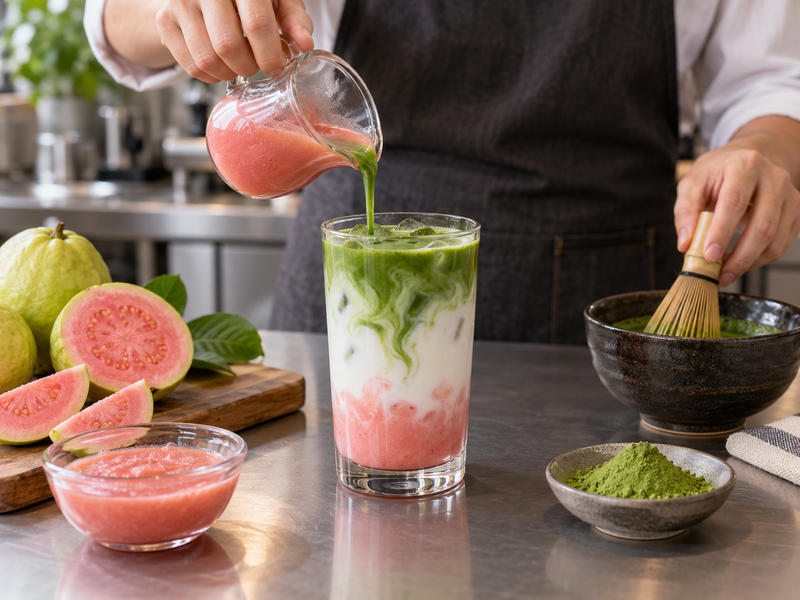
For a first 12-ounce iced trial, weigh 2.0 g matcha, disperse it in 45 g water, add 18 g smooth guava purée, then add 150 g milk and a measured 90 g of ice. This is a test recipe, not a published standard or a promise about flavor. Fruit solids and ice geometry differ, so the final fill must be checked in the actual serving cup. If using jam, begin at a lower weight because sugar and pectin can make the same gram dose taste stronger and feel thicker. Record the exact brand and lot whenever a trial succeeds.
Prepare tea separately. Sift clumped powder, wet it with measured water, and whisk until no dry islands remain. Stir guava into milk; a dense lump at the bottom rarely fixes itself. Add ice, pour milk, then add matcha. Taste the mixed cup before choosing a layered presentation. The card should show grams, tool, order, and cup mark. Run one more check: ask a second barista to follow it without help.
| Trial item | Starting quantity | What to record after tasting |
|---|---|---|
| Pure matcha powder | 2.0 g | Tea presence and bitterness |
| Water for matcha | 45 g | Dispersion and pourability |
| Smooth guava purée | 18 g | Fruit note, pulp and sweetness |
| Milk | 150 g | Body and tea visibility |
| Ice | 90 g | Cup fill and five-minute dilution |
5. How can you control pulp, seeds, and clumps?
Treat texture faults as separate problems
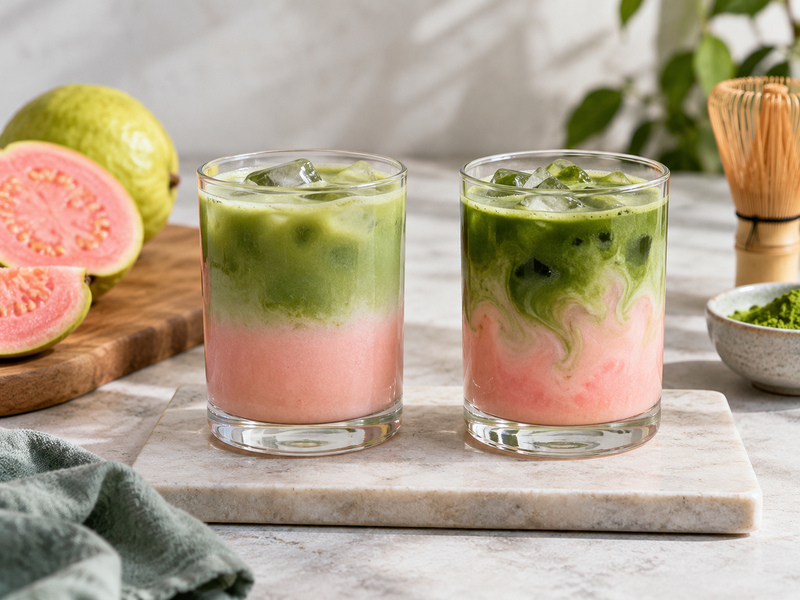
Guava seeds, purée fibers, jam pieces, and matcha agglomerates do not have the same cause. A fine screen can remove seeds and coarse fibers before the fruit reaches service. A sifter can break up matcha clumps before wetting. A barista who strains the finished drink to remove every particle may also strip away fruit character and slow the line. Test screens of different mesh sizes with the actual ingredient, measuring both pass-through yield and taste. Document the screen used, because “strain well” means different things to different staff.
For a pulpy menu concept, choose a wide straw and tell guests what to expect. For a smooth latte, reject lots that repeatedly block the chosen straw after screening. Test in the real cup and lid. Matcha remains suspended rather than dissolved, so some settling is expected; a gritty mouthful is different. Find the source: inspect fruit and tea separately before changing both.
6. How do sweetness and acidity change the balance?
Compare finished drinks with one variable changed
Guava ingredients vary in sweetness and added sugar. Build a tasting matrix: hold tea, milk, water, ice, and cup size constant while changing guava dose across three cups. Repeat the leading dose with two milk options if needed. A sugared jam should not inherit a purée recipe without reformulation. Your supplier’s current specification should govern the purchase.
Acidity can sharpen fruit but also change a milk drink’s texture. Test the actual ingredient with the intended milk, then inspect it immediately and after a short service wait. If curdling or graininess appears, stop changing colors and fix the formula. Do not claim a fixed safe acidity or shelf life from a taste test. For prepared bases, follow the supplier’s handling instructions and your local food-safety rules; the FDA Food Code provides a model for retail handling, while local adoption varies. Keep a control cup: it reveals whether added sugar improves balance or merely hides a mismatch between fruit and tea.
| Variable in trial | Hold constant | Observe |
|---|---|---|
| Guava dose | Tea, milk, ice, cup | Fruit note and pulp |
| Matcha dose | Guava, milk, ice, cup | Tea visibility and bitterness |
| Milk type | Tea, guava, water, ice | Texture and acidity response |
| Sweetener | All ingredients except sweetener | Balance after dilution |
7. Should the drink be layered or mixed?
Design the cup for drinking, then for photographs
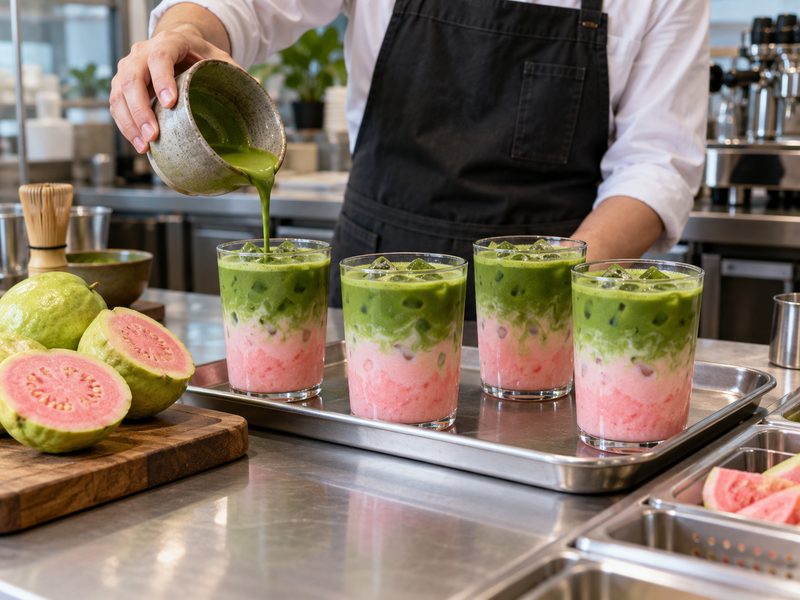
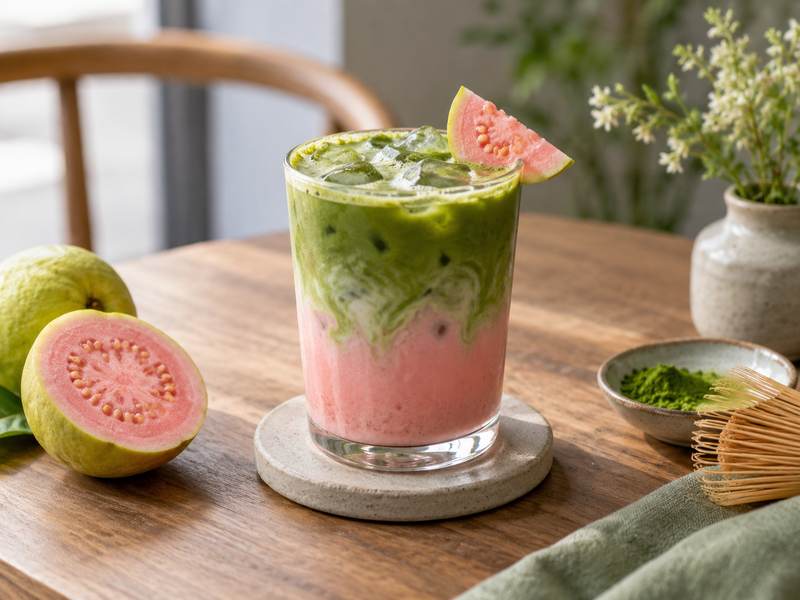
Guava jam at the bottom, milk in the middle, and matcha on top make a strong visual. The reference ispillice recipe uses that arrangement and tells the drinker to mix it. In a café, the practical question is whether a guest can mix the cup without spilling or leaving most of the fruit under the ice. A transparent cup shows layers well, but it also shows streaks and uneven fruit pieces. A sealed delivery cup may spend twenty minutes in transit and arrive with the layers partly blended anyway.
Test both builds. For layers, mark fruit, ice, milk, and matcha levels on a training photograph; provide a stirrer. For a mixed version, stir fruit into milk before ice. Compare taste at the start and near the bottom. Let the cup decide: a mixed drink may travel better, while layers may suit counter service. A studio photo cannot settle that choice.
8. What service procedure keeps cups consistent?
Turn the trial into a short station card
A usable station card names the ingredient, lot, dose, tool, sequence, cup, and acceptance check. It also states who prepares guava base and how opened containers are labeled. At shift change, staff should compare the working purée against the approved sample for color, odor, and texture, then use the same portioning tool. A tablespoon of thick jam may vary more than a weighed portion; pumps are quicker only if the pump delivers the same mass after ingredient viscosity changes. Calibrate a pump with several strokes before adopting it.
Keep fruit tools out of powder storage. Follow supplier storage directions; a prepared milk-and-fruit mix may need different handling from unopened purée. Have the food-safety lead approve any batch holding plan. During the rush: measure three drinks from different staff. Record fill height, build time, clumps, and stirability. Ordinary shifts must repeat the trial.
| Station control | Record on card | Failure sign |
|---|---|---|
| Guava portion | Grams or calibrated pump count | Variable fruit line or sweetness |
| Matcha portion | Grams per cup | Tea disappears or tastes harsh |
| Mixing method | Tool and time | Dry powder or fruit lump |
| Cup and ice | Size and fill mark | Overflow or rapid dilution |
| Opened ingredient | Lot, date, handling direction | Untraceable working container |
9. What should buyers include in the cost and stock plan?
Cost the accepted cup, not only the ingredients
Calculate matcha grams, guava grams, milk volume, ice, cup, lid, and staff time for the approved recipe. Add fruit lost in screening and remakes caused by blocked straws or visible clumps. If a purée pack is larger than a store can use under its approved opened-pack plan, a lower unit price can create more waste. A small café may need a different guava pack size than a chain with centralized prep. Record actual portions from a short pilot rather than trusting a menu spreadsheet built before service.
For procurement, request fruit content, sweetener, pulp grade, pack format, lot code, and lead time. Ask how seasonal changes will be communicated. Confirm that the selected matcha grade is available at forecast volume. Watch the margin: raising tea dose to fix every weak cup can hide a fruit issue. A weekly tally of cups sold, grams issued, and fruit discarded clarifies the source of loss.
| Weekly measure | Record | Decision |
|---|---|---|
| Cups sold | POS count | Demand baseline |
| Matcha issued | Grams by lot | Dose and waste check |
| Guava discarded | Grams and reason | Pack size or prep change |
10. How should a team test before launch?
Run a service pilot with rejection rules
Make a small set of cups from two guava lots or formats and two matcha candidates. Use coded samples, the same cup, and the same ice. Have at least one buyer, one barista, and one person who has not seen the formula judge fruit presence, tea presence, sweetness, texture, and appearance after five minutes. Then repeat the leading recipe during a normal busy period. Record build time and remakes without treating one shift as a scientific study. The goal is to find operational faults before the printed menu locks the team into a recipe.
Set explicit reject conditions: seeds that block a straw, clumps that survive the written mixing step, milk separation, or fruit that disappears after dilution. Document accepted ingredient lots and the changes allowed when a supplier sends a new one. If a fresh guava purée is used, get food-safety review for preparation and holding before extending the pilot. Before printing: ask a new staff member to prepare the drink from the card and explain it in one sentence. If they can do both, the recipe has a chance of surviving ordinary service. Start with a limited run, record feedback by cup rather than anecdote, and revise only the variables that actually failed.
Our matcha latte ingredients guide helps define the base before adding guava.
FAQ
Q1: What is guava matcha? It is a drink that combines matcha with a guava ingredient, often milk and ice. The fruit format determines much of its sweetness and texture.
Q2: Can a café use guava jam instead of purée? Yes, but reformulate by weight and test pulp, sweetness, and how well it mixes. Jam is not a direct gram-for-gram substitute.
Q3: Does guava matcha need to be layered? No. A mixed version may drink and travel more evenly. Test both in the actual service cup.
Q4: How should matcha be selected for this drink? Compare current samples in the full guava-and-milk recipe at the same dose. Judge tea presence, bitterness, color, and cost.
Q5: Can a prepared fruit-and-milk base be held overnight? Follow ingredient directions and the food-safety rules that apply locally. Do not set a holding time from taste alone.
For a dependable launch, approve the finished cup and the station procedure together. Run the five-minute tasting, keep the ingredient specification with the recipe card, and measure remakes during the first service week. Those checks turn a promising guava matcha idea into a drink customers can order twice and recognize both times.