
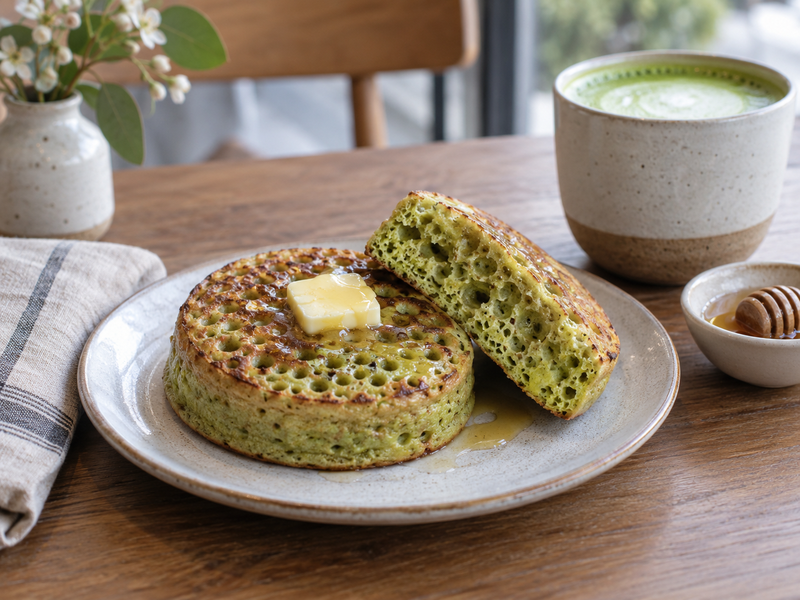
Matcha crumpets can bring a new breakfast item to a café, but a green surface alone will not make them worth ordering again. Uneven bubbles, a gummy center and a weak tea flavor are more obvious once a guest adds butter. Build the product around a dependable crumpet batter first, then test matcha by weight. The Luminaries’ matcha crumpet article demonstrates tea added to a crumpet mix. Its recipe uses a matcha chai blend; this guide treats pure matcha powder as a separate ingredient requiring its own trials.
Contents
- 1. What defines a matcha crumpet?
- 2. Which batter should a café begin with?
- 3. How should matcha enter the batter?
- 4. What creates the crumpet’s open top?
- 5. How should rings and griddle be controlled?
- 6. When is a crumpet fully cooked?
- 7. Which toppings support the tea flavor?
- 8. How should a café hold and toast crumpets?
- 9. What should a menu trial measure?
- 10. What should a bulk buyer specify?
1. What defines a matcha crumpet?
Keep the holes and the tea recognizable
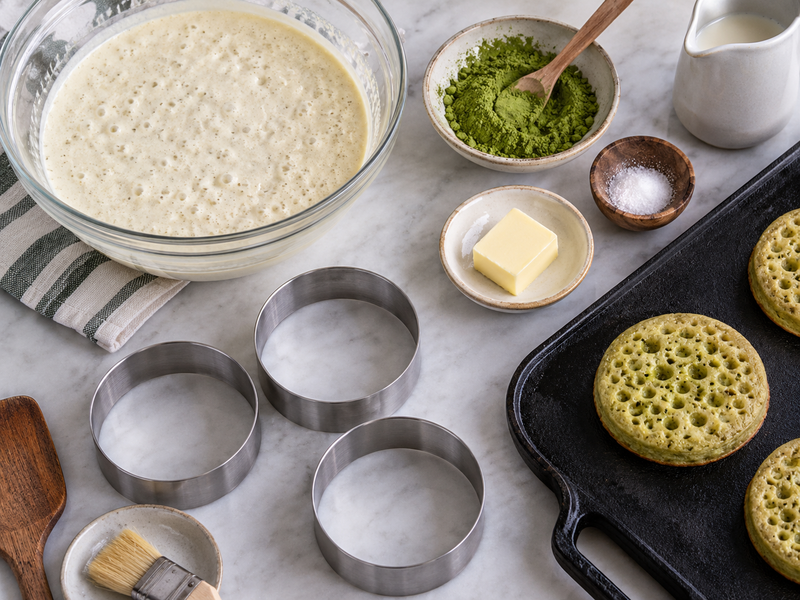
A crumpet is a griddled, ring-shaped bread with an open, hole-marked top. Those holes catch butter or another topping. King Arthur Baking’s crumpet recipe describes a bubbly batter cooked in greased rings until the surface develops small openings. Matcha crumpets should retain that texture while carrying tea flavor. A flat green pancake or a plain crumpet with a green spread may be an enjoyable dish, but it answers a different product brief. Decide which version your menu promises before naming it and buying ingredients.
Taste the crumpet without toppings first. A customer may add honey, cream cheese or jam, yet the batter itself should not require a sweet cover for palatability. Inspect the crumb after cutting: the center should feel cooked and springy, not wet or rubbery. Make a plain control from the same batter and compare its bubbles, height and browning with the matcha version. If the tea version forms fewer holes, the added powder or changed mixing step may have altered batter behavior. This is a product development clue, not proof that matcha always suppresses aeration.
2. Which batter should a café begin with?
Use a known base before changing flavor
A dependable crumpet batter gives your team a reference point for fermentation, thickness and griddle behavior. If the café already makes crumpets, use that tested base. If it buys a mix, confirm ingredient and preparation instructions before adding tea. A recipe such as King Arthur’s uses flour, liquid, yeast and a leavening ingredient; the exact balance belongs to the chosen formula. Record ingredient weights, batter temperature, mixing time, rest period and final volume. Avoid relying on “one scoop” or “until it looks right” because the dough will be cooked by different employees.
Make a small plain batch and a tea batch with the same flour, liquid, yeast lot and rest conditions. Give each bowl enough headspace and mark the starting level. A change in expansion or pourability is visible before the griddle. If matcha thickens the tea batter, do not immediately add water; first check whether powder was dispersed evenly and whether both bowls received the same rest. Adjusting liquid changes hole formation and yield, so record it as a new formula. A café serving breakfast at speed benefits from a batter whose performance does not depend on one baker’s judgment.
| Batter control | What to record | Why it helps |
|---|---|---|
| Flour | Type and lot | Changes absorption |
| Liquid | Weight and temperature | Changes flow and rise |
| Yeast or leavener | Type and weight | Changes bubble pattern |
| Rest | Start, end and room condition | Makes batches comparable |
3. How should matcha enter the batter?
Weigh, sift and compare lots
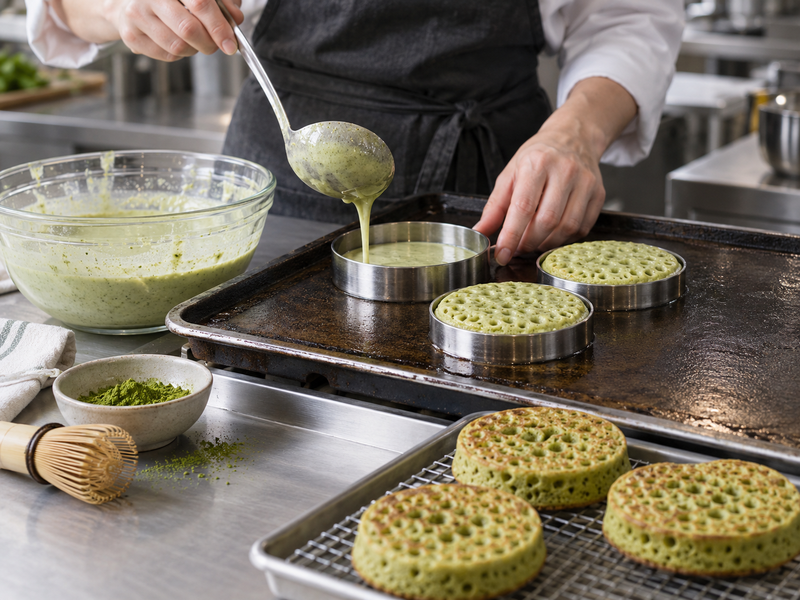
Matcha is a fine powder that can clump when stirred directly into a wet bowl. Sift it with a portion of dry ingredients or disperse it in a measured part of the recipe liquid before combining. Choose one method for the trial and keep it consistent. Make three dose levels by weight around a sensible internal starting point. These are test levels, not an industry-standard amount. Evaluate both the raw batter and the cooked product: a bright green batter may become olive after griddling, and a strong cold-batter aroma may fade with heat.
The reference crumpet article uses a matcha chai powder blend, which may contain other flavor ingredients. Pure matcha has a different sweetness and spice profile. Do not transfer that blend’s dose to a single-ingredient powder. Request a representative matcha lot, ingredient statement and storage instructions. Japan’s MAFF description of matcha identifies it as ground tencha; a supplier’s grade term still needs application testing. Compare coded cooked samples with a plain control and ask tasters to note tea clarity, bitterness and finish before the first topping is added.
| Matcha trial | Hold constant | Evaluate |
|---|---|---|
| Lower dose | Base batter and griddle | Tea visibility |
| Middle dose | Base batter and griddle | Flavor balance |
| Higher dose | Base batter and griddle | Bitter edge and cost |
| New lot | Accepted formula | Color and flavor continuity |
4. What creates the crumpet’s open top?
Watch the batter and griddle together
The top holes result from gas rising through batter while the bottom cooks. Fermentation or leavening, batter flow, ring depth and heat all affect the pattern. King Arthur’s crumpet method waits until the surface shows many holes before finishing the cook. A café should document what that stage looks like with its own formula. If the griddle is too hot, a brown bottom may arrive before the top sets. If batter is too thick, holes may stay closed; if it spreads too thin, the product loses its recognizable height.
Set a standard deposit by weight or measured volume and use identical rings in the first trial. Film a short cook from above for staff training, then note when bubbles first appear, when they stop opening and when the edge looks set. Do not force a fixed minute mark across every load before the griddle recovers heat. Observe the actual surface and cut a cooked sample. A few irregular holes are acceptable; a dense center beneath a decorative top is not. The product needs to toast well at service, so the internal structure matters more than a perfect photograph.
5. How should rings and griddle be controlled?
Prevent sticking without flooding the pan
Use rings of one diameter and height for a pilot batch. Wash, dry and grease them by a written method. Too little release treatment tears the edge; too much can leave a greasy rim or a mottled bottom. Note the griddle setting and surface temperature if your kitchen measures it, but judge cooked samples as well. King Arthur’s recipe offers a starting method for plain crumpets, not a guaranteed setting for a matcha batter and your equipment. A heavy cast-iron surface and a light electric griddle recover heat differently after multiple cold batter deposits.
Run a full-load test. A single crumpet in the center may cook beautifully while the corner of a busy griddle lags. Number ring positions and compare color, hole pattern and time. If edges release but the base sticks, investigate surface treatment and heat before adding more flour. Staff should remove rings with the approved tool and handle hot metal safely. A ring set with enough duplicates reduces delays during peak breakfast; it also makes cleaning and turnaround part of the labor calculation rather than an afterthought.
| Equipment item | Standardize | Defect to check |
|---|---|---|
| Ring | Diameter, depth, grease | Ragged edge |
| Griddle | Setting and load pattern | Uneven bottom color |
| Depositor | Batter amount | Variable height |
| Removal tool | Method and timing | Torn sides |
6. When is a crumpet fully cooked?
Cut the center after a set cooling period
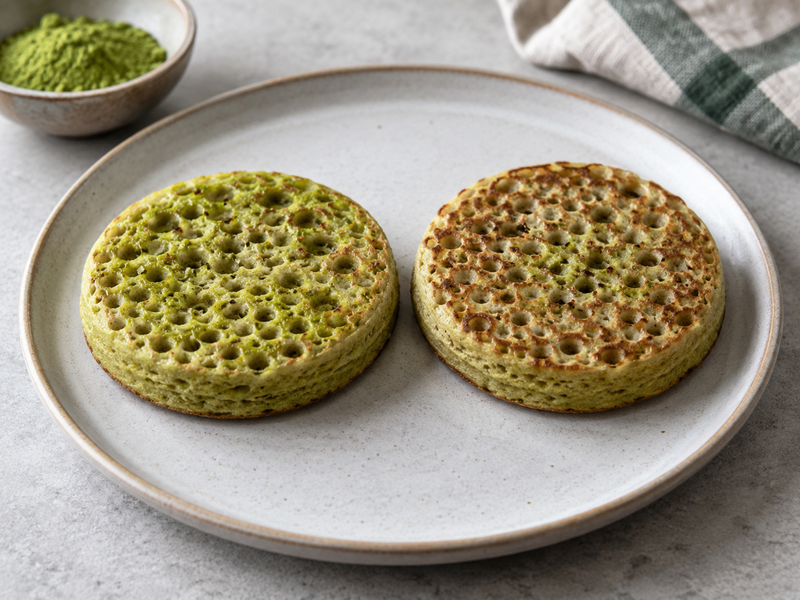
Top bubbles tell the cook that gas has escaped; they do not alone prove the center is done. Remove several samples from different positions, cool them for the same short interval and cut them horizontally. The crumb should hold its form without wet paste. Compare the plain and matcha versions. Tea color can obscure the visual signs a cook uses for a wheat-colored product, so texture and the documented process become more useful. Record any finish on the second side if your house method uses one. A darker surface is not a substitute for a cooked middle.
If the base overbrowns before the middle sets, reduce deposit depth, adjust the griddle setting or allow more time under controlled heat. Change one variable per trial. A very thin crumpet may solve a gummy center while failing the menu’s expected appearance, so test both texture and dimensions. For a café that par-cooks crumpets ahead, validate the complete cook-and-reheat route rather than judging the fresh griddle sample only. Food safety controls should follow local requirements and the actual ingredients; the FDA Food Code is a US retail model, not a substitute for a site’s approved plan.
7. Which toppings support the tea flavor?
Make the first menu version easy to execute
Butter, a restrained sweetener or a light dairy topping can show what the crumpet tastes like. A thick chocolate spread or strongly acidic jam may turn the tea into a color cue. Trial toppings on the same cooked base at realistic service amounts. Start with a plain buttered version as a control, then compare one sweet and one savory option if the menu needs range. A café might test whipped ricotta and citrus zest for a plated breakfast, while a takeaway shop may prefer a sealed portion of matcha butter. The right choice depends on how guests eat the item and how staff assemble it.
Score the whole bite. Ask tasters whether tea remains recognizable after topping, whether the holes retain the spread and whether the base still toasts crisp. Count added ingredients and seconds at the station. A topping with excellent flavor but several delicate steps may fail during a queue. Allergen statements also change when nuts, dairy or other ingredients join the base. The FDA’s food allergy information supports US labeling checks; the final menu description should reflect the actual product and local rules.
| Topping trial | Flavor question | Service question |
|---|---|---|
| Butter | Does tea stay clear? | Can it be portioned quickly? |
| Light honey | Is sweetness balanced? | Does it make takeaway messy? |
| Ricotta | Is mouthfeel appealing? | Does it need chilled handling? |
| Fruit | Does acidity clash? | Does it soften the surface? |
8. How should a café hold and toast crumpets?
Test the method guests will receive
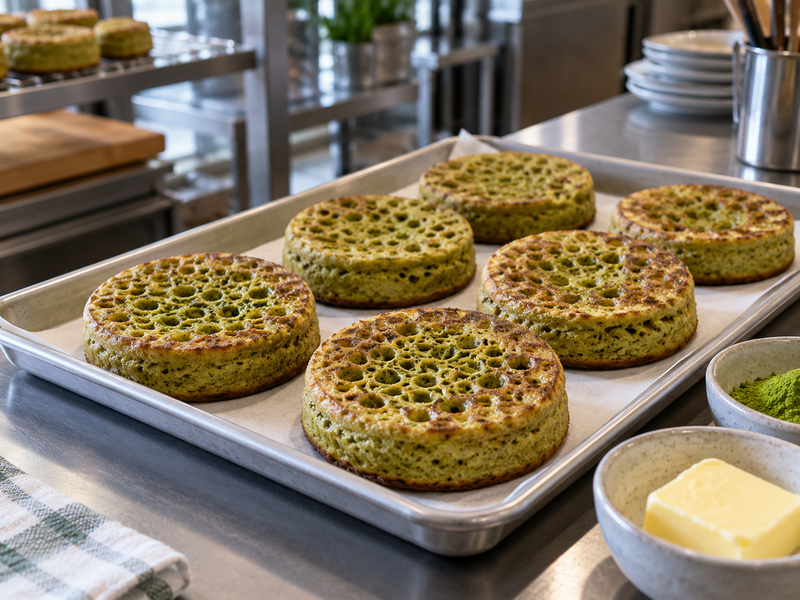
A fresh griddle crumpet and a toasted pre-cooked crumpet are different products. If breakfast service relies on advance preparation, build the trial around that route from the beginning. Cool cooked units under the café’s approved process, pack them for the intended holding period and toast them using the available equipment. Compare the first unit with one from the end of the selling window. Note edge dryness, center softness, color and matcha aroma. Do not borrow a shelf life from another recipe or supplier without validation for this formula and packaging.
Keep toppings separate until service when moisture would fill the holes and soften the base. Train staff on the correct toast color; green dough may look darker before it tastes burnt. Test a packed takeaway order after a realistic delay. If condensation softens the crumpet, consider venting, a different box or assembly at pickup. A chain should run the same instructions in two sites before rollout. One kitchen may have a toaster with stronger heat or a different breakfast load, which changes the guest’s experience more than a small difference in powder grade.
9. What should a menu trial measure?
Count the accepted serving
For two or three candidate matcha lots, prepare coded batches with the same base formula. Record yield, average weight, diameter, hole coverage, bottom color and taste. Count rejects from sticking, gummy centers or tearing during toasting. Ask at least one person who will serve the item to test the method during a normal shift. Compare staff time per order and the number of utensils needed. A product that slows breakfast service may cost more than the ingredient invoice suggests.
Calculate cost per accepted serving: batter ingredients, matcha dose, topping, packaging and rejected units. Use actual purchase prices and an honest waste count. Keep the tasting notes tied to the powder lot, not only the brand. If a replacement lot changes color or aroma, run a small follow-up batch before it enters stock. The target is a crumpet with identifiable tea flavor and dependable holes at the point of sale. That is a stronger purchasing specification than “vibrant green” in a catalog photograph.
| Pilot measure | Record | Purchase impact |
|---|---|---|
| Usable yield | Accepted / cooked units | True unit cost |
| Tea dose | Grams per unit | Powder forecast |
| Service time | Seconds per order | Menu capacity |
| Hold quality | Sensory score over time | Prep schedule |
10. What should a bulk buyer specify?
Ask for a powder matched to the batter
Give the matcha supplier a concise application brief: batter recipe type, griddle cooking, expected powder dose range, target tea note, monthly volume, pack size and destination market. Request representative lot samples and the ingredient, quality and storage documents your team needs. Matcha Village can discuss application-specific grades and bulk supply, but the decisive comparison remains the cooked crumpet. A powder that tastes pleasant whisked in water may lose its note in a fermented wheat batter, while another remains clear after toasting.
Write the staff card alongside the purchase specification. Include batter weights, rest endpoint, ring and griddle setup, deposit amount, cook cues, cooling, holding, toasting and reject photos. Make a pilot batch with a staff member who did not develop the formula. If that person produces a similar crumpet and serves it within the planned station time, you have a credible route to launch. Keep the approved cooked sample description with the supplier lot. Request matcha samples against that written brief and choose the powder that passes the finished-product test.
For powder sourcing, review our matcha supply for bakeries guide.
FAQ
Q1: Are matcha crumpets the same as crumpets with matcha butter?
No. This article tests matcha in the batter. A plain crumpet with matcha butter is a separate menu concept.
Q2: Why are there few holes on top?
Batter activity, thickness, deposit depth and griddle heat can each affect holes. Compare a plain control before changing several variables.
Q3: Can a café use matcha chai blend instead of pure matcha?
Yes, but its other ingredients change flavor and possibly sweetness. Treat it as a different formula and check the ingredient label.
Q4: Can cooked crumpets be toasted for service?
They can if the café validates cooling, holding and reheating with the actual product and food safety plan.
Q5: Which matcha grade is best for crumpets?
Choose by cooked flavor, color, documents and cost per accepted unit. A grade name alone will not predict griddle performance.