
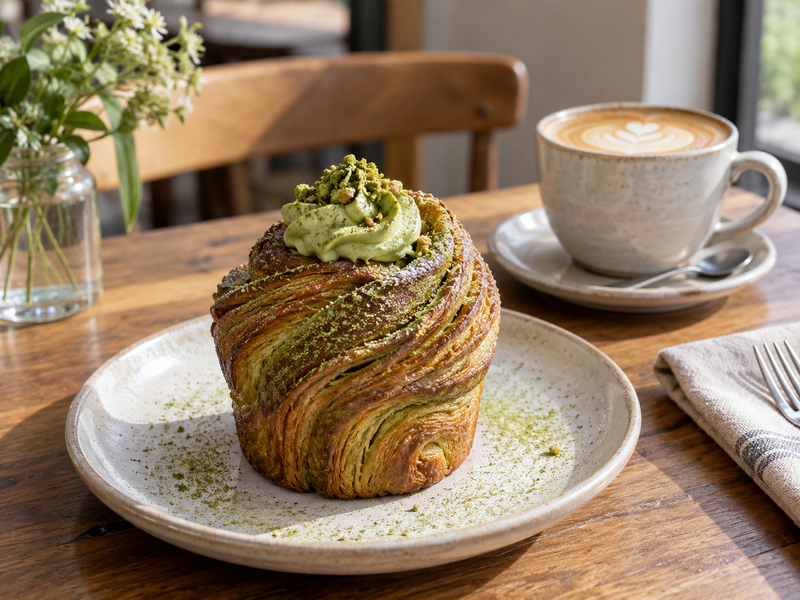
A matcha cruffin can fail at two moments: the pastry unwinds in the oven, or its filling makes the base soggy before sale. A bakery launching this item needs a controlled shape, a matcha cream that pipes cleanly and a defined display test. Begin with one dough format and one pan. Change filling dose only after the shell bakes consistently. The General Mills Foodservice matcha cruffins recipe confirms that a cruffin can work as a foodservice pastry; the production decisions below are a separate trial plan for your bakery.
Contents
- 1. What should a matcha cruffin deliver?
- 2. Which dough and pan should a bakery trial?
- 3. How can staff shape a uniform cruffin?
- 4. When should matcha enter the product?
- 5. How should the filling be formulated?
- 6. What does a successful bake look like?
- 7. How can the filling be deposited cleanly?
- 8. How should the cruffin be held for service?
- 9. What should a pilot batch measure?
- 10. What should a buyer specify before scale-up?
1. What should a matcha cruffin deliver?
Define the bite before mixing dough
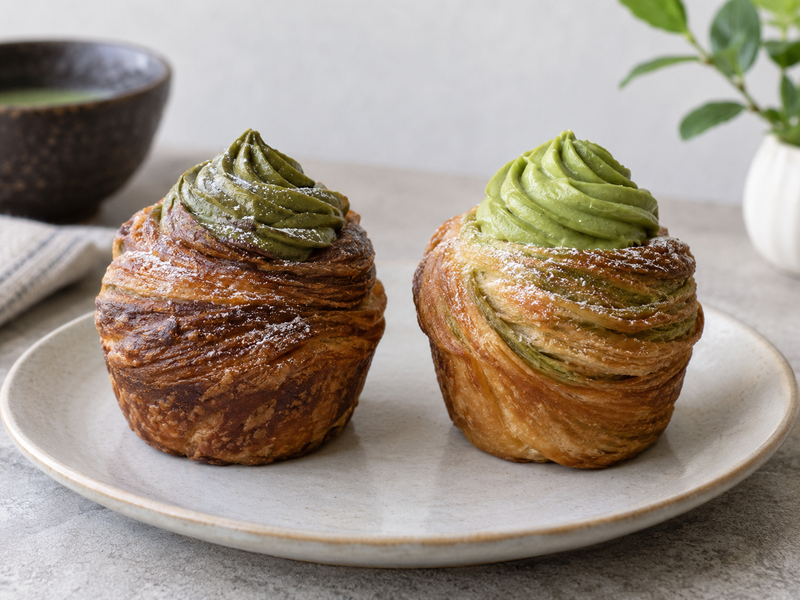
A cruffin combines the layered character of a croissant with a muffin-shaped serving format. Its identity depends on visible layers and a crisp exterior, not merely on green cream piped into any baked cup. Decide whether customers should meet matcha in the dough, the filling, a glaze or more than one place. Each route changes production. Matcha folded into dough meets longer heat exposure and can alter dough handling; a post-bake filling protects some of its fresh aroma but introduces moisture. A heavily coated pastry may photograph well while hiding the layers that make a cruffin worth buying.
Write a product promise that can be checked. For example, the shell should stand upright, separate into distinct layers when torn and carry a detectable tea note in a complete bite. Make three samples with coded filling levels and let tasters eat each as served. Ask where flavor first appears and whether sweetness covers it. Do not call the darkest sample the winner by default. A café may prefer a restrained tea cream with a dry exterior because customers carry it away; a plated dessert can tolerate a softer finish. Your target channel determines which version to approve.
2. Which dough and pan should a bakery trial?
Keep the first comparison narrow
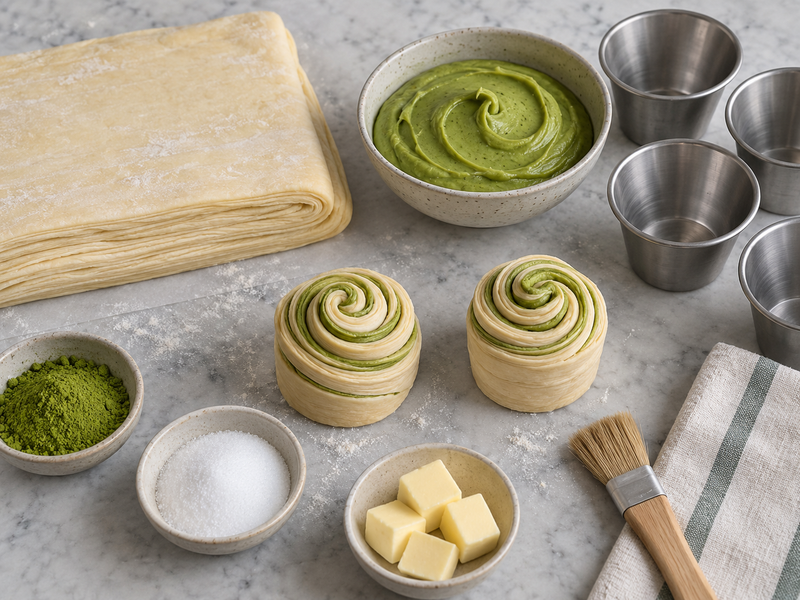
Start with a dough your bakers already handle well. That could be a house laminated dough or a commercial format approved for the bakery. A matcha cruffin adds shaping and filling complexity; changing the butter, flour and proof system at the same time makes failures hard to explain. Record sheet thickness, dough temperature, piece weight and resting time. Use the same muffin pan or ring for every sample. A deep narrow cavity may hold a tall spiral but keep the center damp; a broad cavity may produce a lower, crisp pastry. Both outcomes need a cut test rather than a visual guess.
Grease and release matter because delicate outer layers can tear when staff pull a cruffin from its pan. Run a small pan comparison with the same dough pieces and bake load. Note how many pastries release intact, which ones lose their base and whether the exterior browns evenly. Account for the pan’s cleaning time as well as its purchase cost. If you use preformed dough, confirm its handling directions with the supplier and test it under your actual proof and oven conditions.
| Trial variable | Record before bake | Judge after bake |
|---|---|---|
| Dough format | House or purchased | Layers and flavor |
| Piece weight | Grams per shaped unit | Height and usable yield |
| Pan cavity | Diameter and depth | Release and center bake |
| Surface treatment | Approved pan method | Sticking and exterior color |
3. How can staff shape a uniform cruffin?
Control the spiral
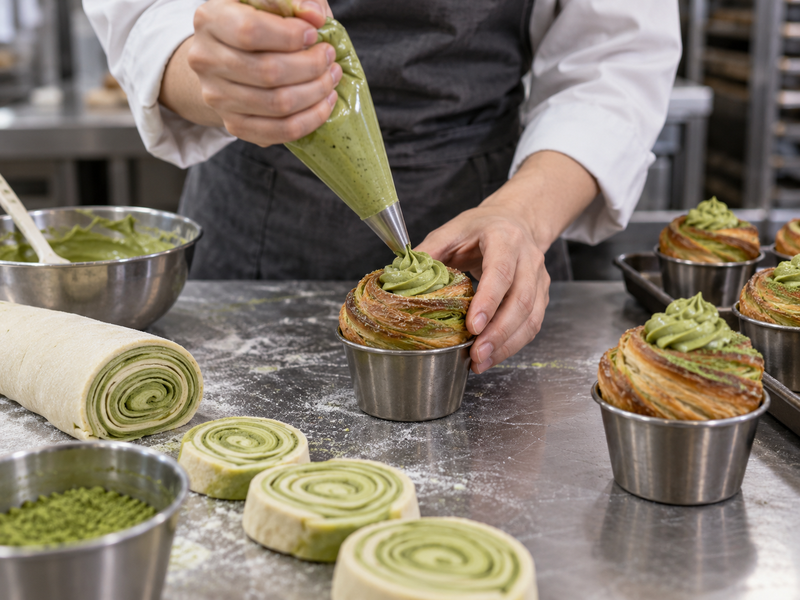
The spiral creates the cruffin’s exposed layers. If one baker stretches a strip and another leaves it loose, the finished pieces rise to different heights and bake at different speeds. Mark cutting width on a board or ruler, weigh each strip and document the rolling direction. Leave enough room for proofing; a roll jammed into the pan can fuse rather than open. Put the seam where it remains supported during proof and bake. These are station controls to test, not a universal shaping formula for every dough.
Run a ten-piece training batch with two operators. Photograph shaped pieces before proofing, after proofing and after baking. Count those that tip, unroll or lose their seam. A higher rise is not useful if the center stays doughy. The baker should be able to tell from the raw shape which pieces need rework before they reach the oven. Give staff a clear reject example: broken butter layers, a tight knot of raw dough or a piece too small for its cavity. The aim is repeatability on a busy shift, when no one has time to sculpt each pastry by hand.
| Shaping check | Simple method | Fault caught early |
|---|---|---|
| Strip size | Mark cutter width | Uneven height |
| Piece mass | Weigh before panning | Variable bake time |
| Seam position | Photograph accepted shape | Unwinding |
| Pan clearance | Compare side gap | Fused layers |
4. When should matcha enter the product?
Separate color from flavor
Matcha can be mixed into dough, filling, sugar or glaze. Each approach puts the tea through a different process. Dough gives color across the pastry but subjects matcha to mixing, proofing and baking. Filling can taste fresher because it is added after baking, yet it may soften layers. A dusting is easy to apply but can taste dry and fall into packaging. A glaze locks the powder on the surface while increasing sweetness and handling time. Test these routes against the product promise established before production begins.
For a first commercial trial, use a plain laminated shell and a matcha filling. That lets the baker solve shape and bake independently of tea dosing. Make one control filling without matcha and at least two tea levels in the same base. Judge a whole pastry, not a spoon of cream. If matcha is too faint, the cause may be a sweet shell or rich filling rather than insufficient powder. If a higher dose adds bitterness without clarity, ask for a different powder sample. Record powder lot, grams per filling batch and grams per cruffin. A broad label such as “premium matcha” cannot replace those measurements.
5. How should the filling be formulated?
Favor a cream that holds its place
Pastry cream, buttercream and ganache all provide different textures. Pastry cream can give a familiar custard bite, but it demands a controlled cooking and cooling process. Buttercream holds a piped shape but can dull tea flavor with fat and sweetness. Ganache brings a dense mouthfeel and may require a smaller deposit. Choose according to the serving temperature and retail format. The General Mills Foodservice reference is a useful example of foodservice adaptation; it does not establish a universal filling for every dough.
Test piping and eating. Pipe a measured portion into cooled test shells, weigh each filled piece and cut it after a short hold. A cream that looks stable in a bowl may run through the layers or collect at the bottom. Record filling temperature, nozzle size and deposit pattern. Use a small amount in two locations if that improves distribution, but compare it with one central deposit before adding labor. Follow your food safety plan for dairy and egg ingredients. The FDA Food Code provides a US model for retail food controls; operators must apply rules relevant to their own location and process.
| Filling option | Product benefit | Trial risk |
|---|---|---|
| Pastry cream | Soft custard bite | Moisture migration |
| Buttercream | Defined piped center | Heavy sweetness |
| Ganache | Dense tea-chocolate profile | High cost per portion |
| Whipped cream | Light texture | Shorter display performance |
6. What does a successful bake look like?
Check the base and center, not the crown alone
A tall golden crown can hide a wet spiral below the rim. Bake several test pieces across the oven load, cool them for a consistent period and cut them vertically. Look for separated cooked layers from top to base, a dry enough bottom and a shell that stands after release. Note any butter pooling in the pan. If pieces near the oven door lag behind, record their position rather than lengthening every bake. If the center remains tight and damp across all positions, revisit shaping, proof and piece weight before relying on a hotter oven.
Set an oven program only after repeating a passing tray. Record oven type, settings, load, rack position and cooling time. A generic recipe time does not guarantee the same result in a convection oven and a deck oven. Do not fill warm shells simply to shorten the schedule; residual heat can thin a cream and trapped steam softens pastry. Define “cool enough to fill” with a process your staff can check. The bakery’s own validation determines a safe process for its recipe, especially where egg or dairy fillings require temperature control.
7. How can the filling be deposited cleanly?
Make the portion visible to the operator
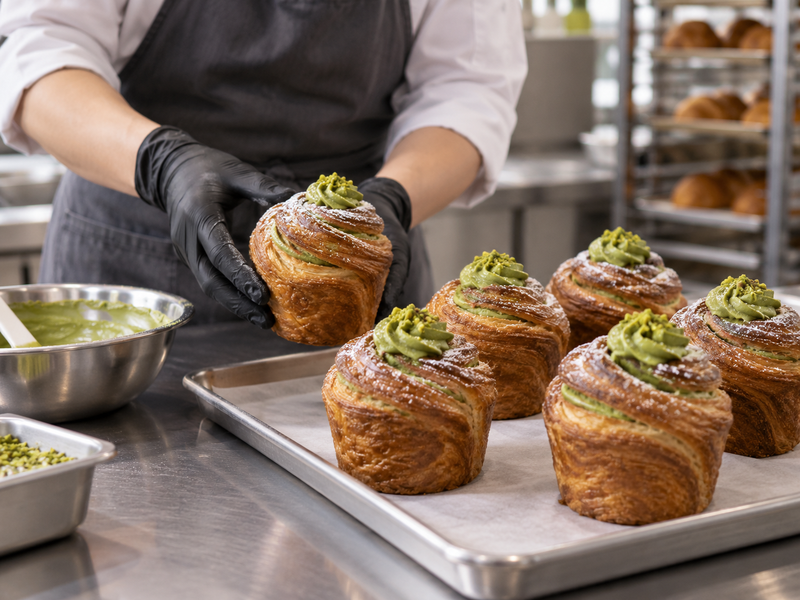
Staff can fill through a top opening, the side or a cut shell. A hidden injection looks tidy but may leave a single dense pocket. A top deposit shows the matcha color and can help a counter team identify the flavor, although exposed cream may dry or smear on a box lid. Choose the entry point with a cut test. Weigh five filled shells before and after depositing cream. If the spread between pieces is wide, a nozzle change or bag mark may help more than another reminder to staff.
Build the topping around packaging. Loose powdered sugar and delicate flakes may disappear during delivery; a flat sealed glaze may soften the surface. Test the pastry in the box it will use at retail, then move it as a customer would. Check whether cream touches the lid and whether the shell survives removal. A production photo should include a cut view and a packed view. The display-ready piece must also be easy for staff to handle with approved utensils. A beautiful top that requires manual repair after every transfer will not scale across several cafés.
| Deposit method | What to inspect | Operational tradeoff |
|---|---|---|
| Top opening | Visible cream and lid clearance | Fast identification |
| Side injection | Filling spread in cross-section | Clean top, hidden pocket risk |
| Split shell | Even cream coverage | More handling and breakage |
8. How should the cruffin be held for service?
Let the real selling window decide
Filled laminated pastry changes quickly in a humid case or closed box. Run a display trial at the conditions customers will encounter. Taste one unit soon after filling and others at set points during service. Note exterior crispness, cream temperature, seepage and matcha aroma. Different fillings may require different holding controls; follow your food safety plan and local rules rather than importing a shelf-life claim from a home recipe. A chilled cream may need cold display, while a dry shell stored separately may allow assembly closer to sale.
If the bakery sells through wholesale partners, test a transport route before promising the same appearance in another shop. Load the pastries in their intended carton, carry them for the actual route and inspect the bottom row after arrival. Give each location a single written refresh or assembly method, including what to discard. Matcha color should be checked under display lighting, which can make green cream look dull or unnaturally bright compared with the development bench.
9. What should a pilot batch measure?
Count rejects as carefully as compliments
Make one pilot batch large enough to expose differences between operators and tray positions. Record raw dough mass, number shaped, number baked, number released intact, number filled and number accepted for sale. Photograph common defects with their causes still unknown; do not label every collapse a dough problem before checking the pan and proof. Score a blind tasting for shell crispness, matcha clarity, filling distribution and sweetness. Ask counter staff to pack several units without special instruction. Their handling often reveals weaknesses that a pastry chef working slowly will never see.
Run the same batch twice on separate days. Compare whether the accepted yield and sensory score remain close, and write down any ingredient lot or equipment change. If results swing, keep the product in development. Test the accepted powder in the finished filling, not only whisked into water. Request ingredient and allergen information for each component; wheat, milk and egg commonly occur in laminated and filled pastries. The FDA food allergy page is a starting point for US labeling teams, but the finished label must be checked for its market.
| Pilot measure | Calculation or observation | Decision supported |
|---|---|---|
| Release yield | Intact shells / baked shells | Pan and grease choice |
| Fill consistency | Portion weight spread | Operator training |
| Saleable yield | Accepted / started units | Product cost |
| Hold quality | Taste at service intervals | Display plan |
10. What should a buyer specify before scale-up?
Tie purchasing to the accepted sample
Your supplier brief should state the product format, intended matcha use, monthly volume, destination market, preferred pack size and documents required by your quality team. Ask for a lot-linked sample and test it in the exact cream or dough that passed the pilot. Matcha Village offers application-based matcha selection and bulk or custom supply. For this pastry, the useful question is whether a candidate powder keeps a clear tea flavor beside butter and sugar over a normal selling shift. Price per kilogram matters only after the dose and accepted yield are known.
Staff need an equally practical production card: dough weight, cut size, shaping photo, pan, proof target, oven program, cool period, filling grams, packing method and reject images. Put the pilot scorecard beside that card. If a replacement powder changes color or flavor, rerun a small batch before changing production stock. If a second operator cannot make a comparable cruffin from the card, the product needs another training trial. Launch when the pastry passes as a shell, a filling and a packed unit. Send your supplier a sample request with the finished pastry target and the quality records your buyer needs.
The filling trial builds on our matcha pastry cream guide.
FAQ
Q1: What makes a matcha cruffin different from a muffin?
A cruffin uses layered pastry shaped in a muffin-style pan. A muffin batter will not create the same separable layers.
Q2: Is matcha better in the dough or filling?
Test both against your product target. Filling lets a bakery tune tea flavor after the shell process is stable; dough gives color throughout but adds bake exposure.
Q3: Why does a cruffin collapse after baking?
Piece shape, proof, pan support and an underbaked center can contribute. Cut several pastries and change one process variable per test.
Q4: Can filled cruffins be shipped to other cafés?
Only after a transport and holding trial with the real packaging. Check appearance, temperature control and crispness at arrival.
Q5: What should a buyer ask from a matcha supplier?
Ask for a representative lot sample, product specification, ingredient information, storage guidance and documents relevant to the destination market.