
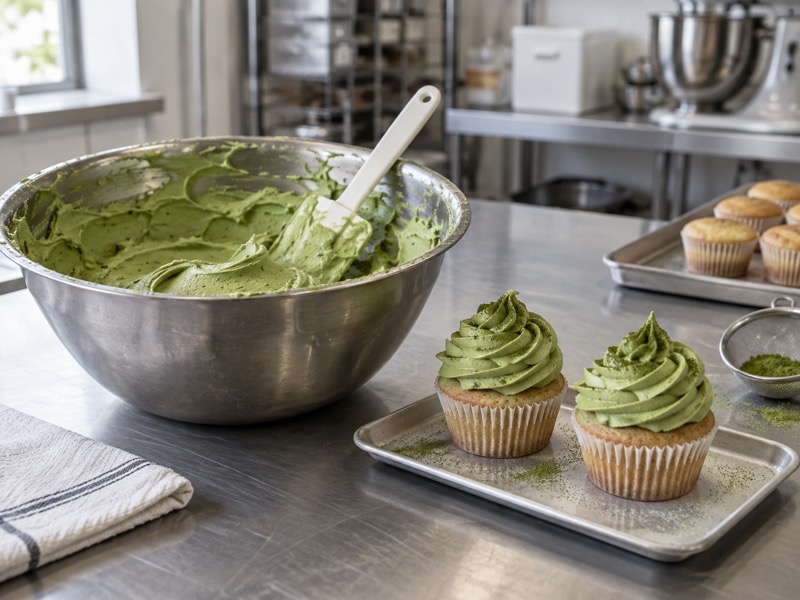
Matcha buttercream is a fat-based frosting flavored and colored with powdered green tea. A bowl can look smooth at the mixer and still show green flecks, weak tea flavor or soft piping on a finished cake. Define the frosting system and sale format before changing matcha dose. Then test the cake at its planned serving temperature and after its normal handling route. That keeps a bakery from approving a spoonful that fails in a box or display.
For: cake bakeries, dessert manufacturers and café pastry teams. Decision: whether the frosting can be produced, piped and sold consistently.
1. What should matcha buttercream do on a cake?
Define flavor, structure and portion
Start with the cake rather than the frosting bowl. A thin layer between sponges, a piped cupcake swirl and a tall celebration cake ask different things of the same fat system. State where frosting sits, the target deposit weight and whether customers eat it chilled or after tempering. A sweet sponge may mute a light matcha note, while a tart fruit layer can sharpen a bitter edge. Taste a cut slice with a normal frosting-to-cake ratio. Look beyond color: green frosting that tastes only of sugar does not deliver the named flavor. The approved sample should have a smooth bite, clear tea character and a finish that fits the cake.
Choose the buttercream family before setting a formula. An American-style powdered-sugar frosting behaves differently from a meringue-based buttercream. Egg-containing, dairy-based and alternative-fat systems also bring different labeling and handling needs. Do not compare their matcha percentages as if the base were identical. Keep a retained target slice and a piping photograph under stable light. Record whether slight air pockets or soft edges are acceptable for the design. A bakery can then reject a prettier green sample when it tastes chalky or loses its shape during service.
2. Which product format sets the handling target?
Follow the frosting through assembly
A cupcake swirl is exposed and handled by its paper cup. A layer cake carries frosting weight between sponges. A sheet cake may be sliced repeatedly while its surface warms. Map mixing, filling, crumb coating, final piping, chilling, boxing, transport, display and serving for the chosen format. Note where the frosting is touched or scraped. Watch the box: a piped border that clears the lid on a bench may smear after movement or after the cake settles. Test a finished unit inside the real packaging rather than inferring performance from an uncovered test board.
Set a realistic service temperature target and document what happens as the cake reaches it. A cold slice can seem firm but have muted flavor; a warmer slice may taste fuller while losing clean edges. The right range depends on the full recipe and approved food-safety controls, so validate it with quality staff. Treat a refrigerated display, event delivery and immediate café service as separate routes. A frosting that works on a cupcake should not automatically be approved for a tall layered cake. Where staff must temper a cake before sale, time that step in a trial and write a clear procedure instead of relying on a visual guess.
| Format | Structural demand | Check on finished unit |
|---|---|---|
| Cupcake swirl | Piped peak stays defined | Shape after display and normal handling |
| Layer cake | Filling supports sponge weight | Slice face and layer movement |
| Boxed celebration cake | Decoration survives travel | Lid clearance and edge damage |
3. How should a team choose matcha and companion ingredients?
Taste in the chosen frosting system
Screen identified matcha lots at equal dose in the same finished buttercream. The fat, sugar and optional vanilla alter how tea aroma and bitterness register, so a dry powder tasting gives only part of the answer. Pipe each candidate onto the actual sponge and taste a full bite at serving temperature. Compare coded samples: a supplier grade name or brighter bowl can influence tasters before they taste. Record tea aroma, finish, color and any powdery feel separately. If a more intense lot reduces the required dose, account for that in the cost comparison.
Confectioners sugar can vary in starch content and texture. Butter, alternative fat and added liquid also affect the frosting’s workable temperature and stability. Hold those materials constant during a tea comparison. If the formula uses fruit puree or white chocolate, test them as distinct additions because each changes flavor balance and structure. Ask suppliers for item specifications, lot identity, pack size and storage advice. A bakery that buys slowly may prefer a smaller protected matcha pack over a lower-priced bulk bag left open beside warm equipment. Save the successful lot code and base formula together; reordering only the tea name may not reproduce the sample.
| Comparison | Keep constant | Judge on cake |
|---|---|---|
| Matcha lot | Base, dose and mix method | Tea flavor, flecks and shade |
| Sugar or fat source | Tea lot and finished yield | Texture and piping behavior |
| Optional flavor | Base and tea dose | Whether the tea remains detectable |
4. What measurements belong in the frosting formula?
Calculate from finished usable weight
Record every ingredient by mass and note the mixer bowl size, batch temperature and finished yield. Matcha grams per kilogram of finished frosting are more useful than a spoon measure because air incorporation and liquid additions can change apparent volume. Weigh the amount placed between layers and the amount piped outside a cake. This separates formula cost from generous or uneven application. Weigh the bag: a piping bag may retain material that never reaches a saleable cake. Note that residue and any frosting discarded after decorating. The usable yield is the amount applied to accepted products, not the quantity originally mixed.
Keep a batch sheet with tea lot, fat lot, mixing stages, speed or equipment setting and the temperature at which piping begins. A frosting can look different after a pause, so record how it is held and whether it is remixed. Trial one changed factor at a time when possible. If a test alters matcha dose, sugar ratio and whip time together, the result may be attractive but hard to repeat. Document frosting weight per finished unit, cake count and rejected decorations. Those measurements allow buying to compare tea options and let production see whether a formulation change raises waste or labor.
| Batch field | Measure | Operational use |
|---|---|---|
| Matcha and base ingredients | Grams by lot | Formula repeatability |
| Finished and usable frosting | Bowl yield and applied mass | Cost per accepted cake |
| Piping condition | Temperature and time | Decoration consistency |
5. Which mixing steps prevent flecks and splitting?
Disperse tea before final whipping
Sift matcha and work it into a compatible portion of the frosting base or permitted liquid so dry powder cannot sit in pockets. The exact method depends on the buttercream system; water added casually to a fat-rich frosting can affect texture. Record when tea enters, how long it mixes and whether a bowl scrape is required. Check the sides: green streaks left on a mixer wall can appear later in a piping bag. Examine a thin smear on a white spatula as well as a full bowl, since tiny dry flecks are easier to see in a thin layer.
Control fat condition and mixing temperature. Fat that is too firm can leave lumps; a warm mixture may lose structure or show separation. Use the process endpoint approved for the chosen system rather than a universal mixing time. If frosting looks split, log temperature and stage before adding more sugar or matcha. Whipping changes air content and deposited weight, so note mixer speed and final texture. Run a piping test after the normal production pause, not only immediately after mixing. Train staff on the written recovery procedure, if one has been tested, and define when a batch must be rejected instead of repeatedly warmed and chilled.
6. What defects should the team inspect on a finished cake?
Cut, pipe and wait
Inspect a smoothed surface, a piped ridge and a cut slice. Green dots in a smear suggest poor tea dispersion; large air holes can point to mixing or piping technique. A soft border may follow frosting temperature, cake temperature or heavy decoration. A layer sliding during cutting can involve filling thickness or cake handling. Taste the slice: a bowl sample hides the sugar and fat ratio customers experience alongside sponge. Compare samples at assembly and after the normal approved display or delivery wait. Color changes need the same lighting and serving condition before they can be judged fairly.
Log each defect with batch, operator and route. If only the last cakes lose shape, check time out of controlled storage and changes in piping-bag temperature. If all slices taste weak, revisit tea dose or competing cake flavors. If a dark line appears at the cake contact surface, inspect filling interaction before blaming the matcha lot. Use defect categories that connect to actions: flecks, split texture, dull flavor, slumped peak, smeared box or uneven fill. Count rejected cakes and frosting rework separately. Those records tell a bakery whether a correction belongs in ingredient buying, mixing, decoration or transport.
| Defect | Check first | Trial response |
|---|---|---|
| Dry green flecks | Sifting and bowl scrape | Revised dispersion step |
| Slumped piping | Temperature and bag time | Defined piping window |
| Weak tea in slice | Cake and frosting ratio | Dose or flavor balance trial |
7. How should cakes with this frosting be held?
Base storage on the complete product
Frosting appearance does not prove a cake is safe to sell. Butter, milk, egg, cream, fillings and cake components all affect handling. Set time and temperature controls through the site’s food-safety process for the full recipe and planned route. Label a prepared frosting batch with its version, lot and production time. If a cake moves from refrigeration to a display or event venue, document the approved route and train staff who receive it. Test the serving moment: a cake eaten directly from cold storage can have a different texture and flavor from one tempered for service.
For sensory checks, hold a decorated cake in its actual box or case, then inspect piping, color and sliceability at planned service. Check whether condensation appears when a cold cake changes environment. Observe whether a lid touches the decoration during transport. A tall cake and individual cupcakes may need different packaging even with the same frosting. Do not use an unvalidated shelf-life claim from a home recipe or a supplier brochure. Keep the safety decision and sensory acceptance as distinct release criteria. If the product needs staff to explain special handling at pickup, place those directions on the order card and test whether the process remains workable during a busy shift.
8. Which documents should purchasing and labeling retain?
Keep the complete component file
File current specifications for matcha, butter or alternative fat, sugar, liquid, egg products and every cake component. Link item codes and lots to the approved formula. Review allergen statements for the complete cake, including decorations and fillings. Dairy and egg may be present depending on the system; soy, wheat or nuts may come from other components. Check the exact item: a tea supplier’s generic catalog does not support a claim about the purchased lot or the finished cake. Request storage guidance and change notifications where available.
If a menu or package names origin, organic status, a color source or other ingredient property, have the responsible team verify the claim against current records. Do not infer that a green frosting contains only matcha if other colors are used. Keep a dated photo and tasting standard with the formula, and make sure production and purchasing use the same revision. A change in fat, sugar or tea may alter both labeling and piping. Requalify affected performance when a supplier switches material or pack. Traceability should let the bakery connect one customer complaint to a cake batch, frosting batch and ingredient lots without guessing from invoices.
9. How should the bakery calculate frosting cost?
Price what reaches an accepted cake
Multiply ingredient quantities by purchased prices, then divide by usable frosting yield. Add mixing and decoration time, bags or other consumables, cake packaging, trimming and rejected work. A lower tea price matters only after comparing the grams needed for the same flavor in the finished slice. Watch the residue: frosting left on paddles, in bowls and in piping bags can make theoretical yield misleading. Weigh it during a pilot rather than assigning a convenient estimate. If a formula pipes poorly and staff repeatedly scrape a border, labor may overwhelm any ingredient saving.
Compare cost per accepted cupcake, slice or whole cake, not only per kilogram of frosting. A tall cake may need a firmer formula or more generous coating than a small cupcake. Include unsold decorated units in the operating model, especially for café cases. Track usable yield separately from edible but visually rejected frosting; a product may taste fine and still miss its display standard. After launch, update the model with batch records and actual decoration times. This is the fair way to judge whether a more expensive matcha, a different pack size or a revised piping design pays for itself.
| Cost line | Pilot measure | Business question |
|---|---|---|
| Ingredients | Formula mass and purchased price | Cost per usable kilogram |
| Application | Deposit weight and labor time | Cost per decorated unit |
| Loss | Bag residue and rejected cakes | Margin per accepted sale |
10. What pilot should approve the frosting?
Release the cake, not the mixing bowl
Run the formula in the intended mixer size and decorate real cakes with ordinary staff. Sample frosting at the beginning and end of piping. Record batch temperature, bag time, deposit weights and accepted yield. Pack cakes in the real boxes and follow the proposed storage, transfer and display route. Taste cut slices at the intended serving condition. Ask another decorator: a design is ready only when someone other than its developer can reproduce the ridge, border or filling thickness from the written card.
Set pass rules for tea flavor, smoothness, piping definition, slice appearance, packaging damage and costs before seeing the pilot. Use the complete product’s approved food-safety plan for handling. If the border slumps or the tea disappears in the slice, revise that specific variable and retest the complete cake. For wider tea pairing language, consult the matcha flavors guide. A consumer matcha buttercream example can provide inspiration, while a commercial sign-off must come from the bakery’s own cake, pack and route. Release a limited run when the measured process and finished slice both meet the written target.
FAQ
Q1: Which buttercream style works with matcha? Choose a style for the cake design and service route, then test tea flavor and piping in that specific base.
Q2: Why are there green flecks? Check sifting, tea dispersion, bowl scraping and mixing order before increasing liquid or changing the tea.
Q3: Should a bakery taste the frosting alone? Taste it alone for defects and on the actual cake for the customer experience.
Q4: Does a firm swirl prove safe holding? No. Set handling from the complete cake formulation and approved food-safety process.
Q5: What is the right cost unit? Use frosting applied to an accepted cake, including residue, decoration labor and rejects.