
A matcha sifter can remove visible clumps before whisking, but it can also become the slowest and messiest step on a busy bar. Choose one by testing powder flow, bowl fit, cleaning and how staff handle it between orders. Nio Teas’ sifter guide explains the basic use; it does not decide which mesh and frame will suit a particular café. The buyer needs a short station trial with the actual matcha and tools.
Contents
- 1. What problem should the sifter solve?
- 2. How should mesh opening be tested?
- 3. Which frame size fits the service bowl?
- 4. What material and finish are appropriate?
- 5. How much powder is lost during sifting?
- 6. Can staff clean it between tasks?
- 7. Does the workflow improve a busy shift?
- 8. How should wholesale units be inspected?
- 9. What should be included in a set or quote?
- 10. Which sifter deserves approval?
1. What problem should the sifter solve?
Identify the actual defect
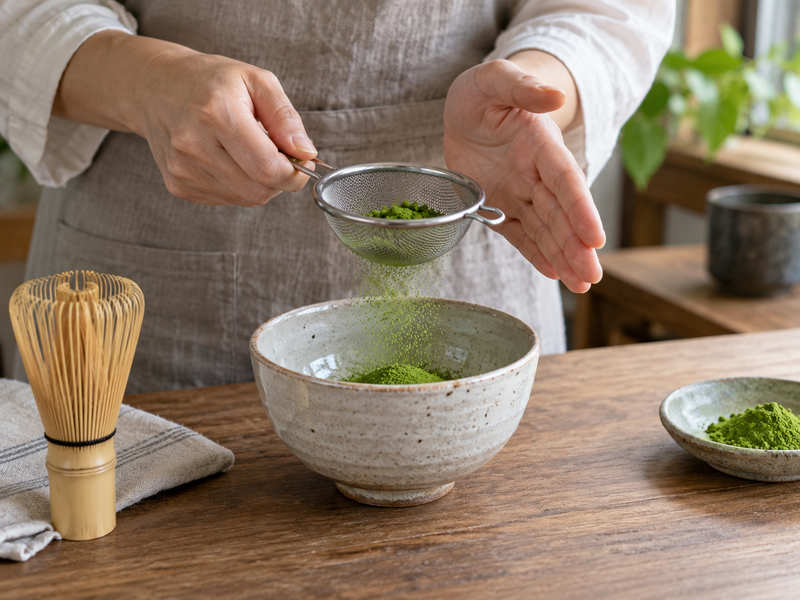
Matcha can form small clumps during storage and handling. Passing it through a sifter may make the dry powder more even before water is added. First, observe the café’s current preparation: are customers finding dry lumps, or are staff simply failing to mix a concentrate well? If a recipe uses a high-speed blender and shows no powder pockets, a separate sieve may add work without a visible gain. If staff hand-whisk into bowls, the tool may be more valuable.
Set a measurable result. Prepare equal matcha doses with and without sifting, keeping water, whisking method and serving time the same. Check dry clumps, drink texture and powder left on tools. A clear difference gives the purchase a purpose. The Nio Teas article presents sifting as a smoother-preparation step; a commercial buyer should confirm that benefit with its chosen powder and service method. Do not market sifting as a change to tea quality or safety.
2. How should mesh opening be tested?
Compare flow and clump removal
An extremely fine mesh may catch more clumps but slow powder flow. A coarse one may pass visible lumps through. Rather than selecting an unverified “best mesh count,” request physical samples with a stated mesh specification and run the same weighed powder through each. Time the process, inspect what remains on top and look at the sifted powder in a white bowl. Repeat when the powder has the condition expected during normal service.
Use a gentle, consistent motion and the same tool for moving powder across the screen. Pushing hard enough to force clumps through can defeat the test and damage mesh. Record whether the surface blinds after several portions and whether a small tap clears it. If a supplier quotes mesh numbers, ask how they are defined and whether the sample matches the quoted item. The customer cares about the cup and the bar cares about throughput; both should appear in the evaluation.
| Mesh trial | Powder flow | Clump result | Decision |
|---|---|---|---|
| Finer sample | Time per dose | Visible lumps retained | Check service speed |
| Coarser sample | Time per dose | Lumps passed | Check drink texture |
| Selected mesh | After repeated doses | Blinding or clear flow | Approve or revise |
3. Which frame size fits the service bowl?
Test the whole movement
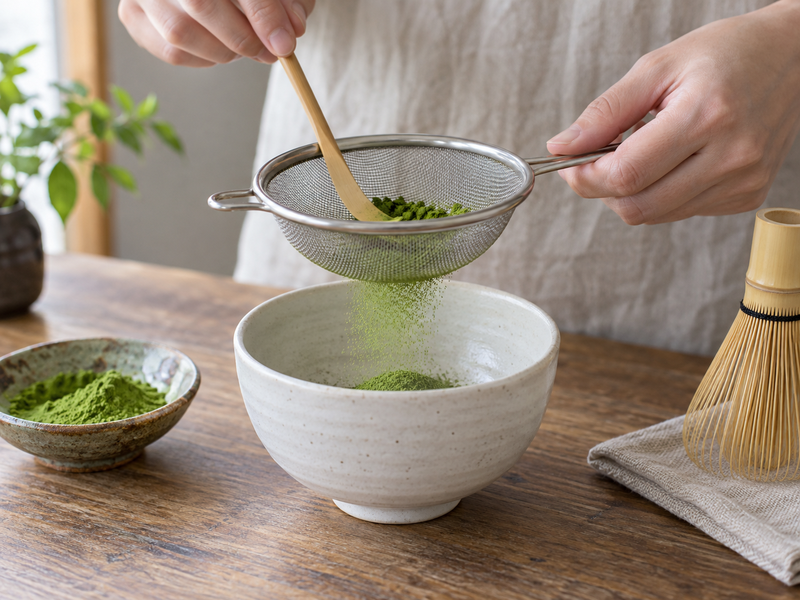
Measure the bowl or container opening, then test whether the sifter rests securely without tipping. A small hand sieve may be fine for one bowl but scatter powder across a broad workstation. A large one may block the cashier’s line of sight or occupy too much counter space. The handle should let staff hold it over the bowl without brushing wet equipment. Check whether the rim catches on the chosen cup or bowl.
Try ten consecutive orders with the intended bowl, scoop and sifter. Notice where the tool is placed when not in use and whether staff must cross a wet station to retrieve it. If a fine mesh must be tapped repeatedly, the frame should remain stable. Powder that lands outside the bowl is waste and a cleaning burden. A product photo showing a sieve over a decorative bowl cannot answer these service questions; the café’s own station layout can.
4. What material and finish are appropriate?
Inspect food-contact surfaces
Common sifters have metal mesh and a metal or plastic frame. The selected material should come with suitable food-contact information for the sales market and the café’s intended cleaning method. Inspect mesh attachment, exposed wire ends, welds or joints and any rough points that could trap powder. A smooth-looking frame may still have a crease where damp residue collects. Ask for current supplier documents rather than assuming every shiny material is a particular steel grade.
Handle samples with dry and then normal service conditions. Does the handle slip? Does the frame flex? Does the mesh stay taut? A flexible frame may let powder fall from the edge rather than through the screen. If the sifter is sold in a consumer set, appearance matters, but it should still work after several uses. Test any colored coating for visible wear according to the supplier’s specifications before approving printed claims about durability.
| Inspection point | Practical concern | Evidence |
|---|---|---|
| Mesh attachment | Loose wires | Physical sample |
| Frame seam | Residue trap | Cleaning check |
| Handle | Grip and reach | Staff trial |
| Material claim | Food-contact suitability | Supplier document |
5. How much powder is lost during sifting?
Weigh what reaches the bowl
Put a weighed matcha dose into the sifter, then weigh the powder delivered to the bowl. The difference includes residue on mesh, powder scattered during handling and any clumps intentionally held back. Repeat across several doses. A small absolute loss can matter when the recipe uses a small tea weight. More importantly, inconsistent loss can make one cup weaker than the next despite an accurate initial scoop.
Record whether staff tip retained powder back into the bowl. If the retained material is a hard clump, that may defeat the purpose; if it is fine powder sticking to a dry mesh, a better technique or tool may recover it. Ask whether the chosen matcha needs sifting under the operation’s storage conditions. When selecting tea, Matcha Village’s sample service can provide material for an application trial, but tool performance needs to be measured by the buyer.
6. Can staff clean it between tasks?
Design the cleaning route
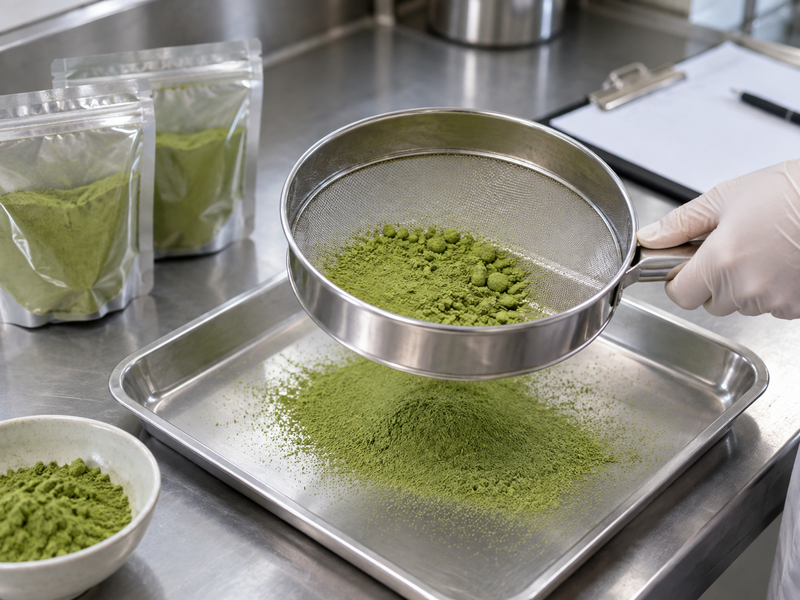
Fine mesh is difficult to inspect when powder has collected around a rim. Follow the café’s approved food-contact cleaning and drying procedure and the supplier’s instructions. Check whether staff can remove visible residue without bending the screen. A shared sifter used for plain matcha and sweetened blends raises ingredient and allergen questions; separate tools or a verified cleaning step may be needed.
Drying is part of the workflow. A damp sieve can make the next dose stick, which affects both speed and hygiene. Give it a clean storage place away from splash zones. Test the method at closing, when several doses have passed through the mesh, not only after one neat demonstration. If the tool cannot be cleaned and inspected to the operation’s standard, it should not be approved for shared café use no matter how elegant it looks.
| Cleaning question | Test |
|---|---|
| Can staff reach mesh edges? | Inspect after normal wash |
| Does it dry fully? | Check before next service |
| Are blends handled? | Review cross-contact route |
| Does the frame survive? | Repeat cleaning trial |
7. Does the workflow improve a busy shift?
Measure time with drink quality
Sifting adds a step, so the café should ask whether it reduces remakes, clumps or whisking time enough to justify that step. Observe ordinary staff during a peak simulation. Record time from opening the matcha container to adding water, powder spilled, mesh clogging and the condition of the finished cup. A sifter that works beautifully for one slow demonstration may not fit twenty drinks in sequence.
Consider a prep station that sifts measured portions into dry, covered containers if the operation’s product and handling plan supports it. Test whether pre-sifted powder re-clumps and whether portions remain traceable. Do not leave exposed powder on the counter to “save time.” Alternatively, a small handheld sieve can be used only for drinks made in a visible bowl, while a different mixing method handles blended lattes. The purchase decision can be narrower than “every drink must use this.”
8. How should wholesale units be inspected?
Set a functional acceptance test
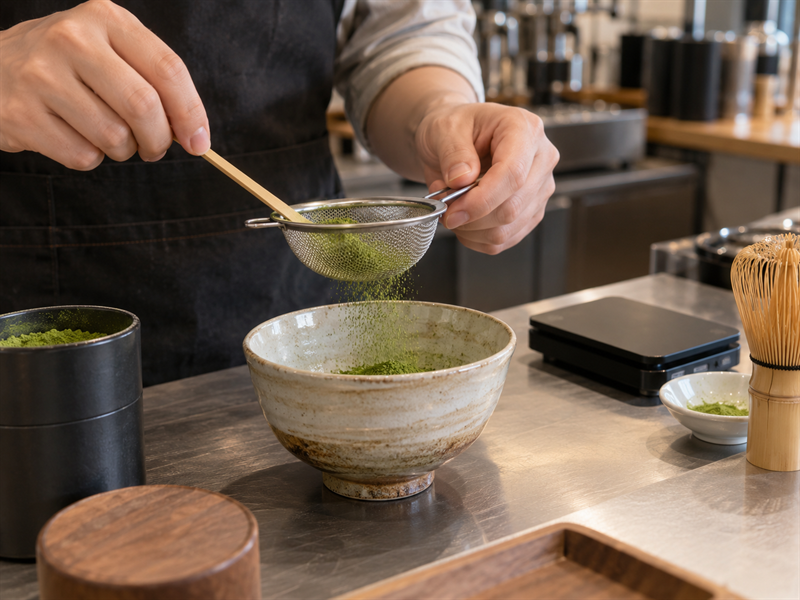
An approved sample should have a taut screen, secure handle, smooth edges and dimensions matching the service bowl. Inspect multiple units from a pilot carton. A warped ring may wobble over a bowl, while a loose mesh can shed wires or slow flow. Photograph acceptable and unacceptable conditions for incoming quality checks. Ask for a current material and cleaning specification tied to the exact item code.
Run powder through units selected from different positions in the carton. If one flows quickly and another blinds, the product is not consistent enough for a multi-site program. Examine packaging for dents to the rim or pressure on the screen. Keep a retained reference unit. If the supplier changes mesh or handle design, repeat the practical flow and cleaning tests before approving the revision.
Sample across a carton rather than taking five neighboring units from the top layer. Note where each unit came from and whether any protective sleeve was missing or crushed. If the frame arrives out of round, try it over the actual service bowl before deciding that the defect is merely cosmetic. A warped rim can make staff hold the sieve in one hand and the bowl in the other, changing both speed and spill risk. Record defects by type and batch, and ask the vendor how replacements will be supplied. Those records make a future reorder easier to judge than a general statement that the first shipment looked acceptable.
| Incoming check | Pass evidence | Reject cue |
|---|---|---|
| Rim | Sits level on bowl | Wobble or bend |
| Mesh | Even tension | Loose or torn area |
| Handle | Secure | Movement at joint |
| Pack | Shape protected | Crushed frame |
9. What should be included in a set or quote?
Cost the usable tool
List the sifter, any matching scoop, protective sleeve, cleaning card and outer pack separately. A cheap sifter that requires a custom insert or frequent replacement may cost more than a sturdier item. If it is part of a retail set, check whether a beginner understands why it is included and where it sits in the preparation sequence. A tool that is never used only adds bulk.
For a café rollout, include training, spare units and cleaning time in the total cost. Compare the cost of the selected mesh with the measurable reduction in powder loss or remakes, if any. Do not invent a payback rate from one small pilot. Matcha Village’s company context includes tea and gift-set combinations, but a specific accessory bundle or packaging option needs an actual current quote and sample.

10. Which sifter deserves approval?
Choose from a complete station trial
The final specification should state mesh description, frame and handle material, dimensions, approved cleaning method, pack and acceptance criteria. Keep the tested powder and bowl in the record so another team can repeat the decision. Confirm that the sifter improves the chosen preparation, fits the station and can be cleaned under the operation’s policy. A low price or a fine-looking mesh alone is insufficient.
Have a second shift run the preferred sample without special coaching. Compare cup texture, powder delivered and time with the original trial. If the benefit disappears when a different worker uses it, improve the instruction or select a simpler tool. For retail, add an opening test and a clear care card. The sifter is ready to buy when its working result and maintenance route are as clear as its appearance.
| Approval gate | Evidence | Owner |
|---|---|---|
| Powder flow | Repeated-dose trial | Beverage team |
| Cleaning | Procedure test | Operations |
| Incoming quality | Pilot carton | Purchasing |
| Kit value | Beginner use test | Product team |
FAQ
Q1. Does every matcha drink need sifting? Test the actual recipe; some mixing methods may already handle clumps.
Q2. Is the finest mesh always best? No. Compare clump removal with flow and cleaning time.
Q3. How can a café measure powder loss? Weigh the dose entering the sieve and the amount reaching the bowl across several trials.
Q4. Can one sieve handle flavored blends too? Review ingredients, cross-contact and the cleaning plan first.
Q5. What is the strongest purchase test? Use several sample units during normal service with the actual matcha, bowl and cleaning routine.
Run a small service trial before ordering cartons. The best matcha sifter is the one that delivers smoother cups without creating an unmanageable step at the bar.