
Matcha chlorophyll degradation concerns changes in tea pigments during handling, processing or storage. Buyers need to distinguish an observed color shift from a measured pigment change. Start with controlled samples and a laboratory question. Herrera and colleagues analyzed chlorophyll compounds in green teas using HPLC–MS, providing an analytical basis beyond visual inspection.
Table of contents
- What should a matcha chlorophyll degradation trial investigate?
- Which control samples should you retain?
- How should you standardize color observation?
- Which formulation variables should you record?
- How should you record processing exposure?
- How should you compare packaging and storage?
- What laboratory evidence identifies pigment changes?
- How should you interpret matcha chlorophyll degradation results?
- How should findings become supplier requirements?
- When should you repeat the investigation?
1. What should a matcha chlorophyll degradation trial investigate?
Describe the commercial defect precisely
Identify where the change appears. A buyer might observe a darker drink after heating, a color difference between stored tubs or variation after opening an ingredient bag. Record product identity, timing and conditions. Avoid describing every undesirable green color as pigment degradation before your team has investigated other formulation and observation differences.
Frame matcha chlorophyll degradation as a testable question. For example, ask whether the chosen process changes the pigment profile of one defined recipe compared with a retained control. Choose the comparison before collecting samples. Keep supplier, dose and handling conditions fixed while testing the variable under review. This gives the laboratory a clearer investigation than an unstructured collection of photographs.
Assign separate owners for analytical interpretation, sensory approval and safety review. Green appearance cannot establish microbiological status, contaminant compliance or product safety. State the commercial color target and the evidence needed to approve it. Keep any safety concern within the site’s quality procedure while the development team examines appearance and pigment composition.
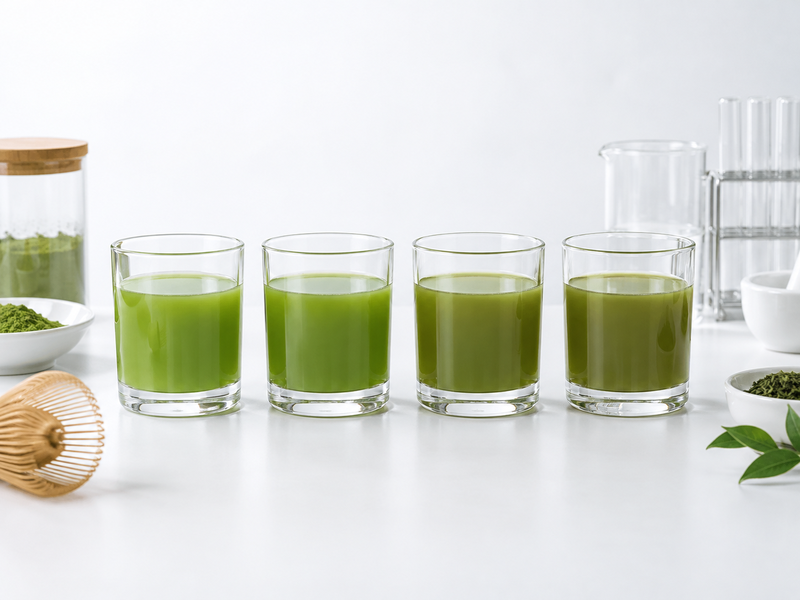
| Observation | Trial question | Separate review |
|---|---|---|
| Change after processing | What changed from the control? | Process records |
| Change during storage | Which condition differs? | Package and environment |
| Difference between lots | Are preparation conditions matched? | Supplier identity |
2. Which control samples should you retain?
Preserve a meaningful starting comparison
Keep traceable powder from each candidate lot and prepare a baseline sample using the chosen recipe. Record powder dose, liquid base, preparation procedure and time of observation. Store retained material under agreed conditions and track access. The control needs a known history, especially when the study extends beyond one development session.
For matcha chlorophyll degradation, separate a powder control from a finished product control. Retain both when the investigation needs them. Powder testing can describe the ingredient; finished testing can examine the matrix and processing. Ask the laboratory which material should be submitted for each question and how it should be protected during transport.
Use a single lot split between conditions when investigating one process variable. Use several independent lots when checking supplier variability. Record the difference between these designs in the report. Repeated measurements of one sample cannot establish future lot consistency. Reserve enough identified material for a justified follow-up so a later analytical question does not require an unrelated replacement sample.
3. How should you standardize color observation?
Keep illumination and sample presentation fixed
Use the same sample vessel, fill depth, viewing background and lighting arrangement. Record observation time after preparation and any mixing before assessment. A settling sample can present different color at different heights. Photograph fixed positions without changing exposure or applying a filter that makes one candidate appear greener than another.
Matcha chlorophyll degradation investigations benefit from instrumental color measurement where the team has suitable equipment and a defined method. Record the measurement conditions with the result. Ask the responsible operator to document instrument settings, sample presentation and repeat measurements. A color value without those conditions can be difficult to reproduce in another laboratory or production room.
Use the site’s color measurement guide as a related preparation reference. Keep appearance measurements separate from pigment concentrations. A color difference can justify further investigation, but it does not identify the chemical compound responsible. Write observations as observations and let the laboratory explain what its analytical results establish for your chosen samples.
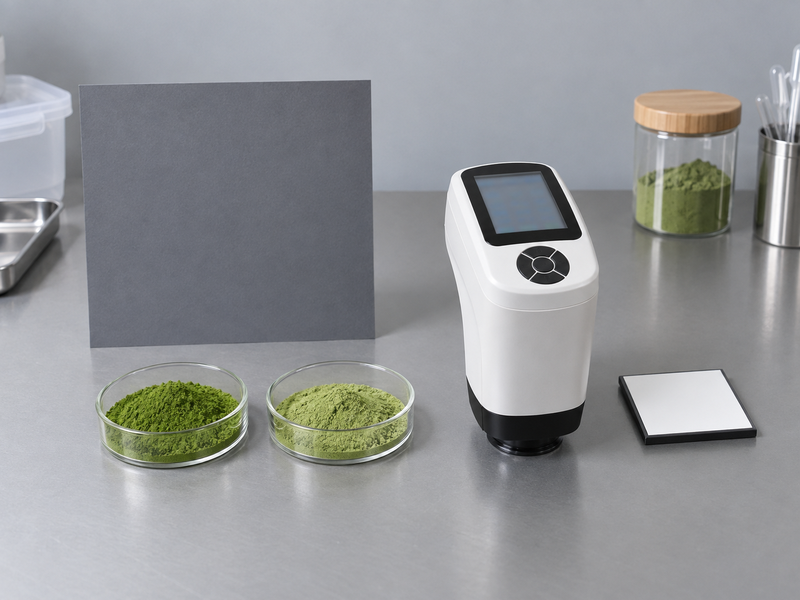
| Observation detail | Keep constant | Record |
|---|---|---|
| Vessel | Material and geometry | Sample presentation |
| Light | Source and position | Viewing setup |
| Timing | Interval after preparation | Observation time |
4. Which formulation variables should you record?
Capture the actual recipe and measured conditions
Record recipe version, ingredient identities, matcha dose and preparation order. Include measured pH where relevant, along with the measurement temperature and procedure. Identify any ingredient charged during the trial. A color shift after adding fruit, milk or a pH adjuster needs a complete record before anyone attributes it to the powder supplier.
For matcha chlorophyll degradation, change one planned variable at a time during the initial screening stage where practical. Keep the remaining recipe fixed. If your team needs a larger experimental design, have a qualified developer define it. Record water source, mixing settings and waiting periods so the trial can be repeated with another identified supplier sample.
Treat laboratory buffers and commercial recipes as different matrices. A screening result in a simple solution does not establish performance in a milk beverage, chocolate or frozen dessert. Use the actual commercial matrix for confirmation. Any proposed additive or recipe change needs technical and destination-market review before it enters the approved product formula or supplier brief.
5. How should you record processing exposure?
Measure what the sample experiences
Document the charging point, actual product temperatures, holding periods and cooling history. Keep equipment settings separate from measured sample conditions. A vessel setpoint alone cannot describe the full exposure of the material being tested. Ask the process team how to capture representative product measurements safely on the equipment used for confirmation.
Matcha chlorophyll degradation should be investigated against a traceable process record. Keep the time and temperature history with each sample. Record delays, interruptions and extra mixing because they can change the comparison. Where samples come from production, identify the collection location and its relation to the processing stage under review.
Keep appearance optimization within the process constraints established by competent quality and process staff. Changing heating to preserve color requires separate assessment of product safety and process suitability. A pigment trial cannot validate a commercial preservation process. The development report should describe quality observations and identify which process conditions were already approved for the test, without declaring a universal safe heating window.
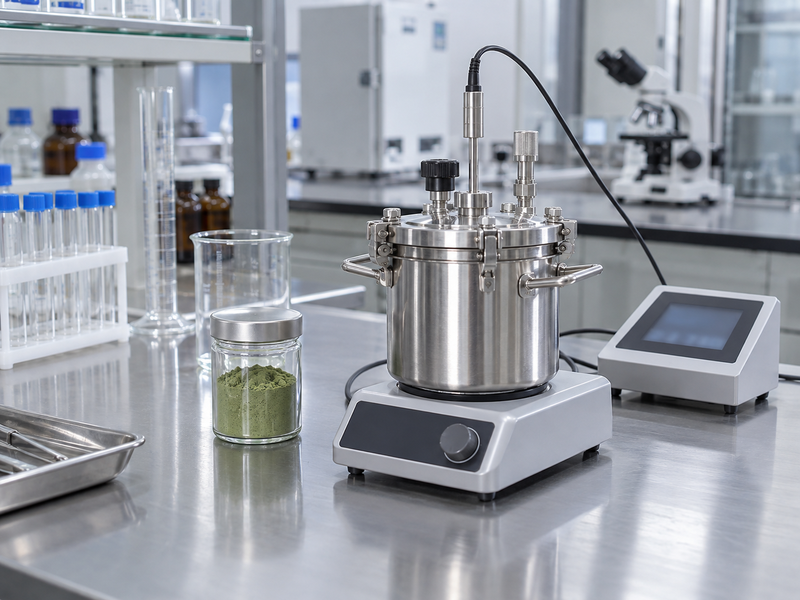
| Process record | What to capture | Avoid assuming |
|---|---|---|
| Heating | Product temperature history | Setpoint equals exposure |
| Holding | Actual elapsed period | Every run has the same delay |
| Cooling | Measured cooling sequence | Immediate cooling occurred |
6. How should you compare packaging and storage?
Test the package intended for sale
Define package material, closure, fill conditions and storage environment. Record lighting where packages face display exposure. Keep fill volume and sample presentation consistent during screening. If your team compares package options, ask the packaging supplier for relevant technical information and confirm performance in the filled product rather than relying only on a material description.
For matcha chlorophyll degradation, plan observation intervals before filling samples. Keep unopened units for later measurements. Repeatedly opening one container changes its exposure and creates a different study from unopened commercial storage. Identify each unit and record any opening, sampling or temperature interruption. Retain the package history beside every analytical result.
Use actual distribution and use conditions when confirming the product’s intended quality period. Accelerated screening can help choose candidates, but its relationship with real storage needs technical justification. Avoid turning a short color trial into a universal shelf life promise. Separate the quality endpoints from the safety and preservation evidence required by your responsible team for the finished product.
7. What laboratory evidence identifies pigment changes?
Ask an analytical question the laboratory can answer
Give the laboratory the baseline and exposed sample identities, recipe and process record. Ask which pigment compounds its method can identify and quantify. Request units, extraction basis, reporting limits and method qualifications. A report labeled “chlorophyll” needs an explanation of whether it describes a total, individual pigments or a response under another procedure.
Matcha chlorophyll degradation may require a pigment profile rather than a single color reading. Confirm the required compounds before ordering the work. Let analysts assess matrix suitability and sample preparation. Do not demand a detailed chemical interpretation from a photograph or instruct the laboratory to use a paper’s procedure unchanged for your commercial recipe.
Review the analysis with the responsible technical owner. Preserve unresolved identifications and qualified results. Ask whether apparent differences exceed the relevant measurement variation and what additional sample would clarify the question. Keep ingredient and finished product results on their stated bases. A concentration in an extract needs its preparation details before it can describe a gram of powder or a finished serving.
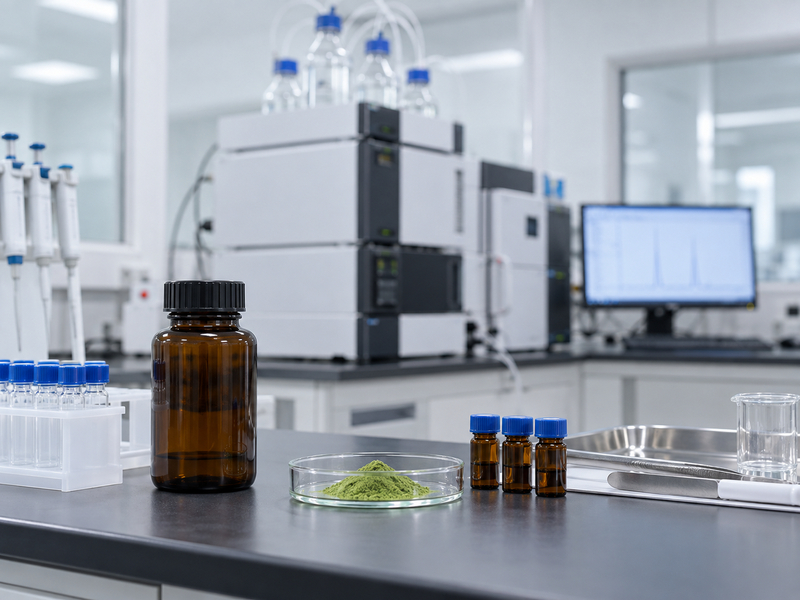
| Laboratory request | Clarification needed | Interpretation boundary |
|---|---|---|
| Pigment profile | Named compounds | Identified method scope |
| Concentration | Units and material basis | Tested material only |
| Comparison | Baseline and exposed pair | Recorded trial conditions |
8. How should you interpret matcha chlorophyll degradation results?
Compare observation and chemistry without merging them
Place color measurements, pigment results and sensory observations in separate columns. Link each row with the same sample identity. Ask the technical reviewer what the combined evidence supports. A visible change may accompany a measured pigment change, but your report should describe that relationship without extending it to untested recipes or suppliers.
Use matcha chlorophyll degradation findings to answer the trial question. Keep findings within the tested conditions. If several variables changed, identify that limitation and plan a narrower follow-up. If the laboratory cannot explain a difference, record the unresolved question instead of creating a confident chemical story from the sample’s appearance.
Have the product team assess whether the change meets the commercial appearance target. An analytically measurable difference may be acceptable in the intended package, while a small visual difference may still matter for a side-by-side display. Document the decision and reference sample. Preserve separate safety decisions; brighter green cannot prove a product is safe, and duller green alone cannot diagnose a specific safety failure.
9. How should findings become supplier requirements?
Specify demonstrated application performance
Send the supplier the controlled recipe, processing conditions and accepted reference. Explain which powder attributes and documents the trial showed you need. Set a sample comparison procedure that both parties can follow. Avoid specifying an unsupported universal pigment retention percentage because it appears technically impressive in a purchasing document.
For matcha chlorophyll degradation, tie any analytical target to its method and material basis. Require notification when the selected product changes. Include ingredient code, lot identity and the agreed sample approval process. Keep process-dependent finished performance distinct from a raw powder guarantee so responsibilities remain clear when your recipe or equipment changes.
Ask for samples from several identified lots when recurring consistency matters. Repeat the relevant application test rather than relying only on dry powder photographs. Ask Matcha Village about application sample support; buyers should confirm the selected powder and requested pigment testing separately. Agree availability, documents and commercial terms in writing before adding any new assay to routine orders.
| Requirement | Supporting evidence | Supplier agreement |
|---|---|---|
| Application color | Controlled recipe trial | Reference comparison |
| Pigment result | Suitable analytical method | Units and basis |
| Consistency | Independent lot trials | Change notification |
10. When should you repeat the investigation?
Name the change triggers
Repeat the relevant comparison when recipe, dose, water source, processing, package or selected powder changes. Identify the owner who decides whether a full trial or a smaller confirmation is required. Keep the approved trial report accessible to development, quality and procurement staff so each team knows which conditions were previously evaluated.
Maintain a current matcha chlorophyll degradation investigation record with sample identities, conditions, methods and decision dates. Review deviations before approving another production run. An unexpected color complaint needs its own traceable sample and history. Avoid diagnosing the cause from a customer photograph without checking preparation, package condition and handling information.
Use a retained finished unit and powder portion where available and suitable for the question. Ask the laboratory what additional evidence it needs before shipping. Keep the follow-up focused on the observed defect and the conditions that changed. Record the revised supplier or operating requirement only after the responsible technical team has assessed the new comparison and its practical limits.
FAQ
Q1: Can a photograph quantify chlorophyll degradation?
A controlled photograph records appearance. Pigment quantification requires a suitable analytical method and defined sample basis.
Q2: Does greener matcha prove better safety?
No. Safety requirements need their own evidence, including the appropriate quality documents and control procedures.
Q3: Can a buffer trial establish beverage performance?
Use it for screening. Confirm findings in the commercial matrix with its actual processing and packaging conditions.
Q4: Should one storage container be opened repeatedly?
Record repeated opening as a separate condition. Keep unopened units when the study concerns commercial unopened storage.
Q5: What should a supplier receive after a pigment trial?
Send the sample identities, controlled recipe, processing record, accepted reference and any agreed analytical method and basis.
Choose one observed color defect and prepare a matched baseline comparison. Record recipe, process and package conditions, then ask the laboratory which pigment evidence can answer the question. Approve a supplier requirement only after technical review connects the measured results with the finished product target under the conditions you tested.