
Matcha polyphenol testing measures a defined analytical response in a prepared sample. Supplier figures become useful when buyers agree the method and reporting basis. Start with a laboratory brief and comparable reports. ISO 14502-1 describes a Folin-Ciocalteu colorimetric assay for total polyphenols in tea, giving the request a named reference.
Table of contents
- What should matcha polyphenol testing help you decide?
- Which method should suppliers report?
- What does a calibration equivalent mean on the report?
- How should you align units and sample basis?
- How should the sample reach the laboratory?
- What should you ask about extraction and interference?
- How should you compare matcha polyphenol testing results?
- How should you handle antioxidant assay requests?
- What acceptance rule should the supplier follow?
- How should later results remain useful?
1. What should matcha polyphenol testing help you decide?
Define the purchase question
Ask the requesting department to identify the decision. It might need an analytical comparison for a new recipe, a customer document or periodic verification of a selected powder. Record the intended ingredient code and application. Keep the analytical requirement separate from color, flavor and texture criteria because each requires its own evidence.
Matcha polyphenol testing should begin with a question the team can answer using the proposed assay. Name the decision and its owner. If marketing wants a health statement, identify that as a separate evidence and labeling review. An ingredient colorimetric result cannot establish a consumer health outcome or authorize a claim in every destination market.
Agree whether the request concerns raw powder or a finished product. A blend containing milk powder, fruit or other ingredients needs a laboratory assessment of its own matrix. Avoid ordering a large testing panel before this scope is settled. A concise brief helps the laboratory quote the appropriate work and helps procurement understand which report will support supplier approval.
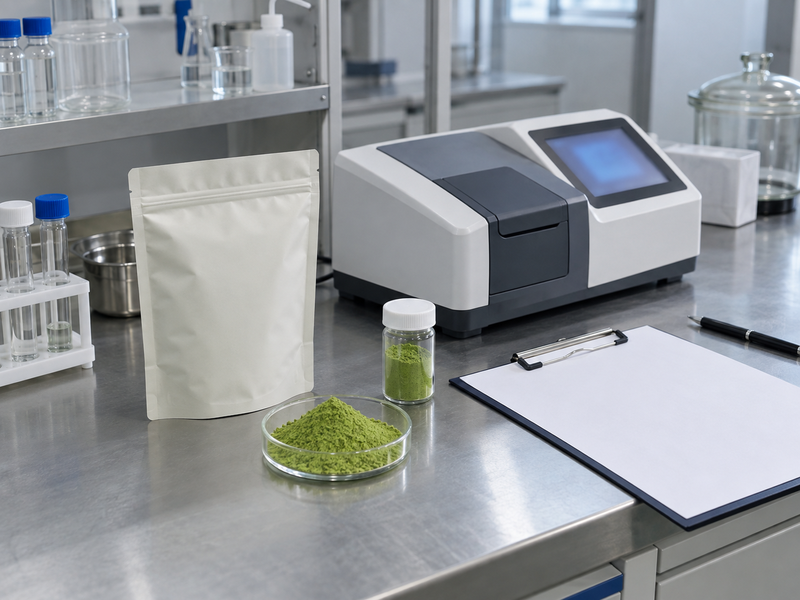
| Requesting team | Possible decision | Scope to clarify |
|---|---|---|
| Development | Compare candidate powders | Ingredient assay |
| Customer quality | Meet a written requirement | Customer method |
| Labeling | Review proposed wording | Finished product evidence |
2. Which method should suppliers report?
Require a named analytical procedure
Obtain the method identifier, edition or laboratory procedure reference. Ask whether the assay suits your powder and whether the laboratory modified the reference procedure. Keep that explanation alongside results. Two suppliers can report a figure called “total polyphenols” while using different analytical procedures, so a shared label does not establish comparability.
For matcha polyphenol testing, ask the laboratory which details your technical owner needs to compare reports. Review the procedure before ranking the numbers. Include extraction basis, calibration material and reporting units. Procurement should avoid forcing a laboratory to reproduce an online recipe without checking method suitability, quality controls and the sample matrix.
Ask the laboratory which source documents support its procedure and what its report can establish for the submitted material. Preserve that scope when preparing a customer response. Your purchasing limit should come from the product requirement, suitable laboratory procedure and comparable data for the ingredient you intend to buy. Keep a general literature discussion separate from the actual lot result and the acceptance decision it supports.
3. What does a calibration equivalent mean on the report?
Preserve the name of the reference material
Ask what reference material defines the calibration and how the result is expressed. A report may use gallic acid equivalents, abbreviated GAE. Preserve the equivalent designation rather than reducing the entry to “mg/g.” The equivalent identifies how the measured response was related to calibration; it should remain visible wherever procurement copies the number.
Matcha polyphenol testing comparisons need the same calibration basis or a laboratory-supported comparison. Keep the equivalent name beside the value. A primary comparison of green tea extract methods describes different calibration conventions for Folin-Ciocalteu and iron tartrate assays. Buyers should ask about calibration before treating values from those procedures as interchangeable.
Avoid describing an equivalent value as the isolated mass of every polyphenol in a sample. Ask analysts how the result should be interpreted under their method. Keep this explanation in the technical file so customer service staff can answer document questions accurately. When a customer requires another convention, obtain laboratory advice and a suitable report rather than renaming the existing result.
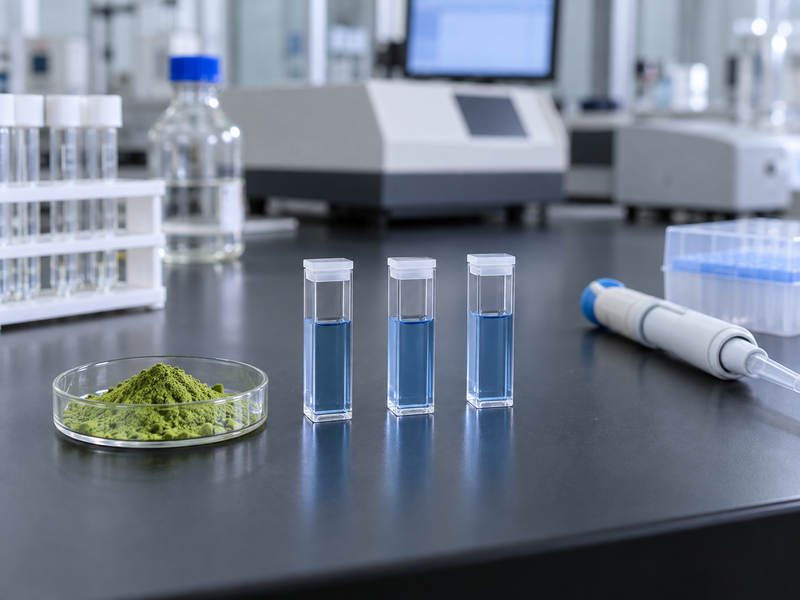
| Report field | Example of information needed | Buyer action |
|---|---|---|
| Calibration | Named reference material | Preserve designation |
| Equivalent | Full result convention | Match comparison basis |
| Procedure | Assay identity | Check comparability |
4. How should you align units and sample basis?
Define the denominator before converting
Record whether the result refers to original powder, dry matter, prepared extract or another material. Ask the laboratory to state the denominator explicitly. A concentration per milliliter of extract requires information about sample preparation before it can describe a gram of purchased powder. Retain original units in the comparison worksheet.
For matcha polyphenol testing, select one approved basis for supplier screening. Confirm units and moisture treatment together. If results need conversion, ask the technical owner to check the formula and inputs. A dry matter conversion requires compatible moisture information. An extract concentration also requires documented preparation details; neither should be converted using a guessed factor.
Keep a separate field for the converted comparison value and its calculation reference. This lets reviewers see what the laboratory measured and what the buyer calculated. Reject unexplained spreadsheets as incomplete evidence. When a supplier changes units, determine whether it changed only the report format or also changed the method, extraction or material basis before adding the new value to a trend chart.
5. How should the sample reach the laboratory?
Trace the submission to the intended supply lot
Agree sampling with quality staff and the laboratory. Record product code, lot code, containers sampled, sample collection date and packaging condition. State whether the sample represents one bag or a composite. Submit enough material for the agreed work and any justified follow-up. Ask the laboratory for its packaging and storage requirements before shipping.
Matcha polyphenol testing should use comparable handling across candidate suppliers. Preserve the sample identity through every transfer. Keep a submission record and laboratory receipt confirmation. If an analyst reports unusual condition, investigate before treating the result as a representative supplier characteristic. Retain a sealed portion where the planned investigation procedure calls for one.
Request independent lot samples when checking recurring supply variability. Repeated measurements of the same portion address another question. Identify any development blend that differs from routine commercial supply. Keep the supplier’s declaration with the assay record so procurement cannot later assume that one development sample establishes the profile of every delivered batch under the same marketing grade name.
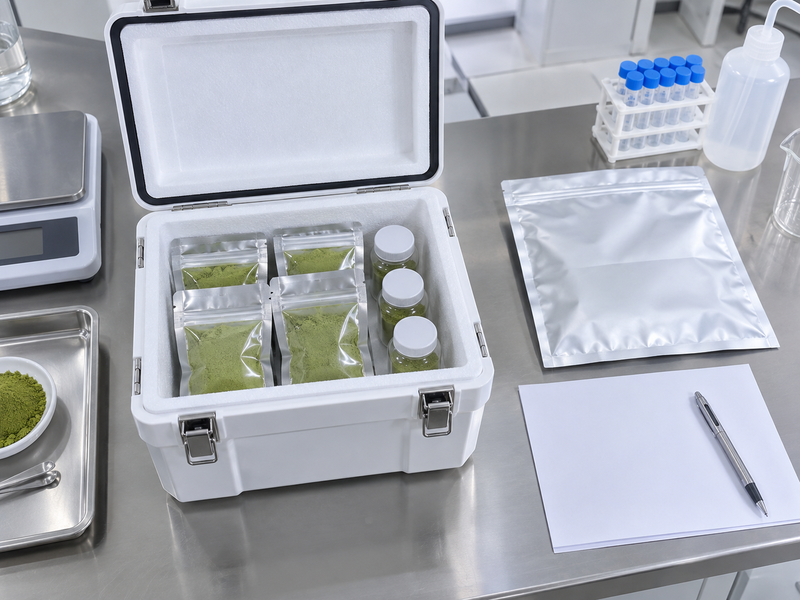
| Sample detail | Record | Question it answers |
|---|---|---|
| Product and lot | Submission identity | What material was tested? |
| Container scope | Individual or composite | What does it represent? |
| Handling | Dates and conditions | Was comparison consistent? |
6. What should you ask about extraction and interference?
Give analysts the complete matrix description
Ask the laboratory how its extraction procedure relates to the intended result. Identify added ingredients and processing history for finished samples. Analysts need that information when checking preparation and possible interference. A buyer should request a technically justified procedure rather than assuming that a powder method works unchanged in every milk beverage or fruit blend.
For matcha polyphenol testing, keep extraction conditions linked to the procedure reference. Ask how the method handles your matrix. Request quality control information relevant to the decision, such as preparation repeatability or recovery assessment when appropriate. Let analysts explain what they can establish and what additional work would be needed for a more complex sample.
If two reports disagree, compare sample identity, extraction, calibration and denominator before questioning the supplier’s ingredient. Ask the laboratories to review identified portions of the same sample where needed. Keep the investigation focused on a stated technical question. Averaging results from incompatible procedures can conceal the disagreement while producing a figure that neither laboratory measured on the approved basis.
7. How should you compare matcha polyphenol testing results?
Separate reported values from purchasing interpretation
Build a comparison sheet with one row per identified sample. Include method, calibration equivalent, units, material basis and result qualifications. Mark incomplete rows before making a ranking. Use a current report for the proposed product where the purchasing requirement calls for it. A general catalog value needs a clear explanation of what material and period it represents.
Check duplicates, reporting limits, uncertainty and rounding with the laboratory when they affect a purchasing boundary. Apply the same decision rule to every supplier. A minor difference between reported values may need technical interpretation before procurement calls one sample superior. Preserve the laboratory’s qualifications in customer documents instead of deleting them to simplify the layout.
Compare application performance separately. A powder can meet the agreed analytical requirement and still fail color or flavor targets in your recipe. Keep those decisions visible in the supplier review. The site’s certificate of analysis guide provides a related document check; your product specification must define this assay’s exact acceptance basis.
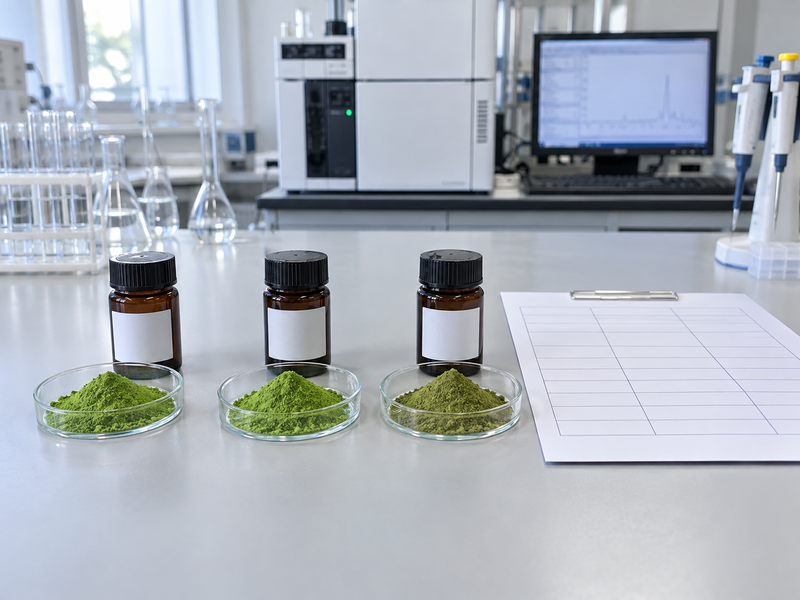
| Comparison check | Acceptable information | Unresolved information |
|---|---|---|
| Method | Named compatible procedure | Assay unspecified |
| Calibration | Stated equivalent | Equivalent omitted |
| Material basis | Defined powder basis | Extract basis unexplained |
8. How should you handle antioxidant assay requests?
Identify the separate measurement being requested
Ask the requesting team to name the assay, purpose and intended wording. A total polyphenol result and an antioxidant assay have different reporting requirements. Keep each report under its own procedure reference and units. Do not combine unlike tests into a single score or promise a fixed multiplier against another food or tea.
Matcha polyphenol testing can support a defined analytical requirement. Keep additional assays in separate fields. If marketing requests a comparison, ask for comparable sample preparation, units and evidence. Have the responsible labeling reviewer assess the proposed claim for the destination market. Laboratory measurements alone do not establish a consumer health effect or a universal product ranking.
Consider whether the extra test changes a purchasing decision. If it answers only a vague request for impressive numbers, return to the application brief. A technical team may need a targeted investigation with a clear endpoint instead. Confirm assay availability, cost and interpretation with the laboratory before adding it to routine supplier requirements or promising it in customer documentation.
9. What acceptance rule should the supplier follow?
Set limits from comparable product evidence
Review several identified lots using the chosen procedure before agreeing a recurring range. Ask the supplier what data supports its proposed specification. Confirm that the reports concern the same ingredient code and reporting basis. Keep any seasonal or blend arrangement statements as supplier information requiring clarification when they affect the purchased product.
Matcha polyphenol testing needs a written response to results near a boundary or outside the agreed range. Define hold, investigation and retest responsibilities. State who can authorize another preparation or replacement lot. Retesting should answer an investigation question; procurement should avoid repeating measurements until an isolated passing value appears.
Confirm report frequency and availability. A periodic verification service differs from a lot-specific result. Agree which arrangement your quality plan requires and obtain a written quotation where extra testing is needed. Keep application performance and other quality requirements alongside the analytical limit. The selected powder should satisfy every relevant requirement before the responsible quality owner approves its recurring purchase.

| Acceptance item | Written agreement | Evidence retained |
|---|---|---|
| Range | Product-specific limits | Comparable lot reports |
| Boundary response | Decision and retest rule | Investigation record |
| Frequency | Lot or periodic reporting | Current service agreement |
10. How should later results remain useful?
Control method and product changes
Require notification when the supplier changes product identity, laboratory procedure, extraction, calibration or reporting basis. Name the reviewer who assesses each change. Keep old and new reports together during comparison. A trend assembled across incompatible methods can create an apparent shift that needs analytical review before anyone changes the purchasing specification.
Use a controlled matcha polyphenol testing brief with an effective date and document owner. Check report identity on every applicable delivery. Record missing evidence through the receiving procedure. Do not replace an overdue assay with an unrelated report simply because the powder has a familiar commercial grade name. Quality staff should decide the appropriate disposition.
Ask Matcha Village about samples and quality document support. Buyers should confirm the requested procedure, laboratory scope and reporting frequency for their selected ingredient. Send the approved analytical brief with a trial order. Review the received documents and finished recipe observations before extending the arrangement to regular purchases, customer reports or any proposed product statement.
FAQ
Q1: What does GAE identify?
It identifies a gallic acid equivalent reporting convention. Keep the designation, method and material basis with the value.
Q2: Can different total polyphenol methods be ranked directly?
Ask the laboratory to assess comparability. Match procedure, calibration, units and sample basis before making a purchasing decision.
Q3: Is an extract result automatically a powder concentration?
No. The conversion needs documented sample preparation and a compatible denominator reviewed by the technical owner.
Q4: Does a total polyphenol result establish a health effect?
No. It reports an analytical response under a defined procedure and does not establish a consumer health outcome.
Q5: What should a supplier confirm before routine testing begins?
Confirm the method, equivalent, units, sampling scope, acceptance rule, reporting frequency and any additional testing charge.
Prepare a laboratory brief with the intended material and purchasing decision. Obtain matched supplier reports before setting a range, then test shortlisted powders in your recipe. Keep the assay basis visible in customer documents and request technical review whenever a method, calibration, sample identity or proposed claim changes.