
The best matcha kit is the set that lets its intended user prepare the promised drink with the items in the box. A gift set can look generous and still omit a practical sieve, pack tea poorly or include a bowl too narrow for its whisk. Café launch teams and retail buyers should unbox samples like new users, follow the supplied method and taste the cup. Then they should clean, dry and repack every component. This exposes missing parts and maintenance work before a large order is placed.
For a first-use retail set, my starting specification is plain tea in a well-sealed pack, a bowl wide enough for the included bamboo whisk, a clear measure, a sifter, a drying position and instructions that state the powder and water amounts. For staff training, buy repeatable tools and replenishable tea before gift packaging. Those two users deserve different bundles.
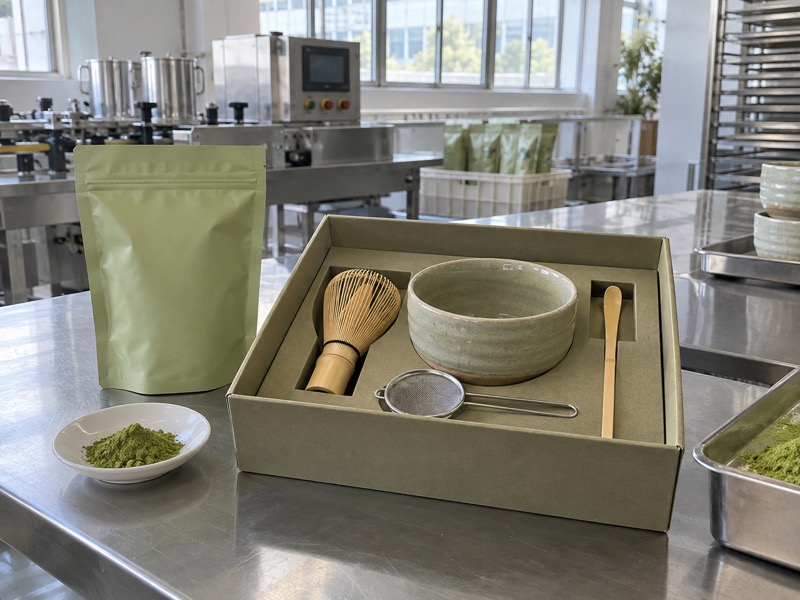
For: café launch teams, retail buyers and gift-set developers. Decision: which bundle produces a repeatable serving and remains usable after the first cup.
1. What should the best matcha kit include for its user?
Define the preparation job
A kit is complete when its parts support a specific preparation method, not when its carton contains the most objects. For straight matcha, a bowl, whisk, tea measure, powder and clear directions may form a useful set; a sifter and whisk stand can improve its workflow. A latte training kit might need a measured mixing vessel and a method for adding milk. State who will open it, what they already own and what drink the box promises. Open it cold: if a new user must find an extra scale, sieve or suitable bowl before making the advertised serving, the bundle needs a clearer contents statement or another component.
Do not treat “ceremonial” as a substitute for a sensory or packaging specification. Evaluate the included tea at the actual dose and water conditions printed in the instructions. Check whether the scoop offers a clear measure or whether directions provide grams for operations. A retailer may accept a gift set that needs a household kettle, but that requirement should be plain. A café training set may need enough duplicate tools for a group, whereas a single household gift does not. Keep the target cup, user and preparation route in one written brief. This prevents buyers from choosing a decorative bundle that cannot deliver its own claim.
2. Where will the kit be sold or used?
Separate gift, retail and staff-training routes
A retail gift kit must survive shipping, shelf handling and an inexperienced owner’s first use. A café training kit may travel between sites and see repeated washing. A launch bundle sold with a new menu may need replenishment of the same tea so customers can repeat the drink later. Each route changes the pack and documentation. Follow the box: inspect the arrival condition, placement on a shelf, unboxing, first cup, cleaning and storage. A whisk that arrives intact but has no safe drying place creates a problem after the first use, not at checkout.
Name the sales market and user language before printing instructions. Check whether the tea pack has the information and traceability required for that market through the responsible regulatory review. For a staff kit, ask whether the routine fits a busy counter and existing sanitation plan. A consumer gift can offer slower preparation and a ceramic bowl; a high-volume café station may require a different mix method and more durable shared equipment. Do not approve a single bundle for both routes from one attractive product photograph. Trial the set in each intended setting, with the actual number of users and storage space.
| Route | Primary stress | Acceptance observation |
|---|---|---|
| Retail gift | Shipping and first-use clarity | Intact contents and successful cup |
| Café staff training | Repeated use and cleaning | Repeatable method across trainees |
| Menu launch bundle | Replenishment and consistency | Same tea and tools available after sale |
3. How should buyers compare candidate kits?
Test each box before swapping components
Begin with a full-use test of each candidate exactly as sold. Follow its directions, use its tea and tools, and record every item borrowed from outside the carton. That shows whether the bundle works as a product. Then run a controlled tea comparison with the same water, dose, vessel and operator where the design allows it. Keep the two tests separate: changing tea and whisk together cannot tell buyers which part caused clumps or a pleasant finish. Taste the prepared matcha, inspect residue and note whether the bowl gives enough room for the whisk.
After the cup test, compare physical fit. Can the sieve sit over the bowl without tipping? Does the scoop reach into the tea container? Does a wet whisk have an open-air place to dry? Does packaging protect the bowl and tine tips during a normal delivery route? A set may include a whisk holder, but its shape and material still need inspection. The manufacturer’s matcha kit listing illustrates a bundle with tea, bowl, whisk, scoop, sifter and holder; that example shows a common component mix, not proof that any bundle will work for this buyer. Record the actual tested item codes and revisions because retail bundles can change contents while retaining a familiar name.
| Test | Use the sold kit? | Question answered |
|---|---|---|
| First-use cup | Yes | Does the box deliver its promise? |
| Controlled tea cup | Matched tools and dose | Is tea quality driving the result? |
| Physical fit | Yes | Do parts work together without spills? |
4. What should an unboxing and cup test record?
Capture the complete user experience
Photograph the sealed carton, protective inserts and each component as opened. Note missing, chipped, cracked or bent parts. Record the tea’s pack date or best-before information as supplied, seal condition, item identity and storage directions. Do not infer freshness from green color alone. Weigh the amount of tea called for in the method and calculate how many such servings the pack can support on paper. Then compare that number with actual preparation, including any powder left in the sieve or scoop. Write down the stumble: a trainee’s pause over an unclear instruction may matter more to retail returns than a small difference in whisking time.
For the cup, log water amount and condition, tea mass, preparation steps, time, residue and flavor. Score clarity of illustrations and whether cleaning instructions appear before the kit is put away. Have at least one person who did not help design the bundle use it from the printed directions. Do not coach them through the trial. Record questions they ask and outside equipment they reach for. Repeat the exercise after ordinary shipping or handling, since a pristine office sample may conceal a fragile pack. Keep every issue tied to a specific component or instruction so a supplier can make a targeted correction.
| Record group | Capture | Why it matters |
|---|---|---|
| Pack and parts | Seal, damage, missing items | Arrival quality |
| Preparation | Dose, water, steps, residue | Cup repeatability |
| User friction | Questions and borrowed tools | Instruction and bundle gaps |
5. How should the kit teach someone to make a cup?
Write a method the included parts can support
Directions should identify the tea dose, water amount, order of operations and a visible endpoint. If the kit uses a scoop, give a weight equivalent or a way for café teams to set one; scoop fills vary between users. Show how powder enters the bowl, whether to sift, how to wet it and how to whisk without pressing delicate tips hard against the base. Try the sequence aloud: a person should be able to read one step, perform it with the supplied pieces and move on without guessing where to place a wet tool. The bowl’s width and fill line must suit the whisking motion described.
For staff training, convert the same method into a short station card and observe several operators. For a consumer gift, use photographs or diagrams where they clarify hand positions or component identity. Keep cleaning and drying directions close to first-use instructions; they are part of using the kit, not an optional appendix. Ippodo’s chasen care instructions advise wetting bamboo tips before use, rinsing after use and drying in open air. A kit with a bamboo whisk should supply care guidance appropriate to that particular tool. Avoid copying one maker’s exact routine onto unrelated electric components. A good booklet states which parts are handwashed and where each goes after drying.
6. Which failures should stop a purchase?
Inspect both the box and the second use
A chipped bowl, broken whisk tips, incomplete ingredient information or a missing component can make a kit unsaleable. Packaging that lets a scoop or sieve strike ceramics during transport needs revision. Run a normal shipment or handling simulation using the proposed retail carton and inspect several samples on arrival. Then make another cup: the first serving may work, while a poorly dried whisk or powder left in a seam makes the next use unpleasant. Follow the supplier’s care method and inspect contact surfaces after cleaning. Retire damaged tools under the buyer’s quality procedure rather than offering a discount on a compromised set.
Failure analysis should point to the part that needs correction. Clumps may come from the tea, a missing sieve, an ambiguous method or poor bowl geometry. A weak flavor may come from the tea dose printed in the instructions. A wet tool enclosed in a gift box after use shows a storage design problem. Keep an issue log with kit code, tea lot, shipping route and tester. Do not claim a defect rate from a handful of unboxing samples; use the small trial to find failure modes and set a larger acceptance check with the supplier. Buyers can reject a candidate outright when it cannot be made safe and workable through a reasonable component or instruction change.
| Failure | Evidence to keep | Next action |
|---|---|---|
| Shipping damage | Carton and part photos | Redesign protection or reject |
| Poor first cup | Dose and step record | Isolate tea, tool or directions |
| Tool damage after cleaning | Care steps and part inspection | Revise care or component |
7. How should tea and tools be stored after opening?
Give each component its own place
Matcha powder and a bamboo whisk need different storage conditions. Keep the tea sealed according to its supplier’s guidance and record opening dates when kits support staff training or a café station. A whisk should be rinsed and fully dried according to its maker’s directions before it enters a closed carton. Ippodo warns that leaving its bamboo chasen in the case while wet can lead to mold and recommends open-air drying; it also calls for replacement when tips break. Check the second day: a retail set that has nowhere to leave a wet whisk may prompt users to repack it too soon. A holder is useful when it fits the supplied whisk and the user has room for it.
Ceramic bowls and metal sieves may have different care directions, especially if glazes, finishes or handles are involved. Use the actual supplier documents. Do not print one blanket dishwasher symbol for every component without confirmation. During a training pilot, watch whether staff can separate clean dry parts from used parts and whether the kit box becomes an accidental wet-tool tray. For consumer kits, make the cleaning steps concise and visible. Protect unopened tea from heat, light, moisture and damage in the chosen retail route according to its specification. A neat gift presentation should survive aftercare, not end when tissue paper is removed.
8. What should procurement request before ordering?
Verify materials, tea identity and replacements
Request a bill of materials with item codes for every component and the included tea. Get dimensions for bowls, sifters and whisks so replacement pieces fit. Ask for component materials, care instructions, country or origin statements where claimed, and packaging specifications. For tea, retain lot traceability, ingredient declaration, stated shelf life and storage guidance. Check the exact bundle: a supplier catalog may show a holder or a different tea tin that is absent from the ordered SKU. Have the supplier confirm what will ship under that code and how changes will be announced.
Regulatory and quality staff should review food-contact and product-label records for the market where the kit will sell. If the box claims an origin, organic status or particular material, keep evidence for that component and tea. Allergen statements and cross-contact information should be reviewed for included food and any flavored add-ins; do not assume that a plain tea claim describes every version of a bundle. Ask about replacement whisk availability, broken-ceramic policy, lead time and minimum reorder quantity. A kit that cannot be replenished may disappoint a café after its launch month. Keep approved sample photos and a physical reference set for receiving checks.
9. What is the real cost per usable kit and cup?
Count replenishment and damage
The carton price is only the starting point. Add freight, retail packaging, damaged-unit replacements, inspection labor and any customer support caused by unclear directions. For café training, divide tea cost by accepted servings made at the written dose, then add cleaning time and replacement of worn tools. Price the refill: a bundle that looks inexpensive initially can be costly if its tea or whisk is unavailable except in another full set. Calculate the cost of a replacement tea pack and each fragile component at realistic order quantities.
Keep the retail margin model separate from a café operating-cost model. One measures saleable boxes after shipping damage; the other measures accepted drinks and staff time. Do not assume a standard number of whisk uses. Record breakage and care time during the pilot, state an assumption for later use and update it after real sales or training. An included ceramic bowl can support gift value while increasing freight and breakage exposure. A simple kit may cost less to ship but require extra tools at home. Compare candidates against the same promised user experience so a lower component count does not appear as an unfair saving.
| Cost line | Retail kit measure | Café training measure |
|---|---|---|
| Tea | Saleable sealed pack | Accepted servings at written dose |
| Tools | Replacement and damage | Wear and cleaning time |
| Pack and support | Freight and returns | Setup and instruction time |
10. What pilot should approve the bundle?
Let unfamiliar users unbox it
Select testers who did not design or select the kit. Give them sealed samples and the exact printed instructions, then observe without coaching. Record missing steps, awkward component fit, preparation time, cup quality, cleaning and dry storage. Include cartons that followed the proposed delivery route. For a café training set, repeat the process across several staff members and a normal shift. Watch what they borrow: if everyone reaches for an extra sieve or scale, the bundle or its promise needs revision. Set acceptance rules for intact arrival, complete contents, acceptable cup and clean second use before reviewing results.
Review faults with the supplier and request one targeted correction at a time. Recheck the modified carton or instructions rather than signing off from a revised drawing. Retain the approved sample, tea lot description and bill of materials for incoming inspection. The matcha flavors guide can help buyers define an honest tea flavor target. The gift-set roundup shows how consumer kits are presented, but the buying decision should rest on the tested bundle and real replenishment plan. Approve a limited order when unfamiliar users can make the promised cup and care for every part without hidden equipment or improvised steps.
FAQ
Q1: Does a good kit need a sifter? Test the included tea and method. If clumps persist without one, add a sifter or revise the preparation promise.
Q2: How many servings does a tea pack provide? Divide pack mass by the written dose, then account for actual preparation loss in a trial.
Q3: Can a bamboo whisk be stored in its gift box? Dry it fully according to its maker’s guidance before closing it in a box.
Q4: What should buyers test after shipping? Check seals, ceramic damage, whisk tips, part count and whether the instructions still support a good cup.
Q5: When is a kit ready for a larger order? Release it after unfamiliar users prepare, clean and store the set successfully with the sold contents.