
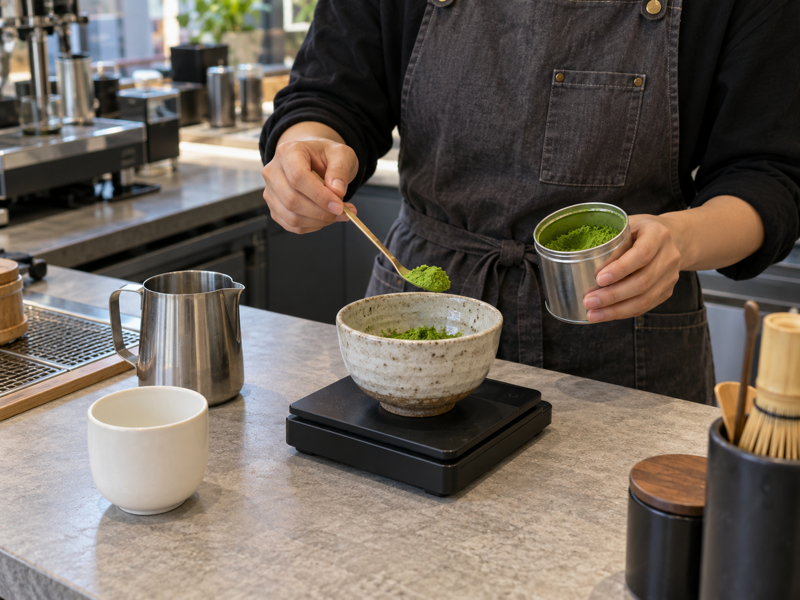
A matcha cafe sells a promise customers can test in one cup. The powder has to taste good in the chosen milk, the color has to survive normal service, and a barista must make the same drink during a rush. Attractive interiors help, but they cannot rescue a weak recipe or a slow counter. For an operator planning a dedicated shop or a coffee shop adding matcha, the useful question is how the concept performs once real orders arrive. This guide walks through product, menu, workflow, supply, and unit economics as a set of decisions you can test before signing a lease or ordering a year's worth of packaging.
Contents
- 1. What makes a matcha cafe different from a coffee shop?
- 2. Which customers should the menu serve?
- 3. How should a cafe choose its matcha?
- 4. What belongs on the opening menu?
- 5. How should the bar be laid out?
- 6. What training does a matcha program need?
- 7. How should the cafe price each drink?
- 8. What should the supplier relationship cover?
- 9. Which numbers show whether the concept works?
- 10. How should an operator test the concept before opening?
1. What makes a matcha cafe different from a coffee shop?
A matcha-led cafe gives tea the main role in its menu and service design. Customers may order a straight matcha, an iced latte, or a flavored drink; each should have a clear reason to exist. The distinction affects more than the sign. Powder needs careful storage, measured dosing, and a mixing method that does not leave clumps. A drink made mostly from sweetened premix creates a different expectation from one made with unsweetened matcha. State the difference plainly on the menu.
Do a simple observation exercise before drafting a concept. Watch ten orders at a comparable café and record what customers ask: sweetness, milk choice, serving temperature, or origin. The point is not to copy a competitor's recipe. It is to see where your staff will need a ready answer. A concept that says “premium” without specifying the cup, price, and preparation will be difficult to train.
| Decision | What the customer notices | What the operator must control |
|---|---|---|
| Tea identity | Flavor and color | Powder specification and dose |
| Sweetness | Whether the drink feels balanced | Syrup weight and premix composition |
| Milk options | Texture and dietary fit | Separate recipe cards |
| Service pace | Queue and handoff | Station layout and prep sequence |
2. Which customers should the menu serve?
A matcha cafe may attract regular tea drinkers, coffee customers seeking another option, and people who want a sweet cold beverage. These groups often use the same word, “matcha,” while expecting very different flavors. Ask a small sample of target customers to taste an unsweetened tea, a plain latte, and a flavored latte without telling them which is the house favorite. Record which drink they would buy again at the proposed price.
Keep the sampling tied to your actual location. A transit shop may need a quick handoff and portable cups. A neighborhood space may earn repeat visits through seating and a slower service style. Neither claim should be settled by a social media trend. Test what customers choose, how long they wait, and whether the price feels credible. If one audience wants a dessert drink and another wants strong tea, consider two menu lanes rather than one vague house latte that disappoints both.
3. How should a cafe choose its matcha?
Start with the finished drink. Prepare candidate powders in water, dairy milk, and the plant milk you intend to stock. Use the same dose, cup size, and mixing method for every sample. Taste blind if possible, then record aroma, bitterness, color, mouthfeel, and aftertaste. A powder that seems subtle in water may disappear under milk. A bright sample can also taste harsh once ice melts.
Request a current specification sheet and lot information for each finalist. Ask about ingredient composition, storage guidance, packaging size, lead time, and the process for handling a failed lot. Terms such as “ceremonial” do not replace a sensory test or a written spec. If you source from a manufacturer, explain your menu and service format so samples match the job. Matcha Village supplies B2B tea powder products; a buyer should still approve the actual sample against its own recipe and market requirements.
| Trial | Fixed variables | What to record |
|---|---|---|
| Straight tea | Powder dose, water, temperature | Aroma, texture, bitterness |
| Dairy latte | Powder dose, milk, sweetness | Tea visibility and balance |
| Plant latte | Powder dose, exact milk SKU | Foam, separation, aftertaste |
| Iced hold | Ice weight and wait time | Dilution and color after service |
4. What belongs on the opening menu?
A short menu is easier to buy, train, and execute. Begin with a straight tea, a hot latte, an iced latte, and one flavored drink that shares most ingredients with the core recipes. Add a seasonal item only after the base drinks pass repeatability tests. Each additional syrup, topping, or milk takes shelf space and creates another decision at the counter. It also changes allergen and nutrition communication.
Write a one-sentence description for each item that names the taste and preparation honestly. “Matcha with milk and a measured vanilla syrup” helps a customer more than a poetic name alone. Show sizes and prices clearly. If a signature drink includes coffee or a sweetened concentrate, state it. Trial the menu with staff who did not write it. Note every question they ask and every substitution that slows service. Those questions expose gaps in menu language before customers do.
5. How should the bar be laid out?
Map the route from order to finished cup. Staff should be able to reach powder, scale, water, milk, ice, and the mixing tool without crossing another worker repeatedly. Put cleaning and handwashing into the layout, not an afterthought. A photogenic whisk station can become a bottleneck if it sits far from cold storage or the pickup point. Sketch the busiest five minutes you expect, then act it out with empty cups.
Measure the space needed for two people to work safely. One person might take payments and finish drinks while another doses and mixes. Test that arrangement with a mock queue and count steps per cup. Note where wet tools are set down and how powder containers stay closed near steam. A service counter should make good habits easy. If staff have to improvise a safe place for a whisk or pitcher, revise the station before buying cabinetry.
| Zone | Required action | Common layout failure |
|---|---|---|
| Dry dosing | Weigh powder, close container | Powder beside steam or spills |
| Mixing | Add water, disperse matcha | No clear tool resting place |
| Cold assembly | Add milk and ice | Repeated trips to refrigerator |
| Handoff | Check cup and lid | Pickup blocks preparation |
| Cleaning | Rinse and sanitize tools | Sink too far from station |
6. What training does a matcha program need?
A recipe card should specify grams, milliliters, order of operations, water temperature range, milk SKU, ice weight, and the visual standard for the finished drink. Give staff a reference cup and a reason for each step. “Whisk until smooth” is too open ended unless you show what smooth looks like in your vessel. Have a new team member make three cups without coaching. Compare taste, weight, temperature, and preparation time.
Train service recovery as well as preparation. Staff should know what to do with a clumped drink, an incorrect milk, or a customer who expects a sweeter latte. They need a clear remake rule and accurate allergen information. For multi-site operations, send the same tools and reference samples to every store. Training against a single cup from the development kitchen is not enough; a busy shift exposes different errors.
7. How should the cafe price each drink?
Work from an actual recipe and invoice. Record powder grams, milk volume, syrup weight, ice, cup, lid, labor time, and normal waste. Divide a bulk powder price by usable grams, then add the dose cost. Do not compare powders only by price per kilogram. A cheaper ingredient that needs a higher dose or causes more remakes can raise the cost of a sellable cup.
Build a sensitivity table before choosing a retail price. Model a low, expected, and high sales day. Include rent, utilities, labor, card fees, and spoilage at the store level. Then ask whether the price still works if a milk supplier changes, a promotion increases large-size orders, or demand shifts toward iced drinks. These are planning scenarios, not forecasts. Update them with actual sales once the cafe opens.
| Cost item | How to measure | Why it can drift |
|---|---|---|
| Matcha | Grams per sale × price per gram | Overdosing and spills |
| Milk | Milliliters poured, including waste | Alternate SKUs and overpour |
| Flavor | Syrup grams per recipe | Freehand pumps |
| Packaging | Cup, lid, sleeve, straw | Supplier price changes |
| Labor | Minutes per order at peak | Extra customization |
8. What should the supplier relationship cover?
Treat matcha as an operating input, not a one-time sample purchase. Agree on packaging size, order frequency, minimum order quantity, lead time, storage instructions, and the documents you need for your market. Request lot identification so a later taste or color change can be traced. Keep a retained sample from an approved lot and compare new deliveries under the same recipe conditions.
Ask what happens when demand rises faster than your forecast or a shipment arrives late. A second approved ingredient may be useful, but it needs its own recipe card because color and bitterness can differ. If your café also sells packaged powder, discuss packaging and labeling separately from the foodservice ingredient. Do not assume that a bulk ingredient bag already carries the information needed for retail sale. Confirm requirements with your local regulator and packaging team.
9. Which numbers show whether the concept works?
Track a small set of measures you can act on. Drinks sold by SKU reveal whether a signature item deserves its space. Preparation time and remake rate show whether the recipe survives real service. Powder yield per bag, waste, and supplier variation explain margin changes that sales alone cannot. Record repeat customers when the point-of-sale system permits it and privacy rules allow it.
Review trends by daypart rather than only by month. A lunch rush may expose a layout problem hidden in daily averages. A weekend dessert crowd may sell flavored drinks that consume more labor and toppings. Treat a metric as a prompt to inspect the operation. If the iced latte suddenly needs more matcha per cup, watch dosing and ice weights before blaming the supplier. Written measurements make those conversations useful.
| Measure | Simple calculation | Action if it shifts |
|---|---|---|
| Powder yield | Sold cups per opened pack | Check dose and waste |
| Remake rate | Remakes ÷ drinks sold | Observe recipe execution |
| Peak prep time | Minutes from ticket to handoff | Rebalance stations |
| Item mix | SKU sales ÷ total drinks | Revise menu or stock |
| Ingredient variance | Actual use − expected use | Count, weigh, investigate |
10. How should an operator test the concept before opening?
Run a small paid pilot using the same ingredients, cups, staff plan, and service steps intended for launch. A tasting with friends can reveal flavor preferences but rarely shows whether customers will pay or wait. A pop-up or limited menu at an existing venue gives a stronger signal. Record paid orders, peak queue length, preparation time, remakes, waste, and direct comments. Set pass criteria before the pilot so a busy-looking line does not hide weak economics.
After the pilot, decide what to change first. If flavor scores are high but service is slow, alter the station or recipe sequence. If speed is good but repeat purchases are weak, revisit taste, price, and menu clarity. If ingredient costs are unstable, resolve the supplier specification before expanding. A matcha cafe earns repeat business when a good cup is available on an ordinary Tuesday, prepared by the regular team.
FAQ
Q1: Does a matcha cafe need to serve coffee?
No. It should serve the audience and location you have chosen. Coffee adds equipment, stock, training, and another promise to maintain.
Q2: How many matcha drinks should an opening menu include?
Start with a few distinct drinks that staff can execute well. Expand after sales and preparation data show a gap.
Q3: Is the most expensive matcha automatically the best for lattes?
No. Blind taste the finished drink and compare cost per usable cup, consistency, and supplier records.
Q4: Can one recipe cover dairy and plant milk?
Use one starting method, then test each milk SKU. Foam, sweetness, and separation may require separate cards.
Q5: What should a first pilot measure?
Paid demand, repeat interest, preparation time, remakes, ingredient yield, and the reasons customers give for choosing or refusing a drink.
For a separate supplier checklist, see our matcha powder for cafes guide. For a consumer view of how cafés present tea, read A Guide to New York City’s Matcha Cafes.