
An expensive whisk and good matcha cannot rescue a station where the powder lives behind the milk fridge and finished cups cross a dirty wash area. The fix begins with observing actual orders. Place ingredients and tools in the sequence staff use them, protect clean work and give every drink a clear handoff path. Matcha Program’s station design article outlines storage, preparation and service zones. This guide shows café teams how to map, test and adjust those zones during a real rush.
Contents
- 1. What work should a matcha cafe station layout support?
- 2. How can a café map its current drink path?
- 3. Where should matcha powder and dry tools sit?
- 4. How should water and mixing be arranged?
- 5. Where do milk, ice and cold ingredients belong?
- 6. How can clean and used tools stay separate?
- 7. What should happen at the drink handoff?
- 8. How can layout reduce reach and crossing?
- 9. How should the station be tested during a rush?
- 10. What belongs in a rollout and maintenance plan?
1. What work should a matcha cafe station layout support?
Start with the menu and staff count
List the drinks made at the station, their order frequency and their preparation steps. A bar selling mostly iced lattes needs a different counter from a tea room serving whisked matcha in bowls. Count the people who stand there at peak service. Two baristas can share a scale if their work is staggered; they may block each other if both need it at the same moment. Include cup storage, labels, toppings, cleaning and waste in the map. Those “small” actions often create the longest reaches.
Draw one ordinary order. Follow powder from its sealed container to a measured dose, water, mixing vessel, milk or ice, lid and handoff. Mark each step on a floor plan. If the barista turns back across the aisle three times, the sequence needs attention. Record current preparation time and mistakes before changing furniture. A clear baseline tells the team whether a new layout helps rather than only looking neater.
| Station job | Required item | Peak-use question |
|---|---|---|
| Dose | Powder and scale | Can two staff access it? |
| Mix | Water and whisking tool | Is the path clean and short? |
| Finish | Milk, ice, cup and lid | Are cold items close enough? |
| Handoff | Label and pickup space | Do completed cups block work? |
2. How can a café map its current drink path?
Observe without coaching staff
Watch a short period of ordinary service and a busy period. Count steps, turns, waits for shared equipment, remakes and times a barista crosses another worker’s path. Draw a simple line for each drink type. A spaghetti-like drawing is useful evidence, but the issue may be a missing scoop or an awkward order screen rather than counter length. Note which items are handled most often and whether they are within comfortable reach. Ask baristas where they place tools when the station is crowded; unofficial tool parking often reveals a layout gap.
Use small changes first. Move cups, scoops and labels before moving plumbing. Test a temporary layout with tape and portable bins, then measure it with the same order mix as the baseline. Photograph the station at opening and after the rush. If cups migrate into the wash zone by midday, the planned space is too small. Keep staff comments alongside the timings because a few seconds gained on one drink may create strain or confusion over a full shift.
| Map observation | Count or measure | Possible response |
|---|---|---|
| Repeated reach | Reaches per order | Move frequent item closer |
| Crossing | Staff path conflicts | Separate or stagger zones |
| Wait | Seconds for shared tool | Duplicate or reschedule use |
| Temporary clutter | Surface area blocked | Add storage or reduce menu load |
3. Where should matcha powder and dry tools sit?
Keep dosing dry and accessible
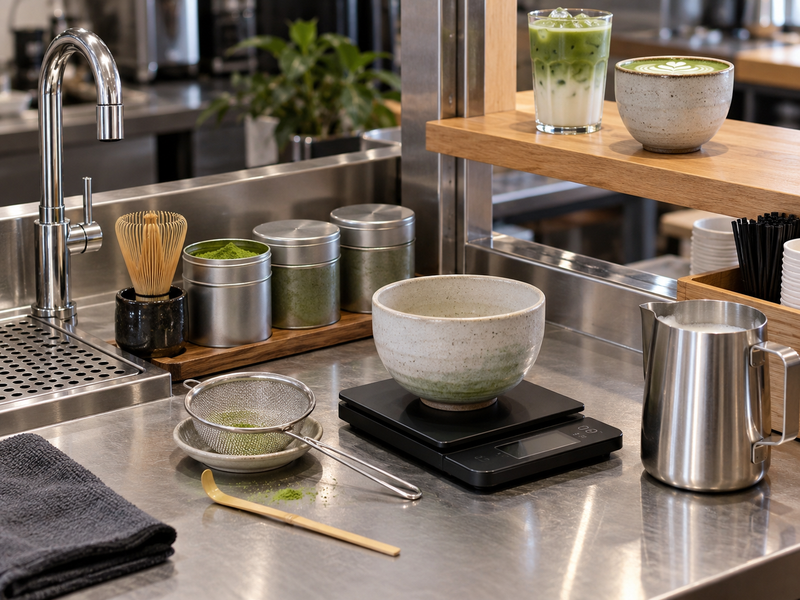
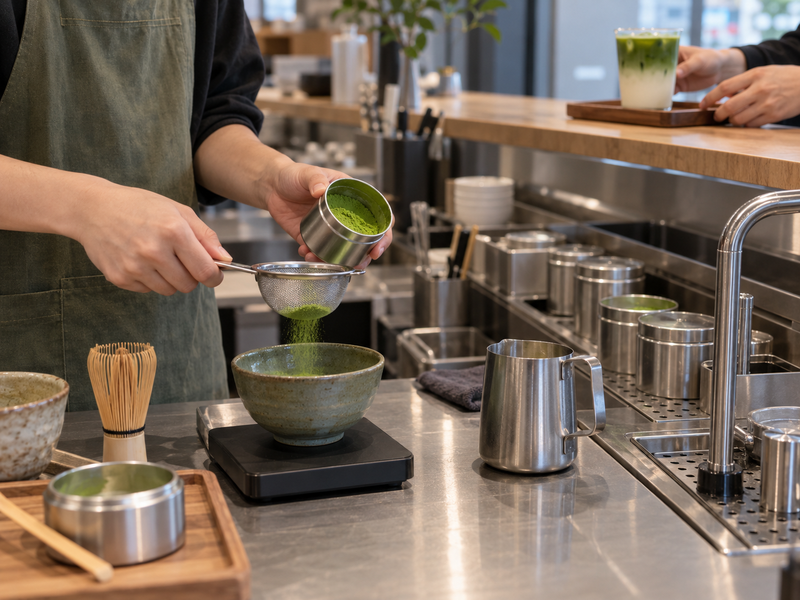
Store the working matcha container away from splashes, steam and direct light under the product’s storage instructions. Put the scale, clean scoop and sieve near the dosing point, with enough surface for a cup or bowl. Label working containers by product and lot so a latte powder cannot be mistaken for a straight-matcha powder. Refill from a controlled stock location rather than keeping several open bags on the bar. Matcha Program also emphasizes tidy storage and defined zones.
Check what happens mid-rush. Watch whether staff leave lids off, tap powder over the milk area or lose the scoop in a wet sink. A dry tray under the dosing point catches spills and makes cleanup visible. If a second barista needs the same powder, decide whether one shared point or two measured stations produce fewer mistakes. Test that choice with actual drink volume. The café equipment guide can help list tools, but placement should follow work observed at this store.
4. How should water and mixing be arranged?
Keep the preparation path direct
Place the water source and mixing vessel close enough that staff can fill, whisk and move to a cup without crossing a dirty-tool path. Check safe access to hot water and the space needed for a whisk, electric mixer or shaker. A narrow corner may fit the equipment on a drawing but leave no elbow room when used. Measure the actual working footprint with a barista at full speed. Put a heat-safe landing surface where hot vessels are set down.
Design for the drink that sells. If most orders are iced, the mixing point should feed the cold assembly path. If straight matcha is a signature, give it room for precise dosing and presentation. Do not let a display ritual obstruct the main queue. Trial one order at a time and a mixed queue of three types. Water temperature belongs in the recipe card; layout should make that water easy to obtain consistently. Record where staff discard rinse water and how they return clean tools.
| Mixing requirement | Layout check | Failure signal |
|---|---|---|
| Water access | Tap or dispenser within work path | Long cross-counter reach |
| Hot vessel | Stable landing area | Unplanned placement near customer |
| Whisking room | Clear hand and elbow space | Spills or cramped motion |
| Used tools | Defined return point | Dirty items in dosing zone |
5. Where do milk, ice and cold ingredients belong?
Place cold work after mixing
Milk and ice usually enter after matcha has been measured and dispersed. Put them on the finish side of the station so staff do not carry open powder over cold wells. Check the route from refrigerator to cup and back. A fridge door that opens into the barista’s movement path can cause repeated pauses even if it is only a step away. Seasonal syrups and fruit bases need a deliberate position, not a row of bottles that narrows the counter.
Review cold holding with operations. The FDA Food Code is a US retail model for handling foods that require temperature control; local rules and the exact ingredients govern the café. Keep perishable ingredients in approved conditions and minimize time on the worktop. Test the station after stocking it for a full rush, when bins and backups occupy space. A layout that works only with nearly empty containers will not work during service.

6. How can clean and used tools stay separate?
Draw the return path
Every whisk, bowl, sieve and pitcher eventually needs a rinse or wash. Give used tools a return route that does not pass over open matcha or finished cups. Define where a tool waits for cleaning and where a cleaned tool dries. If one sink serves several beverage programs, mark the handoff and cleaning responsibilities. Color coding or labeled trays can help, but staff still need a clear cleaning method and a place to put equipment while the sink is occupied.
Check the rush photograph. Look for damp cloths beside powder, dirty bowls beside fresh cups and spills hidden behind a machine. Those are layout failures as much as training failures. The clean-up routine should fit the available work surface and staff count. Watch a barista finish one drink, reset the station and start another. If reset requires a long walk, tools will accumulate. Keep the food safety plan and local sanitation requirements attached to the station design review.
| Tool state | Assigned place | Check |
|---|---|---|
| Clean dry | Covered or protected storage | Ready at open |
| In use | Mixing area | Does not cross handoff |
| Used | Return tray or wash point | Away from ingredients |
| Drying | Approved clean area | No stack of wet tools |
7. What should happen at the drink handoff?
Make the last step obvious
The handoff point needs space for labeling, lids, final visual check and pickup. If it sits inside the mixing zone, completed cups compete with tools and powder. Mark where a barista places a drink while finishing another. For a busy café, separate customer reach from the area containing hot water and open ingredients. The order screen or ticket must be visible without staff leaning across a steaming vessel.
Test clarity with another employee. Ask someone unfamiliar with the new layout to make and hand off a drink using the posted recipe. Watch whether they hesitate at labeling, lids or pickup. Count wrong-cup remakes during a mock queue. A clear handoff can save mistakes even when it does not shorten the measured preparation seconds. Photograph the finished cup at the intended pickup lighting; that is where guests judge the product, not under a bright test-kitchen lamp.
8. How can layout reduce reach and crossing?
Put frequent moves in a comfortable range
Arrange high-frequency items near the barista’s working position and place backups farther away. The OSHA food-service ergonomics resource notes that food-service jobs involve repetitive reaches and tool use. The café should observe its own workers rather than applying a fixed distance from a drawing. Counter height, worker stature and the weight of containers all affect comfort. Ask shorter and taller staff to trial the layout.
Count movement before buying furniture. A new shelf may help only if it removes a repeated reach without obstructing cleaning or sight lines. Move a frequently used cup stack, test ten orders and count turns again. If two workers collide at the refrigerator, change their sequence or access side. Keep heavy containers low enough for safe handling under the site’s procedure. A small shift in where powder, water and cups sit can produce a cleaner path than a costly counter replacement.
| Movement problem | Trial change | What to compare |
|---|---|---|
| Long powder reach | Move working tin near scale | Reach count |
| Shared-fridge collision | Split access sides | Waits and crossings |
| Heavy refill | Store at usable height | Handling ease |
| Handoff overlap | Move pickup shelf | Wrong-cup count |
9. How should the station be tested during a rush?
Simulate the actual order mix
Use recent order data to make a short queue of straight matcha, hot and iced lattes, milk swaps and seasonal drinks. Give the work to ordinary staff after a brief orientation. Time each drink, mark waits and note rework. A station designed around one perfect iced latte may fail as soon as a hot order uses the same mixing area. Run the test with full stock bins, normal cup sizes and real lids. Include one deliberate spill to see whether cleanup blocks every other drink.
Review the whole shift. Compare the first fifteen minutes with a later busy period. Powder containers empty, wet tools accumulate and staff adapt their motions. Ask them which steps feel awkward and which tools they move themselves. Photograph unplanned changes. Keep a baseline and a revised test on the same scorecard; do not claim a speed improvement from one unusually fast worker. Approve the layout when it reduces conflicts and errors without sacrificing cleaning or drink quality.
10. What belongs in a rollout and maintenance plan?
Make the layout reproducible
Keep a measured counter plan, outlet and equipment locations, approved stock quantities, photographs, recipe-card positions and cleaning route. Mark which items can move and which must stay put. For multi-store operations, give the station a common sequence but allow measured changes where plumbing or counter shape differs. Train a new employee on the order path, then check the station after a normal shift to see whether supplies have migrated.
Revisit it when the menu changes. A new fruit latte can add purée, rinse work and a second cup size. Test those steps before putting it on the board. Track remakes, service time and staff comments for a few weeks after rollout. If the station repeatedly needs an unofficial extra shelf or a second pitcher, update the plan. The useful design is the one that survives stock delivery, a rush and close-down with the same clear workflow.
FAQ
Q1: What is a matcha cafe station layout?
It is the placement of ingredients, tools, water, cold items, cleaning and pickup around the sequence staff use to prepare drinks.
Q2: Where should matcha powder be kept?
Keep the working container protected from splash and heat near a clean dosing surface, following product storage instructions.
Q3: Should iced and hot drinks share a station?
They can, but test mixed queues to see whether water, mixing and cold finishing steps conflict.
Q4: What is the quickest layout test?
Map ten real orders, count reaches and waits, move portable items, then repeat with the same order mix.
Q5: When should a café revise the station?
Revise after a menu, equipment or staffing change causes repeated crossing, errors or blocked cleaning.