
Adding more matcha items can make a café slower without giving customers a clearer choice. A menu with three nearly identical sweet lattes ties up syrup stock, confuses ordering and hides which drink earns its place. Matcha cafe menu engineering begins with a job for each item, followed by sales, contribution and preparation checks. Wakokoro Tea’s café menu guide offers a broad lineup of straight, latte and seasonal drinks. This article gives operators a way to decide which ones belong on their own board.
Contents
- 1. What is matcha cafe menu engineering meant to decide?
- 2. Which customer occasions should the menu cover?
- 3. How many core matcha drinks should a café start with?
- 4. How should each item earn its place?
- 5. What product-cost information is needed?
- 6. How should preparation load affect the choice?
- 7. How can ingredient overlap reduce waste?
- 8. When does a seasonal special deserve a slot?
- 9. How should the menu be tested and revised?
- 10. What belongs in the final menu brief?
1. What is matcha cafe menu engineering meant to decide?
Measure more than recipe appeal
Menu engineering is the process of choosing, pricing and placing items using sales behavior and operating constraints. For matcha, it should answer whether a product reaches a distinct customer, contributes enough after its actual costs and fits the bar during a rush. A dramatic seasonal drink may be worth keeping for discovery even if it sells fewer cups than an iced latte; its role must be stated. A second sweet latte with the same buyer and ingredients needs a stronger case.
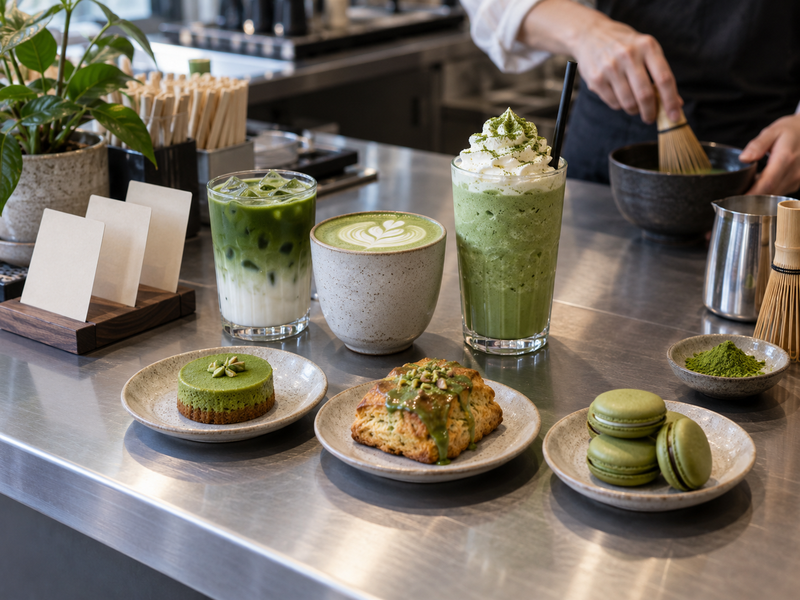
Start with a small inventory. List every current matcha item, its price, weekly units, ingredient cost, packaging cost, preparation steps and customer occasion. Add remake and waste notes. If staff cannot distinguish two items without reading a long flavor description, customers may struggle too. The exercise should end in a decision: retain, revise, test or remove. It is not a contest to make every item look popular on a menu photograph.
| Item role | Customer need | Evidence to watch |
|---|---|---|
| Straight matcha | Tea-led choice | Repeat orders and feedback |
| Core latte | Familiar entry point | Sales and preparation speed |
| Iced refresher | Lighter cold option | Seasonal mix |
| Signature | Brand distinction | Trial and return orders |
2. Which customer occasions should the menu cover?
Map choices to a visit
A morning commuter may want a quick iced latte, while a tea enthusiast wants a plain preparation that shows powder quality. A group ordering dessert may choose a sweet matcha item. These are hypotheses until a café looks at its own orders. Review sales by time of day, weather where relevant and dine-in versus take-away. Ask staff what customers request when the current board does not quite fit. Keep the occasion categories broad enough to guide choice, not so detailed that every drink seems to need a separate slot.
Watch substitutions. If many customers request less syrup in one signature drink, the menu may need a clearer low-sweetness option or a better default recipe. If a dessert item sells only when displayed beside the till, its placement matters. A menu can use one core matcha powder across several occasions, but the prepared drink must still taste right in each format. Test plain tea, milk and sweet combinations separately before assuming one grade handles all of them.
| Occasion | Candidate item | Question for data |
|---|---|---|
| Fast morning | Iced latte | Does it move quickly at peak? |
| Tea-focused visit | Whisked matcha | Are guests satisfied without syrup? |
| Afternoon treat | Seasonal sweet drink | Does it add sales or replace a core item? |
| Food pairing | Matcha pastry | Is food attachment measurable? |
3. How many core matcha drinks should a café start with?
Build a short, distinct base
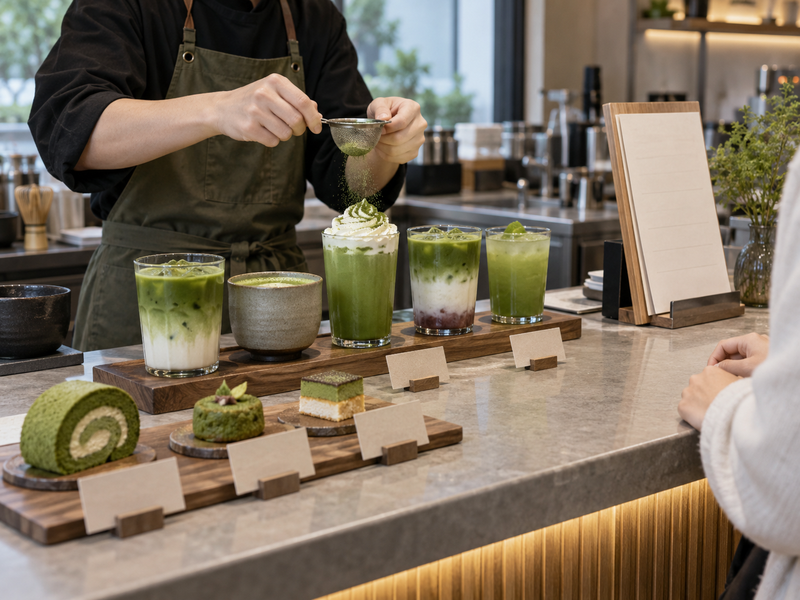
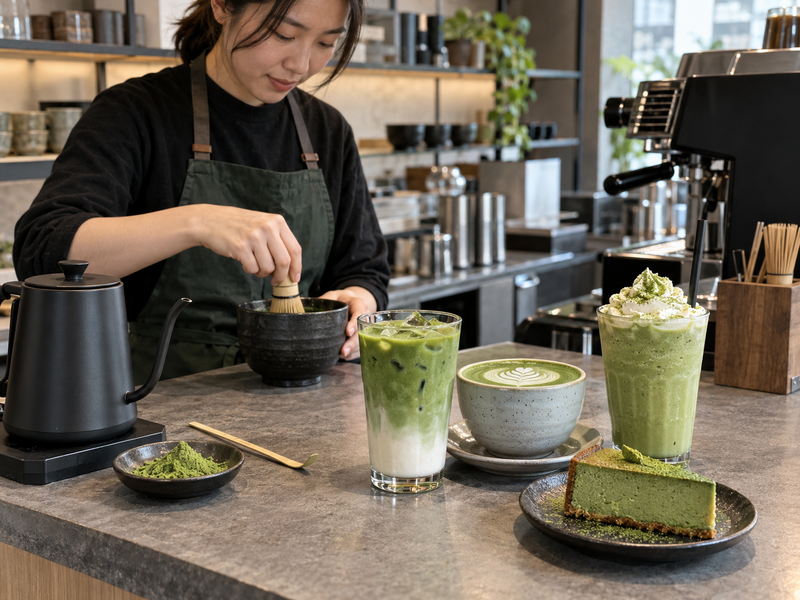
There is no universal ideal count. A small café can start with a straight preparation, a hot latte and an iced latte, then add one seasonal test. Wakokoro’s reference menu guide uses a similar foundation and includes a lighter sparkling option. A larger chain may need more choices, but each added item should offer a new occasion or flavor position. Count the number of ingredient SKUs and bar steps created by every addition.
Make the base excellent. Use measured matcha doses and a consistent preparation method for each core drink. Train staff to describe the difference between straight tea and a milk drink in plain language. If the iced latte sells poorly because it is clumpy, a fourth flavor will not solve the service fault. Keep an approved reference cup and a price/cost sheet for each item. Only widen the lineup after the core products survive a normal rush and draw meaningful orders.
4. How should each item earn its place?
Give products explicit jobs
Write a one-line purpose for every menu item: entry drink, tea showcase, high-volume refresher, seasonal discovery or food pairing. Then set an observable success measure. For a core latte, that might be steady orders with few remakes. For a seasonal drink, it might be incremental sales and acceptable fruit waste during a short pilot. A high-price drink is not automatically a strong contributor if it consumes more ingredients and bar time.
Compare neighbors on the board. If two drinks share a price, customer occasion and flavor, test which one guests choose when both are visible. A menu can simplify by removing the weaker option and letting the stronger one own that choice. Record whether an item brings new sales or moves customers away from another matcha drink. That distinction matters when a new special appears to “sell well” but the category total barely changes. Use actual order data before deciding that a photogenic item deserves permanent space.
| Role | Example measure | Possible decision |
|---|---|---|
| Entry drink | Orders and repeat purchases | Keep if dependable |
| Tea showcase | Satisfaction and staff execution | Refine preparation |
| Seasonal discovery | Incremental category sales | Extend or retire |
| Food companion | Attachment to pastry | Adjust placement |
5. What product-cost information is needed?
Cost the sold cup, not the test-kitchen cup
For each item, weigh matcha, milk, syrup, fruit, topping and ice where relevant. Add cup, lid, straw and a reasonable waste allowance based on observation. Use supplier prices for the pack sizes the café will really buy. A simple contribution calculation subtracts direct item costs from selling price; it does not claim to represent every fixed business expense. Matcha Village’s café wholesale guide helps frame powder procurement, while the operator must use its own invoice and portion data.
Recheck changing inputs. Seasonal fruit can vary in edible yield and price. A syrup that seems cheap per bottle can be costly if staff overpour. Use a scale in a short observation to compare actual portions with the recipe card. Count remakes, discounting and unsold prepared bases separately. If a menu item falls below its intended contribution, identify whether the issue is ingredient price, portion drift or selling price before removing a drink customers want.
6. How should preparation load affect the choice?
Measure work at peak service
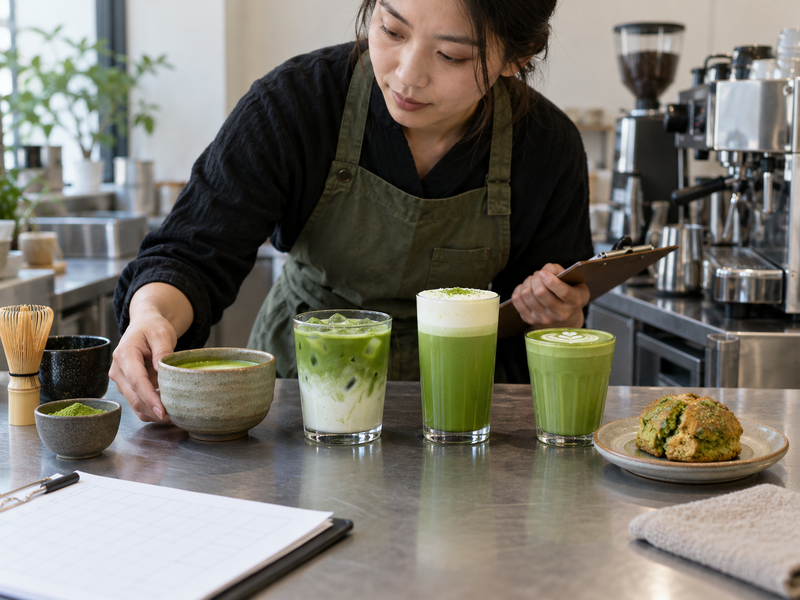
Time a drink from order acceptance to handoff with ordinary staff. Note steps requiring exclusive access to a whisk, blender, steam wand or cold well. A premium item can be profitable per cup and still delay several core drinks if it monopolizes equipment. Run a mixed queue rather than timing each recipe alone. Record queue length, mistakes and how many drinks one barista can prepare simultaneously without quality loss.
Price the friction. A five-step garnish may add little perceived value if it causes rework and spills. Test a simpler version against the full build in a blind customer tasting and a service simulation. If guests prefer the simpler drink or cannot tell the difference, the extra step has no strong case. If the garnish is central to the item, schedule the drink as a slower specialty and make that expectation clear. Preparation load should shape the lineup as much as ingredient cost.
| Operation measure | Where to observe | Decision use |
|---|---|---|
| Handoff time | Mixed peak queue | Capacity effect |
| Exclusive equipment | Whisk, blender, steam | Bottleneck risk |
| Remake count | Normal shift | Execution quality |
| Cleaning time | Between flavors | Hidden labor |
7. How can ingredient overlap reduce waste?
Reuse ingredients with a reason
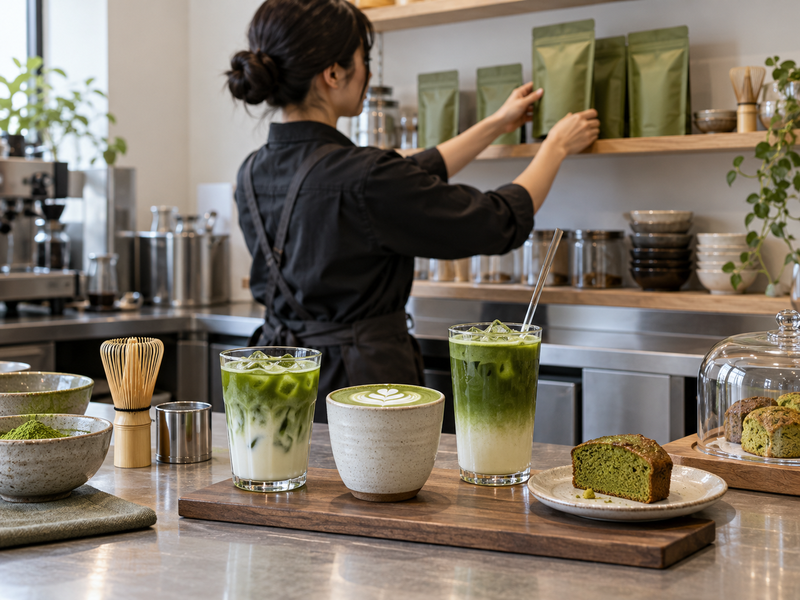
An ingredient used in several products can turn faster and be easier to forecast. One approved matcha powder might serve an iced latte and a bakery filling if it performs in both trials. A seasonal fruit base might work in a drink and a dessert, but only if its handling and flavor fit each use. Overlap is useful when it reduces dead stock without making the menu repetitive. Keep a matrix of ingredients against items and mark those with one slow-selling use.
Do not force a bad fit. A subtle powder that tastes good in water may fade in milk; a bold powder that holds in a latte may be too harsh in a plain cup. Run application tests before consolidating supply. Calculate the waste avoided by shared ingredients against any loss in drink quality. Review open-pack handling and stock rotation under the site’s food safety plan. A smaller ingredient list should make ordering easier while preserving clear differences among drinks.
8. When does a seasonal special deserve a slot?
Give the trial an end date
A seasonal special can test a new audience or use a fruit at its best. Set a start date, end date, forecast and acceptance measure before printing signs. Record the extra ingredient, training and preparation time it requires. If the special needs a new syrup and topping used nowhere else, order a modest quantity for the pilot. Avoid a menu slot that lingers after supply quality or customer interest changes.
Ask what sales it adds. Compare total matcha-category sales before and during the trial, adjusting judgment for obvious changes in traffic or weather. A special that mostly replaces the core iced latte may still have brand value, but it should not be credited with every unit it sells as incremental. Collect short customer comments on taste and repeat interest. At the scheduled review, keep, revise or retire the product, and record why. That decision frees space for a better idea next season.
| Seasonal test | Record before launch | Review after pilot |
|---|---|---|
| Product role | Target customer and occasion | Did it reach them? |
| Stock | Expected units and waste | Actual yield and leftovers |
| Service | Extra steps and tools | Queue and remake effect |
| Sales | Category baseline | Incremental pattern |
9. How should the menu be tested and revised?
Pilot with a stable recipe card
For each candidate, set the exact recipe, approved ingredient lots, sale price, photograph and staff description. Run a short pilot in representative shifts. Log units, contribution, preparation time, remakes, waste and customer feedback. Compare items by their stated roles rather than applying one sales threshold to every product. A plain tea may have low volume but anchor the program’s identity; a high-volume latte must hold up operationally.
Change one issue at a time. If a drink is slow, simplify a step before reformulating flavor. If it tastes weak, inspect matcha dose and ingredient balance before moving its board position. Record the revision date so sales before and after remain comparable. Watch whether a promotion changes the mix temporarily. Build a regular review cadence, perhaps weekly during a seasonal test and less often for stable core drinks. Retire items that repeatedly miss their defined job after a fair trial.
10. What belongs in the final menu brief?
Make decisions executable across stores
The brief should list each retained item’s role, recipe, portion, price, expected contribution, ingredients, allergen information, equipment needs and service photograph. Include the order phrase staff should use and how variants are handled. Purchasing needs forecast volumes and acceptable substitutes; training needs a clear preparation card. For a chain, allow local sales review but keep product names and core specifications controlled so a “matcha latte” means the same thing across stores.
Keep a removal rule. State when an item will be reviewed and what evidence would cause revision or retirement. A menu is a working system, not a collection of recipes. If a new matcha drink earns space, check what it displaces on the board, in the refrigerator and in the barista’s time. Close the next review with an actual decision and update the cards before staff improvise around an outdated lineup.
FAQ
Q1: What is matcha cafe menu engineering?
It is choosing and revising matcha items using customer occasions, sales, direct costs and preparation load.
Q2: How many matcha items should a café launch?
Start with a short lineup whose items have distinct jobs, then expand using local order and service data.
Q3: Is the highest-priced drink always the best item?
No. Compare direct contribution, remakes and bar time as well as selling price.
Q4: Should one matcha powder serve every recipe?
Only if application tests show it works in straight tea, milk and food uses intended for that powder.
Q5: When should a seasonal drink be removed?
Set a review date before launch and retire it when sales, quality, waste or service results miss its agreed role.