
A bag labeled “pure matcha” does not tell a bakery whether the mill also handles milk powder, soy or sesame. Nor does a supplier statement describe what happens when staff use the same scoop for plain tea and a flavored blend. A matcha allergen cross contact plan follows the powder through purchasing, receiving, storage, processing and service. Buyers need evidence for each handoff, plus a clear decision about what to do when that evidence is missing. The Matcha Times discussion of allergen control raises the same supply-chain issue; the workflow below turns it into checks a team can assign and record.
Contents
- 1. Where can matcha allergen cross contact occur?
- 2. What should a buyer ask the powder supplier?
- 3. How should flavored blends be assessed?
- 4. How can receiving and storage reduce transfer?
- 5. Which shared tools need the closest attention?
- 6. How should a changeover be designed and verified?
- 7. What evidence belongs in a batch record?
- 8. How should cafés control service-level handling?
- 9. What should happen after a control fails?
- 10. How should buyers review the plan over time?
1. Where can matcha allergen cross contact occur?
Draw the route before writing a statement
Start with the physical route of the product. A plain tea powder may pass through a sifter, mill, hopper and packer before it reaches a distributor. At the customer’s site it may enter a blend, be scooped into a pastry filling, or be whisked beside a milk-based drink. Each transfer introduces equipment, people and adjacent ingredients. Mark where an allergen-containing material could touch the powder or its contact surface, whether intentionally or by residue. Include rework, dust, temporary holding bins and sampling tools; these are easily omitted from a neat process diagram.
The FDA defines allergen cross-contact as unintentional incorporation of an allergen into food. Ask operations staff to walk the actual line while the diagram is open. A gasket that traps powder matters more than a box on an organizational chart. Record the allergen, route, existing control and person responsible for each point. That record gives the buyer a basis for supplier questions and later audits.
| Process point | Possible transfer route | Evidence to request or observe |
|---|---|---|
| Raw material supply | Shared harvesting or processing containers | Supplier process description |
| Milling and sifting | Residue in contact parts | Line schedule and cleaning record |
| Blending | Allergen-containing additions | Formula and changeover record |
| Packing | Hopper, dust or film contact | Packing-line map and release check |
| Café service | Scoops, whisks and counters | Station method and staff observation |
2. What should a buyer ask the powder supplier?
Request process evidence, not a one-line promise
Ask for an ingredient statement, allergen declaration and a description of products made on the same equipment. Then ask how the supplier separates raw materials, schedules allergen-containing runs, cleans contact surfaces and decides that a line may restart. A statement about the matcha ingredient is useful, but it cannot replace evidence about the facility. The site’s matcha allergen statement guide covers document questions; use that document as the start of a conversation about actual controls.
Specify the market and finished use in the inquiry. A plain powder sold to a beverage brand, a sweetened latte blend and a café topping do not share the same ingredient list or handling route. Ask whether any processing aids, carriers or rework enter the product, and whether the declaration applies to the exact item and production site being quoted. Collect a dated version with a product identifier. If a supplier cannot explain shared-equipment exposure, mark the issue open and arrange a review before approving a claim such as “free from.” Do not turn an absence of listed allergens into a guarantee of absence. The FDA’s draft food-allergen-program guidance discusses raw-material identification, cleaning procedures and verification as connected parts of a control program.
3. How should flavored blends be assessed?
Read every subingredient
A vanilla latte powder may contain milk; a nut-flavored blend may use nut ingredients; a sesame topping can reach the same packaging line as a plain tea powder. The front of a bag rarely tells the whole story. Obtain the complete formulation from the brand or manufacturer, including carriers in flavors and premixes. Match each material to its supplier declaration and the market where it will be sold. A change in flavor house, creamer or garnish can change the allergen review even if the finished product name stays the same.
Build a matrix at SKU level. Separate allergens intentionally present in the recipe from possible transfer during manufacture. In the United States, FDA allergen-labeling guidance addresses major food allergens; other markets have their own rules. Regulatory staff should review declarations and precautionary wording for the destination market. Production staff need a different view: which blend runs after plain matcha and which contact parts require disassembly. Keep both views tied to one controlled formula version.
| SKU type | Ingredient check | Line check | Label review |
|---|---|---|---|
| Plain matcha | Tea identity and aids | Shared-contact history | Market-specific declaration |
| Matcha latte mix | Creamer and flavor subingredients | Blend and fill changeover | Milk or other declared ingredients |
| Bakery premix | Flour, nuts and emulsifiers | Rework and mixer routing | Finished formula, not tea alone |
| Topping blend | Sesame, nuts or dairy additions | Scoops and dusting station | Menu and pack communication |
4. How can receiving and storage reduce transfer?
Keep identity visible at the door
At receiving, compare the delivered lot, product code, seal condition and paperwork with the purchase order. Hold mismatched or damaged packs for review instead of pouring them into a common bin. The warehouse should show which stock is plain tea and which is a blend with declared allergens, even after the outer shipping carton is removed. A useful shelf label has the exact SKU, lot and status; color alone is a weak identifier for staff who rotate shifts.
Separate opened powders from loose allergen ingredients and protect them from dust, torn packaging and shared scoops. The appropriate physical separation depends on the facility, airflow and storage method. For a small café, sealed containers and dedicated utensils may be the practical control. For a manufacturer, zoning, controlled movement and documented handling may be needed. Walk a receiving sample through the site: where is it put before quality release, who opens it, and what happens to the empty liner? If workers cannot answer consistently, rewrite the method at the point of use. Any claimed shelf life or storage condition should come from the supplier’s validated specification and the buyer’s own conditions, not a generic matcha rule.
5. Which shared tools need the closest attention?
Inspect places powder can hide
Powder clings to sieve mesh, filler screws, gasket seams, conveyor guards and the underside of lids. A quick look at the visible bowl can miss residue in a chute that feeds it. Create a contact-parts inventory for each line used by both plain matcha and allergen-containing blends. Mark which parts can be dismantled, which are difficult to inspect and which have a dedicated spare. Do the same at the café counter for scoops, pitchers, whisks, blenders and cloths. A clean-looking tool is an observation, not proof that a relevant allergen has been removed.
The FDA’s retail cleaning study found that surface material and wiping method affected allergen removal and transfer. Question a blanket “wipe between orders” instruction and define a method for the actual equipment. Where dedicated equipment is feasible, compare its cost with the changeover burden. Otherwise, photograph hard-to-clean points and make them inspection locations.
| Tool | Hidden-residue point | Possible control | Verification question |
|---|---|---|---|
| Sifter | Mesh frame and clamp | Disassemble and clean | Can both sides be inspected? |
| Auger filler | Flights and outlet | Defined strip-down | Is powder left behind the guard? |
| Scoop | Handle joint and storage | Dedicated, labeled scoop | Where does it rest between uses? |
| Blender | Seal and blade base | Validated wash method | Was the gasket checked? |
6. How should a changeover be designed and verified?
Start with the previous product
A changeover begins before cleaning. Confirm the previous SKU, its allergen profile, the next SKU and the parts they share. Remove remaining product and rework; account for open packs and labels. Then follow a written cleaning sequence that names the equipment parts, method, tools, responsible operator and acceptance check. The sequence may include dry removal, disassembly, washing and drying as appropriate to the equipment. Do not improvise a wet wash on a powder line without considering moisture control and equipment design.
Choose verification based on a facility-specific assessment. Visual inspection is necessary but may be insufficient for hidden residue. Allergen-specific swabs or finished-product tests may support a validation or verification program when the method fits the allergen, surface and product. The FDA draft guidance on allergen controls distinguishes written cleaning procedures, monitoring and verification. A team should establish its own acceptance criteria with a qualified food-safety professional; a universal swab number copied from another plant is not defensible. In a bench exercise, record the time needed to dismantle, clean, reassemble and release the line. If the task routinely exceeds the planned changeover window, change the schedule or equipment rather than asking staff to skip steps.
7. What evidence belongs in a batch record?
Make the record reconstruct the run
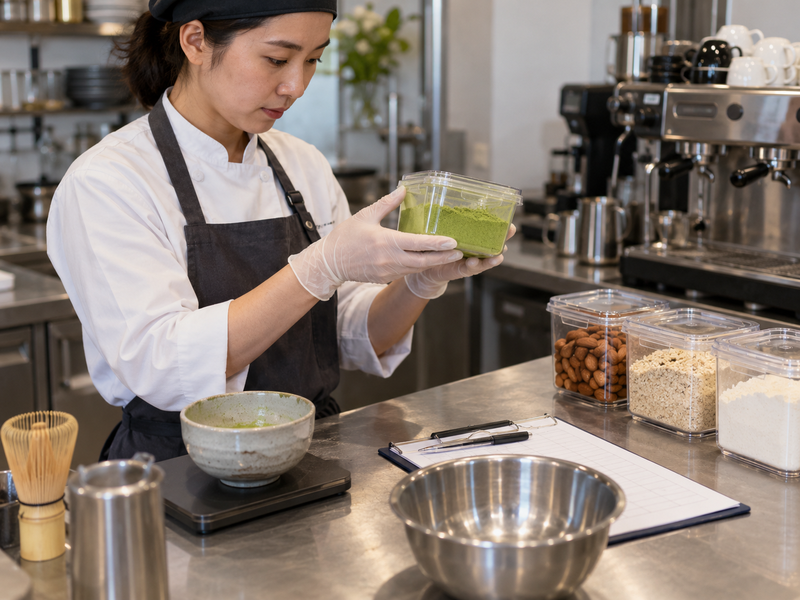
The record should let a reviewer answer four questions without relying on memory: what was made, from which ingredients, on which equipment, and after which cleaning or prior product. Include incoming lot identifiers, approved formula version, equipment ID, line-clearance result, operator, time and any hold or deviation. Link the relevant supplier declaration and finished label version. A record that says “allergen check passed” without identifying the check gives little help during a complaint investigation.
For a production trial, design one page that staff can complete while the work happens. Prepopulate equipment ID and approved cleaning method; leave spaces for actual lot numbers and observations. Use a review signature after those fields are checked. Keep electronic records under access and revision control. Specify who can release held product and how that decision is documented. This is a production-control design, not a prescribed form for every jurisdiction.
| Record field | Why it is needed | Common gap |
|---|---|---|
| Incoming lots | Trace ingredients into the run | Outer cartons discarded too early |
| Prior SKU | Identifies changeover exposure | Only current SKU recorded |
| Equipment and method | Connects cleaning to the actual line | Generic “cleaned” tick box |
| Label version | Checks pack against formula | Old artwork remains at station |
| Deviation and release | Shows who decided the outcome | Verbal approval only |
8. How should cafés control service-level handling?
Design the station for busy periods
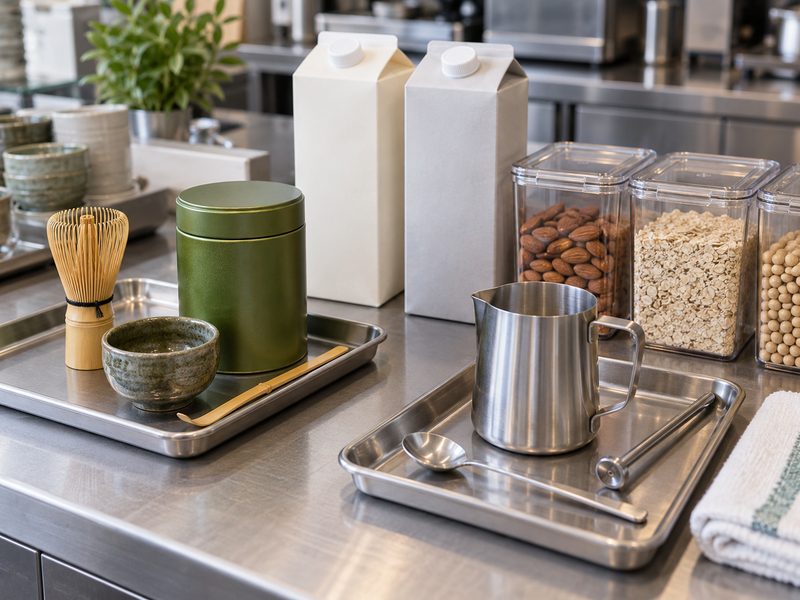
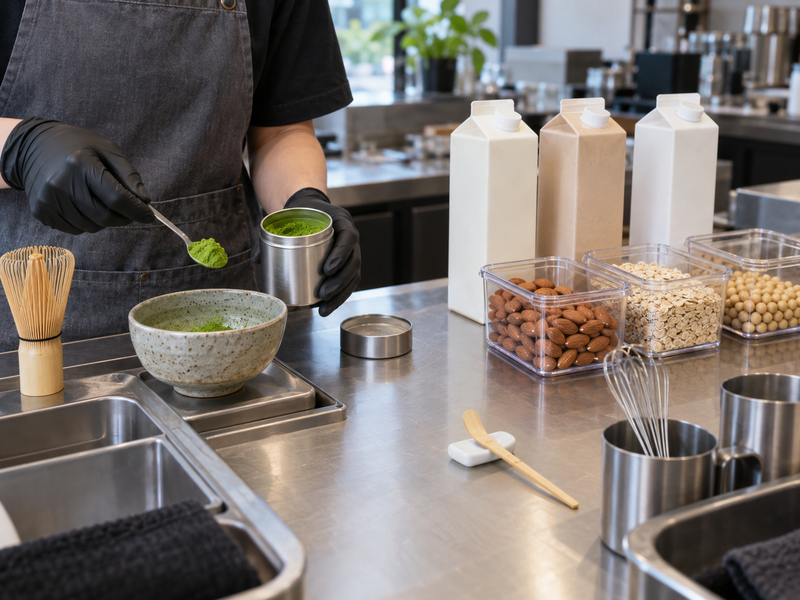
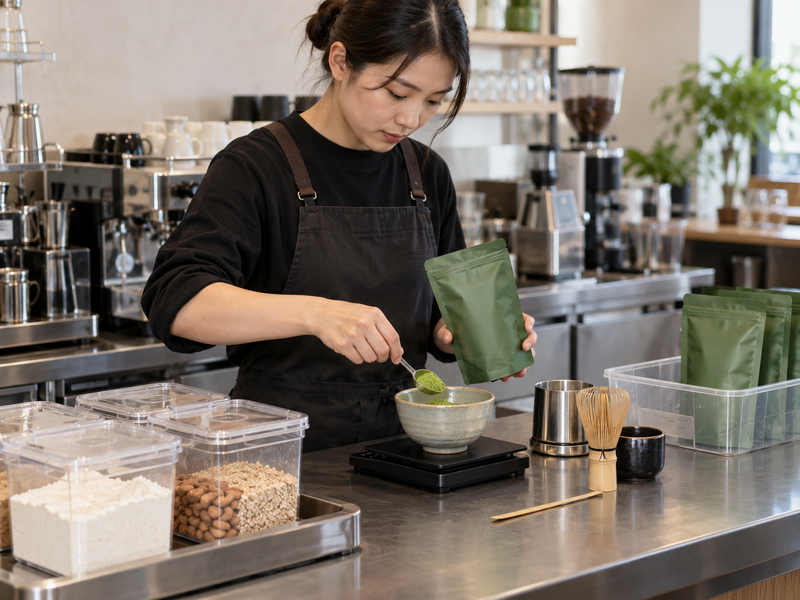
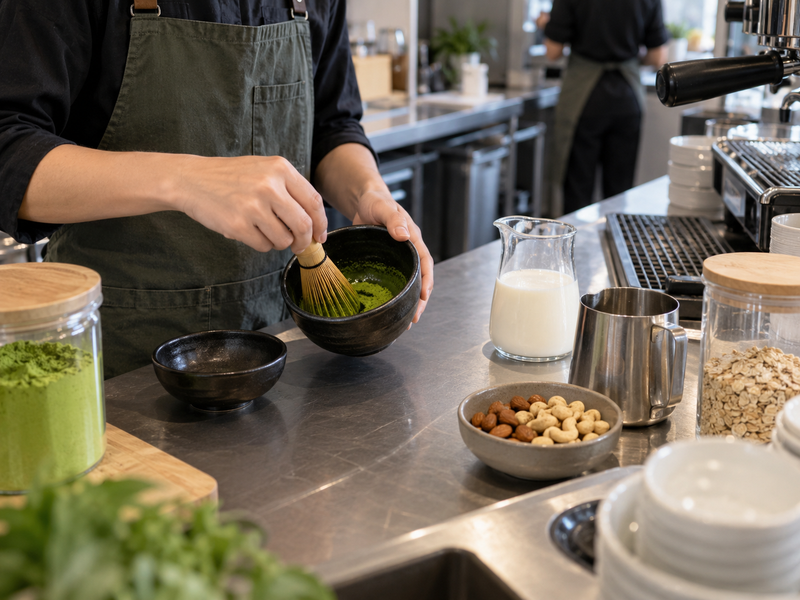
A café may buy well-controlled plain matcha and still expose it to milk, nut or sesame residues during service. Map the drink station during its busiest hour. Observe where pitchers, whisks, blender jugs and garnishes move. Place dedicated tools in a location that staff can reach without crossing the allergen-heavy part of the station. Label ingredient containers clearly and provide a clean work surface for special orders. A separate recipe card should show the exact ingredients of each drink, including powders and toppings supplied by another company.
Training needs a live exercise, not only a sign-off sheet. Ask a barista to make a plain matcha order after an oat latte, a dairy latte and a sesame-topped drink, then explain which tools and surfaces must change. Check the actual rinse and washing facilities available on that shift. If the site cannot reliably meet a customer request for allergen avoidance, staff should communicate that limitation clearly rather than promise a safe drink. Retail rules and consumer communication differ by market; consult the local authority and the café’s food-safety plan. The FDA Food Code provides a model reference for U.S. retail operations.
9. What should happen after a control fails?
Stop the affected flow and establish its boundary
Suppose a plain-matcha hopper is found with residue from a milk-containing blend after a documented clean. Stop using the hopper and hold product made since the last acceptable check. Identify the time window, lots, packs and destinations before deciding what can be released. The food-safety lead should assess the hazard and choose corrective action under the site’s plan. A second visual wipe and immediate restart would leave the cause unresolved.
Record what failed: incomplete disassembly, damaged seal, wrong tool, skipped inspection or inaccurate previous-SKU record. Correct the method and verify it before production resumes. If product has shipped, identify who contacts customers and authorities when required. Facts, market rules and qualified review govern any recall or label decision. The FDA’s food-allergen program guidance treats corrective action and records as part of preventive-control management. Give the next shift a changed instruction, not a general warning.
| Failure signal | Immediate boundary | Follow-up evidence |
|---|---|---|
| Wrong scoop used | Hold affected open material | Tool inventory and retraining check |
| Residue after cleaning | Stop line and hold run | Revised cleaning verification |
| Missing supplier declaration | Hold approval of new SKU | Current signed document |
| Incorrect label roll | Stop packing and segregate units | Reconciliation and label check |
10. How should buyers review the plan over time?
Revisit changes that alter exposure
Schedule a documented review when a supplier, formula, equipment item, processing site or cleaning method changes. Review complaints and deviations alongside routine inspection results. A stable run of clean records is useful, but it does not make a changed gasket or new flavored SKU safe by assumption. Ask the supplier for the current statement against the current product code at renewal, then compare it with the version on file. If information is missing, make the gap visible in the approved-supplier list.
Use one buyer checklist for tendering and another for periodic review. The first asks whether controls exist and whether the proposed matcha can be approved for the intended use. The second checks whether those controls still match actual operations. Meet with quality, production and regulatory colleagues before changing public wording. The most useful outcome is a short list of unresolved decisions, owners and due dates. For example, “validate the clean of filler 2 after the dairy blend before the plain run” is actionable; “improve allergen management” is not. Keep records of the decision and the evidence that closed it.
FAQ
Q1: Is plain matcha itself a major food allergen? Plain tea is not one of the U.S. major food allergens listed by the FDA, but ingredients, processing and market rules still need review.
Q2: Is an allergen statement enough for a new supplier? No. Match it to the exact SKU and site, then ask about shared equipment, cleaning, changeovers and document currency.
Q3: Can a café rely on a quick wipe between drinks? A wipe’s effectiveness depends on the surface, soil and method. Define and test the site’s actual procedure.
Q4: Should every batch receive an allergen test? Testing frequency and method depend on the facility’s hazard assessment and validated controls. A test does not replace prevention.
Q5: When should the plan be reviewed? Review after supplier, formula, site, equipment or method changes, and when deviations or complaints reveal a gap.