
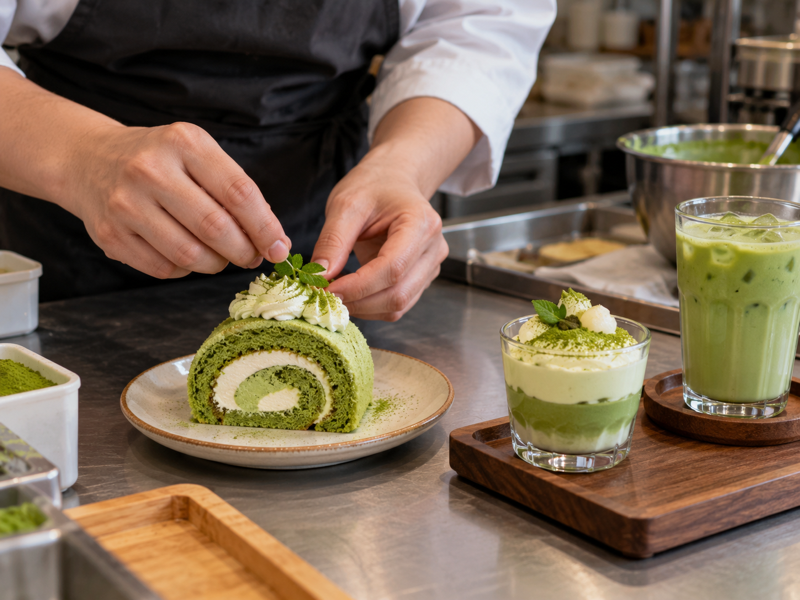
Matcha cafe desserts need to earn their display space alongside the drinks. A matcha dessert earns its place in a cafe when it tastes good beside the drinks and survives production, display, and a normal sales day. Bright green color alone is a poor product brief. A cake can look appealing in a photograph but taste bitter after refrigeration, dry out in the case, or require so much labor that the café cannot make enough during a rush. This guide treats desserts as menu products with recipe, supply, storage, allergen, and waste decisions.
Contents
- 1. What role should desserts play in the cafe?
- 2. Which matcha ingredient works in baking?
- 3. How should a dessert be paired with drinks?
- 4. Should the cafe make or buy desserts?
- 5. What should a dessert recipe card contain?
- 6. How can color and texture be evaluated?
- 7. Which dessert formats fit a small cafe?
- 8. How should shelf life and waste be managed?
- 9. How should the dessert be priced?
- 10. When should a dessert stay on the menu?
1. What role should desserts play in the cafe?
Decide whether desserts are a small add-on, a reason for a seated visit, or a central part of the concept. A takeaway bar may need wrapped items that travel well. A dessert café can support plated cakes and longer service. The role affects kitchen space, display equipment, staffing, and price. Do not add a complex pastry only because its photo performs well online.
Start with the drinks customers actually buy. A sweet matcha latte paired with a heavily sweet cake may feel excessive, while an unsweetened tea can balance a rich dessert. Offer a few distinct textures rather than a row of green items that taste similar. Measure dessert attachment rate, waste, and customer comments during a paid pilot. A dessert should improve the visit and the economics.
| Menu role | Suitable format to test | Operational demand |
|---|---|---|
| Takeaway add-on | Cookie or wrapped cake | Packaging and shelf life |
| Seated pairing | Plated slice | Staff and dishwashing |
| Signature item | Distinct matcha pastry | Production consistency |
| Seasonal item | Limited flavor | Short run and waste control |
2. Which matcha ingredient works in baking?
A powder that tastes smooth in water may not show through butter, sugar, or cream. Test candidate matcha in the finished dessert, not only dry. Bake or prepare small batches at the same dose and compare color, flavor, bitterness, and cost. Heat can change appearance and aroma; cream and white chocolate can mask tea. Record the exact formula so a supplier sample can be assessed fairly.
Ask for ingredient and lot information. If a “matcha blend” includes sugar or other components, calculate how it changes the formula and label. A bakery may use a different powder from the café's straight tea; that can be sensible if each is approved for its job. Keep separate product codes and storage. Do not swap between them during production because their flavor and dose can differ.
3. How should a dessert be paired with drinks?
Taste pairings as a set. Prepare the dessert at its normal serving temperature and the drink at its normal temperature. A chilled matcha cheesecake beside an iced sweet latte may mute both; a plain hot tea may show contrast. Ask tasters which pairing they would purchase, not only which flavor they like alone. Record the reason: too sweet, too bitter, heavy, refreshing, or balanced.
Test a small menu suggestion rather than a fixed bundle at first. A bundle price can lift sales but can also hide weak individual demand. Watch whether people finish both items and whether the pairing changes repeat purchase. Train staff to recommend one or two combinations in plain language. Avoid describing a dessert as “authentic” unless the recipe and context support that claim.
| Dessert style | Drink to test | Sensory question |
|---|---|---|
| Matcha roll cake | Plain hot matcha | Does tea balance cream? |
| Matcha cookie | Iced latte | Is the pair too sweet? |
| Matcha cheesecake | Straight tea | Does acidity work? |
| Matcha soft serve | Lightly sweet drink | Is the meal too cold? |
| Non-matcha pastry | Matcha latte | Does contrast help? |
4. Should the cafe make or buy desserts?
Compare in-house production with a qualified bakery or manufacturer. Making desserts gives direct control but requires space, skilled labor, equipment, food safety processes, and consistent yields. Buying can simplify operations, but the café still needs specification, delivery, storage, allergen, and quality checks. Neither option is automatically cheaper once waste and staff time are counted.
Run a small cost and service trial. For an in-house cake, count ingredient weights, batch time, cleaning, portion yield, and unsold slices. For a bought cake, include delivery, minimum order, damage, and shelf life. Taste the item on the last sale day, not only on arrival. A dessert that is excellent on day one and dry on day two may need a smaller order or a different format.
5. What should a dessert recipe card contain?
Write the formula in weights and record the matcha product code, mixing order, batch size, bake or chill conditions, portion size, garnish, storage, and discard rule. Include a reference photo of a normal slice. If staff portion by eye, cake costs and presentation will drift. A simple cutting guide and scale can make a small menu item more reliable.
Record allergens from every ingredient, including toppings and purchased components. A café that offers plant-milk lattes may still make desserts containing dairy, eggs, nuts, wheat, or soy. Keep ingredient information current and prevent cross-contact according to local rules. When a supplier changes an ingredient, review the card and menu claim before the new batch reaches the display case.
| Card field | Why it matters | Check |
|---|---|---|
| Powder code | Flavor and color | Approved lot |
| Batch yield | Portion cost | Count saleable units |
| Portion weight | Consistency | Weigh sample slices |
| Storage | Safety and quality | Temperature log |
| Allergen list | Customer information | Ingredient review |
6. How can color and texture be evaluated?
Photograph the dessert under normal display lighting at production, mid-hold, and end of shelf life. Note browning, fading, moisture loss, cracking, and cream stability. Taste each stage. A green crumb that looks acceptable may taste stale. A bright surface may hide a dense or dry interior. Use a neutral light source for product approval so a colored lamp does not disguise a weak result.
Adjust one variable at a time. If a cake becomes bitter, consider matcha dose and baking process before adding more sugar. If cream loses its shape, check formulation and holding temperature. If color changes, review ingredient, heat, light, and storage. Avoid making unsupported claims about a single cause until a controlled test shows it. A short trial log saves repeated guesswork.
7. Which dessert formats fit a small cafe?
A compact café often benefits from formats with predictable portions and limited finishing: cookies, bars, simple roll slices, or bought pastries. A plated parfait or fresh soft serve can work if demand and equipment justify it. Evaluate how many steps occur at the service counter. A dessert that needs careful assembly during the lunch rush can delay drinks and require another worker.
Consider delivery and takeaway. A cream-heavy item may move poorly in a warm courier bag. A wrapped cookie may travel well but lose the visual impact of a plated dessert. Test packaging with the actual route and wait time. If the dessert is a limited run, tell customers when it sells out rather than overproducing to keep the case full.
| Format | Strength | Risk to test |
|---|---|---|
| Cookie | Easy portion and travel | Tea flavor through sweetness |
| Roll slice | Attractive display | Drying and cream stability |
| Cheesecake | Strong seated pairing | Cold storage and allergen |
| Soft serve | Fast portion if set up | Equipment cleaning |
| Parfait | Layered texture | Assembly time and travel |
8. How should shelf life and waste be managed?
Follow validated recipes, supplier instructions, and local food safety requirements for storage and discard. Do not infer safe shelf life from appearance. Use production dates, batch records, and a clear first-in, first-out process. Count units made, sold, discounted, and discarded daily. A dessert with a high nominal margin can lose money if half the batch remains at closing.
Start with small batches and adjust to real daypart demand. Weekend traffic may justify a different production plan from Monday. If the display looks empty, consider a smaller case or presentation change rather than making more product than customers buy. Review quality near discard time. A slice should still meet the brand's sensory standard when it is sold.
9. How should the dessert be priced?
Calculate cost per saleable portion. Include matcha, all ingredients, packaging, labor, energy, normal production loss, and expected unsold units. A cake that yields twelve planned slices but only ten acceptable portions has a different cost than the recipe spreadsheet suggests. Compare the price with local customer willingness to pay and the role of the dessert in the basket.
Test whether a pairing offer changes total contribution, not only item count. A discount may lift dessert attachment while reducing profit on drinks customers would have bought anyway. Track paid orders and waste. If the item is popular but production is slow, explore portioning or supplier changes before raising price blindly.
| Cost input | Measurement | Review trigger |
|---|---|---|
| Ingredients | Batch weights and invoice | Supplier change |
| Yield | Saleable portions | Portion drift |
| Labor | Prep and finish time | Menu change |
| Packaging | Actual container | Delivery launch |
| Waste | Unsold units | Production schedule |
10. When should a dessert stay on the menu?
Keep it when customers buy it at the intended price, the café can produce or receive it consistently, it stays good through its stated sale window, and its net contribution justifies space and labor. Review over enough days to include weekday and weekend patterns. Ask staff what customers say and whether they finish the item. A popular social photo can be a poor long-term menu product.
If the dessert fails, identify why. Weak flavor calls for recipe work; spoilage calls for batch or ordering changes; slow service calls for a simpler finish. Retest once with a defined change. Then keep, make seasonal, or remove it. The dessert case should show items that the café can serve well today, not a collection of concepts the team hoped would work.
For a dessert pilot, sell a fixed small batch over several comparable days and keep the same display and menu description. Record how many portions sell with a matcha drink, how many sell alone, and how many remain at closing. Ask buyers what they expected from the matcha flavor and whether the portion felt right. Have staff taste the last saleable portion at the end of its validated holding period.
A high morning score cannot excuse a dry afternoon slice. If production is the constraint, test a smaller batch or supplier format before increasing price. If demand is the constraint, revise the pairing or description once and repeat the trial. Do not treat a single viral photograph as a forecast. The item stays only when the café can make or receive it consistently, hold it safely, and sell enough at full price.
FAQ
Q1: Can a cafe use latte matcha powder in desserts?
It can be tested, but its flavor, color, and composition may perform differently in baked or chilled food.
Q2: Is a green cake necessarily high in matcha?
No. Color alone does not establish ingredient amount. Use the recipe and ingredient records.
Q3: Should every dessert contain matcha?
No. A contrasting pastry can pair well with a matcha drink if it fits the menu.
Q4: How can a small café limit dessert waste?
Use small batches, count daily sell-through, and adjust production by daypart and weekday.
Q5: What is the key purchased-dessert document?
Obtain current ingredients, allergens, storage and shelf-life information, plus a clear product specification.
Related reading: best matcha powder and Experience Matcha Mania With These 13 Dishes in LA.