
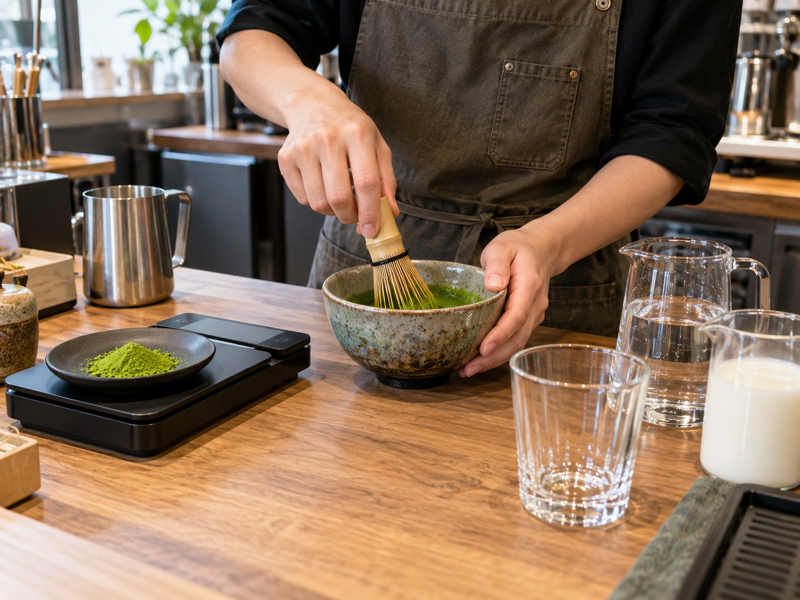
A matcha cafe recipe is a set of instructions another employee can use to make the same cup. “Add one scoop and whisk” leaves dose, water, milk, ice, and mixing open to interpretation. A useful card specifies weights, order, tools, and what the finished drink should taste and look like. It also tells staff when to stop and remake. This guide shows how to build that card from a controlled trial and keep it accurate when ingredients or store conditions change.
Contents
- 1. What should the recipe define before mixing?
- 2. How should a cafe choose the matcha dose?
- 3. Which water variables should be recorded?
- 4. How should matcha be mixed without clumps?
- 5. How should milk and sweetener be specified?
- 6. Why do hot and iced drinks need separate cards?
- 7. How can a recipe be tested during a rush?
- 8. What should the final recipe card look like?
- 9. How should batches and concentrates be handled?
- 10. When should a recipe be revised?
1. What should the recipe define before mixing?
Start with the product: straight matcha, hot latte, iced latte, or flavored drink. State cup size and target finished weight. Decide whether the cup should taste tea-forward, lightly sweet, or dessert-like. Name the milk SKU and whether the default contains added sugar. A recipe cannot be tested fairly if tasters expect different drinks.
List the ingredients and tools in the order staff use them. Include powder product code, dose in grams, water volume and temperature range, milk or plant drink amount, ice weight, sweetener weight, vessel, and mixing method. Write a tolerance for measured variables if the operation uses one. The brief should fit the service model: a café with two baristas and a dedicated station can support different steps from a kiosk with one worker.
| Field | Example of useful detail | Weak substitute |
|---|---|---|
| Powder | Product code and grams | “Premium matcha” |
| Water | Measured volume and range | “A splash” |
| Milk | Exact SKU and amount | “Milk of choice” |
| Ice | Weight and cup size | “Fill cup” |
| Finish | Color, foam, and taste | “Looks good” |
2. How should a cafe choose the matcha dose?
Prepare a dose ladder in a fixed recipe. Use the same milk, water, sweetener, cup, and method for each sample. Record tea flavor, bitterness, mouthfeel, color, and aftertaste. Select a dose that meets the sensory brief at the intended price. Do not assume the supplier's sample recommendation fits a much larger café cup or a sweetened drink.
Retest the dose after normal service time. Ice melt can weaken an iced cup, while a hot cup may taste different as it cools. Weigh actual staff servings during a mock shift. If a scoop is used, measure several filled scoops from different operators. A fixed scoop may be fast, but it should be calibrated against grams and checked when powder or storage conditions change.
3. Which water variables should be recorded?
Water is part of the recipe. Measure its volume and choose a temperature range from the powder's guidance and sensory trials. Very hot water may change taste, while cold liquid can make dispersion harder with some powders and tools. Use the same source during comparison tests. If a store changes filters or water supply, check whether the finished drink changes.
Specify when water enters the vessel. A small amount can help make a smooth paste before the rest is added, while dumping powder into a large cold milk cup can leave dry pockets. Test the chosen sequence rather than assuming one method always wins. For a straight tea, water amount also defines strength and serving size. Record both powder-to-water relationship and finished cup weight so staff cannot accidentally stretch the drink.
| Variable | Trial range to define | Observation |
|---|---|---|
| Water volume | Measured for each cup | Tea strength |
| Temperature | Supplier-informed range | Bitterness and aroma |
| Source | Approved filtered or local | Consistency |
| Sequence | Powder then water or other | Clumps |
| Hold | Immediate or validated | Settling and color |
4. How should matcha be mixed without clumps?
Choose a vessel and tool that staff can use repeatedly. Sift if the powder and workflow benefit. Add measured liquid in a controlled sequence, then mix for a defined time or until a visible reference state is reached. Inspect the base before adding milk or syrup; once the cup is assembled, clumps can hide until the customer drinks it.
Compare whisk, frother, and shaker methods under the same recipe. Count clumps, time the step, and include cleaning. If a method makes a smooth cup only when one expert performs it, refine training or choose another method. Store powder away from moisture and steam, and keep the container closed. A good mixing technique cannot fully compensate for damp, badly handled powder.
5. How should milk and sweetener be specified?
Name the exact dairy or plant milk used in the approved cup and its measured quantity. Milk choices differ in sweetness and texture, so each advertised alternative needs a trial. For hot drinks, record steaming and handoff standards. For iced drinks, check how the milk tastes after ice begins to melt. If a plant milk separates, adjust the method or SKU before serving it as a standard substitution.
Weigh syrup or puree during development. Pumps can be used in service after their actual output is measured. Specify whether sweetener enters the matcha base, milk, or finished cup. Poor mixing can give a sweet final sip after a bland first sip. If the matcha powder is a sweetened blend, include that sugar in the full recipe evaluation and menu description.
| Ingredient | Card must name | Change trigger |
|---|---|---|
| Dairy milk | SKU and amount | Supplier swap |
| Plant milk | Tested SKU and amount | Texture difference |
| Syrup | Weight or calibrated pumps | Pump change |
| Fruit | Product, amount, hold | Seasonal source |
| Sweetened mix | Full composition | Formula change |
6. Why do hot and iced drinks need separate cards?
A hot drink and an iced drink have different dilution, texture, and serving conditions. The iced version needs an ice weight and a test after a normal wait. Its matcha base may be more concentrated or lower in water volume. A hot version needs a clear milk and tea temperature standard. Copying one recipe into the other cup often changes taste and cost without anyone noticing.
Create separate cards even if many ingredients match. Train staff on both and label the card with cup size. Include how the drink should be handed off: mixed uniformly or layered with an instruction to stir. For delivery, test a lidded cup after travel. The recipe should describe the cup the customer receives, not the one in the development kitchen five seconds after pouring.
7. How can a recipe be tested during a rush?
Run a mock peak shift with the regular station and staff. Place multiple orders with common modifiers and time ticket to handoff. Weigh finished cups, inspect clumps and spills, and taste samples from different baristas. Record where workers hesitate or cross paths. A recipe that is perfect in isolation can fail because a shared refrigerator or sink slows every order.
Change one variable at a time. If the cup is weak, check dose, milk volume, and ice before changing powder. If service is slow, test a different sequence or station arrangement. If a batch base is proposed, validate hold time and safe handling with local rules. The goal is a recipe that ordinary staff can execute with the tools and time the business actually has.
| Service test | Measurement | Problem it reveals |
|---|---|---|
| Three staff, same cup | Taste and weight | Training variation |
| Five-order rush | Ticket time | Bottleneck |
| Cup after wait | Flavor and sediment | Hold problem |
| Modifier order | Accuracy | Card complexity |
| End-of-shift count | Powder use | Waste or overdosing |
8. What should the final recipe card look like?
Put the recipe where staff prepare the drink, in a format that tolerates splashes and cleaning. Use short numbered steps, not a long paragraph. List all quantities, tool names, product codes, and the finished-cup standard. Add a reference photograph of the normal cup if it helps. Include a date, version, and approver so stores know whether they are using the current card.
Write the failure rule plainly: remake if visible dry clumps remain, wrong milk was used, or the drink falls outside the approved standard. Train staff to use the rule without seeking a manager for every obvious error. Link the card to ingredient and allergen records. A recipe card is a controlled operating document; update it when product, equipment, or portion changes.
9. How should batches and concentrates be handled?
Batch preparation can improve service speed, but it introduces hold, settling, and traceability questions. Record how much powder and water go into a batch, how it is mixed, where it is held, when it is made, and when it must be discarded. Taste the first, middle, and last pours. If concentration changes as particles settle, the batch method needs work before launch.
Follow local food safety requirements and supplier guidance for storage and hold time. Do not invent a safe period from a successful taste test. Label each batch and keep a log when appropriate. Model waste if an unfinished batch must be discarded. Single-cup preparation may be slower but easier to control at low volume; the right choice depends on measured demand and the approved process.
| Batch field | Required record | Why |
|---|---|---|
| Mix ratio | Powder and water | Cup strength |
| Time made | Date and hour | Hold control |
| Lot | Powder identifier | Traceability |
| First/last cup | Sensory check | Settling |
| Discard | Time and amount | Safety and waste |
10. When should a recipe be revised?
Revise when a new powder lot fails reference tasting, a milk SKU changes, a cup size changes, repeated remakes appear, or customers give consistent feedback. Keep the old card and record what changed. Test the new version against the old one with the same panel and service conditions. A change should solve a named problem, not merely make a description sound new.
After approval, update every place the recipe lives: station card, training file, point-of-sale modifier, ingredient record, and menu description. Remove obsolete cards so staff cannot choose between versions. Monitor the next few shifts. A café recipe is reliable when it is easy to make correctly, easy to audit, and linked to the actual ingredients in stock.
A recipe audit should begin with an unannounced observation of ordinary service, not a staged demonstration. Select a few cups from different workers and weigh the finished drinks. Check the powder container, scale, water source, milk SKU, syrup pump, ice amount, and recipe card version. Taste the cups beside a reference made from the approved lot.
If they differ, find the variable before issuing a general reminder to “follow the recipe.” A scale may be uncalibrated, a pump may deliver more syrup than the development sample, or staff may be using a larger cup. Correct the cause and retest another shift. Record the change on the card when it affects the intended method. This keeps the recipe grounded in the way the café actually works rather than in a document that no longer describes the counter.
FAQ
Q1: Is a scoop accurate enough for café matcha?
It can be convenient after calibration, but weigh several real scoops and recheck when powder or handling changes.
Q2: Should matcha be mixed directly into cold milk?
Test it. Some powders and tools disperse better in a measured water base before milk is added.
Q3: Can one card cover every milk option?
Only if each option passes the same sensory and stability checks. Separate cards may be clearer.
Q4: What makes a recipe ready for more stores?
Different staff using standard tools should produce the same cup at acceptable speed and cost.
Q5: What belongs in a remake rule?
Visible clumps, wrong ingredients, incorrect cup size, and any sensory fault outside the approved standard.
Related reading: matcha latte ratio and Iced Matcha Latte An Easy Recipe.