
Dalgona matcha is a matcha-flavored whipped topping served over milk or another drink base. Matcha powder alone does not produce the stable, spoonable foam associated with whipped coffee; the structure comes from an added whipping ingredient. That choice changes the drink’s flavor, allergens, handling and cost. A high green cap can look excellent at the mixer and vanish before the customer opens the lid. Café developers should specify the whipping system, portion weight and time between assembly and drinking before committing to a menu photograph. The following checks turn a home-style idea into a repeatable service drink.
Jump to foam identity, whipping base, tea, formula, whipping, defects, service, handling, cost and pilot.
1. What makes dalgona matcha a whipped drink?
Define the foam, not only the color
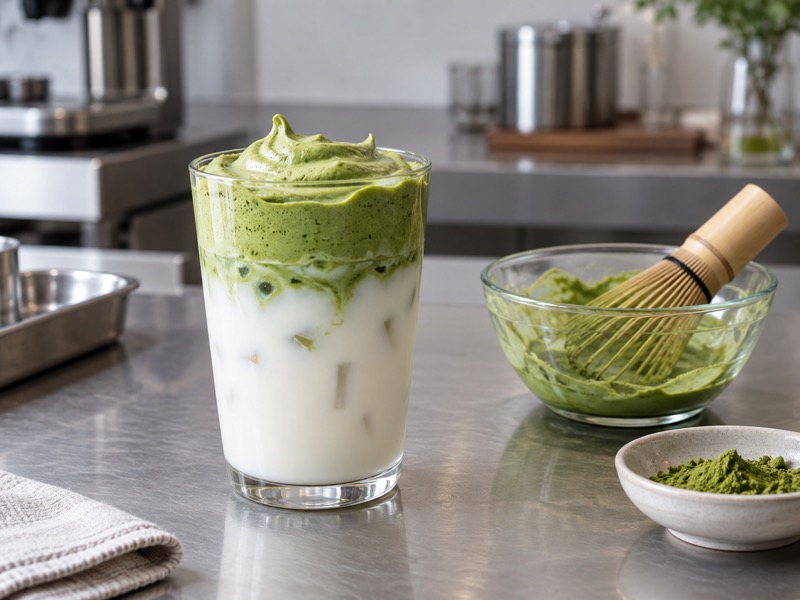
The familiar dalgona silhouette has a mound of foam above a separate liquid base. In a matcha version, tea supplies flavor and color, while another ingredient forms the aerated network. Sugar may support a particular foam system, but sugar and matcha stirred into water are not a reliable stand-in for whipped instant coffee. Write the menu description so it says what the topping actually contains. A customer ordering a light tea cloud may instead receive a rich coconut cream topping or an egg-based foam unless that choice is made clear. Decide whether the menu sells a dessert-like cap or a light tea topping. That decision changes the acceptable fat level and portion size. A small, intensely flavored foam can work over a larger milk base, while a very rich mound may overwhelm it. Taste the full sip: take a spoonful of foam, then drink foam and milk together. Record whether matcha remains present after the two layers combine. The drink should be judged when stirred as well as when photographed. Decide whether a straw, spoon or sip lid is the expected way to consume it; each route presents a different foam-to-milk ratio.
2. Which ingredient should create the foam?
Select the system before setting tea dose
Coconut cream, dairy cream, pasteurized egg products and some formulated plant whipping bases can all produce different textures under appropriate preparation. They do not have the same fat level, flavor, allergen profile or hold behavior. Aquafaba is another option, but its flavor and batch variation need testing in the finished cup. Choose candidates that fit the intended menu claim and equipment. A vegan claim needs the entire drink, including garnish and milk, checked against supplier documentation. An egg route requires particular attention to the purchased product and the site’s food-safety procedure. Run small matched trials: hold tea mass and serving size constant, prepare each foam according to the supplier’s instructions and compare mouthfeel after a normal wait. Note how much base remains in the mixer bowl. A whipping ingredient that makes a taller peak may still taste too rich over sweet milk or collapse when served through a tight lid. Ask the supplier whether its product is intended for whipping at the café’s preparation temperature and batch size. A product designed for a different mixer may look inconsistent even when staff follow the recipe carefully. Keep the chosen pack and preparation instructions with the drink specification.
| Whipping option | Buying question | Cup check |
|---|---|---|
| Dairy cream | Fat level and allergen declaration | Richness and foam-to-milk balance |
| Coconut cream | Solids and pack consistency | Coconut flavor and drainage |
| Formulated plant base | Ingredient and claim documentation | Texture after lidding |
3. How should matcha be evaluated inside the foam?
Test tea where customers will taste it
Whipped foam puts tea at the surface, where aroma reaches the nose before the milk does. A matcha lot that seems gentle in a latte may taste sharp in a concentrated topping. Compare lots at the same mass in the same whipping base, then serve equal foam portions over a fixed milk recipe. Note bitter finish, vegetal character, green color and whether the tea stays dispersed. If a candidate creates visible specks, review its mixing method before rejecting it on flavor. Keep the base constant. Changing a sweet milk to an unsweetened one can alter perceived tea strength more than a modest change of tea lot. The chosen dose must work across the actual sip path: foam by itself, foam with milk and the final stirred liquid. Record a sample’s lot number and opening date, because a later color or aroma change should be traceable without guessing whether the mixer caused it.
4. What should the cup formula measure?
Price the deposited foam, not the bowl
Write masses for matcha, whipping base, sweetener, milk, ice and garnish per finished cup. Record the foam’s starting mass, finished mass after whipping and mass actually deposited. Air increases volume without adding much ingredient mass, which makes a tall scoop an unreliable portion measure. The bowl, whisk and piping bag can retain significant topping. Weighing accepted cups provides a better cost denominator than dividing the batch by an estimated number of visual dollops. Set a foam target: define an acceptable deposited mass and a practical visual range after the lid goes on. Also specify the milk sweetness, because a highly sweetened base can make a bitter topping seem balanced for one sip while the mixed cup becomes cloying. A batch card should name the supplier product, its storage state at whipping and the tool used. Volumetric measurements may be used at service only after checking their delivered mass. Separate a batch-yield sheet from the cup card. The former tracks mixing loss and usable foam; the latter tells staff exactly what a customer receives. If the batch produces fewer portions than planned, investigate deposition and equipment residue before quietly making the cap smaller.
| Formula line | Record | Why it belongs on the card |
|---|---|---|
| Foam ingredients | Grams and supplier item | Flavor, allergens and purchase cost |
| Foam yield | Whipped mass and deposited mass | Loss in bowl or piping bag |
| Base drink | Milk, sweetener and ice mass | Final taste and dilution |
5. How can the whipping endpoint be repeated?
Replace “fluffy” with observable controls
Mixer speed, vessel shape, ingredient temperature and batch size all affect the result. A hand mixer in a narrow bowl may produce a different foam from a café blender or commercial whipper. Write the equipment and sequence that produced the approved sample. If the whipping ingredient needs chilling or staged addition, follow the supplier’s handling instructions and confirm the method in the real prep area. Disperse matcha so dry powder does not become green lumps, then add it at the point that preserves the chosen foam structure. Define an endpoint staff can see: for example, the topping should form a stable mound on the intended spoon and deposit without running down the cup wall. Record mixing time as a guide, not as the sole acceptance criterion. A batch that takes much longer than usual may signal an ingredient temperature or supplier-lot problem. Stop and compare it with a control instead of extending whipping indefinitely. Excessive mixing can alter texture, and the operator needs a clear reject rule. Record the endpoint photograph or a short training clip for new staff, then verify that they can reproduce it without developer coaching. Avoid rescuing a weak foam with unrecorded extra powder.
6. Which foam failures should staff record?
Watch drainage and bubble size
A fresh topping can appear high because large bubbles inflate it quickly. Those bubbles may merge and leave a watery line over the milk. Photograph the same cup at deposit, handoff and a realistic customer wait, using the same angle and fill level. Record foam height, drainage, graininess, matcha specks and whether a straw opening destroys the cap. A coarse foam can taste rough even if it still looks green. Isolate the cause: compare a suspect batch against the approved whipping base at the same tea mass and temperature. If only a new matcha lot clumps, examine dispersion. If every cup collapses after a lid change, test lid contact and headspace. A service defect list should state which conditions trigger a remake. Give staff a check after deposit and another when the lid is closed. A topping can pass the first check but fail the second if it touches the lid. Keeping those observations separate prevents the team from changing a good foam formula to solve a cup-packaging fault. It should also distinguish harmless visual mixing from a topping that no longer delivers the menu promise.
| Symptom | Check before changing tea | Possible process response |
|---|---|---|
| Watery ring | Whipping base temperature and batch age | Revise preparation or service window |
| Large bubbles | Mixer setting and endpoint | Adjust method and retest texture |
| Green specks | Matcha dispersion step | Sift or pre-disperse tea |
7. How should the foam meet the milk and lid?
Design for a real handoff
A tall mound can be crushed by a flat lid, while an open cup may not suit takeout service. Select the cup and lid during development rather than after the drink photograph is approved. Deposit the foam over a measured ice and milk fill, then close the lid exactly as staff will. Check for overflow, foam stuck inside the dome and loss through the straw slot. A customer who drinks through a straw may taste mostly sweet milk until the end, so consider whether the service card should request stirring or provide a sip lid. Use the normal route: carry the cup, set it down and open it after the expected handoff interval. Compare counter service with delivery only if both are planned. A dispenser-held topping needs its own validated holding procedure; do not assume a foam made per order will behave the same way after several hours in a reservoir.
8. What holding and labeling rules are needed?
Treat the complete topping as the product
Cold holding, preparation time and discard rules should come from the complete foam formulation and the café’s food-safety plan. Ingredient directions for cream or pasteurized egg product do not automatically establish a hold time once tea and sweetener are mixed in. Label prepared containers with recipe version and time. If an operator wants to ship or sell a ready-made topping, that is a separate packaged-product program requiring its own validation. Check the menu file: dairy, coconut, egg or plant-base ingredients can change allergen declarations and customer expectations. Keep documents for matcha and the whipping base by lot so a service complaint can be traced. Any statement that a version is dairy-free or vegan needs confirmation across the base drink, topping and garnishes. A short, written discard rule also keeps an attractive but aged foam from being served because staff have no clear instruction.
| Record | Owner | Use during service |
|---|---|---|
| Ingredient and allergen declarations | Buyer | Menu and staff answer |
| Prep time and storage | Shift lead | Hold and discard decision |
| Formula and lot numbers | Developer | Investigate variation |
9. Where does the real serving cost hide?
Count collapse and retained topping
Matcha may be the most visible premium ingredient, but whipped topping also uses labor, mixing equipment and a base that can be expensive per accepted cup. Weigh a prepared batch, then measure the topping that reaches sellable cups. Subtract what stays on the whisk, in the bag or in a dispenser at discard. Add milk, sweetener, cup, lid and any garnish. A remake caused by collapse or crushed foam affects the average cost even if the failed cup used the correct tea dose. Look at batch size. A large prep batch can reduce mixing labor while increasing waste late in a quiet day. A small made-to-order foam may protect freshness but slow a busy line. Time the actual cleaning and setup between batches as well as the whipping itself. That labor can be more consequential than a few extra grams of tea. A purchasing comparison should also include the minimum order quantity and how much base the store is likely to discard before it can use it. Price both methods with their observed yield and prep time before choosing one. Keep the cost sheet linked to the exact whipping ingredient; a cheaper substitute may change service losses.
10. What should a café pilot demonstrate?
Approve the drink at the customer’s pace
Have ordinary staff prepare consecutive cups with the final mixer, cup, lid and drink card. Record foam deposited per cup, build time, waiting time, height at handoff and sensory comments after sipping. Include an awkward but common scenario, such as a customer waiting while another order is made. If the foam survives only an immediate photograph, shorten the promised service route or revise the formulation. Let the lid decide: close each trial cup the way staff will during a rush and inspect the topping after reopening. A second operator should reproduce the method without verbal coaching. Release the drink only when the written acceptance criteria for flavor, appearance, handling and cost are met. Matcha flavor pairings offer context for future menu work; a consumer dalgona matcha recipe illustrates why the whipping base must be named.
| Pilot sample | Capture | Decision |
|---|---|---|
| Freshly deposited cup | Foam mass and appearance | Portion standard |
| Lidded handoff cup | Height, drainage and sip quality | Service fit |
| Staff series | Variation, time and remakes | Training and cost |
FAQ
Q1: Can matcha alone whip into dalgona foam? No. Matcha contributes tea flavor and color; a separate whipping system creates the foam structure.
Q2: Is coconut cream the only plant option? No. Test suitable plant whipping products or aquafaba in the complete drink and verify their ingredient declarations.
Q3: How much foam goes on each cup? Set a deposited mass during development and check that portion against the chosen cup, lid and milk volume.
Q4: Can the topping be made ahead? Only within a handling and service window validated for its complete formulation and operation.
Q5: What should prompt a remake? Use written reject criteria for collapse, drainage, coarse texture, wrong portion or a lid that damages the advertised topping.
Reference: Easy Dalgona Matcha is a home recipe used for topic context; this article addresses café formulation and service.