
Starting a matcha business means turning a defined customer need into a product you can supply repeatedly. Buyers often select powder and packaging before checking sales, cash and preparation. A small launch with written acceptance criteria gives you a sounder starting point. The steps below connect product trials with commercial decisions.
Table of contents
- Who will buy your first matcha product?
- What should your first product range contain?
- How should you test matcha before selling it?
- How can you verify that supply fits the launch?
- Which packaging decisions must be made early?
- What costs should your launch budget include?
- How will customers understand your offer?
- What should a first paid pilot prove?
- Who owns the work after the first order?
- When should the business expand its matcha range?
1. Who will buy your first matcha product?
Choose a customer and a purchasing occasion
Decide who signs the purchase order before designing your range. A café owner buys an ingredient that works during service. Food manufacturers buy specifications that fit their processes. A retailer buys a packaged item with a clear place on its shelf. These customers require different pack formats, support and sales conversations. Write one sentence naming your customer, application and purchasing reason. Keep broad claims about popularity outside that sentence. They cannot tell you whether a particular customer will place a repeat order.
For a hypothetical launch, a brand might target independent cafés preparing iced matcha lattes. Its initial offer could include one powder, a preparation sheet and a standard commercial pack. Interviews should ask about current recipes, weekly purchasing routines and problems with existing ingredients. Record what customers say separately from what you infer. An expression of interest belongs in a prospect list; a paid pilot belongs in your demand evidence. This distinction helps you plan how to start a matcha business without treating every conversation as a sale.
2. What should your first product range contain?
Keep the offer narrow enough for a useful trial
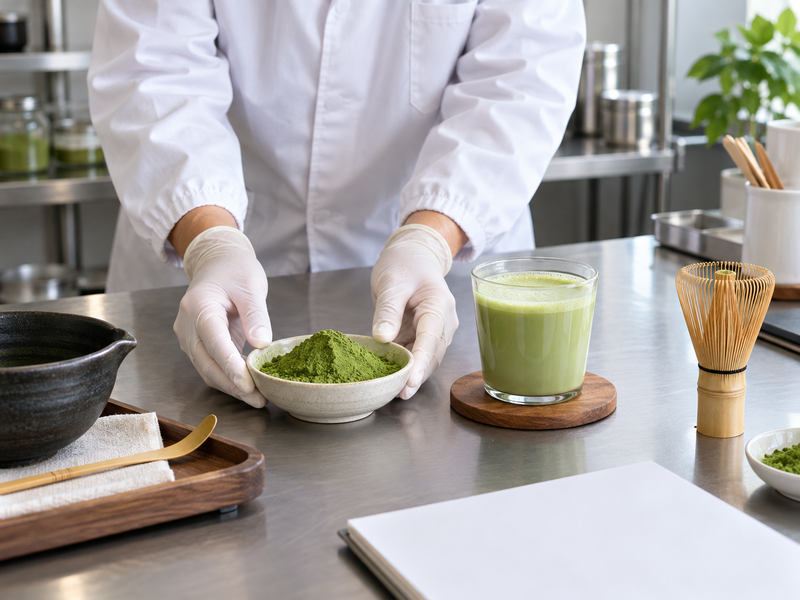
A large catalogue creates several decisions at once. Each additional powder needs sample approval, a cost model, packaging and an explanation buyers can understand. Begin with the smallest range that covers the selected application. You can expand after customers show why another item belongs. One product can still have a precise position: intended preparation, pack format, expected handling and the evidence supplied with each order. A grade name alone leaves much of that work unfinished.
Compare possible products using the same trial method. A beverage powder should be judged in the actual milk and sweetener used by your target buyer. Baking ingredients need a baked-product trial. A retail item requires preparation instructions that a customer can follow. Keep a record of rejected options and the reason for rejection. That record prevents attractive samples from reappearing in the range without a new commercial reason. The launch range should have enough depth for a repeat purchase and few enough variations for your team to control stock accurately.
| Launch choice | Buyer question | Evidence before inclusion |
|---|---|---|
| Beverage ingredient | Does it work in the house recipe? | Comparable drink trial |
| Bakery ingredient | What happens after baking? | Cooled-product assessment |
| Retail pack | Can customers prepare it consistently? | Instructions and pack trial |
3. How should you test matcha before selling it?
Translate a tasting into a product decision
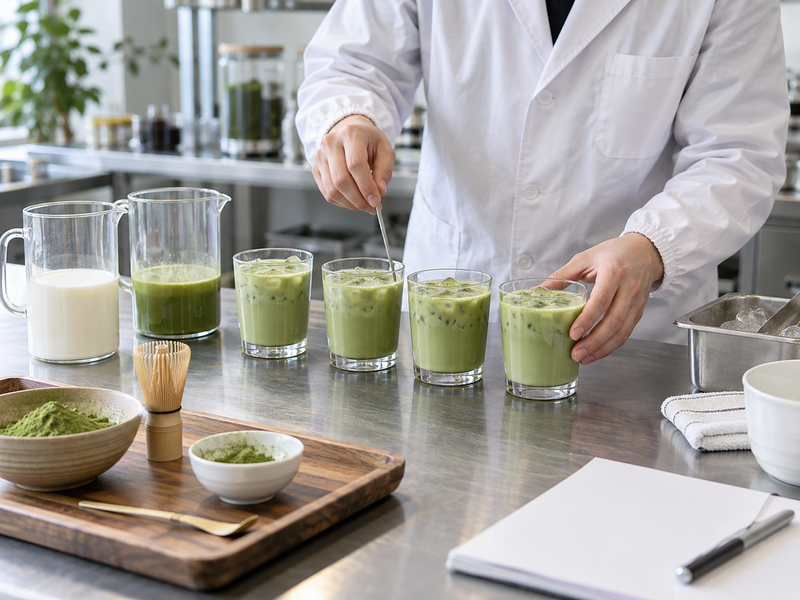
Create a trial sheet before opening samples. Record sample identity, recipe, powder weight, water or milk quantity, preparation equipment and serving condition. Keep those inputs consistent when comparing candidates. Otherwise, you may select the sample prepared with more powder or a different milk. Evaluate the finished product at the point your customer receives it. A beverage sold with ice needs an iced trial. Desserts sold after holding need assessment after a defined holding period.
Ask reviewers to describe observations rather than award unexplained scores. Useful notes include lingering bitterness, visible clumps, tea aroma after mixing and the color under consistent lighting. Decide which differences would cause a buyer to reject a product. The matcha reference sample guide explains how an approved sample can support later comparisons. A retained sample has value only when its identity and handling are recorded. When planning how to start a matcha business, use the trial to approve a specific product for a specific use. Save broader marketing language until you have supporting evidence.
4. How can you verify that supply fits the launch?
Ask for a defined product and a realistic commitment
Send potential suppliers the same short brief. Include the application, destination, initial order estimate, expected repeat pattern and packaging needs. Ask which product they propose and why it suits the application. Request relevant specifications and documentation for the proposed item. Documents should identify their scope. A company document, a product specification and a lot report answer different questions; keep them in separate fields rather than calling all of them a quality certificate.
Confirm what the supplier can commit to now. Sample availability does not confirm allocation for a later launch date. A quoted lead time should state its starting point and the steps included. Check whether packing, freight booking or buyer artwork approval sits outside that period. Assign someone to resolve missing answers before the pilot order. You can use direct supply, a distributor or a packing partner if the responsibilities are clear. The first relationship should fit the workload your business can handle, including communication, receipt checks and reorder planning.
| Supply item | Ask for | Launch decision affected |
|---|---|---|
| Proposed product | Identity and application rationale | Sample approval |
| Delivery timing | Start point and included steps | Pilot date |
| Packaging | Format and approval responsibility | Ready-to-sell stock |
5. Which packaging decisions must be made early?
Approve function before printed decoration
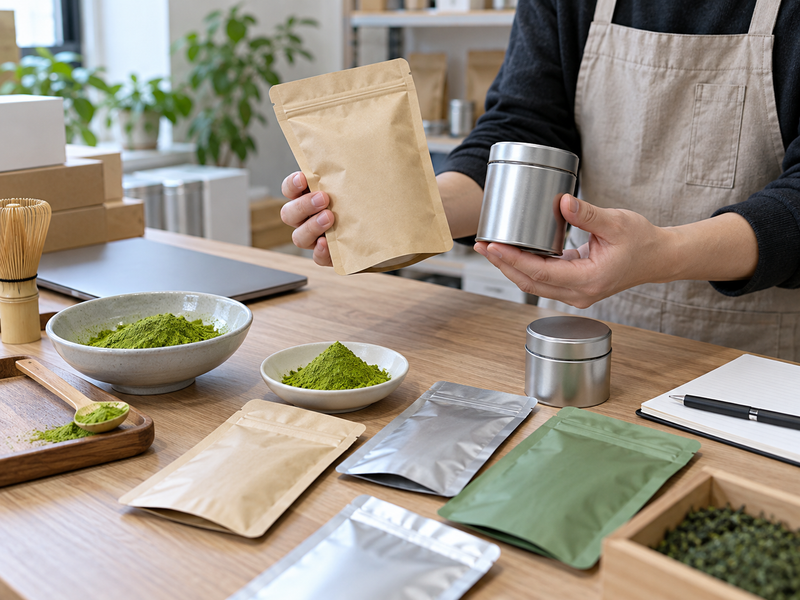
Packaging affects both the buyer’s routine and your cash exposure. A café pack should suit its opening frequency and daily use. Retail packs need clear preparation and storage information. A manufacturing bag must fit receiving, handling and dosing. Ask who opens the pack, how it is closed after use and where it is stored. These questions often reveal a more useful format than selecting a tin because it photographs well. Review protection, seal integrity and handling with the supplier for your intended product.
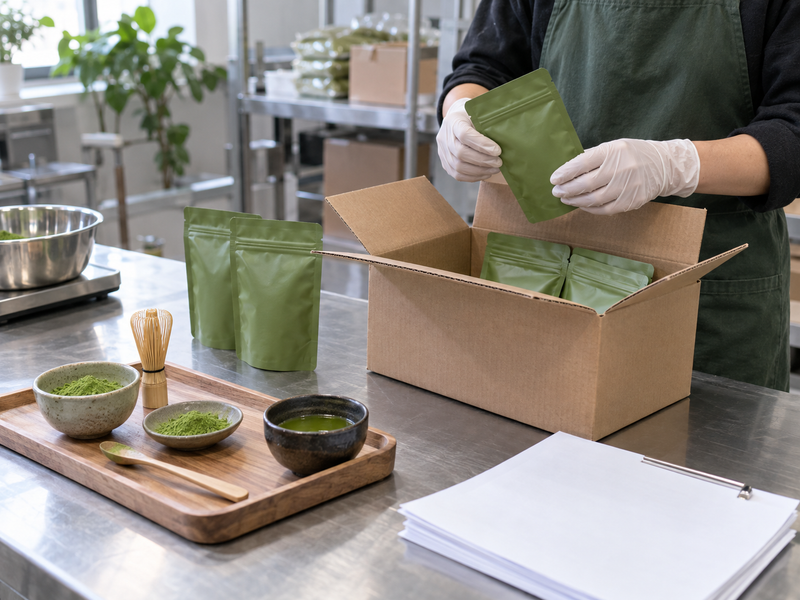
Use standard packaging during an early trial when it meets the product and market requirements. Custom components may create a separate commitment even when the powder order is small. Confirm ownership of unused components and the process for approving artwork. The matcha private label guide provides context for branded formats and responsibility. Matcha Village offers bulk ingredients and OEM or private label options. Ask for a product-specific proposal rather than assuming a standard minimum, price or delivery promise applies to your launch.
6. What costs should your launch budget include?
Separate development spending from each sale
A launch budget needs two views. One lists spending required before revenue: product trials, packaging development, artwork, equipment, market review and initial stock. The other lists costs that change with each order: powder, packaging, delivery, payment charges and handling. Keep these views linked but separate. A low powder cost does not pay for a packaging change or a slow sales month. Use actual quotations where available and mark unresolved amounts as estimates with an owner and review date.
A hypothetical starter brand might choose a standard pouch to reduce its early component commitment. It should still budget for label review, receipt checks and unsold inventory. Build a cash calendar showing when suppliers require payment and when customers are expected to pay. Include freight or service invoices that arrive outside the product invoice. Review the budget against a smaller sales outcome before committing the entire launch fund. The purpose of this exercise is to identify what you can afford to test and which spending depends on evidence from that test.
| Budget layer | Example item | How to record it |
|---|---|---|
| Development | Packaging prototype | One-time launch expense |
| Per order | Ingredient and outbound delivery | Variable order cost |
| Cash timing | Deposit before customer payment | Cash calendar entry |
7. How will customers understand your offer?
Sell the application with evidence they can use
Your sales material should answer a buyer’s practical questions quickly. State the intended application, available format and what the buyer should send when requesting a proposal. Show preparation or application photos that represent the product honestly. Avoid calling one powder suitable for every recipe. A purchasing team needs a reason to sample it in its own process. Include a clear route for technical questions, commercial quotations and complaints so messages reach the right person.
Write claims from documented information. Country of origin, ingredients and certifications require a matching source and scope. Claims about health outcomes or guaranteed product performance need their own support; enthusiasm is insufficient. A useful offer for cafés could explain the recipe trial, pack handling and reorder information available. For manufacturers, a useful offer could describe application selection and specification review. While learning how to start a matcha business, keep sales language close to these actions. Buyers can assess a specific sample process more easily than a promise that your brand will transform their menu.
8. What should a first paid pilot prove?
Define a small commercial experiment
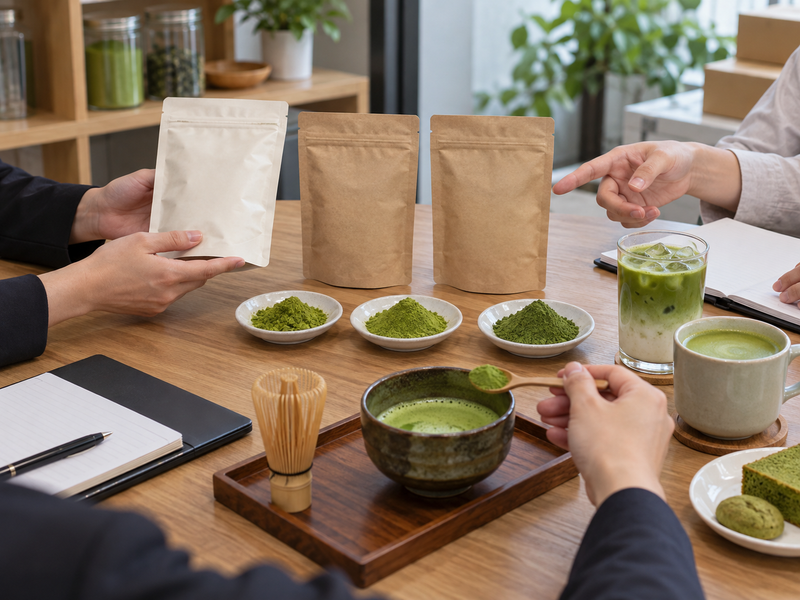
A paid pilot should test the steps that free tasting leaves unresolved. Can the customer order correctly? Does the pack arrive in usable condition? Can staff reproduce the approved preparation? Does the customer know when and how to reorder? Write a pilot plan naming the product, participating buyer, intended application and review date. Decide which observations would justify a repeat order and which would require a change. The pilot can remain modest while producing useful evidence.
For a hypothetical café trial, the business might supply one approved product and collect feedback after normal service. Ask about preparation time, portion control, remaining stock and customer questions. Compare those observations with the original application brief. Record exceptional events such as a temporary promotion separately from ordinary demand. A sellout during a giveaway does not establish normal purchasing volume. If the buyer declines a repeat order, document the reason without rewriting it as a success story. A controlled pilot helps your team identify the next decision while keeping its financial exposure visible.
| Pilot observation | What it can tell you | Follow-up |
|---|---|---|
| Staff preparation | Whether instructions work | Adjust and repeat trial |
| Pack turnover | Whether format fits usage | Review pack size |
| Repeat order decision | Whether offer fits the buyer | Record reason and next step |
9. Who owns the work after the first order?
Assign ordinary operating responsibilities
New brands often give product selection a clear owner and leave routine operations informal. Write down who maintains stock records, checks receipts, answers buyers and approves replacements. Decide who can change a recipe or substitute a product. If several people contact the supplier, appoint one person to maintain the current approved specification. Buyers should receive consistent answers even when the founder is unavailable. A small team can manage this with a short responsibility sheet and orderly files.
Build a simple complaint route. Capture the order, lot identity, problem, handling conditions and supporting photos or samples where appropriate. Decide whether stock needs to be held while the issue is reviewed. Keep commercial goodwill separate from any technical finding; issuing a replacement does not establish the cause of a complaint. For reorders, reconcile usable stock and expected consumption before placing the next purchase. These operating steps belong in your plan for how to start a matcha business because a successful first sale creates obligations that continue beyond the launch announcement.
10. When should the business expand its matcha range?
Use repeat evidence to release the next investment
Expand when the current offer reveals a specific unmet need. A café customer requesting a baking product may justify a second application trial. Retailers asking for a different pack may justify packaging research. Each change should have its own buyer evidence, product decision and cash estimate. Keep expansion separate from replacing a weak first offer. Adding products can conceal a problem with preparation, availability or positioning rather than solve it. Review these causes before ordering another item.
The Matcha & Beyond startup article discusses product selection, packaging and brand finishing. Those are useful planning categories, while its service promises apply to that seller. Your expansion decision should use your own sales and operating records. Look at repeat orders, unanswered customer needs, returns and stock left after the pilot. Assign a go, revise or hold decision to each proposed addition. When the decision is go, set a new trial boundary and owner. This gives the business a measurable next step instead of an open-ended commitment to a larger catalogue.
| Expansion signal | Evidence to review | Decision |
|---|---|---|
| New application request | Named buyer and recipe need | Run application trial |
| Different pack request | Actual opening and usage pattern | Compare pack options |
| Weak repeat orders | Buyer feedback and remaining stock | Revise existing offer |
Prepare a one-page launch brief with the buyer, first product, sample criteria, pack format and pilot budget. Send it with your application and destination when requesting a Matcha Village proposal. Approve the pilot only after product, supply and cash decisions have named owners.
FAQ
Q1: Can a matcha business start with one product?
Yes, if that product serves a defined application and the business can explain, supply and support it consistently.
Q2: Must a new business import directly?
No. Compare the responsibilities and usable cost of available supply routes before selecting one.
Q3: Do samples confirm launch stock is available?
No. Confirm the proposed commercial product, allocation and delivery conditions separately.
Q4: Should custom packaging come before a paid pilot?
It depends on the offer. Standard packaging can support a pilot when it meets product and market requirements.
Q5: What should trigger a larger range?
A documented buyer need, a successful application trial and a cash plan for the added stock.