
A matcha breakfast smoothie can vary from thick enough for a spoon to thin enough to separate before pickup. Oats, fruit, milk, matcha, and ice each change the blender’s result; an unmeasured handful is enough to shift the cup. A café needs a defined final volume, weighed ingredients, and an assembly method staff can repeat during a rush. Test the served cup, including the minutes between blending and handoff. Our matcha beverage formulation guide gives a broader framework for comparing ingredients in finished drinks.
Contents
- 1. What should this smoothie be?
- 2. Which matcha works with oats and fruit?
- 3. How should oats be measured and prepared?
- 4. What milk and fruit make a stable base?
- 5. How much ice belongs in the recipe?
- 6. What blending sequence produces the target texture?
- 7. Can ingredients be portioned ahead?
- 8. How do you handle modified orders?
- 9. What does one smoothie cost to serve?
- 10. How do you keep cups consistent across shifts?
1. What should this smoothie be?
Set a sensory and serving standard
Decide whether the menu item is a drinkable breakfast with noticeable oats or a lighter matcha fruit smoothie. Specify cup size, target fill, texture at handoff, and flavor order: should tea appear first, or should banana and milk lead? A smoothie is not automatically a balanced meal because it carries a breakfast name. Avoid nutrition or health claims until the complete serving has been calculated and reviewed. Give staff a photograph of the passing cup and a plain-language description of the texture.
Taste a test cup immediately, then again after the typical pickup delay. Oat particles can continue taking up liquid, and ice melt can change thickness and tea flavor. A version that is pleasant straight from the blender may require a different milk or oat amount by the time a guest drinks it. The Cuzen breakfast smoothie is a consumer format example using fruit and a matcha shot; a café using powdered matcha needs its own weighed recipe and service timing.
2. Which matcha works with oats and fruit?
Evaluate the tea in the full blend
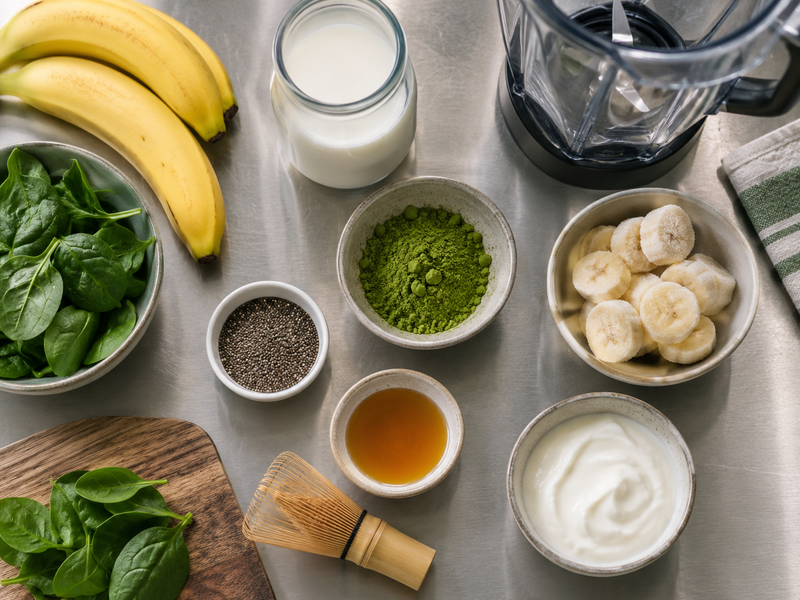
Prepare candidate matcha products at the same mass in the same oat, fruit, and milk base. Compare tea aroma, bitterness, color, and whether the flavor remains identifiable after a short wait. Banana can soften matcha’s edge but also hide a small dose. A powder that is excellent whisked with water may not justify its price when buried in a strongly flavored smoothie. Ask the supplier for the exact product specification and a representative sample, then record product and lot in the trial.
Weigh the chosen matcha dose. A scoop can vary as the powder packs, and a different dose changes cost and caffeine information. If a sweetened matcha blend is considered, inspect its ingredient statement and treat it as a separate recipe. Its serving mass is not pure tea mass, and it may limit a “no added sugar” option. Test several doses with the other ingredients fixed, choosing the one that gives a clear tea note without a rough finish.
| Matcha trial | Fixed inputs | Record |
|---|---|---|
| Low dose | Oats, fruit, milk, ice | Tea presence |
| Middle dose | Same cup and blend time | Balance after wait |
| Higher dose | Same ingredients | Bitterness and cost |
3. How should oats be measured and prepared?
Know which oat format the blender receives
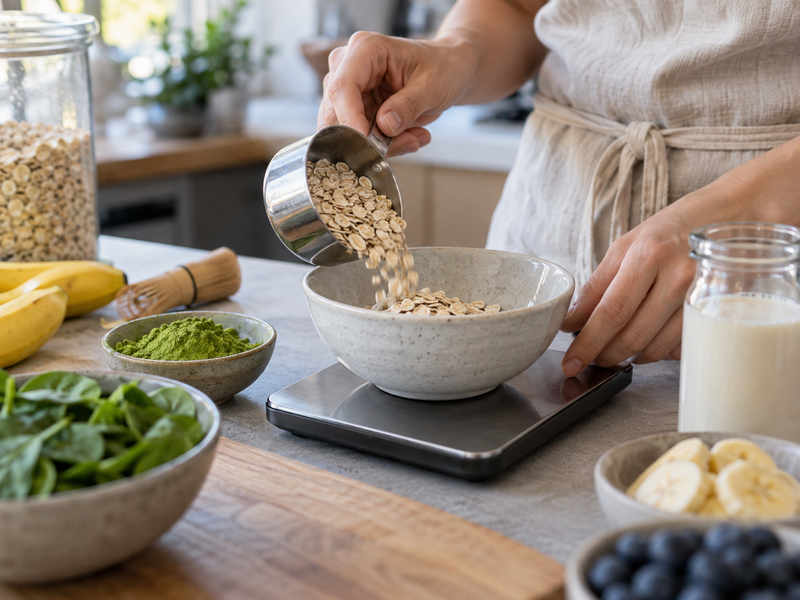
Rolled oats, quick oats, oat flour, and soaked oats do not behave the same way in a smoothie. Choose one ingredient and record its dry mass per cup. Test whether it needs a pre-soak or a longer blend to avoid grainy sediment. If oats are soaked ahead, the preparation and handling procedure becomes a separate controlled step. The target texture should be judged after the normal pickup delay as well as at the blender.
Changing oat mass changes thickness, yield, and ingredient cost. A barista compensating for a heavy oat scoop with extra milk may make a larger, weaker cup. Weigh several ordinary scoops before deciding whether a scoop is reliable enough for service. Check the first and last sips for sediment. If the drink thickens too much while waiting, adjust oat amount or form in a controlled trial rather than giving staff permission to thin each cup by eye. The recipe should tell a new employee exactly what enters the pitcher.
4. What milk and fruit make a stable base?
Test the exact products and their temperature
Milk or a plant-based alternative affects body and flavor. Fruit contributes sweetness, acidity, and water. Compare one variable at a time: first test milk options with the same fruit, then test fruit form with the chosen milk. Fresh and frozen banana can create different thickness and chilling; a fruit puree may carry added sugar. Record brand, ingredient statement, portion mass, and whether the fruit arrives fresh, frozen, or prepared.
Check whether the recipe remains drinkable in the saleable cup. A high-viscosity base may look generous but resist a normal straw. A thin one can separate quickly. Staff should have an approved response to dairy or nut-milk substitutions and understand any allergen handling limits of the shared blender. Do not promise a product is free from cross-contact if the station cannot support that claim. The selected base should taste good without relying on a long list of optional sweeteners.
| Ingredient choice | Flavor effect | Service check |
|---|---|---|
| Dairy milk | Creamy background | Chilled stock and allergens |
| Plant-based milk | Product-specific taste | Blend body and label |
| Fresh or frozen fruit | Sweetness and thickness | Prepared yield and availability |
5. How much ice belongs in the recipe?
Weigh ice during development
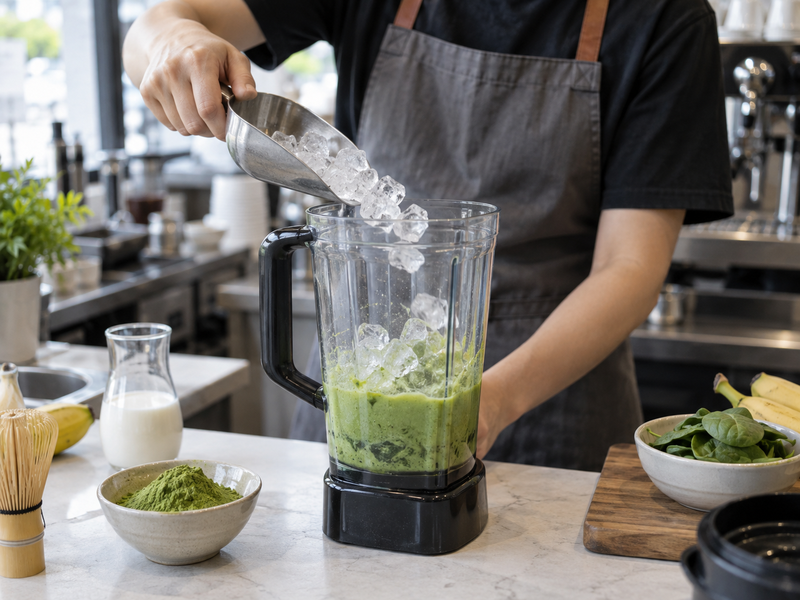
Ice both chills and dilutes. Use a scale in the pilot to establish the amount that gives the target temperature and thickness with the chosen frozen or fresh fruit. A heaped scoop can vary with cube size and melt water in the bin. Once the recipe is approved, a calibrated ice scoop may be practical, but its output should be checked after ice equipment or cube shape changes. Record the final blended yield and cup fill.
Test too little, target, and too much ice with the same matcha and milk. A large ice load can make a smoothie appear thick while muting the tea and increasing the amount left in the pitcher. Do not treat every extra spoonful of leftover blend as a bonus serving; it is waste or portion drift. Check the drink again after a few minutes. If it separates or becomes watery before normal pickup, revise the recipe or service sequence. The ice specification is part of flavor control, not merely a cooling detail.
6. What blending sequence produces the target texture?
Make the equipment part of the recipe
Specify the blender model or approved tool, ingredient order, batch size, blend time or program, and stopping cue. One sequence may wet oats and matcha before ice is added; another may work better with the shop’s machine. Test for matcha streaks and oat particles at the bottom of the pitcher. A long blend can warm or thin the drink and slow the bar, while a short one may leave lumps. Choose by the finished cup and measured ticket time.
Blenders also need cleaning between orders and controlled handling for allergens. Plan that work into the station rather than assuming the jar is always ready. Test two consecutive smoothies with different milk options under the approved cleaning procedure. If one pitcher cannot keep up with peak service, consider equipment or menu scope before preblending large batches without a validated holding plan. A recipe card that says “blend until smooth” is not enough for consistent service across staff and machines.
| Blend control | Record | Passing result |
|---|---|---|
| Ingredient order | Step sequence | Matcha fully dispersed |
| Program or time | Machine setting | Target texture |
| Pitcher reset | Cleaning step | Ready for next order |
7. Can ingredients be portioned ahead?
Prep solids without losing traceability
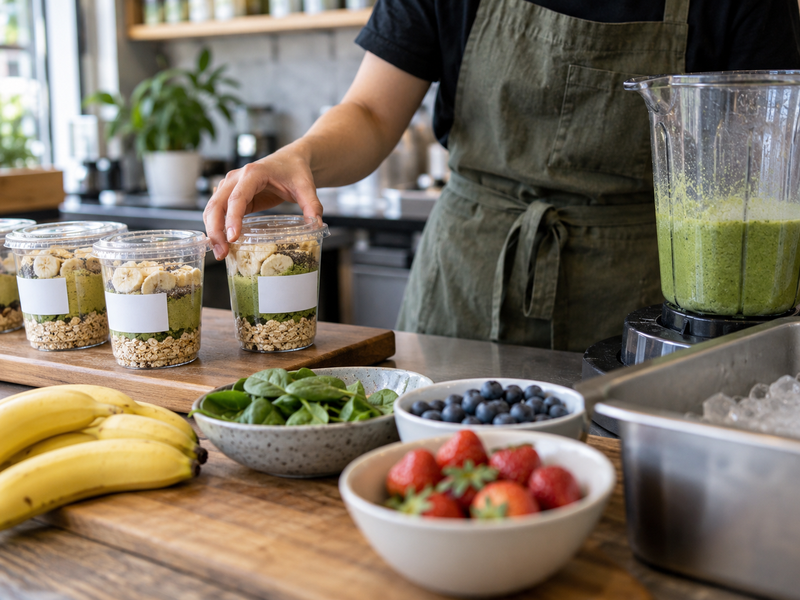
Pre-weighed matcha and oats can shorten an order and protect dose accuracy if they are stored and labeled appropriately. Fruit can be cut or portioned under the site’s food-safety procedure. Decide which components save real service time and which add waste. A sealed dry packet may help the morning rush; a large mixed wet base may separate and create handling questions. Test the complete workflow, including where portions are kept and how staff identify the correct recipe version.
The FDA Food Code provides a model reference for US retail food practices, while adopted local rules govern the actual café. Have the food-safety lead set preparation, labeling, temperature, and discard instructions for perishable ingredients. Do not infer safety from a smoothie that looks or smells good. Count how many prepped portions are used and discarded. If weekday demand is low, a smaller prep plan may be cheaper and fresher than one large batch intended for a hypothetical rush.
8. How do you handle modified orders?
Define the changes the bar can execute
“Less sweet,” “extra matcha,” “no oats,” and milk substitutions affect different parts of the drink. Set measured versions for modifications you plan to sell. Extra matcha should add a defined mass; no oats may require a tested change to liquid or ice so the cup is not watery. A different milk can change flavor and texture. Put the allowed options in the ordering system and recipe card so the printed ticket communicates the same instructions staff learned.
Do not promise an unsweetened smoothie if the fruit puree, yogurt, milk, or matcha blend already contains added sugar. Staff can say “no added syrup” when that is accurate. Record common modifications during the trial period; they may indicate that the house recipe is too sweet or too thick for the audience. Resist making every ticket bespoke. A short, well-tested option list protects speed and makes ingredient cost visible. When a modification cannot be supported safely or consistently, explain that plainly to guests.
| Request | Defined change | Recheck |
|---|---|---|
| Extra matcha | Added weighed tea | Flavor and caffeine information |
| No oats | Approved liquid/ice build | Thickness and cost |
| Milk swap | Named product | Allergen handling and body |
9. What does one smoothie cost to serve?
Include what stays in the blender
Calculate matcha, oats, fruit after trimming, milk, sweetener, cup, lid, and any garnish from the actual serving masses. Add an allowance for blend left in the pitcher, spills, remakes, and prep loss. A smoothie can look inexpensive per ingredient and still waste enough material to erode margin if the batch yield is poorly matched to the cup. Measure finished volume from several consecutive tickets and compare with the intended fill.
Consider machine and cleaning time in the service plan. If a breakfast smoothie blocks the only blender during a rush, ticket delay is a real operating cost. A larger cup or double-size option requires its own recipe and yield test rather than a quick multiplier. Update the worksheet when fruit price, milk product, matcha lot price, or pack changes. The cost model should describe the drink as served, not a perfect laboratory blend with no residual material.
10. How do you keep cups consistent across shifts?
Train to an observable result
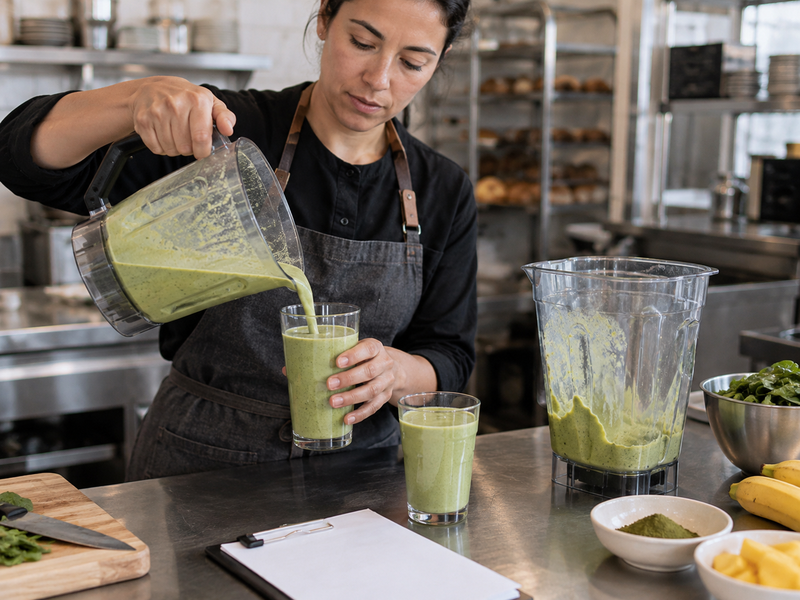
Post a short station card with exact ingredients, masses, ingredient order, blender program, cup, and passing texture. During training, ask different staff members to make the smoothie independently and compare fill, thickness, and flavor after a short wait. If cups vary, inspect scale use, ice scoop, fruit portions, and blender settings before changing the formula. A visual reference can show the target pour, but measured ingredients remain the main control.
Record the approved matcha and milk products, recipe date, and person responsible for changes. A new fruit supplier or oat form should trigger a comparison trial. Watch remakes and customer comments for patterns: “too thick” may mean oat or ice drift, while “weak tea” may mean powder dose or fruit balance. Make one controlled adjustment at a time. The goal is a drink that tastes like the same menu item whether it is made at opening or during a busy lunch.
| Shift check | Passing evidence | If it fails |
|---|---|---|
| Portion setup | Correct dry packets or scale | Reweigh ingredients |
| Blend | Smooth, no oat grit | Check setting and order |
| Cup | Target fill and texture | Inspect ice and yield |
FAQ
Q1. Can oats be added dry? Test the chosen oat type and blender. A pre-soak may improve texture, but it adds a separate preparation and handling step.
Q2. Should the smoothie use fresh or frozen fruit? Either may work. Test the exact form for sweetness, thickness, prepared yield, and service availability.
Q3. Why does the drink thicken while waiting? Oats can continue absorbing liquid. Judge the cup at the normal handoff delay and adjust the controlled recipe if needed.
Q4. Can the café batch a complete smoothie ahead? Only after quality and handling have been assessed for the complete drink under the site’s procedure. A fresh blend may perform differently.
Q5. Does a breakfast smoothie need a nutrition claim? No. Describe the ingredients and serving accurately; any protein, energy, or health statement needs appropriate calculation and review.
Make the blender result repeatable
A useful matcha breakfast smoothie starts with the cup the customer receives, then works back to weighed tea, oats, fruit, milk, and ice. Test the blend after normal delay, measure what remains in the pitcher, and train staff to a clear texture. The morning rush should produce the same drink as the quiet pilot.