
A handmade matcha bowl can give a retail assortment a recognizable maker’s touch. It can also bring differences in opening, glaze, and foot that matter when a café orders dozens of units. The sensible purchase starts with two separate questions: what variation tells the maker’s story, and what variation changes the bowl’s function? Use the checks below to ask for clear provenance, a safe food-contact specification, and a reorder agreement that respects both craft and daily service.
Contents
- 1. What does handmade mean for this bowl?
- 2. Which parts may vary from piece to piece?
- 3. How do you verify the maker and origin?
- 4. Is the glaze documented for food contact?
- 5. Does the shape still support whisking?
- 6. How should you assess the foot and balance?
- 7. What can ordinary handling reveal?
- 8. How will retail packaging protect each piece?
- 9. Can a buyer reorder a similar bowl?
- 10. What should the listing promise?
1. What does handmade mean for this bowl?
Ask about the actual process
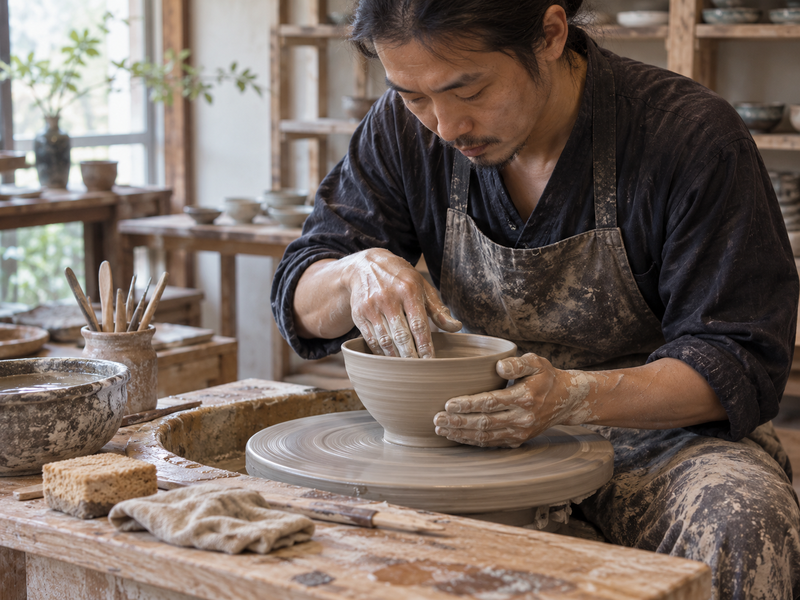
“Handmade” can cover hand throwing, hand building, hand finishing, or decoration applied to a molded body. None is inherently wrong, but the product description should say which steps a person performs. Ask the maker or supplier for a process summary and photographs of representative production, not just one styled finished bowl. If a bowl is wheel-thrown and then glazed by hand, say so. If it is molded and hand-decorated, describe that accurately as well.
For a buyer, process affects capacity and variation. A studio making individually thrown pieces may offer color families but no exact replacement. A workshop using consistent forms can support a larger program. Ask how many people make and finish the order, what portion is made to a template, and how a new batch is checked. The answers help you choose a sale format and set customer expectations without inventing a romantic story about the maker.
2. Which parts may vary from piece to piece?
Divide visual character from functional limits
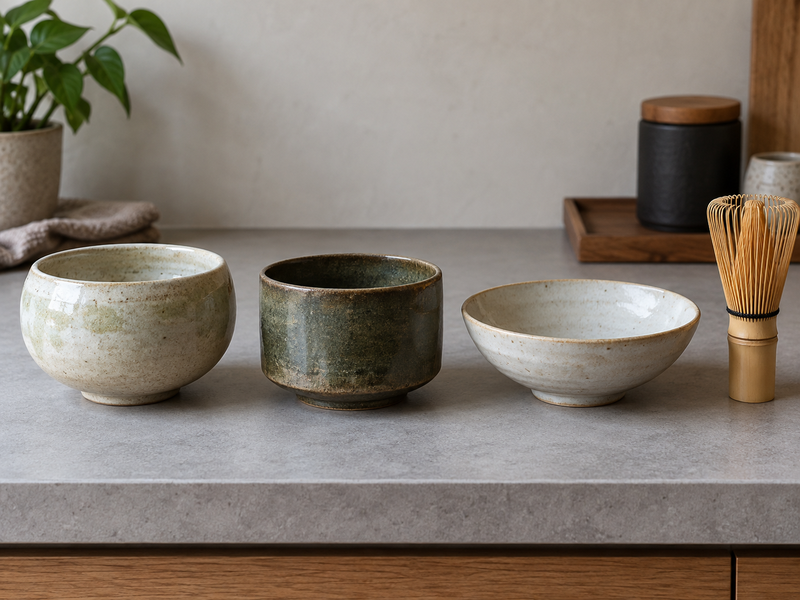
Inspect at least three bowls from the same design. Compare glaze tone, brush marks, rim shape, height, inner opening, and foot. A color variation can make every piece distinctive. A markedly narrower opening may make one unit difficult to whisk in. Write tolerances for functional dimensions and broader descriptions for appearance. That distinction is fairer than demanding identical bowls while advertising them as individually made.
Photograph a representative range, including the lightest and darkest acceptable glaze. Put a measuring tape or gauge on the inner opening and record the smallest working area. If the bowl is sold online, show the allowed variation rather than a single perfect sample. If it is used at several cafés, assign functional limits based on the whisk and recipe. A buyer can then inspect a shipment without arguing over whether a brush mark is a defect.
| Feature | Usually aesthetic or functional? | What to specify |
|---|---|---|
| Glaze shade | Mostly aesthetic | Representative color range |
| Inner opening | Functional | Minimum clear diameter |
| Foot flatness | Functional | No rocking on defined surface |
| Brush placement | Aesthetic unless at rim | Acceptable examples |
3. How do you verify the maker and origin?
Keep the provenance chain short and traceable
Ask for the maker’s name or studio, production location, and the party responsible for importing and selling the bowl. If a retailer plans to use a story card, get the studio’s approval for the words and photographs. An invoice and a maker statement are more useful than an unverified claim that every piece is “traditional Japanese.” Some excellent handmade bowls are made outside Japan; origin should be stated accurately, not inferred from style.
Keep a record linking each shipment to the maker or workshop and to the product design. A stamped mark can help identify a piece, but it is not a substitute for supply documents. The Tsukushi guide describes visual clues used when examining a chawan; treat any unfamiliar seal or technique name as a question to verify with the producer before repeating it in a product listing.
4. Is the glaze documented for food contact?
Ask for evidence tied to this finish
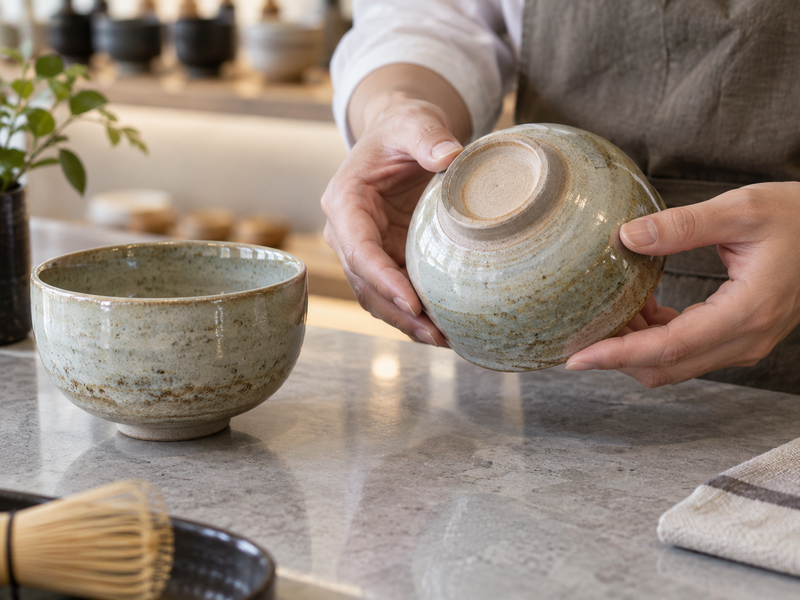
Food-contact suitability cannot be judged from a smooth appearance or a claim that the clay is natural. Ask for the relevant material and testing information for the country of sale, identifying the product family and glaze finish. Check whether a bright overglaze, metallic accent, or painted rim is included in the same documentation. The FDA’s guidance on lead-glazed traditional pottery explains why certain glazes warrant attention; it does not approve any individual bowl.
Inspect the food-contact surface under good light. Look for rough spots, unglazed patches not intended for contact, and cracks or crazing. Ask how changes in pigment, glaze recipe, or firing are handled between batches. Keep documents with the SKU and lot. If the studio cannot provide adequate evidence for the sales market, do not present the item as a food-service bowl while hoping that its handmade status will substitute for documentation.
| Document question | Useful answer | Follow-up if missing |
|---|---|---|
| Which finish was assessed? | Exact glaze/color family named | Request matching evidence |
| Which market is covered? | Destination stated | Check local requirements |
| Was decoration included? | Rim and overglaze addressed | Separate decorative SKU |
| What changed this batch? | Change record available | Reassess before reorder |
5. Does the shape still support whisking?
Prepare the intended drink in several units
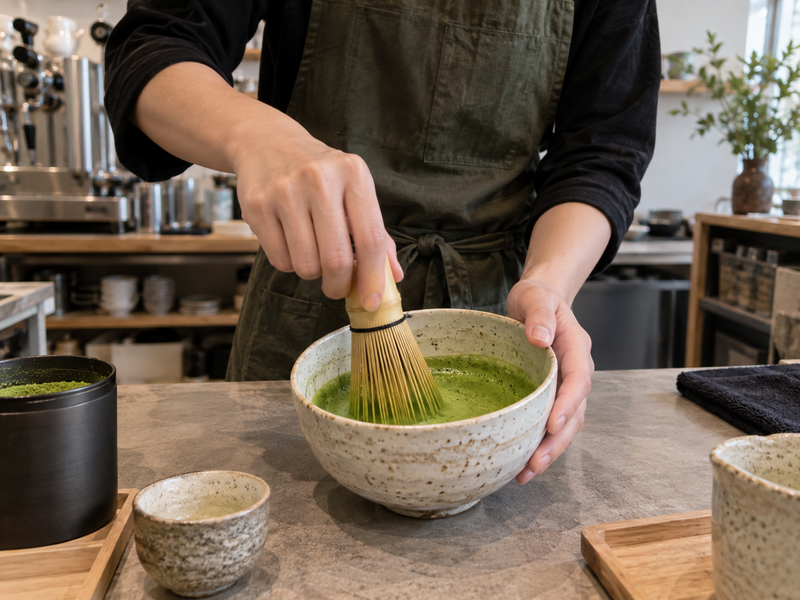
Put the same whisk, powder dose, and water volume in each sampled bowl. Measure the inner opening and working floor, then whisk at normal pace. Listen for repeated contact with the side and observe splashes. A slightly irregular rim may make a bowl charming without affecting preparation. A sloping floor that pushes powder into a corner can change the operator’s work. Record the functional result for each unit, not just the average.
If the bowl is sold as a gift, test it with the whisk included in the set. If it is for a café, test it beside the scale, sieve, and serving cup. A handmade matcha bowl should be allowed its visual individuality while meeting the minimum dimensions that make it usable. The EdoMatcha discussion of chawan shape offers context, but the buyer’s own recipe and tool set determine the final pass.
6. How should you assess the foot and balance?
Test stability on a defined surface
Set each bowl on the same flat worktop and press lightly at four points near the rim. Record rocking, then repeat with the normal liquid amount. Look at the foot ring for sharp clay burrs, glaze drips, or a surface that could scratch a table. A hand-finished foot need not look machine-perfect, but it must support the bowl securely in its stated use. A stable sample on a cloth mat may still rock on a bare counter, so test both if both will be used.
Balance also affects lifting. Ask two people to pick up the filled bowl from its service position and turn it for a pour or presentation. Note where their fingers land and whether a thick wall makes the bowl tiring to carry. For a retail piece, check how the foot rests inside the packaging insert. A foot that presses against a hard carton wall can become a transit damage point.
| Foot check | Simple method | Why it matters |
|---|---|---|
| Flatness | Four-point rim press | Stability while whisking |
| Edge finish | Fingertip and cloth pass | Table and packaging abrasion |
| Center of balance | Lift filled bowl naturally | Handling comfort |
| Insert fit | Close and reopen package | Transport pressure |
7. What can ordinary handling reveal?
Observe rather than stage a stunt
Use a small group of samples for a normal service or demonstration week. Count preparations and washes, and note where a chip, stain, or roughness appears. Keep one unused bowl as a control so a firing mark is not mistaken for new wear. Hand-formed rims and projecting details may meet neighboring ware in a drying rack; that everyday contact is more informative than a single dramatic drop. Record the washing method used, because an unapproved machine cycle would make the result hard to interpret.
For retail, have staff pack, unpack, and repack a bowl the way a customer or fulfillment team will. Watch whether a product card or insert rubs the glaze. Compare several pieces from one lot rather than judging a maker by an unusual outlier. Ask the supplier how defects are defined and resolved. The aim is a workable quality agreement, not a promise that ceramic can never chip.
8. How will retail packaging protect each piece?
Build around the largest acceptable unit
Measure the widest, tallest, and most projecting acceptable bowls in the approved range. Design the insert around those limits, not around the smallest sample. Support the base and side without pressing a narrow point against the rim. Check that the bowl cannot strike the outer box during the handling expected for the chosen distribution channel. If the packaging includes a whisk or scoop, separate the tools so they cannot abrade the glaze.
Ask for packaging samples before ordering printed cartons. Open them after a realistic journey through the warehouse or an agreed transit test. Inspect the bowl, not only the box. Record whether padding can be recycled or reused if that matters to the retailer’s program, but avoid environmental claims unsupported by the actual material and collection system. Provide a clear care card that matches the maker’s instructions. A broken replacement in a beautiful box still creates a poor buying experience.
| Package element | Function | Trial question |
|---|---|---|
| Inner support | Limits movement | Does widest bowl fit without pressure? |
| Rim clearance | Protects fragile edge | Does any tool or card touch it? |
| Outer carton | Resists normal shipment | Is damage visible after trial? |
| Care card | Sets customer expectations | Is wording maker-approved? |
9. Can a buyer reorder a similar bowl?
Agree on continuity before launch
Ask whether the maker can repeat the clay body, approximate size, glaze family, and price after the first run. Discuss likely batch size and what happens if the glaze changes or a studio closes a design. Do not invent a lead time or demand an impossible guarantee of identical handwork. A retailer may intentionally sell numbered batches. A café may need a second source or enough spare bowls to cover a planned menu period. Those are different buying strategies.
Keep an approved master sample and photos of acceptable variation. When a second batch arrives, compare functional dimensions first, then review visual range. Tell customers if a future bowl may differ from the product image. For wholesale buyers, include a clause requiring notice before material or finish changes. The relationship works better when the maker knows which differences are welcome and which would interrupt service.
10. What should the listing promise?
Describe the piece that can be delivered
A useful product listing names the maker or workshop where permitted, the real production method, approximate dimensions, material, finish, care method, and expected visual variation. Show more than one representative bowl if the range is broad. State that a photographed piece may differ in pattern or color when that is true. Avoid terms such as “authentic,” “ceremonial,” or “heirloom” unless the seller can explain exactly what they mean and support the claim.
For food-service buyers, attach a concise specification with minimum opening, stable-foot criterion, cleaning method, packaging, and product-specific food-contact documents. For consumers, keep the prose short enough to understand before checkout. A clear description can celebrate handwork without pretending that every piece is interchangeable. After launch, compare customer questions and returns with the listing. If people repeatedly misunderstand size or color, improve the photos and measurements before writing more adjectives.
| Listing element | Useful wording focus | Avoid |
|---|---|---|
| Process | Exact handmade steps | Vague origin legend |
| Dimensions | Approximate range | One precise number for varied pieces |
| Appearance | Representative glaze variation | Single idealized photograph |
| Care | Maker-approved method | Assumed machine compatibility |
| Food contact | Verified documentation | Unsupported safety guarantee |
FAQ
Q1. Does handmade mean every bowl is unique? Often there is variation, but the extent depends on the process. Ask the maker what parts are made to a repeatable template.
Q2. Can a handmade matcha bowl work in a café? Yes, if the functional dimensions, stable foot, food-contact evidence, and cleaning method meet the café’s documented requirements.
Q3. Is a maker’s stamp proof of origin? It is one useful identifier, but invoices and a traceable statement from the maker or supplier provide stronger provenance.
Q4. Should slight glaze differences be defects? Usually only if they fall outside an agreed visual range or affect use. Establish that range before ordering.
Q5. How should a retailer photograph the product? Show several representative pieces, the interior, the base, a scale reference, and the breadth of acceptable variation.
Buy the real craft, with clear limits
Choose a handmade matcha bowl for the work and story it can honestly deliver. Verify the maker, test multiple pieces, and put functional limits beside the acceptable visual range. That lets a buyer value handwork without leaving service and customer expectations to chance.