
Taro matcha combines a taro base with whisked green tea, usually in a milk drink. For cafes, the recipe starts with an ingredient decision: cooked taro, prepared paste or a sweetened powder blend. Each choice changes texture, sweetness, labor and labeling. Specify that base before selecting the tea or photographing the menu drink.
Contents
- 1. What ingredients belong in a taro matcha latte?
- 2. How do cooked taro and powder blends differ?
- 3. What formula can a cafe use for a starting trial?
- 4. How should a cooked taro base be prepared?
- 5. How can a team control texture and portion weight?
- 6. How should matcha be chosen for the finished drink?
- 7. What color and layering should customers expect?
- 8. How should staff handle batches and substitutions?
- 9. How much does the finished latte cost?
- 10. What should buyers send to an ingredient supplier?
1. What ingredients belong in a taro matcha latte?
Identify the base before naming the drink
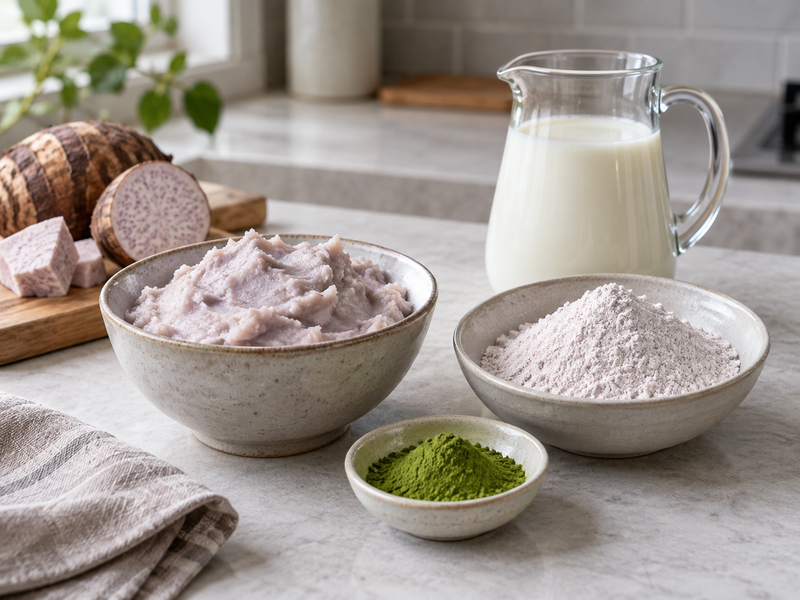
An ingredient list should tell staff whether the taro component is cooked root, a prepared paste or a beverage blend. Then list the milk, matcha, water, sweetener and optional additions separately. A taro powder may already contain sugar and creamer, while a plain cooked base gives the developer more independent choices.
Taro and ube are different ingredients. Singapore’s NParks identifies ube as Dioscorea alata, a yam whose flesh may be white, ivory or purple. Its plant record also notes that purple forms are sometimes confused with taro. Avoid using the names interchangeably on a menu or purchasing order. NParks Dioscorea alata record
Define the intended texture in ordinary language. A smooth latte should pass through the chosen straw without hard particles or a thick plug at the bottom. A drink deliberately containing soft taro pieces needs a different serving tool and customer description. Decide this before testing tea grades. Otherwise, tasters may reject a powder because of a texture defect caused by the base underneath it.
2. How do cooked taro and powder blends differ?
Compare the complete purchased ingredient
For taro matcha, plain cooked taro requires preparation and texture control. A formulated powder may offer simpler portioning but includes ingredients that affect sweetness, color and milk choices. Prepared paste sits between those options and needs its own specification. Ask for the full ingredient list rather than relying on the product name.
Bossen’s listed taro powder, for example, includes creamer, sugar, taro powder, flavor, gum and colors. Its creamer contains sodium caseinate. Check the current pack and allergen declaration before using a blend in any dairy-free menu claim. This is a product-specific example, not a description of every taro powder. Bossen Taro Powder ingredients
| Base format | Work required | Purchasing check |
|---|---|---|
| Plain cooked taro | Cook, mash and blend | Usable yield and preparation control |
| Prepared taro paste | Portion and dilute | Added sugar, fat and storage directions |
| Pure taro powder | Follow preparation guidance | Processing method and intended use |
| Sweetened beverage blend | Mix to supplier instructions | Sugar, creamer, colors and allergens |
Taste each candidate at its intended usage rate before comparing cost. A lower price per kilogram means little if the product requires a much larger serving. Save the product code with the approved recipe so a replacement bag does not silently change the drink.
3. What formula can a cafe use for a starting trial?
Start with a small, weighed sample
The following formula is a proposed taro matcha bench trial using plain, fully cooked taro. It is not a validated production recipe. Use ingredients handled under the site’s approved food safety procedure and check the finished fill in the intended glass. A sweetened premix requires a separate trial based on its own directions.
| Component | Proposed quantity | Purpose in the trial |
|---|---|---|
| Plain cooked taro | 50 g | Establish root flavor and body |
| Selected milk | 150 g | Blend the taro into a drink |
| Matcha | 2 g | Establish a tea reference |
| Water for matcha | 40 g | Disperse the powder |
| Ice | 100 g | Standardize the initial serving |
| Added sweetener | None initially | Assess the base without added sugar |
Blend the taro and milk separately from the tea. Taste the complete stirred drink, then run a taro comparison using 40 g and 60 g while holding the other quantities fixed. Record pourability, root flavor and residue in the glass. Those observations should guide the next adjustment.
Add a measured sweetener trial only after choosing the base quantity. If condensed milk enters the recipe, record its full weight and reduce other ingredients through a new trial. It changes more than sweetness, so it should not appear as an undefined optional spoonful on a commercial recipe card.
4. How should a cooked taro base be prepared?
Use an approved cooking and cooling procedure
Source edible taro from a traceable food supplier. NParks identifies taro as Colocasia esculenta and warns against eating its tubers or leaves raw. For cafe production, use fully cooked taro prepared through a suitable foodservice process. A drink recipe should not replace that process with an unverified cooking time. NParks taro guidance
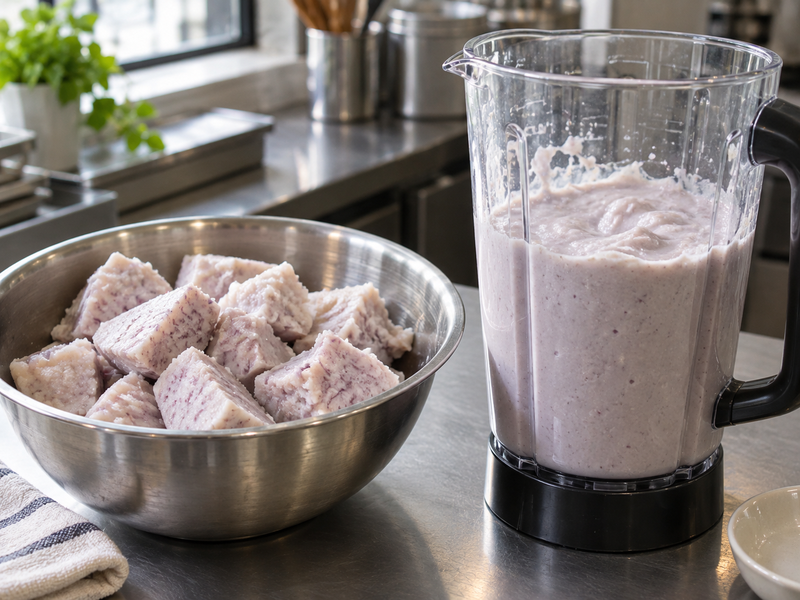
Keep piece size consistent during preparation so staff can assess the batch evenly. After cooking, check for hard centers before mashing. Use the site’s controlled cooling method before blending a chilled beverage base. Record the prepared batch weight; trimming and cooking can change the amount available for drinks.
Blend a small quantity with the selected milk and inspect it on a spoon. Hard particles, fibers and dense lumps need attention before tea is added. If a sieve forms part of the method, measure the retained material and include that loss in yield calculations. Repeatedly straining an unsuitable base may create expensive waste.
Avoid adding enough liquid to hide every defect. A diluted base may pour easily yet leave taro matcha without the texture customers expect. Keep the approved preparation sequence beside the recipe so staff know when to stop blending and how the finished base should look.
5. How can a team control texture and portion weight?
Test the actual pump, scoop or ladle
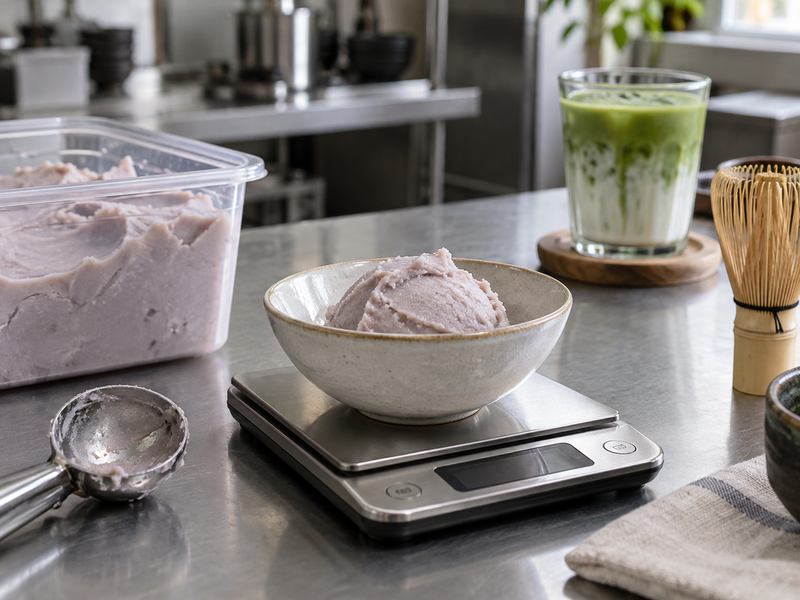
A thick base can coat a ladle or cling inside a pump. For taro matcha service, check portion tools with the prepared product at its normal service condition. Weigh several consecutive portions and inspect what remains on the tool. Include a routine for stirring or mixing the base when your approved process requires it.
| Observation | Check before changing the recipe | Proposed follow-up |
|---|---|---|
| Heavy bottom layer | Base quantity and blending | Reduce taro in a separate trial |
| Hard particles | Cooking and raw material | Correct preparation before tasting |
| Uneven portions | Tool and staff motion | Compare weighed deliveries |
| Watery finish | Milk, ice and service delay | Repeat with fixed ice weight |
| Base sticks to glass | Pourability and mixing | Test a narrower solids range |
Use descriptive references in training. Show the approved base flowing from a spoon and the residue left after a customer-style stir. A photograph of the full glass cannot capture these details. Staff should recognize whether the base is too stiff before assembling an order.
When comparing a premix, follow its preparation instructions and record the water or milk added. Dry powder weight alone does not describe the amount of prepared base in a serving. Keep those two quantities separate on the portion sheet.
6. How should matcha be chosen for the finished drink?
Evaluate tea in the approved taro base
Prepare matcha separately with measured water and inspect it for dry clumps. Keep the powder dose, water quantity and preparation sequence fixed across candidates. A tea comparison becomes unreliable if one bowl is whisked smoothly while another contains gritty powder stuck to its sides.
Taste each tea in the complete taro matcha after stirring. The taro base, milk and sweetener may soften some flavors and obscure others. Ask tasters whether they can recognize tea after the initial creamy mouthful. Record any drying finish rather than assuming that more powder will solve a weak aroma.
Run a dose comparison only after selecting a shortlist. Keep the approved base unchanged and use coded samples. A stronger dose increases ingredient cost and can change mouthfeel, so approval should include both tasting and costing. Do not choose a grade solely because its dry powder looks greener in a photograph.
For related milk-based development, see the Matcha Village latte guide. Send the taro formula with any sample enquiry. The supplier needs to know whether the tea will enter a plain cooked base or a sweet, flavored premix before recommending samples for evaluation.
7. What color and layering should customers expect?
Photograph the ingredients you intend to serve
For a pale-fleshed taro base mixed with milk, plan for cream, off-white or muted gray-lilac tones. Do not make an intensely purple drink the reference for that formula. Taro varieties and prepared products can differ in color. Ask suppliers to identify any added color, ube or purple sweet potato in a blend.
Adding ube changes the formulation and should be described accurately. If a developer adds color deliberately, record it in the formula and review the applicable labeling requirements for the intended market. Photography should represent the approved drink under ordinary lighting so stores can match it without improvising extra ingredients.
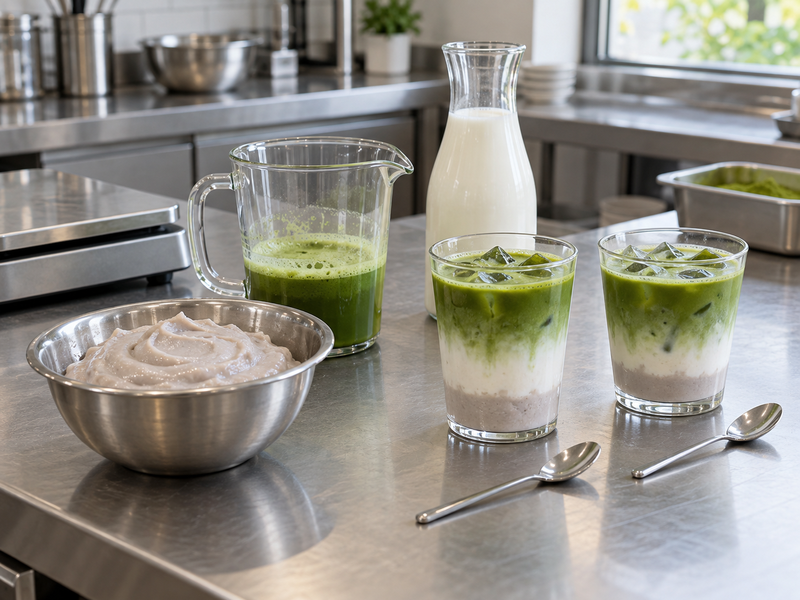
For a proposed layered taro matcha service, pour the prepared taro milk over measured ice and add the whisked tea slowly. Check the glass at handover, then stir it completely and taste again. A dense base can remain below the straw opening, leaving customers with strong tea above and sweet paste below. Approve the stirred texture alongside the layered appearance and provide a serving tool that reaches the bottom.
8. How should staff handle batches and substitutions?
Give every prepared base a clear identity
For taro matcha production, label the prepared base with its product or recipe code, batch details and the handling information required by your site procedure. Keep supplier instructions for purchased paste or premix available at the station. The unopened powder’s shelf life does not establish how long a milk-based preparation may be held after mixing.
Storage and service limits require an appropriate food safety assessment for the actual formula and process. Do not borrow a home recipe’s refrigerator period or another shop’s practice. Staff need an approved instruction they can follow and a clear action when batch identity is missing.
| Change at the station | Recheck before approval | Record to update |
|---|---|---|
| New milk product | Taste, texture and allergens | Substitution recipe |
| New taro supplier | Color, yield and preparation | Ingredient specification |
| New premix | Ingredients and usage rate | Formula and menu claims |
| Larger batch | Mixing and cooling procedure | Production record |
Observe a trial service from preparation through station cleaning. A base that tastes good in one glass may be difficult to portion from a large container. Use the smallest practical batch for development and record actual demand before increasing production. That gives purchasing a better basis for pack size and replenishment decisions.
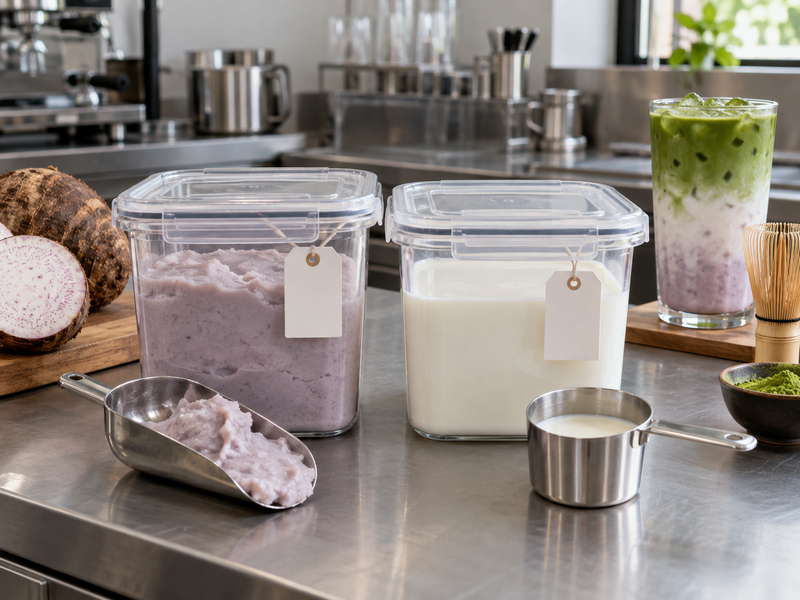
9. How much does the finished latte cost?
Cost usable base and the full portion
Calculate taro matcha costs from prepared yield when using fresh taro. The cost of purchased root must cover trimming, rejected material and any losses during processing. Divide the total relevant ingredient cost by the usable prepared weight before assigning a price to each portion.
The illustration below uses invented prices for a proposed formula. It excludes labor, ice, packaging, freight, tax and waste. The taro price represents an assumed cost per kilogram of usable cooked taro, not a current market quotation.
| Ingredient | Illustrative price | Portion | Ingredient cost |
|---|---|---|---|
| Usable cooked taro | USD 5 per kg | 50 g | USD 0.25 |
| Milk | USD 2 per kg | 150 g | USD 0.30 |
| Matcha | USD 60 per kg | 2 g | USD 0.12 |
| Listed ingredients | Calculation only | One trial drink | USD 0.67 |
For a powder blend, calculate the finished serving from the blend dose plus every added milk, syrup or creamer. Compare that cost with the cooked-taro version after both pass the same tasting target. Include preparation and cleaning time before making a buying decision. A simpler station routine may justify a different ingredient price, but the arithmetic should show that tradeoff clearly.
10. What should buyers send to an ingredient supplier?
Provide a complete application brief
Describe the taro base by product code or full recipe. Include the milk, matcha dose, water, sweetener, ice and serving size. Add a photograph showing the approved pale base or the correctly declared colored formulation. Specify whether the tea needs a clear grassy note, a softer finish or another sensory direction your team can describe consistently.
For Matcha Village enquiries, identify whether the project needs bulk matcha, a blend or private label packaging. State expected quantities and destination market, then ask for the available sample choices and documents for the proposed product. Confirm claims and specifications directly before putting them on retail packs or trade materials.
Keep a small purchase specification beside the recipe. It should identify the accepted ingredient, packaging format and process for reviewing replacements. Include the agreed tasting reference and any documented limits needed for your application. A generic request for premium matcha gives the supplier less useful information than a measured taro matcha recipe.
Have another team member prepare the shortlisted version without verbal help. Update any unclear portion or assembly instruction, then issue the approved revision to purchasing and store staff together.
FAQ
Q1: Are taro and ube the same ingredient?
No. Ube is a yam and taro is a different crop. Name any ube added to the formula accurately and check supplier ingredient statements.
Q2: Why is a real taro latte often pale?
A pale-fleshed taro mixed with milk produces a pale base. Varieties differ, and vivid commercial colors may come from other ingredients or added colors.
Q3: Can taro powder replace cooked taro directly?
Run a separate trial. Pure powders and beverage blends vary in composition, usage rate and preparation needs. A gram-for-gram substitution can change several properties together.
Q4: Is a taro powder drink automatically dairy-free?
No. Check the complete ingredient list and allergen declaration for the blend, milk and other additions. A creamer description alone cannot support that claim.
Q5: Can the finished latte be prepared in advance?
Evaluate taste and appearance separately from food safety. Any advance preparation needs approved handling and storage limits for the exact formula, equipment and service conditions.