
Matcha bingsu gives a dessert cafe a bowl of finely shaved ice with tea flavor and contrasting toppings. The machine, frozen base and assembly order determine whether that bowl reaches the table as a light mound or a collapsing pool. Develop the ice texture first, then add the toppings needed for a complete serving.
1. What kind of matcha bingsu should the cafe make? · 2. Which equipment details must be resolved before freezing a base? · 3. How should the first matcha ice-base trial be organized? · 4. What should be recorded while the base freezes? · 5. How should the first shaving trial be evaluated? · 6. How much ice belongs in one serving? · 7. Which toppings support the ice rather than bury it? · 8. How can the cafe test the trip from machine to table? · 9. What costs are easy to miss in a shaved-ice menu? · 10. What should a second location receive before launch?
1. What kind of matcha bingsu should the cafe make?
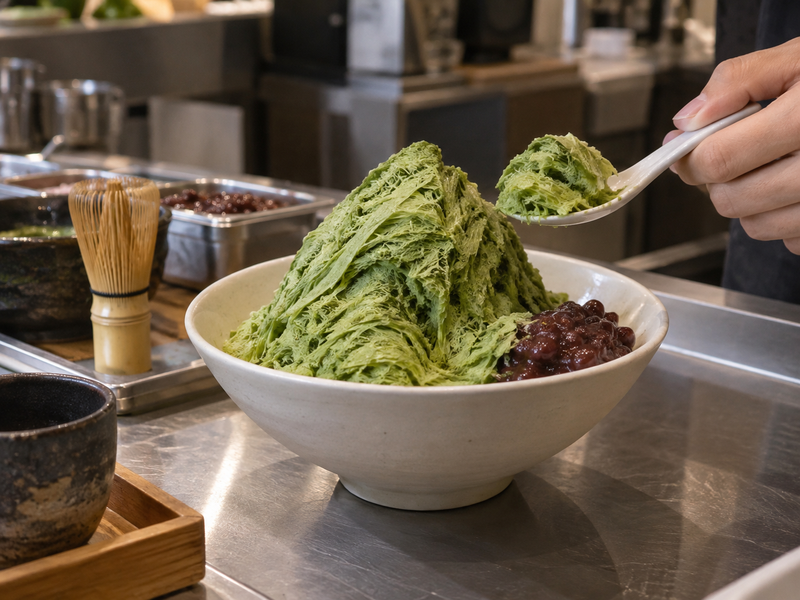
Decide where the tea enters the bowl
Matcha can be incorporated into the frozen base or applied through a topping. Those routes create different color distribution and preparation work. For a first comparison, select one route so the team can evaluate ice texture without changing several components.
Sift & Simmer’s matcha bingsu freezes a matcha-and-water base and shaves it before adding toppings. That provides one clear format. A sweetened milk base is a separate recipe and equipment question, not an automatic substitute.
Choose a serving size and bowl before development. A tall mound may photograph well but need more time to assemble than a flatter portion. The rim should leave enough room for toppings without forcing staff to compress the ice.
Describe the desired texture in a spoonful. Compare whether the shaved material feels light, coarse or slushy and whether toppings dominate each bite. The product brief should specify the bowl customers eat, including the point at which the tea flavor becomes apparent.
2. Which equipment details must be resolved before freezing a base?
Ask what the machine is designed to shave
Check whether the equipment uses blocks, cubes or a liquid-fed freezing system. Confirm the required mold dimensions and permitted base composition with the manufacturer. A machine sold for plain ice should not be assumed suitable for every sweetened or milk-containing block.
Snowie’s Block Pro information illustrates how a block shaver specifies its ice format. It is a manufacturer example of equipment-specific requirements, not a recommendation that this model supports your proposed matcha or dairy formulation.
| Equipment question | Evidence to request | Why the cafe needs it |
|---|---|---|
| Feed format | Current operating manual | Correct freezing container |
| Permitted base | Manufacturer guidance | Appropriate formulation |
| Cleaning method | Food-contact cleaning instructions | Repeatable daily operation |
| Local installation | Electrical and space requirements | Feasible counter setup |
Arrange a trial using the intended machine before purchasing a large set of molds. A freezer full of blocks that do not fit the machine creates avoidable waste.
Keep operator access and bowl placement in the trial. The unit has to work within the cafe’s counter layout, including safe loading, cleaning and collection of shavings.
3. How should the first matcha ice-base trial be organized?
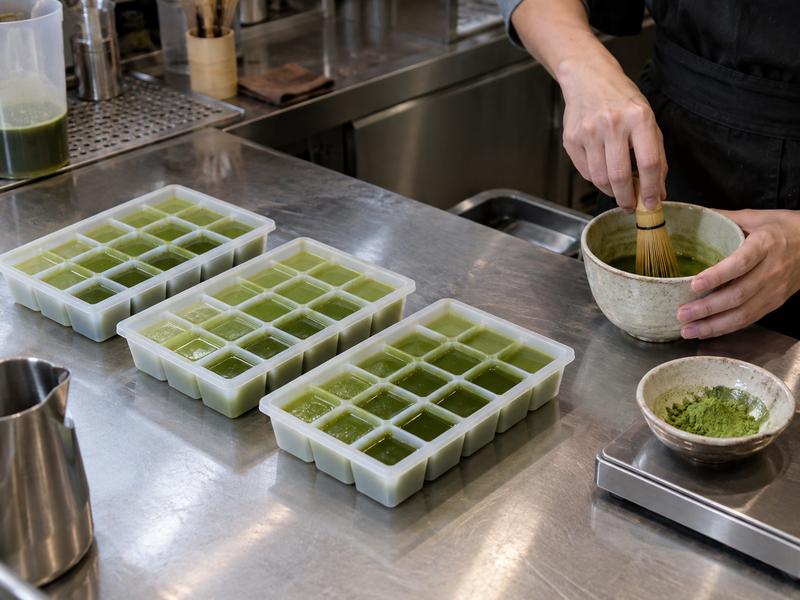
Compare tea levels within an approved base
Once the equipment supplier confirms a suitable base, prepare small equal batches using that formulation. For a water-based screening proposal, compare 2, 3 and 4 grams of matcha per 500 grams of water, provided the selected machine permits that application. These are unvalidated flavor trials rather than a universal bingsu formula.
Sift the tea, disperse it thoroughly and inspect the liquid before filling molds. Record any additional sugar or other ingredients as a separate version. A sweetened sample should not be compared with an unsweetened one as if matcha dose were the only change.
Use identical molds and fill weights. Note the preparation-to-freezing interval and the freezer location. If particles are distributed differently between blocks, the shaved output may vary within a single serving.
Taste the shaved base without toppings before choosing a tea level. Then add the same topping set to each sample. A bowl with sweet red bean or condensed milk can alter the apparent tea intensity, so the final choice needs both observations.
Retain the powder lot identity alongside the freezing record for every selected sample.
4. What should be recorded while the base freezes?
Make the block a controlled ingredient
Use containers suitable for the intended freezing and equipment process. Follow their fill limits and the machine supplier’s requirements. Record the actual base weight in each mold rather than relying on a visual fill line alone.
Keep blocks identifiable through the freezing process without placing unsuitable labeling materials in contact with food. Staff need to distinguish formulation versions, preparation batches and approved stock at a glance.
| Freezing record | What it identifies | Useful check |
|---|---|---|
| Base version | Formula and matcha lot | Correct trial comparison |
| Fill weight | Amount in each mold | Comparable blocks |
| Mold identity | Shape and dimensions | Machine fit |
| Freezer position | Location during freezing | Observed variation |
Confirm the frozen state required by the operating procedure before shaving. A block that looks solid at the outside may not represent the condition needed by the equipment.
Do not borrow a fixed freezing duration from a home recipe as a production guarantee. Container geometry, load and freezer conditions need their own evaluation. Keep any unused base or finished blocks within the approved food-safety and storage plan.
5. How should the first shaving trial be evaluated?
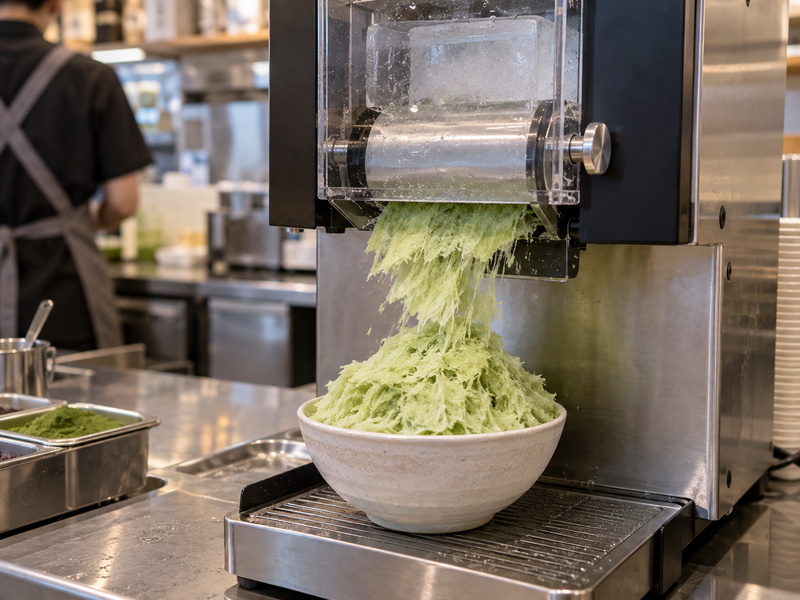
Inspect the output before building a mound
Operate the machine according to its manual, including any block-conditioning or adjustment steps. Do not use a universal bench-rest time from a recipe for every machine and base. The equipment guidance and validated cafe procedure should define those conditions.
Collect a small amount in a plain bowl and inspect the shavings. Look for coarse fragments, wet clumps or uneven color. Keep the same bowl and collection method when comparing trial blocks so the team can see differences clearly.
Record the condition of the block as shaving progresses. Output from the beginning and later part of a block may need separate observation. If the color changes, investigate base dispersion and freezing records before increasing the tea addition.
Check texture with the spoon used for service. A mound that looks soft can contain unexpectedly coarse pieces beneath the surface.
Any blade adjustment, cleaning or intervention must follow the manufacturer’s instructions with appropriate machine isolation. The product trial should never depend on improvised access to moving parts. Stop the run if the equipment behaves outside its specified operating conditions.
6. How much ice belongs in one serving?
Weigh the bowl before judging its height
A tall mound contains variable amounts of air between shavings. Weight gives the cafe a more repeatable portion measure than height alone. Tare the intended bowl, shave the proposed serving and record its appearance without compressing it simply to match a photograph.
For an unvalidated menu comparison, test 180-gram and 240-gram portions of the same shaved base. These are proposed serving sizes. Evaluate bowl fit, topping balance, eating time and cost before choosing one.
| Portion detail | What to record | Decision |
|---|---|---|
| Shaved-base weight | Net weight in the bowl | Consistent serving |
| Mound shape | Side photograph | Practical presentation |
| Rim clearance | Space for toppings | Clean assembly |
| Spoonful balance | Ice with normal toppings | Suitable portion ratio |
Check the actual bowl’s weight individually if there is meaningful variation between pieces. Otherwise a tare error can become a portion error.
Avoid rescuing an undersized mound by adding unmeasured toppings. Keep ice and topping specifications separate so the finished serving remains predictable when different operators work at the machine.
7. Which toppings support the ice rather than bury it?
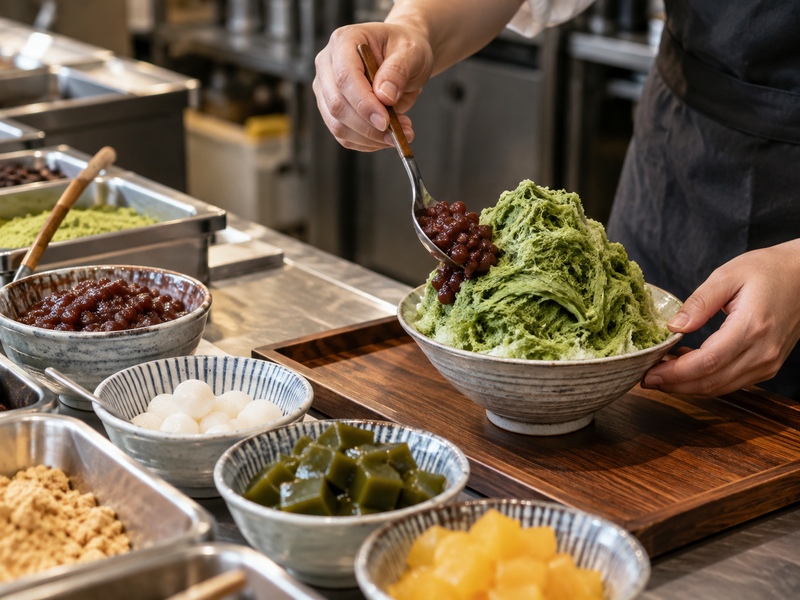
Assemble in the order the cafe can repeat
Choose a restrained topping set during development. Sweet bean paste, fruit, dumplings or condensed milk each add a different texture and preparation task. Begin with a small number of components, then add another only if it improves the completed bowl.
Portion toppings before shaving during the pilot. That reduces the time a finished mound waits while staff search for a scoop or cut fruit. Follow approved temperature controls for every ingredient; preparation convenience does not justify leaving sensitive components at the station indefinitely.
Place heavier toppings with care and observe how the mound responds. A dense scoop dropped onto the peak may flatten the presentation. Test whether serving an item beside the ice or in a separate small dish makes the bowl easier to assemble and eat.
Apply liquid toppings in a measured amount. A generous free-poured sauce can change both sweetness and the condition of the shavings. Compare the first spoonful and the final part of the bowl.
Photograph a normal service sample after all components are placed. Do not use an elaborate one-off arrangement that the counter team cannot reproduce during a regular shift.
8. How can the cafe test the trip from machine to table?
Measure the actual handoff delay
Time the complete service path: shaving, topping, clearing the rim, collection at the pass and delivery to the customer. Observe the bowl at the end of that path. A machine demonstration stops too early to prove the cafe can serve the desired texture.
Repeat the check during a realistic group order. Several bowls made in sequence may wait different amounts of time, so compare the first and last bowls served.
| Service stage | Observation | Possible process change |
|---|---|---|
| Topping station | Waiting for components | Preportion within controls |
| Pass | Queue before collection | Change ticket coordination |
| Table arrival | Melt and mound shape | Shorter handoff path |
| Group service | Difference between bowls | Adjust order sequence |
These observations describe quality under the tested conditions. They do not establish a safe holding period or a guarantee for long-distance delivery.
If takeaway is proposed, conduct a separate container and route trial. A cafe bowl designed for immediate eating may not suit a sealed delivery pack. Approve that format only if the actual result matches the product description you intend to sell.
9. What costs are easy to miss in a shaved-ice menu?
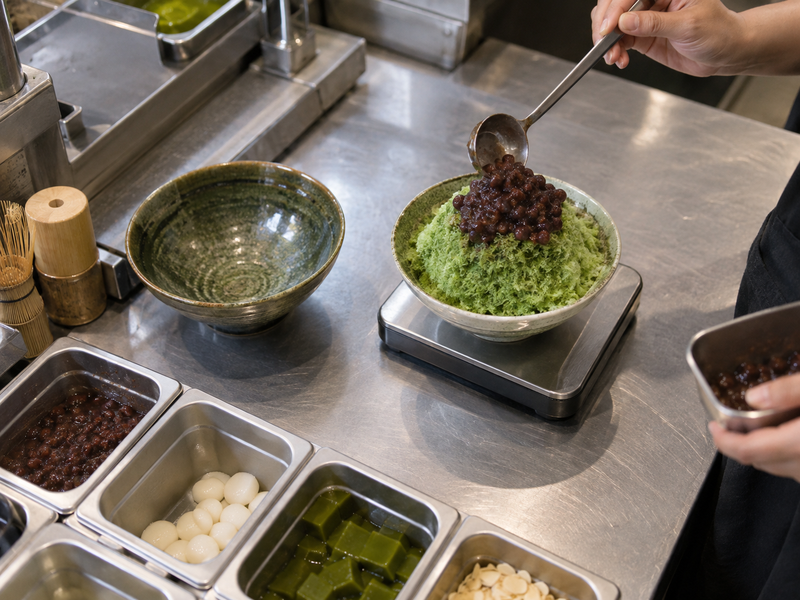
Count usable bowls from a prepared base batch
Track prepared base, material lost during handling, remaining block pieces and saleable servings. A theoretical recipe yield can overstate how much the machine and service process actually deliver.
For a hypothetical example, a 2,000-gram prepared batch that produces 1,800 grams of usable shavings supplies nine 200-gram portions. Dividing the batch by 200 without accounting for the loss would predict ten. These illustrative numbers are not an expected yield or recommended portion.
Include toppings, bowls, cleaning, freezer space and staff time. A complex topping arrangement can add more labor than shaving itself. Compare ingredient cost with the actual number of finished orders delivered, including any remade bowls.
For matcha purchasing, send Matcha Village the approved base composition, equipment format and tasting notes. The site’s matcha granita article offers related frozen-dessert questions, although its preparation method differs. Evaluate Chinese matcha samples in shaved form because a warm tea tasting does not reproduce the finished bowl’s serving condition.
10. What should a second location receive before launch?
Transfer the equipment procedure with the recipe
Another branch needs the machine model, approved base composition, mold details and operating instructions. A formula alone cannot specify the texture produced by different shaving equipment. Include the finished bowl, portion weight and topping placement.
Keep a clear record of any manufacturer restrictions on base ingredients and cleaning. If the branch proposes a different machine, treat it as a new equipment trial rather than an administrative substitution.
| Transfer record | Main user | Confirmation |
|---|---|---|
| Base and mold sheet | Preparation team | Correct frozen ingredient |
| Machine instruction | Trained operator | Approved operating method |
| Bowl and toppings | Service team | Weighed reference serving |
| Handoff sequence | Shift supervisor | Table-arrival comparison |
Review the full ingredient declaration, including purchased toppings and sauces. A water-based matcha ice does not make a bowl dairy-free if condensed milk is added at service. Likewise, a topping change can alter the information customers need.
Have the receiving branch run a small group-order rehearsal and compare the earliest and latest bowls at the table before approving its opening menu.
FAQ
Q1: Can a blender produce the same result as an ice shaver?
Do not assume so. Compare the actual texture and describe the product accurately if the equipment produces a coarser or slushier result.
Q2: Can any shaver handle a sweetened milk block?
No. Confirm permitted base composition and operating requirements with the manufacturer before testing.
Q3: Should matcha be mixed into the ice or poured over it?
Both are development directions. Choose one for the first trial so tea intensity and texture are easier to evaluate.
Q4: Why weigh the ice if the bowl already looks full?
Mound height varies with the arrangement of shavings. Net weight helps control portion cost and topping balance.
Q5: Can an immediate-service bowl be offered for delivery?
Only after a separate packaging and route trial confirms the product reaches customers in an acceptable, accurately described condition.