
Matcha banana bread can look compelling in a case and still disappoint after the first slice. Banana moisture, matcha dose, baking time, and cooling all affect the result. A bakery needs a loaf that cuts cleanly, tastes of both ingredients, and keeps its planned display quality. Start with a controlled pilot bake and record the yield rather than scaling a home recipe by eye. Our matcha cake guide gives a related bakery development example; the loaf itself needs its own trials.
Contents
- 1. What should a saleable slice deliver?
- 2. How should bananas be specified?
- 3. Which matcha should be tested in batter?
- 4. How much matcha is enough?
- 5. Should the loaf be marbled or uniform?
- 6. How do you control baking and doneness?
- 7. When should the loaf be cooled and sliced?
- 8. How should case life be tested?
- 9. What is the cost per saleable slice?
- 10. How do you scale the approved loaf?
1. What should a saleable slice deliver?
Set the slice standard first
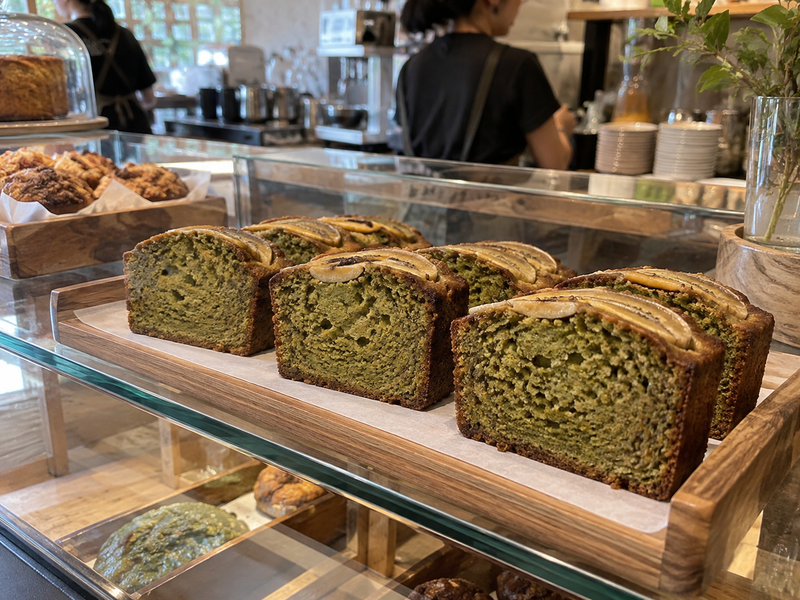
Decide the portion weight, thickness, appearance, and intended eating experience before adjusting the batter. A breakfast slice may be less sweet and larger than a packaged snack slice. Customers should be able to notice banana and matcha without a dry, dusty finish. Photograph a passing cut surface and note whether the top should be domed, flat, or glazed. That visual standard helps the baker judge more than a vague direction to “bake until done.”
Taste the loaf when warm and at the time it will actually be sold. A fragrant warm slice may become dense or muted after cooling. If the bakery packages slices, include the packaging in the test; moisture can shift after sealing. Count only intact slices that meet the planned portion. End pieces, broken pieces, and oversized slices affect the real yield. The saleable standard is the foundation for recipe cost and display decisions.
2. How should bananas be specified?
Record weight and condition
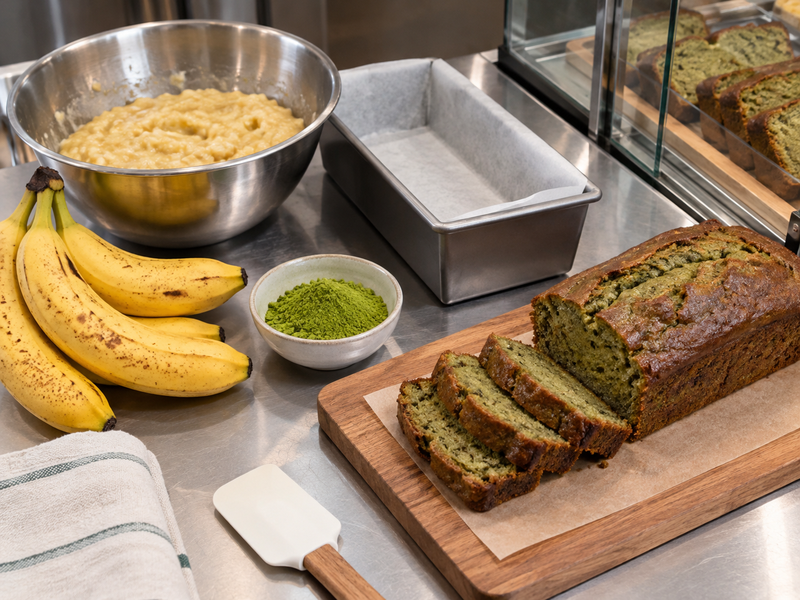
“Three ripe bananas” is too loose for a production formula. Peel and weigh the banana used in a pilot batch, then record its condition: ripe, soft, and free from spoilage, for example. Bananas vary greatly in size and water content. A wetter batch can lengthen baking time and leave a gummy center even when the same number of fruits is used. The formula should specify peeled banana mass and a practical acceptance range set by your own trials.
Mash consistently and mix it in at the same stage each time. If bananas are stored or thawed before use, test that handling route separately; liquid released after thawing can change batter consistency. Do not silently pour off liquid in one batch and include it in another. Keep a simple batter note such as “spoonable, not pourable” alongside measured ingredients. When a loaf fails, the banana record helps distinguish ingredient variability from a baking or matcha problem.
| Banana variable | Record | Why it matters |
|---|---|---|
| Peeled mass | Weight per batch | Controls moisture and flavor |
| Ripeness | Simple visual description | Affects sweetness and mash |
| Handling | Fresh or thawed | Changes free liquid |
3. Which matcha should be tested in batter?
Bake the sample before buying a grade
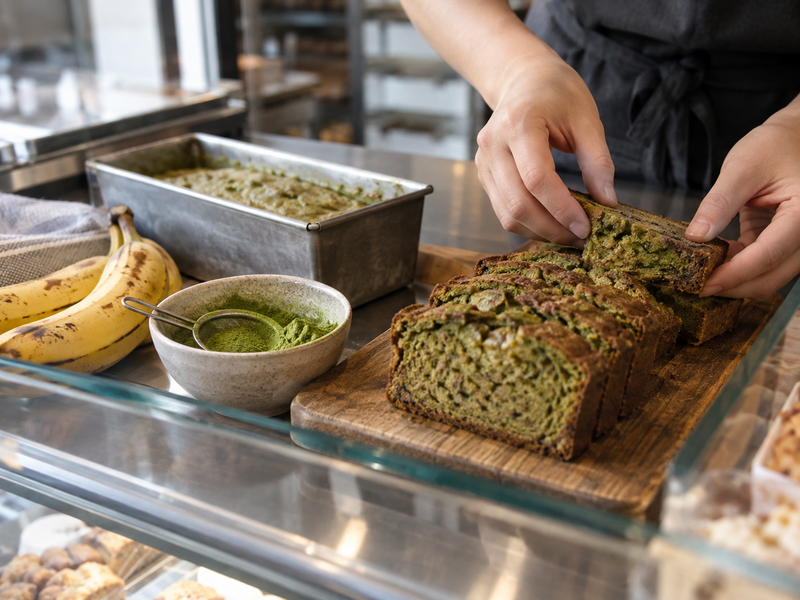
A powder’s color and flavor in water do not predict its performance after mixing with banana, flour, fat, and sugar. Bake small controlled loaves with candidate matcha products at the same dose. Compare flavor, interior color after cooling, and cost per loaf. A grade name can describe a supplier category, but the buyer needs a representative sample and the finished product test. Ask for the product specification and packaging format that would be supplied at production volume.
Look at the ingredient statement too. Plain matcha gives more control over sugar and color than a sweetened mix. If a blend is used, its total mass cannot be treated as pure tea mass in the formula. Store opened powder according to supplier guidance and protect it from heat, moisture, and light during production. The approved powder and lot should be recorded with the bake sheet. A new lot is a reason for a comparison bake before a large production run.
4. How much matcha is enough?
Run a dose ladder
Test a few matcha levels while keeping banana, flour, sweetener, fat, pan, and bake process fixed. Taste slices blind after they cool. Too little matcha can leave only a green tint; too much can create bitterness or a dry impression without improving the loaf. The right amount depends on the specific powder and the intended slice. Record the matcha mass against total batter mass, so a future batch can be scaled accurately.
If the matcha is placed only in a marbled portion, note the amount in that portion as well as the whole loaf. A strong green swirl may taste quite different from a uniform loaf with the same total tea amount. Calculate the added cost at each level and choose the lowest dose that meets the flavor brief, rather than the brightest-looking crumb alone. The reference matcha banana bread recipe demonstrates a home-style version; production dose and yield should come from your own trials.
| Trial | Matcha variable | Hold constant | Decide from |
|---|---|---|---|
| Low | Smaller weighed dose | Base batter and pan | Flavor visibility |
| Middle | Intermediate dose | Base batter and pan | Balance and color |
| High | Larger weighed dose | Base batter and pan | Bitterness and cost |
5. Should the loaf be marbled or uniform?
Choose a look the team can repeat
A uniform green crumb is simpler to portion and communicate, but banana and matcha flavors arrive together in every bite. A marbled loaf creates visual contrast and can make the slice stand out in a case, yet the swirl may vary from loaf to loaf. Test both with the same total batter mass. For marbling, divide the batter by weight and specify the order and number of folds or spooned layers. “Swirl until pretty” will not scale across bakers.
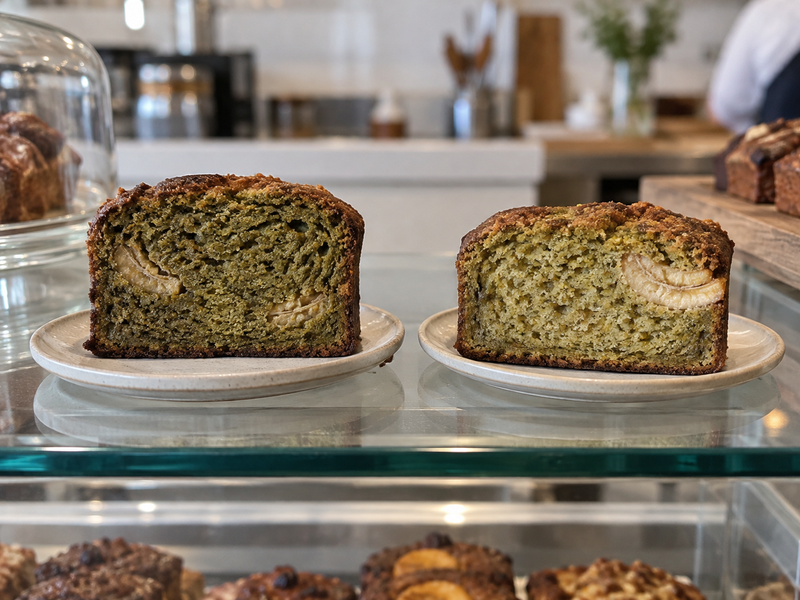
Cut several loaves from the same trial, including the ends. If one slice has no visible matcha and another has a dense green pocket, the method needs adjustment. Check whether the matcha portion bakes at the same rate as the plain portion and whether the crumb remains cohesive. If the loaf is sold prepackaged, photograph the slice that a customer actually sees through the pack. A consistent presentation is worth more than a single unusually photogenic test loaf.
6. How do you control baking and doneness?
Track the full oven run
Record pan dimensions, batter weight per pan, oven setting, rack position, and bake duration in the pilot. Temperature displayed on an oven is not always the temperature the batter experiences, so use the bakery’s normal verification method. Rotate pans only if the test shows it is needed, and write that step down. A dark top can hide a wet center; color alone is not a reliable doneness check in banana bread.
Use a consistent internal or physical doneness check chosen by the bakery, such as a probe reading combined with crumb inspection, and validate it against cooled slices. Avoid publishing one universal temperature as a guarantee for every formula. The loaf continues to set during cooling. If the center is gummy while edges are dry, consider pan size, batter weight, banana moisture, and oven profile before simply extending every bake. Change one factor per trial so the next batch teaches you something.
| Bake record | Example observation | Possible next check |
|---|---|---|
| Center gummy | Wet crumb after cooling | Banana mass and pan load |
| Edges dry | Firm outer slices | Oven position and duration |
| Uneven top | Different pans vary | Rack placement and load |
7. When should the loaf be cooled and sliced?
Let the crumb set before counting yield
Warm banana bread smells inviting, but cutting too early can tear the crumb and leave sticky surfaces. Set a cooling procedure based on the bakery’s equipment and validated product. Record when the loaf leaves the pan, when it can be handled, and when it cuts cleanly with the chosen knife or slicer. Keep the handling sanitary and follow the site’s food-safety process. The time a loaf is ready to slice may determine whether it fits a morning production schedule.
Cut to a measured thickness or weight, then count saleable slices. Inspect the first, middle, and last slices; a loaf that yields ten theoretical cuts may provide fewer saleable portions once ends and breakage are removed. If the loaf is glazed or wrapped, test that step after it has cooled sufficiently for the product and packaging. Write the slice standard beside the bake sheet so the person portioning does not improvise a generous cut that erases the planned margin.
8. How should case life be tested?
Observe quality under the real display conditions
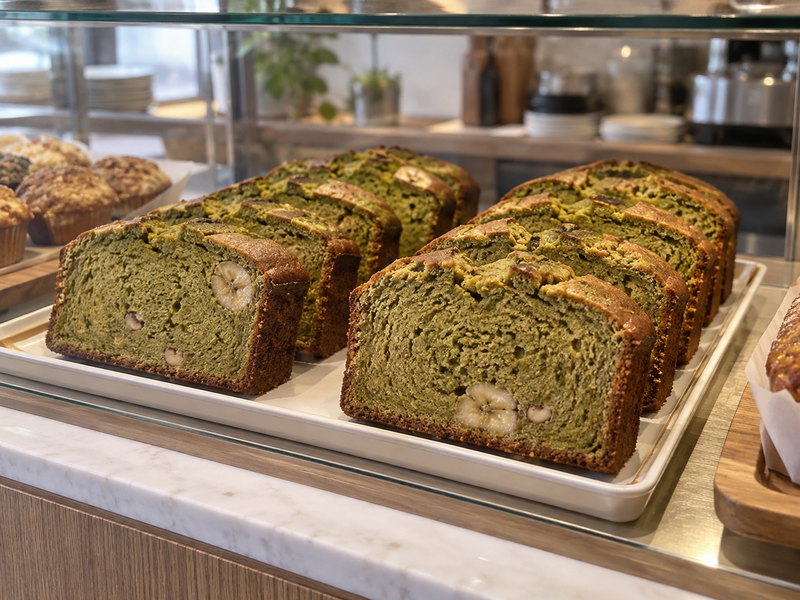
Define the intended display and storage arrangement with the bakery’s food-safety lead. Then assess the loaf at opening, mid-service, and the planned end of sale. Look for drying, sticky crumb, color change, aroma loss, and package condensation. A room-temperature case, a wrapped shelf product, and refrigerated service are different systems. The site must follow its applicable handling rules; a visual quality test does not establish food safety or a legal shelf life.
Run the test on more than one batch, particularly if banana ripeness or bakery humidity varies. Note which slices were cut early and which stayed in the loaf, because exposed surfaces dry differently. If the product is sold with cream, glaze, or another topping, test the complete item and review handling requirements again. Set a conservative sale window based on the approved process and documented observations. Discard rules belong on the production sheet, not in a baker’s memory.
| Observation point | Quality check | Action if failing |
|---|---|---|
| After cooling | Crumb and flavor | Adjust formula or bake |
| During display | Dryness and color | Change protection or window |
| At planned end | Saleable quality | Shorten window or reformulate |
9. What is the cost per saleable slice?
Divide by the yield you can actually sell
Sum the cost of banana, matcha, flour, fat, sweetener, inclusions, packaging, and other ingredients using current purchase prices. Add a site-appropriate allowance for production loss and labor. Divide by the counted saleable slices, not by the number of knife cuts marked on a sketch. A thicker slice or a marbled process with more breakage can change the economics even if the loaf formula stays the same.
Keep a separate record of matcha cost per loaf. It helps compare candidate powders and dose trials without losing sight of total cost. If the product is sold whole and by slice, cost both formats. Consider how quickly each sells and whether unsold slices become waste. Use the numbers to decide price and portion; do not hide a weak yield behind a high selling price without understanding why it occurs.
10. How do you scale the approved loaf?
Keep ratios and process checkpoints together
Scale ingredient masses from the approved pilot formula, but do not assume the larger batch will mix or bake identically. Larger bowls, different pans, and full ovens change mixing time and heat flow. Run a staged production test and record batter weight per pan, number of pans per oven load, rack positions, and the same doneness checks used in the pilot. Compare slices from different pans, not just the best-looking loaf.
Put the matcha product, banana specification, mixing order, pan load, baking procedure, cooling, slicing, and sale window on one controlled production sheet. Name the person who can approve substitutions. When an input changes, make a comparison batch before changing the document. A recipe is ready for regular sale when another baker can make a loaf that meets the slice standard without the developer standing beside the mixer.
| Scale checkpoint | Pilot record | Production verification |
|---|---|---|
| Batter per pan | Weighed mass | Weigh each production pan |
| Oven load | Pan count and position | Compare multiple pans |
| Slice yield | Saleable portions | Count after cooling |
FAQ
Q1. Does matcha banana bread need a bright green crumb? No. Flavor and saleable quality matter more than color alone. Evaluate the cooled slice under the lighting where it will be sold.
Q2. Can ripe bananas be measured by count? Count can help purchasing, but peeled weight is more reliable in the production formula because fruit sizes vary.
Q3. Why is the middle gummy? Check banana moisture, batter weight per pan, oven loading, and cooling before changing bake time alone.
Q4. Is a marbled loaf harder to scale? It can be. Weigh the two batter portions and document the layering method so slices show a similar pattern across loaves.
Q5. How long can slices stay in a case? Set the window from the complete product, site handling rules, and observed quality under your actual display conditions. Do not use a generic home-recipe estimate.
Sell the slice that passed the test
A reliable matcha banana bread begins with a defined slice and a controlled bake record. Measure banana and matcha, validate cooling and case quality, and cost the portions that are truly saleable. That gives the bakery a product it can make again tomorrow, not just a successful trial loaf.