
Matcha air freight vs sea freight is a decision about a complete delivery plan. Buyers need to know when usable stock will reach the business, what conditions the product will experience and which costs remain outside the freight quote.
A lower transport rate can be attractive while the proposed schedule leaves a factory without approved material. A fast flight can still arrive too late if paperwork or collection is unfinished. Compare both modes against the same product, quantity and receiving requirement, then choose the route that fits the order.
Contents: 1. What order are you comparing in matcha air freight vs sea freight? | 2. How do you establish the date that the business needs? | 3. Which charges must appear in the comparison? | 4. What handling differences exist along the proposed routes? | 5. How should packaging evidence affect the choice? | 6. How do transport time and order size interact? | 7. When is a split shipment worth evaluating? | 8. Who controls cost and risk at each handover? | 9. Which information should be tracked after booking? | 10. How do you make the booking decision reviewable?
1. What order are you comparing in matcha air freight vs sea freight?
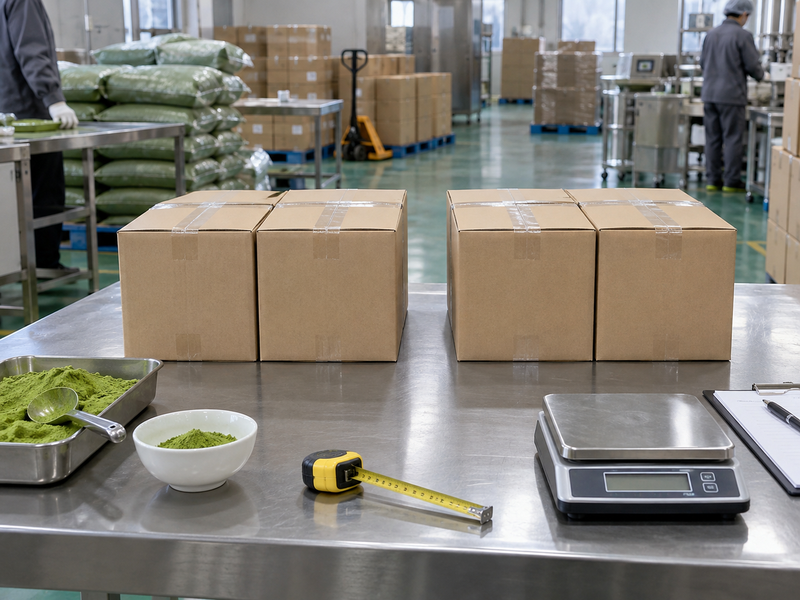
Hold the shipment assumptions constant
Create one shipment description before requesting alternatives. Include the exact product, net quantity, package format, case dimensions, gross weight, collection point and destination. Ask both providers to use those facts so the comparison does not quietly pit a small pouch shipment against bulky retail tins.
TNK’s freight comparison discusses the trade-off between transport cost, timing and product condition. Treat route estimates as items to obtain from the provider rather than benchmarks to copy into an order.
| Shared shipment field | Reason to fix it |
|---|---|
| Product and package | Defines handling requirements |
| Gross weight and dimensions | Supports a comparable quote |
| Collection address | Includes the same origin work |
| Receiving address | Sets the same delivery endpoint |
Specify when the goods will actually be ready for collection. A quotation based on immediate availability cannot support a decision about an order still awaiting production approval. Keep the ready date visible beside the required usable-stock date.
2. How do you establish the date that the business needs?
Work back from approved availability
Ask operations for the date when the matcha must be available for use. A cafe distributor may need time to break down cases and dispatch them to branches. A food factory may need incoming checks before releasing the ingredient. Arrival at a port or airport is only one event in that sequence.
Map the work between carrier delivery and usable inventory. Include receiving appointments, document checks, any agreed sampling and internal release. Use actual procedures and recent records rather than adding an unexplained allowance to every stage.
Define the consequence of missing the date. The buyer might delay a menu launch, reduce a production run or use an already approved alternative. Record the consequence in operational terms before assigning a monetary value. This keeps urgency connected to the business task rather than a preference for the fastest label on a quote.
Ask each provider to identify which dates are estimates and which commitments, if any, are part of its service. Keep the answer with the quotation so procurement does not present an estimated arrival as a guaranteed production date.
3. Which charges must appear in the comparison?

Compare the same delivery scope
Request an itemized quote with the collection and delivery scope clearly stated. Ask which origin handling, main carriage, destination handling and delivery tasks are included. Leave taxes, duties or other charges as unconfirmed until the responsible provider or adviser has supplied the applicable basis.
DHL’s volume calculator explains that actual and volumetric weight are compared when calculating chargeable weight. Ask your carrier to confirm its method for the quoted service rather than borrowing a divisor from another route.
| Quote component | Question for the provider |
|---|---|
| Collection | Which address and loading service? |
| Main transport | Which weight or volume basis? |
| Destination handling | Which tasks are included? |
| Final delivery | Which appointment and unloading scope? |
Record currency, validity date and assumptions alongside each quote. Compare totals only after omissions are resolved. A missing charge is an open question, not a zero. Ask for a revised written quotation when shipment dimensions or service scope change.
4. What handling differences exist along the proposed routes?
Map handovers and waiting locations
Ask the logistics provider to describe the route in stages. For air cargo, that may include collection, consolidation, terminal handling, flight connections and destination delivery. For sea cargo, ask about consolidation, container handling, port waiting and final distribution. Use the provider’s actual plan, since mode names alone do not identify every handover.
Maersk’s LCL terms describe consolidation with other customers’ cargo and refer to booking cutoffs. These are examples of service conditions that a buyer should read for its own booking; they are not promises about every sea-freight provider.
Review each handover against the shipment’s handling requirements. Ask where the goods may wait, how a delay is reported and who can arrange a response. If controlled conditions are required, identify the legs covered by that service and any gaps between them.
Put unresolved questions back to the provider before choosing a route. A diagram showing the full journey can expose an unplanned warehouse stop that a headline transit estimate leaves out.
5. How should packaging evidence affect the choice?
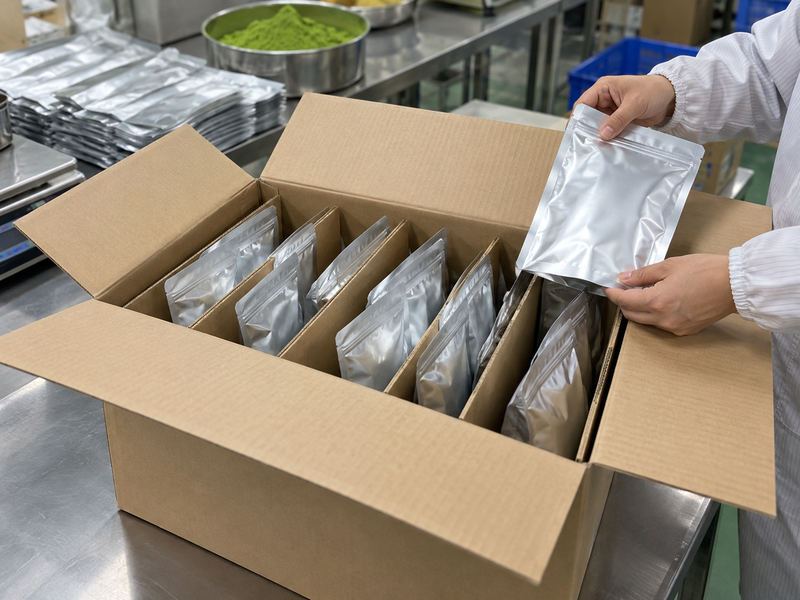
Match the pack to the proposed journey
Start with the supplier’s approved conditions for the actual product and package. Ask what evidence supports using that configuration over the proposed distribution route. A package previously sent on a short local journey may need further evaluation for an international route with more handling and waiting.
Review the outer case as well as the primary pouch or tin. The case arrangement should allow normal lifting, stacking and receiving without damaging the product barrier. The matcha packaging guide provides format context; this decision concerns the full shipment configuration.
| Evidence question | Owner to confirm |
|---|---|
| Product conditions | Supplier quality team |
| Package construction | Packer or packaging supplier |
| Route exposure | Logistics provider |
| Arrival checks | Buyer’s receiving team |
Where evidence is incomplete, ask the technical team whether a route trial or another documented check is needed. Avoid assuming that sea shipment is always unsuitable or air shipment automatically protects quality. Approve the actual combination of product, package and service.
6. How do transport time and order size interact?
Follow the inventory through the route
Build a time-based stock view for each option. Start with usable inventory, subtract expected consumption and add the proposed receipt only when it can be released. Keep quantities tied to the correct grade and package. A future delivery of another product should not appear as available cover.
A larger order may change the transport quotation, but it also changes how much stock arrives together. Check whether the receiving business can store and consume that quantity under the product’s approved conditions. Do not justify excess stock with a freight saving before those constraints are reviewed.
Ask whether the provider offers a practical shipment size between a small parcel and a full container. The answer must come from an actual service proposal. Compare it on the same delivered scope, including any consolidation and deconsolidation work.
Keep this analysis separate from a general price-per-kilogram exercise. The decision here is whether the route delivers the right quantity at a usable time. A buyer can then take that feasible route into the broader landed-cost calculation.
7. When is a split shipment worth evaluating?

Separate immediate need from later replenishment
A split shipment can be considered when one part of an order is needed earlier and the remainder has a later consumption date. Calculate the early requirement from actual stock and planned use. Do not assign an arbitrary fraction of the order to air freight merely because a split sounds balanced.
Ask the supplier whether splitting affects packing, lot identity, release documents or collection arrangements. Request separate quotes and dates for each portion. Additional handling or documentation may change the comparison, so keep those items visible.
| Split-shipment question | Decision input |
|---|---|
| What is needed early? | Dated consumption requirement |
| What can arrive later? | Remaining demand and storage capacity |
| Are lots separated? | Packing and release plan |
| Who receives each portion? | Named location and owner |
Check the later shipment independently. An urgent small delivery should not hide an unresolved risk in the main order. Record what happens if either leg changes, including who decides whether another expedited quantity is justified.
8. Who controls cost and risk at each handover?
Put the agreed trade term beside the route
Use the exact agreed trade term, named place or point and version when discussing responsibilities. ICC’s Incoterms information explains that the rules allocate costs, risks and obligations. Confirm the selected rule with the parties’ advisers and the actual transport arrangement.
Do not infer responsibility from whoever pays the carrier’s invoice. The sales contract and transport booking need to work together. A forwarder may perform a task for one party while another party retains a separate obligation under the sale.
Write down who books the service, supplies shipment data, receives notices and handles a problem at each stage. Keep cargo insurance questions attached to the actual policy or provider response; avoid assuming that every type of quality loss is covered.
This is a commercial review step, not a substitute for contract advice. Bring unresolved responsibility questions to the relevant adviser before dispatch. A route comparison is incomplete when both parties believe the other will arrange clearance, provide documents or respond to a delivery exception.
9. Which information should be tracked after booking?

Monitor events that change usable arrival
Agree on the events that will update the delivery plan. Useful milestones include goods ready, collection completed, main carriage departed, arrival, clearance status and final delivery appointment. Ask the provider which events it can report and which dates remain estimates.
Maersk’s LCL tracking page describes milestone arrival estimates and route stops. Use the equivalent information available for your booked service, then connect it with internal receiving and release work.
| Event change | Buyer response |
|---|---|
| Collection delayed | Recheck inventory cover |
| Route changed | Review handling conditions |
| Arrival estimate moved | Update receiving plan |
| Documents requested | Assign a response owner |
Keep one current record instead of conflicting dates in separate messages. Procurement, operations and receiving should see the same expected usable date. Preserve previous estimates as history so the business can later distinguish production delay, transport delay and internal release delay.
10. How do you make the booking decision reviewable?
Record the reason for choosing one route
Prepare a short decision note covering the shipment facts, required date, feasible route options and unresolved assumptions. Attach comparable written quotes and the packaging approval relevant to the chosen route. Name the person who approves the commercial commitment and the person responsible for quality conditions.
Explain the trade-off in the business’s own terms. The selected route might support a launch date, reduce handling or fit a repeat replenishment pattern. Do not claim that the choice is universally cheapest or freshest. Its value depends on the defined shipment and the alternatives actually quoted.
After delivery, compare the estimate with the recorded stages and receiving outcome. Use that evidence when quoting the next order, while checking whether the new season, route or service has changed. One successful shipment is useful experience without becoming a permanent guarantee.
Send the chosen provider the approved cargo description, collection readiness, handling requirements and receiving contact. Ask for confirmation that the booking reflects those details before the supplier releases the shipment.
Frequently asked questions
Q1: Is air freight always faster from order to use?
Compare the full schedule. Production readiness, collection, clearance and internal release can affect availability beyond the main transport leg.
Q2: Is sea freight always cheaper?
Compare actual quotes for the same scope and quantity. Omitted destination work or a different charging basis can change the apparent saving.
Q3: Should freight be compared using net matcha weight?
Provide net contents, gross shipment weight and dimensions. Ask the carrier to confirm which charging basis applies to the service.
Q4: Can one order travel by both modes?
Ask for a documented split plan with quantities, dates, lot records and separate costs. Evaluate each portion against its consumption need.
Q5: Does a carrier quote establish product suitability?
No. Confirm product and packaging conditions with the responsible technical team, then match them to the proposed route and handling.