
Matcha shipping temperature should be planned around the actual product, packaging and route, with a written response for conditions outside the approved range. Buyers need more than a request to keep the cartons cool.
A useful plan states what the supplier supports, what the carrier can provide, how conditions will be recorded and who can decide whether an affected shipment may be used. The focus here is transport and temperature excursions, from dispatch through receiving, rather than the routine storage of an opened pouch.
Contents: 1. Who should define the matcha shipping temperature requirement? | 2. Which parts of the journey need to be mapped? | 3. What must the transport provider confirm in writing? | 4. How do you choose a suitable data logger? | 5. Where should loggers be placed in the shipment? | 6. How should transitions between conditions be handled? | 7. What should the receiver do when a logger shows an alarm? | 8. What information supports an excursion assessment? | 9. How should responsibilities and claims be documented? | 10. How do you improve the next shipment?
1. Who should define the matcha shipping temperature requirement?
Begin with product-specific evidence
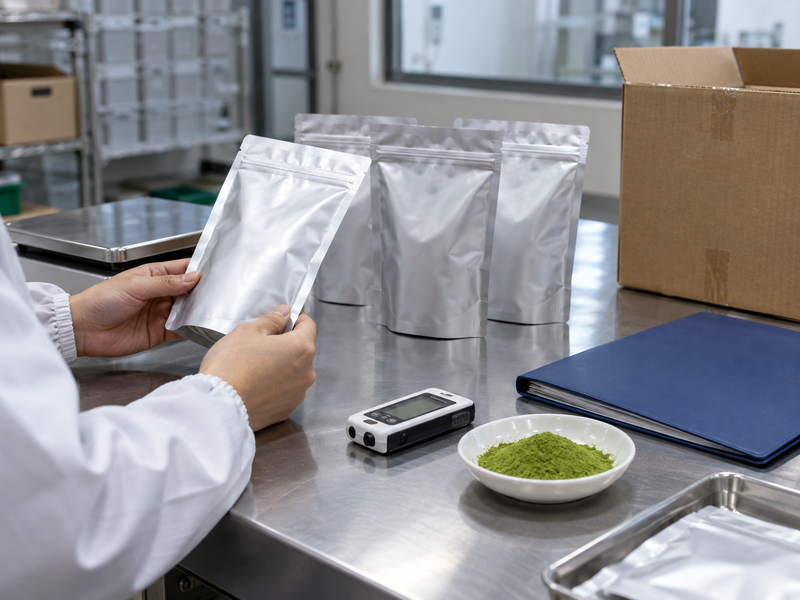
Ask the supplier’s technical team for the transport conditions supported for the exact product and package. Request the evidence, its date and any restrictions. A general storage instruction may not answer how the product should be handled during loading, long waits or transfer between vehicles.
Yunomi’s temperature article reviews storage research and offers storage advice. Those observations provide context; they do not establish an approved shipping limit for a different supplier’s product or packaging.
| Requirement field | What to confirm |
|---|---|
| Product identity | Pure powder or specified blend |
| Package identity | Material and pack revision |
| Supported conditions | Supplier’s documented scope |
| Excursion assessment | Named technical decision maker |
Record unresolved questions before booking. If the supplier gives a range without explaining its basis, request clarification rather than treating the number as a universal matcha standard. The buyer’s quality team should decide whether the available evidence is adequate for the proposed distribution plan.
2. Which parts of the journey need to be mapped?
Include the waiting periods
Draw the route from the supplier’s released stock to the receiving location. Include loading, collection, consolidation, terminal handling, main transport, customs-related waiting and final delivery. Ask the logistics provider where the goods may wait and which locations offer the agreed conditions.
Identify handovers separately. A controlled vehicle does not establish what happens before loading or after unloading. Similarly, a booked service may have different provisions at an intermediate warehouse. Ask each provider to describe the scope it actually offers rather than relying on the name of the service.
Connect the route with the calendar. Collection near a closure, a missed appointment or a delayed document can extend a waiting period. Record who can change the plan and how the supplier will be informed when goods should remain in approved storage rather than move into a queue.
Keep the map short enough for operations to use. The purpose is to expose gaps in responsibility and handling. Review it whenever the destination, season, carrier or shipment configuration changes materially.
3. What must the transport provider confirm in writing?
Translate conditions into a service instruction
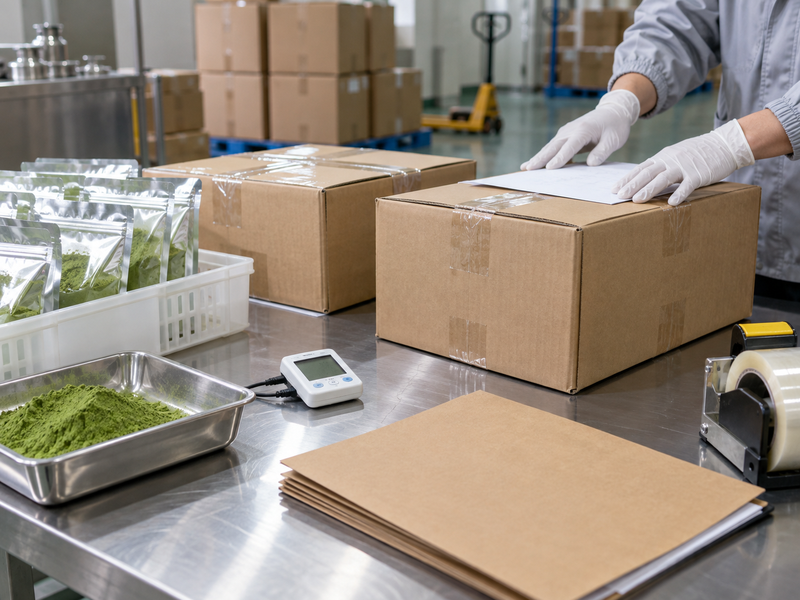
Send the provider the approved product conditions and ask which portions of the route it can cover. Have it state any exclusions or dependencies, including access to suitable waiting areas and the handling required at collection. A sales description should be converted into a booking-specific instruction.
Clarify the response to a delay before the vehicle leaves. The provider should know whom to contact and what information the buyer needs. It should not be expected to make a product-quality release decision on its own.
| Service question | Written answer needed |
|---|---|
| Which legs are covered? | Collection through named endpoint |
| Where can goods wait? | Agreed locations and conditions |
| How are deviations reported? | Contact and information route |
| Who can approve changes? | Named decision authority |
Ask the supplier to confirm that the goods are prepared for the agreed service. Packaging, loading instructions and logger placement should all refer to the same shipment. Keep the final instructions with the booking so a substitute driver or handler can receive the relevant requirements.
4. How do you choose a suitable data logger?
Match the instrument to the question
Specify the conditions the logger needs to measure, the expected journey duration and how the receiver will read the data. Check range, accuracy, recording interval, memory, battery suitability and environmental protection with the instrument supplier. Choose those features for the actual monitoring task rather than selecting the smallest device available.
Testo’s transport logger documentation describes configurable recording and a downloadable report. A device’s alarm settings still need to reflect the product plan; the instrument does not choose an acceptable matcha temperature for the buyer.
Ask who configures the logger, verifies it started and checks that the clock and time zone are correct. A record with an uncertain start time may be difficult to connect with loading and transit events. Keep the device identity in the shipment file.
Confirm how the measurement equipment is checked before use. Vaisala’s calibration explanation describes comparing instrument readings at selected temperatures. Request calibration or verification evidence relevant to the instrument and operating range.
5. Where should loggers be placed in the shipment?
Document what each measurement represents
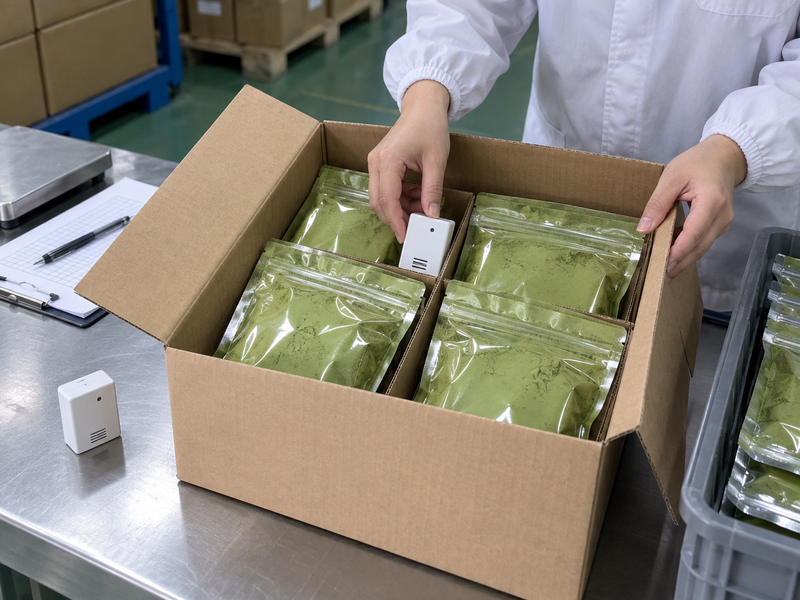
Agree placement with the technical and logistics teams. The location should answer the monitoring question and avoid damage to the package. A logger outside a carton measures a different environment from one placed among packs, so its meaning must be recorded.
Do not describe a carton reading as the temperature of every pouch or the powder itself without evidence supporting that relationship. If the shipment has several positions of concern, ask whether the monitoring design needs more than one device. The number and location should follow the assessment rather than an arbitrary rule.
| Placement record | Why it is retained |
|---|---|
| Device identity | Connects report and shipment |
| Carton or pallet location | Defines the measured position |
| Placement photograph | Helps receiving find the device |
| Start confirmation | Shows recording began as planned |
Provide retrieval instructions to the receiver. A logger discarded with outer packaging cannot support the arrival review. Avoid putting a device where staff must open or damage a food-contact package merely to recover it.
6. How should transitions between conditions be handled?
Use an approved handling procedure
Ask the supplier and receiving quality team to specify how sealed goods move between the transport environment and the receiving area. Changes in conditions may require a defined handling sequence. Staff should follow the product procedure rather than opening packs immediately to see whether the powder looks normal.
Keep the primary packaging intact while external inspection and record review take place. If sampling is required, use the approved sampling conditions and method. Record any visible moisture or package damage and refer it to the quality team before proceeding.
The matcha storage guide covers broader storage considerations. The transport plan should state the exact handover into those approved storage conditions, including who receives the cartons and where they wait for review.
Make the instructions usable during a busy delivery. Name the holding area, contact and record to complete. Avoid a vague instruction to let the product adjust without defining the responsible procedure. The time and conditions for any adjustment must come from the product assessment, not an improvised universal waiting period.
7. What should the receiver do when a logger shows an alarm?
Hold the affected stock for review
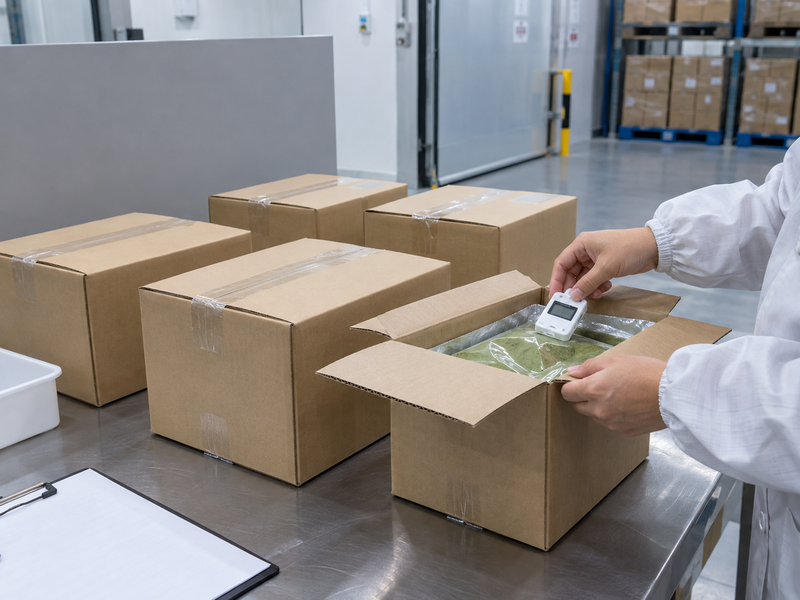
Treat the alarm as a prompt to review the evidence. Identify the affected shipment and prevent it from being issued to production or branches while the responsible team assesses it. Preserve the logger data, packaging condition and arrival observations without resetting or editing the original record.
Confirm that the device was configured correctly and that the alarm corresponds to the approved criteria. A wrong time setting or placement problem can change the interpretation, but those possibilities should be investigated rather than assumed to explain the event.
| Initial action | Record to preserve |
|---|---|
| Identify affected goods | Lot and case quantities |
| Hold stock | Location and inventory status |
| Recover logger record | Original report and device ID |
| Notify reviewers | Time and contact details |
An alarm alone cannot tell staff whether the product is safe, suitable or unacceptable. Equally, a normal appearance should not overrule an unresolved deviation. The receiving procedure should name the people authorized to decide the next step.
8. What information supports an excursion assessment?
Reconstruct the event before deciding
Provide the reviewer with the measured conditions and their duration, the device location, package identity and known handling events. Include any gaps in the record. Keep the original data available alongside the summary so a reviewer can inspect the sequence rather than only the highest displayed reading.
Ask the carrier for relevant events, such as a missed connection or extended waiting period. Match those events to the device’s clock. A plausible explanation helps understand the exposure but does not by itself establish product acceptability.
The technical team may request additional inspection, comparison samples or suitable tests. Those steps should be selected for the actual concern and interpreted within their limitations. A sensory check can address a sensory question; it cannot replace every other aspect of product assessment.
Record the decision and its basis. If stock is released with a restriction, specify the affected quantity and how operations will enforce it. If evidence is insufficient, keep that uncertainty explicit rather than translating a missing record into an automatic pass.
9. How should responsibilities and claims be documented?
Separate product disposition from commercial recovery
Decide who communicates with the supplier, carrier and any insurer. The person deciding whether stock can be used may be different from the person handling replacement or compensation. Keep both processes connected through the same shipment identity without delaying a quality decision while commercial responsibility is discussed.
Review the actual sale and transport terms before making a claim. Preserve evidence requested by the relevant parties and record notification dates. Do not assume that a temperature deviation automatically creates a covered insurance loss or a particular remedy.
| Responsibility | Named role |
|---|---|
| Product assessment | Buyer and supplier quality contacts |
| Carrier investigation | Logistics owner |
| Inventory hold or release | Authorized warehouse reviewer |
| Commercial resolution | Procurement and contract contacts |
Agree who pays for further testing before commissioning work where possible. Keep affected goods and samples under the approved conditions during the investigation. The file should show what happened, what was decided and which quantities remain in stock.
10. How do you improve the next shipment?
Change the route or procedure using evidence
Review the complete transport record after delivery, including shipments without alarms. Confirm whether the logger covered the intended period and whether handovers followed the plan. A quiet alarm display is less useful if the device was never started or the receiver cannot find its placement record.
Compare repeated issues by route stage. If delays cluster before collection, investigate readiness and booking. If receiving causes long waits, review appointment arrangements and staffing. Choose a corrective action that addresses the observed event rather than adding equipment without a clear purpose.
Decide whether the next shipment needs a revised route, packing configuration, monitoring design or instruction. Have the responsible technical team approve changes affecting product conditions. Retain the earlier version so the business can compare outcomes instead of losing the history.
Before the next dispatch, send the supplier and provider the current temperature plan, logger instructions and excursion contacts. Ask the receiving team to confirm its holding location and review process while the shipment is still being prepared.
Frequently asked questions
Q1: Is there one correct shipping temperature for all matcha?
Use conditions supported for the actual product, package and route. This article does not propose a universal range.
Q2: Does a logger control temperature?
No. It records conditions. The transport service and handling arrangement must provide any control required by the approved plan.
Q3: Can an alarmed shipment be accepted after tasting?
A qualified reviewer should decide using the relevant evidence. Taste alone cannot resolve every quality or safety question.
Q4: Should packs be opened immediately after arrival?
Follow the approved receiving and sampling procedure, including handling of transitions between conditions. Keep unresolved shipments identifiable and on hold.
Q5: What if the logger record is missing?
Record the evidence gap and ask the responsible reviewer how to proceed. Missing data should not be represented as proof that conditions were satisfactory.