
Maple matcha combines powdered green tea, maple syrup and, for a latte, milk or a plant drink. A cafe can make an attractive cup quickly, but maple intensity changes with the syrup and the milk. Buying the most expensive tea will not repair that balance. Start with a weighed recipe, compare syrup samples in the finished drink, and price the dose that customers prefer. The quantities below are proposed small trials, not a tested commercial formula.
1. What should maple matcha taste like?
2. Which maple syrup should a cafe buy?
3. What is a sensible small trial formula?
4. How should staff mix the drink?
5. Which milk lets the maple flavour remain clear?
6. How can buyers choose matcha for maple lattes?
7. How does a cafe control cost per serving?
8. What storage and labelling controls belong on the recipe card?
9. What problems should the trial team diagnose?
10. How should a buyer prepare the launch order?
1. What should maple matcha taste like?
Set a recognizable maple target
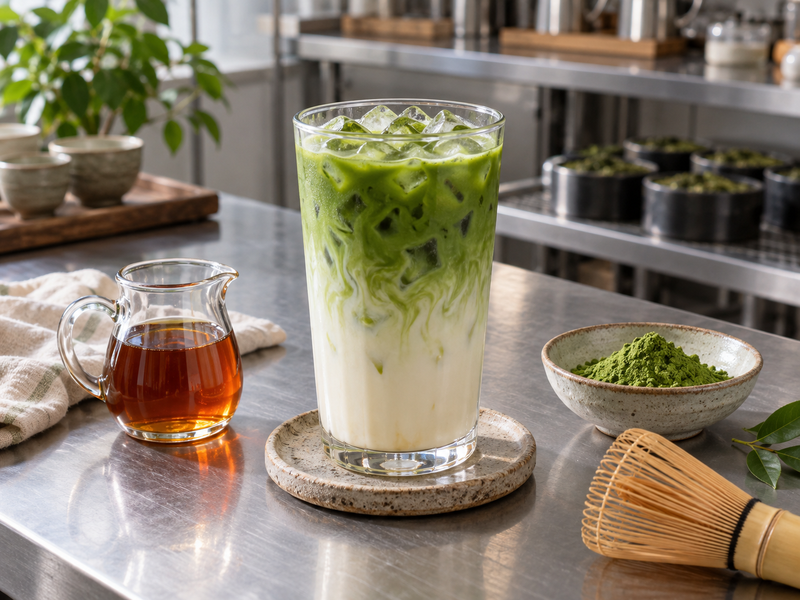
A useful brief describes a tea drink with identifiable maple aroma and enough sweetness to soften the finish. It should also say whether customers expect a light morning latte or a richer dessert drink. Those two products may need different milk, syrup and tea choices. Ask tasters to describe maple aroma before asking whether they like the cup. Otherwise, a sweet sample can win even when nobody recognizes its named ingredient.
Casual Foodist’s maple latte pairs matcha with maple syrup and milk. That provides a consumer reference for the combination. Your cafe trial still needs its own portion size and ingredient specification. Serve the proposed drink beside your existing plain matcha latte, using identical cups. Customers should be able to describe what the maple version adds without reading a long menu explanation.
| Menu direction | Desired impression | Check in tasting |
|---|---|---|
| Tea led | Clear green tea finish | Maple remains identifiable |
| Balanced latte | Milk, tea and maple together | No component disappears |
| Dessert latte | Rich sweetness and fuller body | Finish does not become cloying |
2. Which maple syrup should a cafe buy?
Specify colour class and ingredient identity
Request pure maple syrup if that is the ingredient promised on your menu. A maple flavoured syrup can contain a different sweetener base, so read the complete ingredient declaration before comparing prices. Record the supplier, colour class, pack size and batch. A purchase order that says only maple syrup leaves too much room for substitution during a busy seasonal promotion.
Canada’s official system includes golden, amber, dark and very dark colour classes. These are useful buying descriptors rather than a ranking of which syrup makes the best latte. The Canadian maple syrup grade compendium also specifies soluble solids for Canada Grade A. Do not treat a colour name as proof of Canadian origin.
Try two contrasting syrup samples at the same weighed dose. Taste them in milk before adding tea, then repeat with matcha. This separates a syrup that lacks character from one whose character disappears behind your tea. If the darker sample requires less syrup for recognizable maple flavour, calculate its cost at that lower approved dose. Price per bottle alone cannot answer the purchasing question.
3. What is a sensible small trial formula?
Start with one cup and one variable
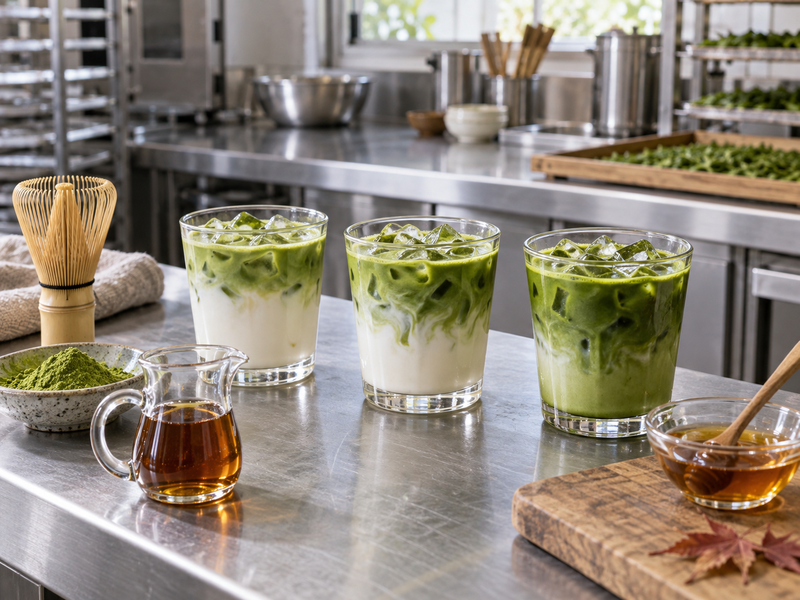
Use the following as an unvalidated development starting point for an iced latte. The listed mass includes ice and is not a claim about cup volume. Check the actual fill line in your chosen cup. A different milk, syrup or ice shape can change the space needed, even when the scale shows the same total weight.
| Ingredient | Proposed amount | Purpose |
|---|---|---|
| Pure matcha | 2 g | Tea flavour |
| Water | 40 g | Disperse tea |
| Pure maple syrup | 15 g | Sweetness and maple aroma |
| Milk or selected plant drink | 180 g | Latte base |
| Ice | 90 g | Cooling and dilution |
Prepare additional cups with 10 g and 20 g syrup while keeping everything else fixed. Code the cups so the tasting panel cannot see which contains more syrup. Ask about maple recognition, sweetness and tea finish separately. These are proposed comparison levels, not an approved recipe range.
Keep a little headspace for stirring. Record the supplier codes on your worksheet before opening the containers, because visually similar samples are easy to confuse. Once you choose a syrup level, run a separate tea comparison. Changing syrup and matcha simultaneously creates several possible explanations for the result and makes the next trial harder to design.
4. How should staff mix the drink?
Disperse the tea before adding the full drink
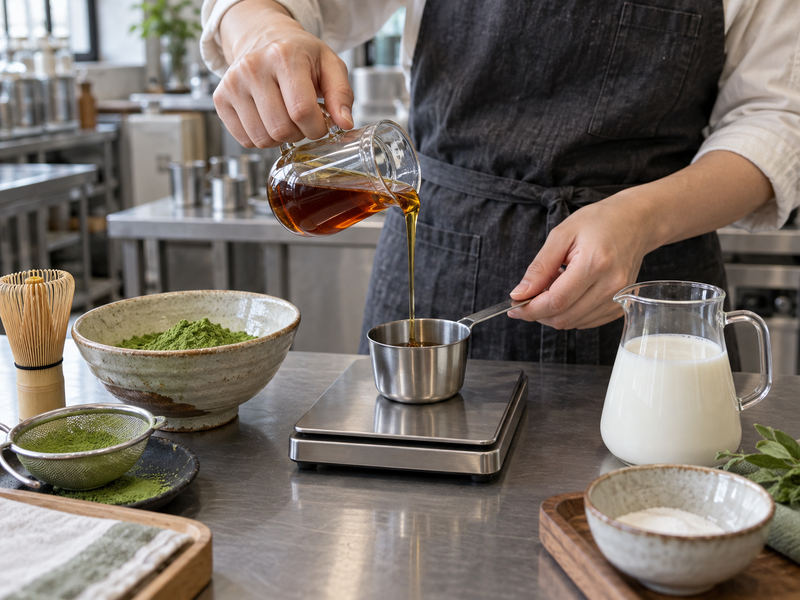
Sift the weighed matcha into a clean bowl, add part of the measured water and work it into a smooth slurry. Add the remaining water and whisk until no dry pockets remain. Use the same water temperature and whisking method across comparison cups. There is no reason to introduce another uncontrolled variable while testing syrup.
Mix the maple syrup into the liquid tea or a measured portion of milk before finishing the drink. Thick syrup poured over a full cup of ice may settle at the bottom, leaving the opening sip weak and the final sip excessively sweet. Check the cup after a normal stir with the utensil you will give customers. A recipe requiring vigorous shaking should be designed around a suitable closed shaker.
For hot service, develop a separate assembly card using your approved milk heating procedure. A hot cup changes aroma, sweetness perception and drinking pace. Do not assume the iced recipe works merely by removing ice. Staff should know the sequence, the liquid masses and the final fill line; a photograph alone will not communicate those details during a shift change.
5. Which milk lets the maple flavour remain clear?
Taste the base without tea
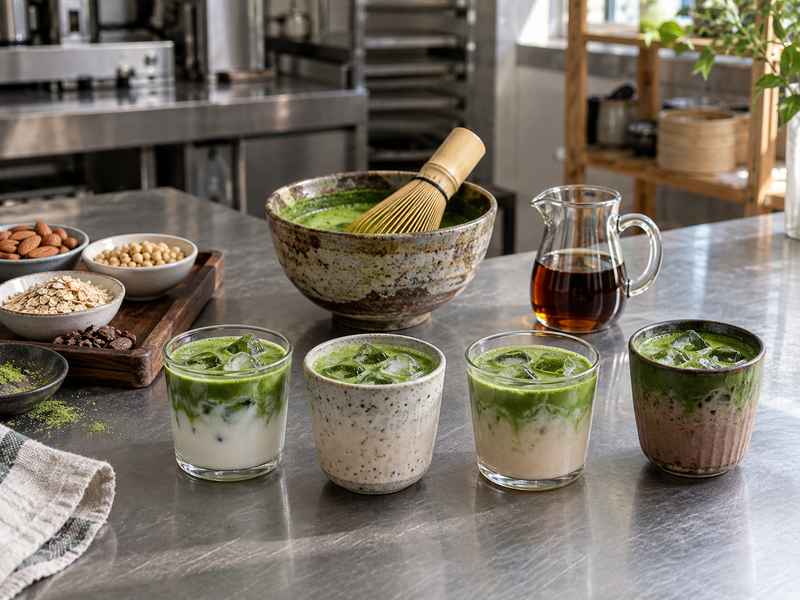
Whole milk, lower fat milk and plant drinks can produce different sweetness and texture. A sweetened oat drink may reduce the additional syrup needed, while a strongly flavoured coconut drink can shift the whole product toward coconut. Use actual brands from the purchasing list. Category names such as oat milk do not describe the same formulation across suppliers.
| Base | Question for the trial | Purchasing detail |
|---|---|---|
| Dairy milk | Does richness soften tea too much? | Fat specification |
| Unsweetened oat drink | Is maple still distinct? | Full ingredient list |
| Soy drink | Does the finish suit the tea? | Soy allergen information |
| Coconut drink | Does coconut dominate? | Drink versus cooking product |
Taste the milk and syrup together before adding matcha. This simple intermediate sample can reveal a conflict that a larger tea dose would only cover at extra cost. Record the selected milk in the recipe by product code, including whether it is sweetened. A last minute substitute should trigger a taste check before staff serve the drink under the same menu description.
For plant based menus, confirm the complete recipe and handling practices support the intended claim. Maple syrup alone does not make a latte dairy free when the standard build contains milk.
6. How can buyers choose matcha for maple lattes?
Compare the finished application
Request pure matcha samples with lot identification and relevant product documents. A sweetened latte powder requires a different formula because it already contributes sugar and other ingredients. Ask the supplier to identify the product clearly before you design the tasting. Comparing pure powder against a premix at equal scoop size would tell you very little.
A useful tea evaluation includes dry aroma, a water dispersion and the complete maple latte. The water sample helps identify stale or unpleasant notes; the complete drink shows whether the tea remains clear after milk and syrup enter the recipe. Avoid choosing by dry powder colour under different lighting. Put samples beside each other in the same white cups and use a consistent background.
Matcha Village’s bulk matcha purchasing guide provides a starting point for a supplier discussion. Send the proposed maple recipe, service style and expected monthly usage with the sample request. Ask for an ingredient appropriate to that application and destination market. Any certification, residue report or origin statement should refer to the offered product and current documents, rather than being assumed from a company description.
7. How does a cafe control cost per serving?
Cost the approved syrup dose
Use landed ingredient cost per gram and multiply by the actual dose. Include the tea, syrup, milk, cup and other consumables. Keep labour and wastage visible as separate lines so a manager can see what changes when staff move from hand pouring syrup to a calibrated dispenser. A cheap syrup can become expensive if the drink needs substantially more of it.
| Cost line | Calculation | Useful check |
|---|---|---|
| Matcha | Cost per gram times dose | Verify scale accuracy |
| Maple syrup | Cost per gram times dose | Weigh dispenser output |
| Milk | Cost per gram times dose | Include foaming waste for hot cups |
| Packaging | Cup, lid and utensil | Match intended service |
| Batch loss | Prepared minus sold portions | Record actual disposal |
If syrup costs 0.012 currency units per gram, a 15 g dose costs 0.18. This is arithmetic using a hypothetical price, not a market quotation. Use your own invoice figures before setting margin targets.
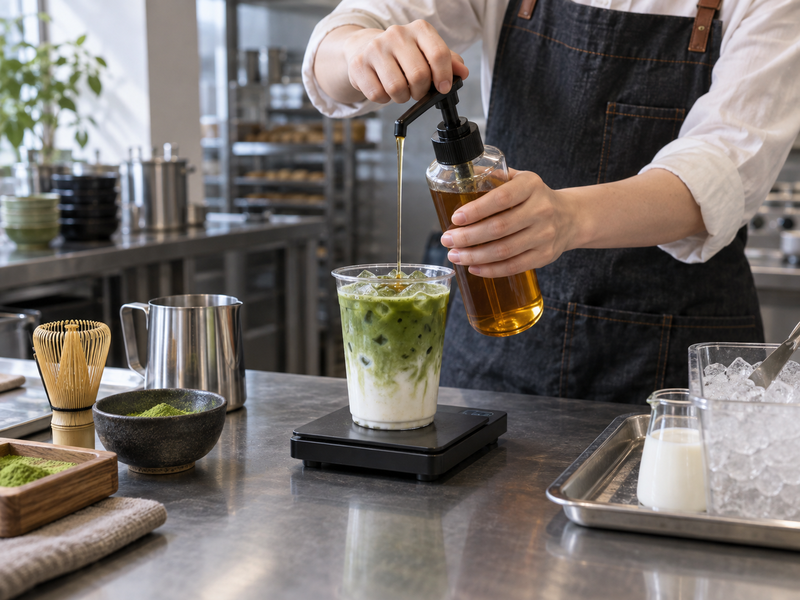
Weigh several dispenser strokes at the beginning and end of a container. Cold viscosity and partial strokes can affect delivery. Train staff to complete a full stroke and replace any recipe instruction that relies on an undefined splash. Recheck the dose when purchasing changes the dispenser or syrup product.
8. What storage and labelling controls belong on the recipe card?
Separate syrup instructions from latte handling
Follow the syrup manufacturer’s instructions after opening, and keep the bottle opening and dispensing equipment clean. A container that was stable unopened does not give the finished milk drink the same storage properties. Write the opening date and supplier lot in the cafe’s traceability system. Do the same for any decanted working bottle so staff can connect it with its original container.
The FDA Food Code is a model for retail food safety adopted through local jurisdictions. Use the rules applicable to your operation when setting milk handling, holding and cleaning procedures. This proposed recipe supplies no validated storage life for a premixed maple latte or tea concentrate.
Prefer made to order assembly during initial menu trials. If the operation later needs batching, assess the actual container, cooling method, service period and cleaning routine with the responsible food safety person. Taste checks can reveal quality drift but cannot establish microbiological safety. A clear label should identify the preparation, time, responsible employee and use instructions under the site’s approved system. Include milk or soy information wherever the finished recipe requires it.
9. What problems should the trial team diagnose?
Change the ingredient responsible for the defect
A weak maple impression can come from low syrup dose, a mild syrup or a strongly flavoured milk. Increasing tea will rarely answer that question. Taste the syrup in the selected milk, then taste the full drink. If the sweetness is already high, compare another syrup sample before adding more. If the tea disappears, run a separate tea dose trial after fixing the syrup choice.
| Observation | Possible cause to investigate | Next controlled trial |
|---|---|---|
| Sweet bottom layer | Incomplete syrup mixing | Predilute in measured liquid |
| Maple hard to identify | Syrup or milk combination | Compare syrup at fixed dose |
| Dry green specks | Poor tea dispersion | Inspect slurry before assembly |
| Weak after several sips | Ice melt or low solids | Weigh ice and liquid consistently |
| Heavy finish | Excess syrup or rich base | Compare one lower syrup dose |
Ask two staff members to make the approved candidate independently using the written card. If their cups taste different, watch the sequence before adjusting ingredients. They may be using different ice masses or reading a dispenser instruction differently. Training errors and formula errors require different corrections, and a complete trial record helps distinguish them.
10. How should a buyer prepare the launch order?
Order against the final service recipe
Send suppliers the approved ingredient names, product codes, expected portions and planned service period. Estimate tea and syrup demand from weighed doses, then add a separately stated allowance based on the cafe’s experience with waste. Keep this allowance visible. Hiding it inside the recipe would make the drink stronger whenever staff use the purchasing calculation as a preparation instruction.
For a limited seasonal offer, check how long the syrup and matcha packs will remain open at the forecast sales rate. Smaller working packs may fit the operation better than one large container, even if the bulk price is lower. Ask whether the supplier can provide consistent lots for the promotion and what notice they need for replenishment.
Release the menu only after the approved cup, cost sheet, allergen details and staff recipe agree. Keep a retained ingredient sample where your quality system allows it, alongside the tasting record. On the launch morning, make a cup from the incoming production stock and compare it with the approved description. Record any difference and resolve it before expanding the order to additional locations.
FAQ
Q1: Can maple matcha be made without milk?
Yes. Develop a water based version separately because the same syrup dose can taste much sweeter without milk. Begin with a small weighed trial and compare tea clarity after stirring.
Q2: Is pure maple syrup required?
Use it when the menu promises pure maple syrup. A flavoured syrup may suit another product, but its ingredient list and menu description should match what customers receive.
Q3: Can staff measure matcha with a teaspoon?
A scale gives a clearer control during development. Spoon volume varies with packing and powder handling. Convert to a service measure only after checking its repeatability against the approved mass.
Q4: Is this recipe suitable for bottled retail drinks?
It is a proposed cafe trial. Bottled production needs its own processing, packaging and shelf life work before sale. A successful fresh cup does not validate a bottled product.
Q5: Which syrup colour class is best?
There is no universal winner. Compare at least two samples in the chosen milk and tea recipe, then select the flavour and cost per finished cup that fit the menu.